
Motorola Edge 20 Fusion vs. Edge 30: A Head-to-Head Showdown
| Phones Images | |||||
|---|---|---|---|---|---|
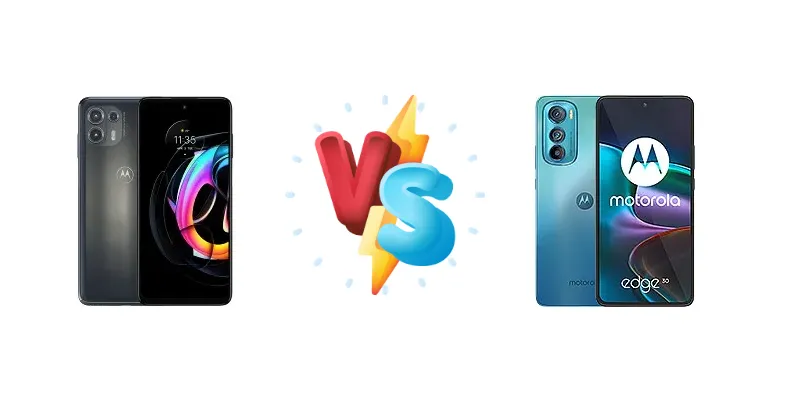
|
🏆 Quick Verdict
The Motorola Edge 30 emerges as the clear winner, boasting a more powerful chipset, improved camera capabilities, and a slightly faster charging speed. While the Edge 20 Fusion remains a solid option, the Edge 30's upgrades make it the superior choice for most users.
| PHONES | ||
|---|---|---|
| Phone Names | Motorola Edge 20 Fusion | Motorola Edge 30 |
| Network | ||
|---|---|---|
| 2G bands | GSM 850 / 900 / 1800 / 1900 | GSM 850 / 900 / 1800 / 1900 |
| 3G bands | HSDPA 850 / 900 / 1700(AWS) / 1900 / 2100 | HSDPA 850 / 900 / 1700(AWS) / 1900 / 2100 |
| 4G bands | 1, 2, 3, 4, 5, 7, 8, 12, 13, 17, 18, 19, 20, 26, 28, 32, 34, 38, 39, 40, 41, 42, 43, 66 | 1, 2, 3, 4, 5, 7, 8, 12, 13, 17, 20, 26, 28, 32, 38, 39, 40, 41, 41, 42, 43, 66 |
| 5G bands | 1, 3, 5, 7, 8, 20, 28, 38, 40, 41, 77, 78, 66 SA/NSA/Sub6 | 1, 2, 3, 5, 7, 8, 20, 28, 38, 40, 41, 66, 78 SA/NSA/Sub6 |
| Speed | HSPA 42.2/5.76 Mbps, LTE Cat18 1200/150 Mbps, 5G | HSPA, LTE, 5G |
| Technology | GSM / HSPA / LTE / 5G | GSM / HSPA / LTE / 5G |
| Launch | ||
|---|---|---|
| Announced | 2021, August 17 | 2022, April 27 |
| Status | Available. Released 2021, August 27 | Available. Released 2022, May 12 |
| Body | ||
|---|---|---|
| Build | Glass front | Glass front (Gorilla Glass 3), plastic frame, plastic back |
| Dimensions | 166 x 76 x 8.3 mm (6.54 x 2.99 x 0.33 in) | 159.4 x 74.2 x 6.8 mm (6.28 x 2.92 x 0.27 in) |
| SIM | Nano-SIM + Nano-SIM | · Nano-SIM· Nano-SIM + Nano-SIM |
| Weight | 185 g (6.53 oz) | 155 g (5.47 oz) |
| Water-repellent design | Water-repellent design | |
| Display | ||
|---|---|---|
| Protection | - | Corning Gorilla Glass 3 |
| Resolution | 1080 x 2400 pixels, 20:9 ratio (~393 ppi density) | 1080 x 2400 pixels, 20:9 ratio (~405 ppi density) |
| Size | 6.7 inches, 108.4 cm2 (~85.9% screen-to-body ratio) | 6.5 inches, 102.0 cm2 (~86.2% screen-to-body ratio) |
| Type | OLED, 1B colors, 90Hz, HDR10+ | AMOLED, 1B colors, 144Hz, HDR10+ |
| Platform | ||
|---|---|---|
| CPU | Octa-core (2x2.4 GHz Cortex-A76 & 6x2.0 GHz Cortex-A55) | Octa-core (1x2.5 GHz Cortex-A78 & 3x2.4 GHz Cortex-A78 & 4x1.9 GHz Cortex-A55) |
| Chipset | Mediatek Dimensity 800U (7 nm) | Qualcomm SM7325-AE Snapdragon 778G+ 5G (6 nm) |
| GPU | Mali-G57 MC3 | Adreno 642L |
| OS | Android 11 | Android 12, upgradable to Android 14 |
| Memory | ||
|---|---|---|
| Card slot | microSDXC | No |
| Internal | 128GB 6GB RAM, 128GB 8GB RAM | 128GB 6GB RAM, 128GB 8GB RAM, 256GB 8GB RAM |
| Main Camera | ||
|---|---|---|
| Features | LED flash, HDR, panorama | Dual-LED flash, HDR, panorama |
| Triple | 108 MP, f/1.9, (wide), 1/1.52", 0.7µm, PDAF 8 MP, f/2.2, 118˚ (ultrawide) Auxiliary lens | 50 MP, f/1.8, (wide), 1/1.55", 1.0µm, multi-directional PDAF, OIS 50 MP, f/2.2, 118˚ (ultrawide), 1/2.76", 0.64µm, PDAF Auxiliary lens |
| Video | 4K@30fps, 1080p@30/60/120fps, gyro-EIS | 4K@30fps, 1080p@30/60/120fps, 720p@960fps, HDR10, gyro-EIS |
| Selfie camera | ||
|---|---|---|
| Features | HDR | HDR |
| Single | 32 MP, f/2.3, (wide), 0.7µm | 32 MP, f/2.3, (wide), 0.7µm |
| Video | 1080p@30fps | 4K@30fps, 1080p@30/120fps |
| Sound | ||
|---|---|---|
| 3.5mm jack | Yes | No |
| 35mm jack | Yes | No |
| Loudspeaker | Yes | Yes, with stereo speakers |
| Comms | ||
|---|---|---|
| Bluetooth | 5.0, A2DP, LE | 5.2, A2DP, LE, aptX HD, aptX Adaptive |
| NFC | Yes | Yes |
| Positioning | GPS, GLONASS, GALILEO | GPS, GLONASS, BDS, GALILEO |
| Radio | FM radio | No |
| USB | USB Type-C 2.0 | USB Type-C 2.0 |
| WLAN | Wi-Fi 802.11 a/b/g/n/ac, dual-band, Wi-Fi Direct | Wi-Fi 802.11 a/b/g/n/ac/6e, dual-band, Wi-Fi Direct |
| Features | ||
|---|---|---|
| Sensors | Fingerprint (side-mounted), accelerometer, gyro, proximity, compass | Fingerprint (under display, optical), accelerometer, gyro, proximity, compass |
| Battery | ||
|---|---|---|
| Charging | 30W wired | 33W wired |
| Type | Li-Po 5000 mAh | Li-Po 4020 mAh |
| Misc | ||
|---|---|---|
| Colors | Electric Graphite, Cyber Teal | Meteor Grey, Supermoon Silver, Aurora Green |
| Models | - | XT2203-1 |
| Price | About 250 EUR | $ 529.00 / € 168.00 |
Motorola Edge 20 Fusion
- Larger display
- Good value for money
- Decent battery life
- Less powerful chipset
- IPS LCD display
- No ultrawide camera
Motorola Edge 30
- Powerful Snapdragon 778G+ 5G
- Vibrant OLED display with 144Hz
- Better camera performance
- Sleek design
- Smaller display
- Slightly higher price
Display Comparison
The Edge 30 features a 6.5-inch OLED display with a 144Hz refresh rate, offering vibrant colors and incredibly smooth scrolling. The Edge 20 Fusion has a 6.7-inch IPS LCD display with a 90Hz refresh rate. While the Fusion's screen is larger, the Edge 30's OLED technology and higher refresh rate provide a noticeably superior visual experience.
Camera Comparison
The Edge 30 generally offers better camera performance, particularly in low-light conditions. While both phones have a 50MP main sensor, the Edge 30's image processing and additional features (like OIS) contribute to superior image quality. The Edge 30 also has an ultrawide lens, which the Edge 20 Fusion lacks.
Performance
The Snapdragon 778G+ 5G in the Edge 30 significantly outperforms the Dimensity 800U in the Edge 20 Fusion. Expect faster app loading times, smoother multitasking, and better gaming performance on the Edge 30. The Edge 30's CPU architecture is also more efficient.
Battery Life
Both phones offer similar battery life, typically lasting a full day with moderate usage. The Edge 30's 33W charging is slightly faster than the Edge 20 Fusion's 30W charging, but the difference isn't substantial.
Buying Guide
The Motorola Edge 20 Fusion is a good choice for budget-conscious buyers who prioritize a large display and decent performance for everyday tasks. The Motorola Edge 30 is ideal for users seeking a smoother experience, better camera quality, and a more modern design, even if it means spending a bit more.