
Motorola Defy 2 vs. Moto G72: A Head-to-Head Comparison
| Phones Images | |||||
|---|---|---|---|---|---|
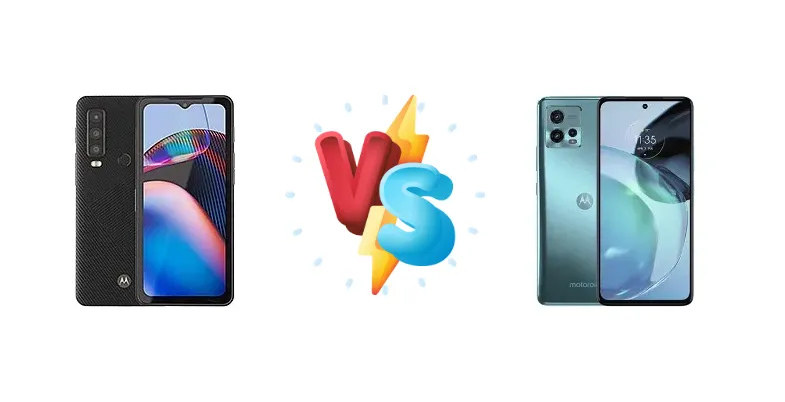
|
🏆 Quick Verdict
The Moto G72 takes the win for most users thanks to its brighter display, faster charging, and generally smoother performance. However, the Defy 2's rugged build and water resistance make it the clear choice for those needing a durable device for demanding environments.
| PHONES | ||
|---|---|---|
| Phone Names | Motorola Defy 2 | Motorola Moto G72 |
| Network | ||
|---|---|---|
| 2G bands | GSM 850 / 900 / 1800 / 1900 | GSM 850 / 900 / 1800 / 1900 |
| 3G bands | HSDPA 850 / 900 / 1700(AWS) / 1900 / 2100 | HSDPA 850 / 900 / 1900 / 2100 |
| 4G bands | 1, 2, 3, 4, 5, 7, 8, 12, 13, 14, 17, 20, 25, 26, 28, 30, 38, 40, 41, 46, 48, 66, 71 | 1, 2, 3, 5, 7, 8, 18, 19, 20, 26, 28, 38, 40, 41 |
| 5G bands | 2, 5, 23, 25, 26, 28, 38, 41, 48, 66, 70, 71, 77, 78, 255, 256 SA/NSA/Sub6/mmWave | - |
| Speed | HSPA, LTE, 5G | HSPA 42.2/5.76 Mbps, LTE Cat4 150/50 Mbps |
| Technology | GSM / HSPA / LTE / 5G | GSM / HSPA / LTE |
| Launch | ||
|---|---|---|
| Announced | 2023, February 24 | 2022, September 29 |
| Status | Available. Released 2023, October | Available. Released 2022, October 03 |
| Body | ||
|---|---|---|
| Build | Glass front (Gorilla Glass Victus), plastic back, aluminum frame | Glass front, plastic back, plastic frame |
| Dimensions | 171 x 80 x 11.9 mm (6.73 x 3.15 x 0.47 in) | 160.5 x 74.4 x 7.9 mm (6.32 x 2.93 x 0.31 in) |
| SIM | Nano-SIM + Nano-SIM | Nano-SIM + Nano-SIM |
| Weight | 268 g (9.45 oz) | 166 g (5.86 oz) |
| IP68/IP69 dust/water resistant (up to 5m for 35 min) Drop-to-concrete resistance from up to 1.8m MIL-STD-810H compliant | Water-repellent design | |
| Display | ||
|---|---|---|
| Protection | Corning Gorilla Glass Victus | - |
| Resolution | 1080 x 2408 pixels, 20:9 ratio (~400 ppi density) | 1080 x 2400 pixels, 20:9 ratio (~402 ppi density) |
| Size | 6.6 inches, 104.9 cm2 (~76.7% screen-to-body ratio) | 6.6 inches, 103.6 cm2 (~86.8% screen-to-body ratio) |
| Type | IPS LCD, 120Hz | P-OLED, 1B colors, 120Hz |
| Platform | ||
|---|---|---|
| CPU | Octa-core (2x2.2 GHz Cortex-A78 & 6x2.0 GHz Cortex-A55) | Octa-core (2x2.2 GHz Cortex-A76 & 6x2.0 GHz Cortex-A55) |
| Chipset | Mediatek Dimensity 930 (6 nm) | Mediatek Helio G99 (6 nm) |
| GPU | IMG BXM-8-256 | Mali-G57 MC2 |
| OS | Android 12 | Android 12, upgradable to Android 13 |
| Memory | ||
|---|---|---|
| Card slot | microSDXC (uses shared SIM slot) | microSDXC (uses shared SIM slot) |
| Internal | 128GB 6GB RAM | 128GB 6GB RAM, 128GB 8GB RAM, 256GB 8GB RAM |
| Main Camera | ||
|---|---|---|
| Features | Dual-LED flash, HDR, panorama | LED flash, HDR, panorama |
| Triple | 50 MP, f/1.8, (wide), PDAF 8 MP, f/2.2, (ultrawide) 2 MP (macro) | 108 MP, f/1.7, 24mm (wide), 1/1.67", 0.64µm, PDAF 8 MP, f/2.2, 118˚ (ultrawide), 1/4.0", 1.12µm 2 MP (macro) |
| Video | 1080p@30fps | 1080p@30/60fps |
| Selfie camera | ||
|---|---|---|
| Single | 8 MP, f/2.0, (wide) | 16 MP, f/2.5, (wide), 1/3.0", 1.0µm |
| Video | 1080p@30fps | 1080p@30fps |
| Sound | ||
|---|---|---|
| 3.5mm jack | No | Yes |
| 35mm jack | No | Yes |
| Loudspeaker | Yes | Yes, with stereo speakers |
| Comms | ||
|---|---|---|
| Bluetooth | 5.1, A2DP, LE | 5.1, A2DP, LE |
| NFC | Yes | Yes |
| Positioning | GPS (L1+L5), GLONASS, GALILEO, BDS | GPS, GLONASS, GALILEO |
| Radio | Unspecified | FM radio |
| USB | USB Type-C 2.0, OTG | USB Type-C 2.0, OTG |
| WLAN | Wi-Fi 802.11 a/b/g/n/ac, dual-band | Wi-Fi 802.11 a/b/g/n/ac, dual-band, Wi-Fi Direct |
| Features | ||
|---|---|---|
| Sensors | Fingerprint (rear-mounted), accelerometer, gyro, proximity, compass | Fingerprint (under display, optical), accelerometer, proximity |
| Emergency SOS via satellite (Bullitt Satellite Connect service) | - | |
| Battery | ||
|---|---|---|
| Charging | 15W wireless | 33W wired |
| Type | Li-Po 5000 mAh | Li-Po 5000 mAh |
| Misc | ||
|---|---|---|
| Colors | Black | Meteorite Gray, Polar Blue, Mineral White |
| Models | BM1S1B | XT2255-1 |
| Price | About 570 EUR | About 150 EUR |
| Tests | ||
|---|---|---|
| Battery life | - | Endurance rating 121h |
| Camera | - | Photo / Video |
| Display | - | Contrast ratio: Infinite (nominal) |
| Loudspeaker | - | -26.5 LUFS (Good) |
| Performance | - | AnTuTu: 383317 (v9) GeekBench: 1842 (v5.1) GFXBench: 13fps (ES 3.1 onscreen) |
Motorola Defy 2
- Rugged and durable design
- Water and dust resistant (IP68)
- Wireless charging
- Potentially better raw performance (Dimensity 930)
- Likely less bright display
- Unspecified battery capacity
- Potentially less advanced camera system
- Slower charging (15W wireless)
Motorola Moto G72
- Brighter display (1015 nits)
- Fast charging (33W wired)
- Excellent battery life (121h endurance rating)
- Potentially better camera system
- Less rugged design
- No wireless charging
- Helio G99 chipset may be slightly less powerful
Display Comparison
The Moto G72 boasts a significant advantage with its 1015 nits max brightness, offering excellent visibility even in direct sunlight. Its 'infinite' contrast ratio (though nominal) suggests deep blacks and vibrant colors. The Defy 2's display is likely adequate but won't match the G72's visual punch. Resolution and panel type (likely AMOLED on the G72) further contribute to the G72's display superiority.
Camera Comparison
Camera performance is difficult to definitively assess without detailed testing. Both phones are described as having 'Photo / Video' capabilities, suggesting standard camera setups. The G72 likely has a more advanced camera system overall, potentially with better image processing and features. The Defy 2 may prioritize durability over camera quality.
Performance
The Dimensity 930 in the Defy 2 generally offers better raw performance than the Helio G99 in the Moto G72. The Cortex-A78 cores in the Defy 2's CPU provide a boost for demanding tasks. However, software optimization and daily usage scenarios can influence perceived performance. Both phones are suitable for everyday tasks, but the Defy 2 should handle more intensive games and applications slightly better.
Battery Life
The Moto G72's endurance rating of 121h is impressive, suggesting excellent battery life. While the Defy 2's battery capacity isn't specified, its 15W wireless charging is a nice convenience. The G72's 33W wired charging offers significantly faster top-ups.
Buying Guide
Who should buy the Motorola Defy 2? Individuals working in construction, outdoor enthusiasts, or anyone needing a phone that can withstand drops, dust, and water. Who should buy the Motorola Moto G72? Users prioritizing a vibrant display for media consumption, fast charging, and a more mainstream smartphone experience.