
Motorola Defy 2 vs Moto G53: A Head-to-Head Showdown
| Phones Images | |||||
|---|---|---|---|---|---|
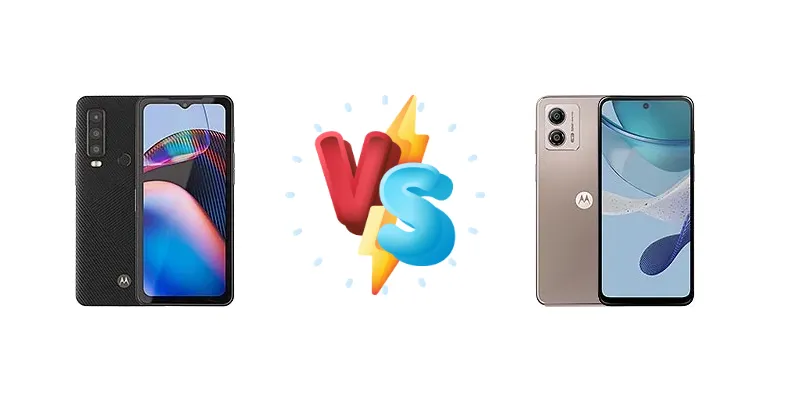
|
🏆 Quick Verdict
The Moto G53 offers a brighter display and potentially longer battery life, while the Defy 2 boasts a more powerful chipset and wireless charging. Ultimately, the G53 provides better value for most users, but the Defy 2 caters to those prioritizing performance and durability.
| PHONES | ||
|---|---|---|
| Phone Names | Motorola Defy 2 | Motorola Moto G53 |
| Network | ||
|---|---|---|
| 2G bands | GSM 850 / 900 / 1800 / 1900 | GSM 850 / 900 / 1800 / 1900 |
| 3G bands | HSDPA 850 / 900 / 1700(AWS) / 1900 / 2100 | HSDPA 850 / 900 / 1900 / 2100 - EMEA & AP, China |
| 4G bands | 1, 2, 3, 4, 5, 7, 8, 12, 13, 14, 17, 20, 25, 26, 28, 30, 38, 40, 41, 46, 48, 66, 71 | 1, 2, 3, 5, 7, 8, 18, 19, 20, 26, 28, 32, 38, 40, 41, 42 - EMEA & AP |
| 5G bands | 2, 5, 23, 25, 26, 28, 38, 41, 48, 66, 70, 71, 77, 78, 255, 256 SA/NSA/Sub6/mmWave | 1, 3, 5, 7, 8, 20, 28, 38, 40, 41, 77, 78 SA/NSA - EMEA & AP |
| Speed | HSPA, LTE, 5G | HSPA, LTE, 5G |
| Technology | GSM / HSPA / LTE / 5G | GSM / CDMA / HSPA / LTE / 5G |
| - | 1, 5, 8, 28, 41, 78 SA/NSA - China | |
| Launch | ||
|---|---|---|
| Announced | 2023, February 24 | 2022, December 15 |
| Status | Available. Released 2023, October | Available. Released 2022, December 15 |
| Body | ||
|---|---|---|
| Build | Glass front (Gorilla Glass Victus), plastic back, aluminum frame | Glass front, plastic back, plastic frame |
| Dimensions | 171 x 80 x 11.9 mm (6.73 x 3.15 x 0.47 in) | 162.7 x 74.7 x 8.2 mm (6.41 x 2.94 x 0.32 in) |
| SIM | Nano-SIM + Nano-SIM | · Nano-SIM + eSIM· Nano-SIM + Nano-SIM |
| Weight | 268 g (9.45 oz) | 183 g (6.46 oz) |
| IP68/IP69 dust/water resistant (up to 5m for 35 min) Drop-to-concrete resistance from up to 1.8m MIL-STD-810H compliant | Water-resistant design | |
| Display | ||
|---|---|---|
| Protection | Corning Gorilla Glass Victus | - |
| Resolution | 1080 x 2408 pixels, 20:9 ratio (~400 ppi density) | 720 x 1600 pixels, 20:9 ratio (~270 ppi density) |
| Size | 6.6 inches, 104.9 cm2 (~76.7% screen-to-body ratio) | 6.5 inches, 102.0 cm2 (~83.9% screen-to-body ratio) |
| Type | IPS LCD, 120Hz | IPS LCD, 120Hz |
| Platform | ||
|---|---|---|
| CPU | Octa-core (2x2.2 GHz Cortex-A78 & 6x2.0 GHz Cortex-A55) | Octa-core (2x2.2 GHz Kryo 460 & 6x1.8 GHz Kryo 460) |
| Chipset | Mediatek Dimensity 930 (6 nm) | Qualcomm SM4350-AC Snapdragon 480+ 5G (8 nm) |
| GPU | IMG BXM-8-256 | Adreno 619 |
| OS | Android 12 | Android 13, planned upgrade to Android 14 |
| Memory | ||
|---|---|---|
| Card slot | microSDXC (uses shared SIM slot) | microSDXC (uses shared SIM slot) |
| Internal | 128GB 6GB RAM | 64GB 4GB RAM, 128GB 4GB RAM, 128GB 6GB RAM, 128GB 8GB RAM |
| Main Camera | ||
|---|---|---|
| Dual | - | 50 MP, f/1.8 (wide), 1/2.76", 0.64µm, PDAF 2 MP (macro) |
| Features | Dual-LED flash, HDR, panorama | LED flash, HDR, panorama |
| Triple | 50 MP, f/1.8, (wide), PDAF 8 MP, f/2.2, (ultrawide) 2 MP (macro) | - |
| Video | 1080p@30fps | 1080p@30fps |
| Selfie camera | ||
|---|---|---|
| Single | 8 MP, f/2.0, (wide) | 8 MP, f/2.0, (wide), 1/4.0", 1.12µm or 16 MP, f/2.2, (wide), 1.0µm |
| Video | 1080p@30fps | 1080p@30fps |
| Sound | ||
|---|---|---|
| 3.5mm jack | No | Yes |
| 35mm jack | No | Yes |
| Loudspeaker | Yes | Yes, with stereo speakers |
| Comms | ||
|---|---|---|
| Bluetooth | 5.1, A2DP, LE | 5.1, A2DP, LE |
| NFC | Yes | Yes (market/region dependent) |
| Positioning | GPS (L1+L5), GLONASS, GALILEO, BDS | GPS, GLONASS, GALILEO, BDS |
| Radio | Unspecified | FM radio (market/region dependent) |
| USB | USB Type-C 2.0, OTG | USB Type-C 2.0, OTG |
| WLAN | Wi-Fi 802.11 a/b/g/n/ac, dual-band | Wi-Fi 802.11 a/b/g/n/ac, dual-band |
| Features | ||
|---|---|---|
| Sensors | Fingerprint (rear-mounted), accelerometer, gyro, proximity, compass | Fingerprint (side-mounted), accelerometer, gyro, proximity, compass |
| Emergency SOS via satellite (Bullitt Satellite Connect service) | - | |
| Battery | ||
|---|---|---|
| Charging | 15W wireless | 18W wired (China, LATAM) 10W wired (International) Reverse wired |
| Type | Li-Po 5000 mAh | Li-Po 5000 mAh |
| Misc | ||
|---|---|---|
| Colors | Black | Ink Blue, Arctic Silver, Pale Pink |
| Models | BM1S1B | XT2335-2 |
| Price | About 570 EUR | $ 295.00 / £ 143.15 |
| Tests | ||
|---|---|---|
| Battery life | - | Endurance rating 123h |
| Camera | - | Photo / Video |
| Display | - | Contrast ratio: 1746:1 (nominal) |
| Loudspeaker | - | -26.0 LUFS (Very good) |
| Performance | - | AnTuTu: 314195 (v9) GeekBench: 1594 (v5.1), 1797 (v6.0) GFXBench: 29fps (ES 3.1 onscreen) |
Motorola Defy 2
- More powerful chipset
- Wireless charging
- Potentially more durable build
- 5G Connectivity
- Likely dimmer display
- Unknown battery capacity
- Potentially higher price
Motorola Moto G53
- Brighter display
- Excellent battery life
- More affordable
- Reverse wired charging
- Less powerful chipset
- No wireless charging
- International models have slower wired charging
Display Comparison
The Moto G53 takes the lead here with a measured peak brightness of 599 nits, significantly brighter than the Defy 2's likely output. Both offer a high contrast ratio of 1746:1, ensuring deep blacks and vibrant colors. However, the G53's brightness advantage makes it more usable outdoors.
Camera Comparison
Camera performance is likely comparable, with both phones offering decent image quality in good lighting conditions. However, detailed camera specs are missing for both devices, making a definitive comparison difficult. Expect standard features like portrait mode and HDR.
Performance
The Defy 2's Mediatek Dimensity 930 chipset is noticeably more powerful than the Moto G53's Snapdragon 480+ 5G. Expect smoother multitasking, faster app loading times, and better gaming performance on the Defy 2. The Dimensity 930's 6nm process also contributes to better power efficiency.
Battery Life
The Moto G53 claims an impressive endurance rating of 123h, suggesting exceptional battery life. While the Defy 2's battery capacity is unknown, the Dimensity 930's efficiency could offset any capacity difference. Wireless charging on the Defy 2 is a convenient bonus.
Buying Guide
Who should buy the Motorola Defy 2? Users prioritizing performance, wireless charging, and a more robust build. Who should buy the Motorola Moto G53? Those seeking a brighter display, excellent battery life, and a more affordable price point.