
Motorola Defy 2 vs. Defy (2021): The Ultimate Rugged Phone Comparison
| Phones Images | |||||
|---|---|---|---|---|---|
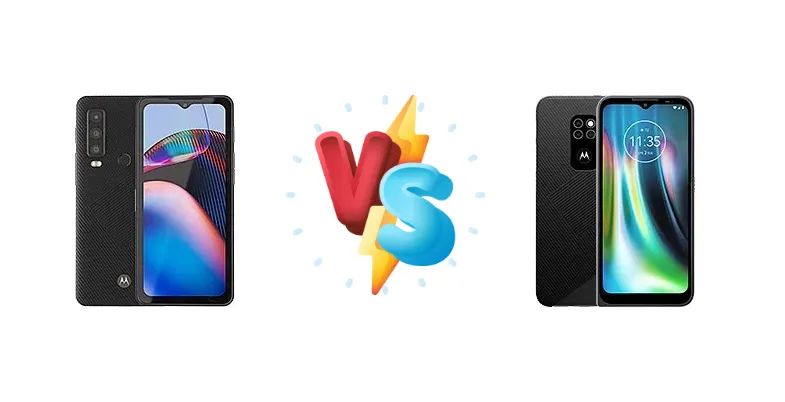
|
🏆 Quick Verdict
The Defy 2 boasts a more modern chipset and wireless charging, offering a performance edge. However, the original Defy (2021) still holds its own with exceptional battery life and a proven track record of durability. Ultimately, the Defy 2 is for those prioritizing speed, while the Defy (2021) is for battery champions.
| PHONES | ||
|---|---|---|
| Phone Names | Motorola Defy 2 | Motorola Defy (2021) |
| Network | ||
|---|---|---|
| 2G bands | GSM 850 / 900 / 1800 / 1900 | GSM 850 / 900 / 1800 / 1900 |
| 3G bands | HSDPA 850 / 900 / 1700(AWS) / 1900 / 2100 | HSDPA 850 / 900 / 1700(AWS) / 1900 / 2100 - LATAM |
| 4G bands | 1, 2, 3, 4, 5, 7, 8, 12, 13, 14, 17, 20, 25, 26, 28, 30, 38, 40, 41, 46, 48, 66, 71 | 1, 2, 3, 5, 7, 8, 18, 19, 20, 26, 28, 38, 40, 41 - EMEA |
| 5G bands | 2, 5, 23, 25, 26, 28, 38, 41, 48, 66, 70, 71, 77, 78, 255, 256 SA/NSA/Sub6/mmWave | - |
| Speed | HSPA, LTE, 5G | HSPA 42.2/5.76 Mbps, LTE Cat4 150/50 Mbps |
| Technology | GSM / HSPA / LTE / 5G | GSM / HSPA / LTE |
| - | 1, 2, 3, 4, 5, 7, 8, 19, 28, 66 - LATAM | |
| Launch | ||
|---|---|---|
| Announced | 2023, February 24 | 2021, June 17 |
| Status | Available. Released 2023, October | Available. Released 2021, July 25 |
| Body | ||
|---|---|---|
| Build | Glass front (Gorilla Glass Victus), plastic back, aluminum frame | Glass front (Gorilla Glass Victus), plastic frame, plastic back |
| Dimensions | 171 x 80 x 11.9 mm (6.73 x 3.15 x 0.47 in) | 169.8 x 78.2 x 10.9 mm (6.69 x 3.08 x 0.43 in) |
| SIM | Nano-SIM + Nano-SIM | · Nano-SIM· Nano-SIM + Nano-SIM |
| Weight | 268 g (9.45 oz) | 232 g (8.18 oz) |
| IP68/IP69 dust/water resistant (up to 5m for 35 min) Drop-to-concrete resistance from up to 1.8m MIL-STD-810H compliant | IP68 dust/water resistant (up to 1.5m for 35 min) Drop-to-concrete resistance from up to 1.8m MIL-SPEC 810H compliant | |
| Display | ||
|---|---|---|
| Protection | Corning Gorilla Glass Victus | Corning Gorilla Glass Victus |
| Resolution | 1080 x 2408 pixels, 20:9 ratio (~400 ppi density) | 720 x 1600 pixels, 20:9 ratio (~270 ppi density) |
| Size | 6.6 inches, 104.9 cm2 (~76.7% screen-to-body ratio) | 6.5 inches, 102.0 cm2 (~76.8% screen-to-body ratio) |
| Type | IPS LCD, 120Hz | IPS LCD |
| Platform | ||
|---|---|---|
| CPU | Octa-core (2x2.2 GHz Cortex-A78 & 6x2.0 GHz Cortex-A55) | Octa-core (4x2.0 GHz Kryo 260 Gold & 4x1.8 GHz Kryo 260 Silver) |
| Chipset | Mediatek Dimensity 930 (6 nm) | Qualcomm SM6115 Snapdragon 662 (11 nm) |
| GPU | IMG BXM-8-256 | Adreno 610 |
| OS | Android 12 | Android 10 |
| Memory | ||
|---|---|---|
| Card slot | microSDXC (uses shared SIM slot) | microSDXC (uses shared SIM slot) |
| Internal | 128GB 6GB RAM | 64GB 4GB RAM |
| Main Camera | ||
|---|---|---|
| Features | Dual-LED flash, HDR, panorama | LED flash, HDR, panorama |
| Triple | 50 MP, f/1.8, (wide), PDAF 8 MP, f/2.2, (ultrawide) 2 MP (macro) | 48 MP, f/1.8, (wide), PDAF 2 MP (macro) Auxiliary lens |
| Video | 1080p@30fps | 1080p@30fps |
| Selfie camera | ||
|---|---|---|
| Single | 8 MP, f/2.0, (wide) | 8 MP, f/2.2, 1.12µm |
| Video | 1080p@30fps | 1080p@30fps |
| Sound | ||
|---|---|---|
| 3.5mm jack | No | Yes |
| 35mm jack | No | Yes |
| Loudspeaker | Yes | Yes |
| Comms | ||
|---|---|---|
| Bluetooth | 5.1, A2DP, LE | 5.0, A2DP, LE |
| NFC | Yes | Yes |
| Positioning | GPS (L1+L5), GLONASS, GALILEO, BDS | GPS |
| Radio | Unspecified | FM radio |
| USB | USB Type-C 2.0, OTG | USB Type-C 2.0 |
| WLAN | Wi-Fi 802.11 a/b/g/n/ac, dual-band | Wi-Fi 802.11 a/b/g/n/ac, dual-band, Wi-Fi Direct |
| Features | ||
|---|---|---|
| Sensors | Fingerprint (rear-mounted), accelerometer, gyro, proximity, compass | Fingerprint (rear-mounted), accelerometer, gyro, proximity, compass |
| Emergency SOS via satellite (Bullitt Satellite Connect service) | - | |
| Battery | ||
|---|---|---|
| Charging | 15W wireless | 20W wired |
| Type | Li-Po 5000 mAh | Li-Po 5000 mAh |
| Misc | ||
|---|---|---|
| Colors | Black | Black, Green |
| Models | BM1S1B | XT2083-9 |
| Price | About 570 EUR | About 280 EUR |
| Tests | ||
|---|---|---|
| Battery life | - | Endurance rating 129h |
| Camera | - | Photo / Video |
| Display | - | Contrast ratio: 1896:1 (nominal) |
| Loudspeaker | - | -29.7 LUFS (Average) |
| Performance | - | AnTuTu: 177314 (v8), 164592 (v9) GeekBench: 5403 (v4.4), 1511 (v5.1) GFXBench: 13fps (ES 3.1 onscreen) |
Motorola Defy 2
- More powerful chipset
- Wireless charging
- Modern design
- Potentially better image processing
- Likely shorter battery life than Defy (2021)
- Camera details are limited
- Price likely higher
Motorola Defy (2021)
- Exceptional battery life (129h endurance rating)
- Proven rugged design
- Affordable
- 20W wired charging
- Less powerful chipset
- No wireless charging
- Older design
- Camera performance likely average
Display Comparison
The Defy (2021) features a respectable 6.5-inch display with a high contrast ratio (1896:1 nominal) and a measured brightness of 436 nits. While the Defy 2's display details are less readily available, it's likely to be similar in size and quality, potentially with slightly improved color accuracy due to the newer chipset. Both offer good visibility in outdoor conditions.
Camera Comparison
Camera details are sparse for both devices, but both are described as 'Photo / Video'. The Defy 2's newer chipset *may* offer slightly improved image processing, but neither phone is expected to be a photography powerhouse. Expect decent results in good lighting conditions, but low-light performance will likely be average.
Performance
Here's where the Defy 2 pulls ahead. Its Mediatek Dimensity 930 chipset is significantly more powerful than the Snapdragon 662 in the Defy (2021). Expect smoother multitasking, faster app loading times, and better gaming performance on the Defy 2. The Defy (2021) is adequate for basic tasks but will struggle with demanding applications.
Battery Life
The Defy (2021) is the clear winner in this category. Its endurance rating of 129 hours is exceptional. The Defy 2, while having a decent battery capacity, will likely not match this longevity due to the more power-hungry chipset. The Defy 2 does offer wireless charging, a feature absent in the original.
Buying Guide
Who should buy the Motorola Defy 2? Users seeking a more responsive experience for everyday tasks and occasional gaming, and who appreciate the convenience of wireless charging. Who should buy the Motorola Defy (2021)? Those prioritizing unparalleled battery life and a tried-and-true rugged design, even if it means sacrificing some processing power.