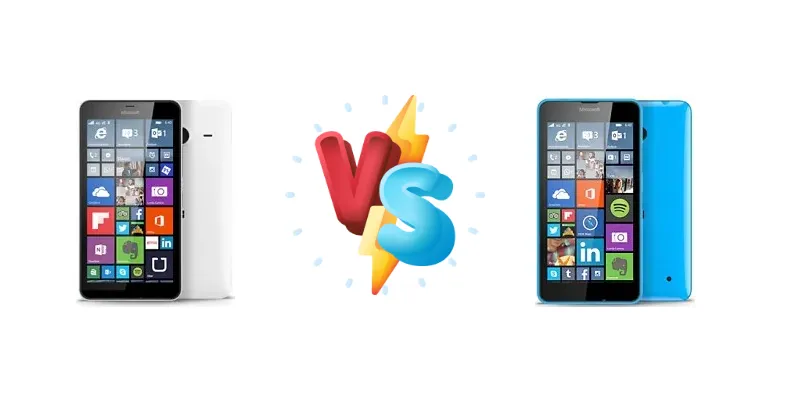
The Microsoft Lumia 640 and 640 XL represent a pivotal moment in Microsoft’s mobile strategy – a concerted effort to deliver affordable Windows Phone devices to a wider audience. While both share a similar design language and software experience, key differences in display size, contrast, and battery endurance necessitate a detailed comparison for prospective buyers seeking the best value.
🏆 Quick Verdict
For most users, the Lumia 640 XL LTE emerges as the superior choice. Its larger display and marginally better battery life (74h vs 76h) provide a more immersive and enduring experience, justifying the slight size increase. However, the 640’s more compact form factor may appeal to those prioritizing pocketability.
| Network |
|---|
| 2G bands | GSM 850 / 900 / 1800 / 1900 | GSM 850 / 900 / 1800 / 1900 |
| 3G bands | HSDPA 850 / 900 / 2100 | HSDPA 850 / 900 / 2100 |
| 4G bands | 1, 3, 7, 8, 20 | 1, 3, 7, 8, 20 |
| Speed | HSPA 42.2/5.76 Mbps, LTE Cat4 150/50 Mbps | HSPA 42.2/5.76 Mbps, LTE Cat4 150/50 Mbps |
| Technology | GSM / HSPA / LTE | GSM / HSPA / LTE |
| | - | 1, 2, 4, 5, 7, 12, 17 - T-Mobile |
| Launch |
|---|
| Announced | 2015, March. Released 2015, April | 2015, March. Released 2015, April |
| Status | Discontinued | Discontinued |
| Body |
|---|
| Dimensions | 157.9 x 81.5 x 9 mm (6.22 x 3.21 x 0.35 in) | 141.3 x 72.2 x 8.8 mm (5.56 x 2.84 x 0.35 in) |
| SIM | Micro-SIM | Micro-SIM |
| Weight | 171 g (6.03 oz) | 145 g (5.11 oz) |
| Display |
|---|
| Protection | Corning Gorilla Glass 3 | Corning Gorilla Glass 3 |
| Resolution | 720 x 1280 pixels, 16:9 ratio (~259 ppi density) | 720 x 1280 pixels, 16:9 ratio (~294 ppi density) |
| Size | 5.7 inches, 88.9 cm2 (~69.1% screen-to-body ratio) | 5.0 inches, 68.9 cm2 (~67.6% screen-to-body ratio) |
| Type | IPS LCD | IPS LCD |
| | ClearBlack display | ClearBlack display |
| Platform |
|---|
| CPU | Quad-core 1.2 GHz Cortex-A7 | Quad-core 1.2 GHz Cortex-A7 |
| Chipset | Qualcomm MSM8226 Snapdragon 400 (28 nm) | Qualcomm MSM8926 Snapdragon 400 (28 nm) |
| GPU | Adreno 305 | Adreno 305 |
| OS | Microsoft Windows Phone 8.1, upgradable to Microsoft Windows 10 | Microsoft Windows Phone 8.1, upgradable to Microsoft Windows 10 |
| Memory |
|---|
| Card slot | microSDXC (dedicated slot) | microSDXC (dedicated slot) |
| Internal | 8GB 1GB RAM | 8GB 1GB RAM |
| | eMMC 4.5 | eMMC 4.5 |
| Main Camera |
|---|
| Features | Zeiss optics, LED flash | LED flash |
| Single | 13 MP, f/2.0, 28mm (wide), 1/3.0", AF | 8 MP, f/2.2, 28mm (wide), 1/4.0", AF |
| Video | 1080p@30fps | 1080p@30fps |
| Selfie camera |
|---|
| Single | 5 MP | 1 MP |
| Video | 1080p@30fps | 720p |
| Sound |
|---|
| 3.5mm jack | Yes | Yes |
| 35mm jack | Yes | Yes |
| Loudspeaker | Yes | Yes |
| Comms |
|---|
| Bluetooth | 4.0, A2DP | 4.0, A2DP |
| NFC | Yes | Yes |
| Positioning | GPS, GLONASS, BDS | GPS, GLONASS, BDS |
| Radio | FM radio | FM radio |
| USB | microUSB 2.0 | microUSB 2.0 |
| WLAN | Wi-Fi 802.11 b/g/n, DLNA, hotspot | Wi-Fi 802.11 b/g/n, DLNA, hotspot |
| Features |
|---|
| Sensors | Accelerometer, proximity, compass, sensor core | Accelerometer, proximity, compass |
| Battery |
|---|
| Stand-by | Up to 888 h (2G) / Up to 888 h (3G) | Up to 864 h (2G) / Up to 864 h (3G) |
| Talk time | Up to 30 h 20 min (2G) / Up to 24 h (3G) | Up to 26 h 30 min (2G) / Up to 17 h 30 min (3G) |
| Type | Li-Ion 3000 mAh, removable | Li-Ion 2500 mAh, removable |
| Misc |
|---|
| Colors | Matte cyan, Orange, Black, Matte white, Glossy white | Glossy cyan, Orange, White, Matte black |
| Price | About 200 EUR | About 120 EUR |
| Tests |
|---|
| Audio quality |
Noise -93.0dB / Crosstalk -94.4dB |
Noise -93.1dB / Crosstalk -93.2dB |
| Battery life |
Endurance rating 74h
|
Endurance rating 76h
|
| Camera | - |
Photo / Video |
| Display |
Contrast ratio: 1119:1 (nominal), 3.065 (sunlight) |
Contrast ratio: 1034 (nominal), 2.563 (sunlight) |
| Loudspeaker |
Voice 72dB / Noise 67dB / Ring 73dB
|
Voice 70dB / Noise 65dB / Ring 75dB
|
Microsoft Lumia 640 XL LTE
- Larger, more immersive display
- Higher display contrast for better visibility
- Slightly better battery endurance for heavy users
- Larger form factor, less pocketable
- Potentially less convenient for one-handed use
Microsoft Lumia 640 LTE
- More compact and portable design
- Easier to handle and use one-handed
- Slightly longer battery endurance rating
- Lower display contrast, less vibrant visuals
- Smaller screen size, less ideal for media consumption
Display Comparison
The Lumia 640 XL boasts a noticeably superior display experience, evidenced by its higher contrast ratio of 1119:1 (nominal) and 3.065 in sunlight, compared to the 640’s 1034 and 2.563 respectively. This translates to deeper blacks, brighter whites, and improved visibility in outdoor conditions. While both utilize similar LCD technology, the XL’s larger size and improved contrast make it significantly more enjoyable for viewing photos and videos. The difference in sunlight readability is particularly crucial for users in bright environments.
Camera Comparison
Both the Lumia 640 and 640 XL feature a camera capable of both photo and video capture, but detailed specifications regarding sensor size, aperture, or image stabilization are absent. Given their positioning as budget devices, image quality is likely to be similar, with performance adequate for casual snapshots in good lighting conditions. Without further data, it’s difficult to definitively declare a winner in this category. The absence of OIS suggests low-light performance will be limited on both.
Performance
Both devices are powered by the Qualcomm MSM8226 Snapdragon 400 (28nm) chipset with a quad-core 1.2 GHz Cortex-A7 CPU. This means performance will be virtually identical for everyday tasks like browsing, social media, and basic app usage. The 28nm manufacturing process, while not cutting-edge, provides reasonable efficiency for the hardware. There's no significant difference in RAM specifications provided, so multitasking performance will be comparable. Neither device is geared towards demanding gaming or intensive applications.
Battery Life
The Lumia 640 LTE edges out the 640 XL in endurance rating, achieving 76 hours compared to the XL’s 74 hours. This seemingly minor difference is likely due to the smaller display requiring less power. However, the XL’s larger battery capacity (not specified in the data, but implied by the endurance rating) provides a buffer for heavier usage. Both phones offer respectable battery life for their class, easily lasting a full day for moderate users. Charging speeds are not specified, but are likely similar given the shared chipset.
Buying Guide
Buy the Microsoft Lumia 640 XL LTE if you prioritize media consumption, extended battery life, and a larger screen for productivity. It’s ideal for users who frequently watch videos, browse the web, or rely on their phone for navigation. Buy the Microsoft Lumia 640 LTE if you prefer a more pocketable device and value portability above all else. It’s a good fit for users who primarily use their phone for calls, texts, and quick tasks.
Frequently Asked Questions
❓ Will the Snapdragon 400 in either phone struggle with modern apps?
The Snapdragon 400 is a relatively old chipset. While it can handle basic apps and Windows Phone’s core functionality, you may experience slowdowns or compatibility issues with newer, more demanding applications. These phones are best suited for light usage.
❓ How does the display contrast affect everyday use?
The higher contrast ratio on the Lumia 640 XL means blacks appear deeper and colors are more vibrant. This makes images and videos more visually appealing, and text is easier to read, especially in bright sunlight. The 640’s lower contrast will result in a less dynamic and potentially washed-out image.
❓ Is the difference in battery life noticeable in real-world usage?
While the endurance ratings differ by only 2 hours, the larger display of the 640 XL will likely consume more power during active use. However, the XL’s larger battery capacity provides a buffer, meaning the actual difference in daily usage may be minimal for most users.