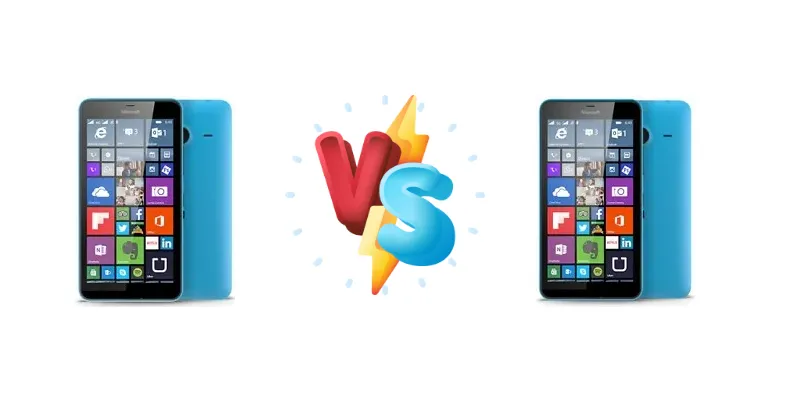
The Microsoft Lumia 640 XL series represented a sweet spot in Windows Phone affordability. While appearing nearly identical on paper, the Lumia 640 XL LTE and the standard 640 XL cater to slightly different needs. This comparison dissects the nuances, focusing on the key distinction: cellular connectivity and the inclusion of a camera feature on the LTE model.
🏆 Quick Verdict
For most users, the Microsoft Lumia 640 XL LTE Dual SIM is the superior choice. The inclusion of LTE connectivity provides a significantly faster data experience, and the presence of a camera feature, even if basic, adds versatility. The standard 640 XL remains viable for those prioritizing the absolute lowest cost and not needing faster data speeds.
| Network |
|---|
| 2G bands | GSM 850 / 900 / 1800 / 1900 - SIM 1 & SIM 2 | GSM 850 / 900 / 1800 / 1900 - SIM 1 & SIM 2 |
| 3G bands | HSDPA 850 / 900 / 1700 / 1900 / 2100 | HSDPA 850 / 900 / 1900 / 2100 |
| 4G bands | 1, 2, 3, 4, 5, 7, 8, 12, 17, 20, 28, 38, 40 | - |
| Speed | HSPA 42.2/5.76 Mbps, LTE Cat4 150/50 Mbps | HSPA 42.2/5.76 Mbps |
| Technology | GSM / HSPA / LTE | GSM / HSPA |
| Launch |
|---|
| Announced | 2015, March. Released 2015, April | 2015, March. Released 2015, April |
| Status | Discontinued | Discontinued |
| Body |
|---|
| Dimensions | 157.9 x 81.5 x 9 mm (6.22 x 3.21 x 0.35 in) | 157.9 x 81.5 x 9 mm (6.22 x 3.21 x 0.35 in) |
| SIM | Dual SIM (Micro-SIM, dual stand-by) | Dual SIM (Micro-SIM, dual stand-by) |
| Weight | 171 g (6.03 oz) | 171 g (6.03 oz) |
| Display |
|---|
| Protection | Corning Gorilla Glass 3 | Corning Gorilla Glass 3 |
| Resolution | 720 x 1280 pixels, 16:9 ratio (~259 ppi density) | 720 x 1280 pixels, 16:9 ratio (~259 ppi density) |
| Size | 5.7 inches, 88.9 cm2 (~69.1% screen-to-body ratio) | 5.7 inches, 88.9 cm2 (~69.1% screen-to-body ratio) |
| Type | IPS LCD | IPS LCD |
| | ClearBlack display | ClearBlack display |
| Platform |
|---|
| CPU | Quad-core 1.2 GHz Cortex-A7 | Quad-core 1.2 GHz Cortex-A7 |
| Chipset | Qualcomm MSM8226 Snapdragon 400 (28 nm) | Qualcomm MSM8226 Snapdragon 400 (28 nm) |
| GPU | Adreno 305 | Adreno 305 |
| OS | Microsoft Windows Phone 8.1, upgradable to Microsoft Windows 10 | Microsoft Windows Phone 8.1, upgradable to Microsoft Windows 10 |
| Memory |
|---|
| Card slot | microSDXC (dedicated slot) | microSDXC (dedicated slot) |
| Internal | 8GB 1GB RAM | 8GB 1GB RAM |
| | eMMC 4.5 | eMMC 4.5 |
| Main Camera |
|---|
| Features | Zeiss optics, LED flash | Zeiss optics, LED flash |
| Single | 13 MP, f/2.0, 28mm (wide), 1/3.0", AF | 13 MP, f/2.0, 28mm (wide), 1/3.0", AF |
| Video | 1080p@30fps | 1080p@30fps |
| Selfie camera |
|---|
| Single | 5 MP | 5 MP |
| Video | 1080p@30fps | 1080p@30fps |
| Sound |
|---|
| 3.5mm jack | Yes | Yes |
| 35mm jack | Yes | Yes |
| Loudspeaker | Yes | Yes |
| Comms |
|---|
| Bluetooth | 4.0, A2DP | 4.0, A2DP |
| NFC | Yes | Yes |
| Positioning | GPS, GLONASS, BDS | GPS, GLONASS, BDS |
| Radio | FM radio | FM radio |
| USB | microUSB 2.0 | microUSB 2.0 |
| WLAN | Wi-Fi 802.11 b/g/n, DLNA, hotspot | Wi-Fi 802.11 b/g/n, DLNA, hotspot |
| Features |
|---|
| Sensors | Accelerometer, proximity, compass, sensor core | Accelerometer, proximity, compass, sensor core |
| Battery |
|---|
| Stand-by | Up to 936 h (2G) / Up to 936 h (3G) | Up to 936 h (2G) / Up to 936 h (3G) |
| Talk time | Up to 31 h 20 min (2G) / Up to 23 h 40 min (3G) | Up to 31 h 20 min (2G) / Up to 23 h 40 min (3G) |
| Type | Li-Ion 3000 mAh, removable | Li-Ion 3000 mAh, removable |
| Misc |
|---|
| Colors | Matte cyan, Orange, Black, Matte white, Glossy white | Matte cyan, Orange, Black, Matte white, Glossy white |
| Price | About 200 EUR | About 170 EUR |
| Tests |
|---|
| Audio quality |
Noise -93.0dB / Crosstalk -94.4dB |
Noise -93.0dB / Crosstalk -94.4dB |
| Battery life |
Endurance rating 74h
|
Endurance rating 74h
|
| Camera | - |
Photo / Video |
| Display |
Contrast ratio: 1119:1 (nominal), 3.065 (sunlight) |
Contrast ratio: 1119:1 (nominal), 3.065 (sunlight) |
| Loudspeaker |
Voice 72dB / Noise 67dB / Ring 73dB
|
Voice 72dB / Noise 67dB / Ring 73dB
|
Microsoft Lumia 640 XL LTE Dual SIM
- LTE Connectivity for faster data speeds
- Includes a camera for photo and video capture
- Identical battery life to the standard model
- Snapdragon 400 chipset is dated
- Camera specifications are unknown
Microsoft Lumia 640 XL Dual SIM
- Lowest possible cost within the 640 XL range
- Identical battery life to the LTE model
- Dual SIM functionality for convenient call management
- Lacks LTE connectivity, limiting data speeds
- May not include a camera module
Display Comparison
Both the Lumia 640 XL LTE and the standard 640 XL share an identical display profile. The contrast ratio of 1119:1 (nominal) and 3.065 (sunlight) indicates a reasonably viewable screen, though not exceptional by modern standards. The lack of information regarding panel type (IPS, TFT) or resolution limits a deeper analysis, but given the price point, an IPS panel is likely. Sunlight readability is a strength, suggesting decent outdoor visibility.
Camera Comparison
This is where the key difference lies. The Lumia 640 XL LTE Dual SIM explicitly lists 'Photo / Video' capabilities, while the standard 640 XL does not have this feature listed. This suggests the LTE model includes a camera module, while the standard model may lack one entirely. While the resolution and quality of the camera are unknown, its presence adds significant functionality. The absence of camera details on the standard model implies a deliberate cost-cutting measure.
Performance
The core performance is identical between the two devices. Both are powered by the Qualcomm MSM8226 Snapdragon 400 (28 nm) chipset, featuring a quad-core 1.2 GHz Cortex-A7 CPU. This chipset was adequate for basic tasks and light multitasking during its time, but will struggle with demanding applications or modern games. The 28nm manufacturing process isn't particularly efficient, so extended gaming sessions may lead to some thermal throttling, though the large chassis should mitigate this somewhat.
Battery Life
Both devices boast an endurance rating of 74 hours, indicating similar battery life performance. This suggests a comparable battery capacity and efficient power management. The Snapdragon 400 is not a power-hungry chipset, and the large display size doesn't appear to significantly impact battery drain. Charging speeds are not specified, but likely utilize a standard 5W charger, resulting in a relatively slow 0-100% charge time.
Buying Guide
Buy the Microsoft Lumia 640 XL LTE Dual SIM if you require reliable mobile data speeds for streaming, browsing, or using data-intensive apps. This model is ideal for travelers or users in areas with strong LTE coverage. Buy the Microsoft Lumia 640 XL Dual SIM if you primarily use Wi-Fi and need a basic, affordable dual-SIM phone for calls and messaging, and are comfortable with slower data speeds when mobile.
Frequently Asked Questions
❓ Does the Lumia 640 XL LTE support VoLTE (Voice over LTE)?
Given the age of these devices and the limited available specifications, it's unlikely that VoLTE support was a standard feature. However, compatibility may vary depending on the carrier and region. Users should check with their mobile provider for specific VoLTE support details.
❓ What is the practical impact of the Snapdragon 400 chipset in 2024?
The Snapdragon 400 is a very old chipset. Expect slow app loading times, lag when multitasking, and an inability to run most modern games. These phones are best suited for basic tasks like calls, texts, and light web browsing. Do not expect a fluid or responsive experience with demanding applications.
❓ If the standard 640 XL doesn't have a camera, can I add one externally?
Adding an external camera to either device is not practical. These phones lack the necessary hardware and software support for external camera connections. The absence of a camera on the standard 640 XL is a fundamental hardware limitation.