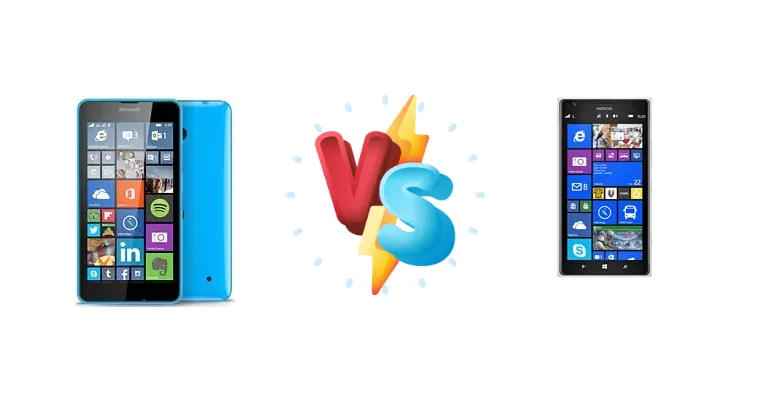
The Microsoft Lumia 640 LTE and Nokia Lumia 1520 represent distinct eras and philosophies within the Windows Phone ecosystem. The 1520, a late-era Nokia flagship, aimed for premium features and performance. The 640 LTE, released after Microsoft’s acquisition, prioritized affordability and essential functionality. This comparison dissects their key differences to help users understand which device best fits their needs in a post-Windows Phone world, considering their continued usability for legacy applications.
🏆 Quick Verdict
For the average user seeking longevity and a better overall experience, the Nokia Lumia 1520 is the clear winner. Its significantly more powerful Snapdragon 800 processor and superior battery life outweigh the 640 LTE’s affordability. However, the 640 LTE remains a viable option for those on a strict budget or needing a smaller, more portable device.
| Network |
|---|
| 2G bands | GSM 850 / 900 / 1800 / 1900 | GSM 850 / 900 / 1800 / 1900 - all versions |
| 3G bands | HSDPA 850 / 900 / 2100 | HSDPA 850 / 900 / 1900 / 2100 - RM-937, RM-939, RM-940 |
| 4G bands | 1, 3, 7, 8, 20 | 1, 3, 7, 8, 20 - RM-937 |
| Speed | HSPA 42.2/5.76 Mbps, LTE Cat4 150/50 Mbps | HSPA 42.2/5.76 Mbps, LTE Cat4 150/50 Mbps |
| Technology | GSM / HSPA / LTE | GSM / HSPA / LTE |
| | 1, 2, 4, 5, 7, 12, 17 - T-Mobile | 2, 4, 5, 7, 17 - RM-938, RM-940 |
| Launch |
|---|
| Announced | 2015, March. Released 2015, April | 2013, October. Released 2013, November |
| Status | Discontinued | Discontinued |
| Body |
|---|
| Dimensions | 141.3 x 72.2 x 8.8 mm (5.56 x 2.84 x 0.35 in) | 162.8 x 85.4 x 8.7 mm, 120.3 cc (6.41 x 3.36 x 0.34 in) |
| SIM | Micro-SIM | Nano-SIM |
| Weight | 145 g (5.11 oz) | 209 g (7.37 oz) |
| Display |
|---|
| Protection | Corning Gorilla Glass 3 | Corning Gorilla Glass 2 |
| Resolution | 720 x 1280 pixels, 16:9 ratio (~294 ppi density) | 1080 x 1920 pixels, 16:9 ratio (~367 ppi density) |
| Size | 5.0 inches, 68.9 cm2 (~67.6% screen-to-body ratio) | 6.0 inches, 99.2 cm2 (~71.4% screen-to-body ratio) |
| Type | IPS LCD | IPS LCD |
| | ClearBlack display | ClearBlack display |
| Platform |
|---|
| CPU | Quad-core 1.2 GHz Cortex-A7 | Quad-core 2.2 GHz Krait 400 |
| Chipset | Qualcomm MSM8926 Snapdragon 400 (28 nm) | Qualcomm MSM8974 Snapdragon 800 (28 nm) |
| GPU | Adreno 305 | Adreno 330 |
| OS | Microsoft Windows Phone 8.1, upgradable to Microsoft Windows 10 | Microsoft Windows Phone 8, upgradable to Windows 10 |
| Memory |
|---|
| Card slot | microSDXC (dedicated slot) | microSDXC (dedicated slot) |
| Internal | 8GB 1GB RAM | 16GB 2GB RAM, 32GB 2GB RAM |
| | eMMC 4.5 | eMMC 4.5 |
| Main Camera |
|---|
| Features | LED flash | Zeiss optics, dual-LED flash, panorama |
| Single | 8 MP, f/2.2, 28mm (wide), 1/4.0", AF | 20 MP, f/2.4, 26mm (wide), 1/2.5", 1.12µm, AF, OIS |
| Video | 1080p@30fps | 4K@30fps (after WP8 Denim update), 1080p@30fps, stereo sound rec. |
| Selfie camera |
|---|
| Single | 1 MP | 1.2 MP, f/2.4 |
| Video | 720p | 720p@30fps |
| Sound |
|---|
| 3.5mm jack | Yes | Yes |
| 35mm jack | Yes | Yes |
| Loudspeaker | Yes | Yes |
| Comms |
|---|
| Bluetooth | 4.0, A2DP | 4.0, A2DP, EDR, LE/ aptX after WP8 Denim update |
| NFC | Yes | Yes |
| Positioning | GPS, GLONASS, BDS | GPS, GLONASS |
| Radio | FM radio | FM radio |
| USB | microUSB 2.0 | microUSB 2.0 |
| WLAN | Wi-Fi 802.11 b/g/n, DLNA, hotspot | Wi-Fi 802.11 a/b/g/n/ac, dual-band, hotspot |
| Features |
|---|
| Sensors | Accelerometer, proximity, compass | Accelerometer, gyro, proximity, compass, sensor core |
| Battery |
|---|
| Charging | - | Wireless (Qi) |
| Music play | - | Up to 124 h |
| Stand-by | Up to 864 h (2G) / Up to 864 h (3G) | Up to 768 h (2G) / Up to 768 h (3G) |
| Talk time | Up to 26 h 30 min (2G) / Up to 17 h 30 min (3G) | Up to 27 h 40 min (2G) / Up to 25 h (3G) |
| Type | Li-Ion 2500 mAh, removable | Li-Ion 3400 mAh, non-removable (BV-4BW) |
| Misc |
|---|
| Colors | Glossy cyan, Orange, White, Matte black | Yellow, white, black, red, green (AT&T) |
| Price | About 120 EUR | About 350 EUR |
| SAR EU | - | 0.64 W/kg (head) 0.20 W/kg (body) |
| Tests |
|---|
| Audio quality |
Noise -93.1dB / Crosstalk -93.2dB |
Noise -89.3dB / Crosstalk -89.4dB |
| Battery life |
Endurance rating 76h
|
Endurance rating 107h
|
| Camera |
Photo / Video |
Photo / Video |
| Display |
Contrast ratio: 1034 (nominal), 2.563 (sunlight) |
Contrast ratio: 1207:1 (nominal) / 1.813:1 (sunlight) |
| Loudspeaker |
Voice 70dB / Noise 65dB / Ring 75dB
|
Voice 73dB / Noise 66dB / Ring 74dB
|
Microsoft Lumia 640 LTE
- More affordable price point
- Compact and lightweight design
- Long battery endurance for basic use
- Significantly slower processor
- Smaller display
- Inferior camera performance (likely)
Nokia Lumia 1520
- Powerful Snapdragon 800 processor
- Large, high-contrast display
- Wireless charging (Qi)
- Superior battery life
- Higher price (even now)
- Larger and heavier form factor
- Older device, limited software support
Display Comparison
Both devices utilize LCD panels, but the Lumia 1520 boasts a larger 6-inch display compared to the 640 LTE’s 5-inch screen. While both report contrast ratios for nominal and sunlight conditions, the 1520’s 1207:1 nominal contrast edges out the 640 LTE’s 1034:1. This translates to deeper blacks and a more vibrant image on the 1520, particularly noticeable in bright sunlight where its 1.813:1 sunlight contrast ratio is also superior to the 640 LTE’s 2.563:1. The larger screen of the 1520 is better suited for media consumption and productivity tasks.
Camera Comparison
Both phones offer photo and video capabilities, but details beyond that are limited. Given the 1520’s flagship status, it likely features a more advanced camera sensor and image processing pipeline. While sensor size and aperture data are unavailable, the 1520’s higher price point suggests a superior imaging experience. The 640 LTE’s camera is adequate for casual snapshots, but the 1520 is expected to deliver better low-light performance and overall image quality.
Performance
The performance gap between these devices is substantial. The Lumia 1520’s Qualcomm MSM8974 Snapdragon 800, with its quad-core 2.2 GHz Krait 400 CPU, is a significant leap ahead of the 640 LTE’s Qualcomm MSM8926 Snapdragon 400 (1.2 GHz Cortex-A7). The Snapdragon 800’s architecture is more efficient and powerful, resulting in smoother multitasking, faster app loading times, and a more responsive user experience. While both are built on a 28nm process, the architectural differences are key. The 640 LTE will struggle with demanding applications, while the 1520 handles them with relative ease.
Battery Life
Battery life is a key differentiator. The Lumia 1520 achieves an endurance rating of 107 hours, significantly exceeding the 640 LTE’s 76 hours. This translates to nearly 40% longer usage between charges. The 1520 also benefits from wireless charging (Qi), a convenience feature absent on the 640 LTE. While both offer respectable battery life, the 1520’s larger capacity and more efficient processor provide a substantial advantage for power users.
Buying Guide
Buy the Microsoft Lumia 640 LTE if you need a functional, budget-friendly Windows Phone for basic tasks like calls, texts, and light app usage, and prioritize extended battery life over performance. Buy the Nokia Lumia 1520 if you prefer a larger screen, significantly faster performance for multitasking and demanding apps, wireless charging convenience, and a more premium user experience, even if it comes at a higher cost and larger form factor.
Frequently Asked Questions
❓ Is the Snapdragon 400 in the Lumia 640 LTE sufficient for modern app usage, even if those apps are older Windows Phone apps?
While the Snapdragon 400 can handle basic tasks, it will struggle with more demanding applications, even older ones. Multitasking will be slow, and app loading times will be noticeably longer compared to the Lumia 1520. It's best suited for calls, texts, and light browsing.
❓ Given that Windows Phone is no longer actively supported, does the Lumia 1520’s superior hardware offer a longer usable lifespan for legacy applications?
Yes, the Lumia 1520’s more powerful processor and ample RAM provide a better foundation for running older Windows Phone apps. It’s more likely to remain functional and responsive as apps become less optimized over time. The 640 LTE may become increasingly sluggish as app compatibility degrades.
❓ Does the Lumia 1520's wireless charging still work reliably today, considering the age of the device?
Wireless charging functionality on the Lumia 1520 should still work, provided the charging pad and the phone's charging coil are in good condition. However, charging speeds may be slower than modern wireless charging standards.