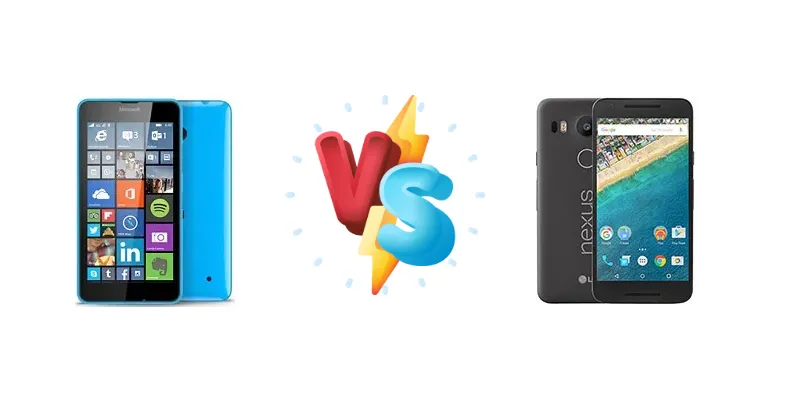
The Microsoft Lumia 640 LTE and LG Nexus 5X were popular budget contenders, offering compelling features at accessible prices. But which one holds up best today? This in-depth comparison will analyze their strengths and weaknesses to help you decide which phone is right for you.
🏆 Quick Verdict
The LG Nexus 5X edges out the Lumia 640 LTE thanks to its significantly faster processor, superior display, and more modern Android experience. While the Lumia boasts impressive battery life, the Nexus 5X's overall performance and features make it the better choice for most users.
| Network |
|---|
| 2G bands | GSM 850 / 900 / 1800 / 1900 | GSM 850 / 900 / 1800 / 1900 - all models |
| 3G bands | HSDPA 850 / 900 / 2100 | HSDPA 850 / 900 / 1700 / 1900 / 2100 - American model |
| 4G bands | 1, 3, 7, 8, 20 | 1, 2, 3, 4, 5, 7, 12, 13, 17, 20, 25, 26, 29 - American model |
| Speed | HSPA 42.2/5.76 Mbps, LTE Cat4 150/50 Mbps | HSPA 42.2/5.76 Mbps, LTE Cat6 300/50 Mbps |
| Technology | GSM / HSPA / LTE | GSM / CDMA / HSPA / LTE |
| | 1, 2, 4, 5, 7, 12, 17 - T-Mobile | 1, 2, 3, 4, 5, 7, 8, 9, 17, 18, 19, 20, 26, 28, 38, 40, 41 - Global model |
| Launch |
|---|
| Announced | 2015, March. Released 2015, April | 2015, September. Released 2015, October |
| Status | Discontinued | Discontinued |
| Body |
|---|
| Build | - | Glass front (Gorilla Glass 3), plastic back, plastic frame |
| Dimensions | 141.3 x 72.2 x 8.8 mm (5.56 x 2.84 x 0.35 in) | 147 x 72.6 x 7.9 mm (5.79 x 2.86 x 0.31 in) |
| SIM | Micro-SIM | Nano-SIM |
| Weight | 145 g (5.11 oz) | 136 g (4.80 oz) |
| Display |
|---|
| Protection | Corning Gorilla Glass 3 | Corning Gorilla Glass 3, oleophobic coating |
| Resolution | 720 x 1280 pixels, 16:9 ratio (~294 ppi density) | 1080 x 1920 pixels, 16:9 ratio (~423 ppi density) |
| Size | 5.0 inches, 68.9 cm2 (~67.6% screen-to-body ratio) | 5.2 inches, 74.9 cm2 (~70.2% screen-to-body ratio) |
| Type | IPS LCD | IPS LCD |
| | ClearBlack display | - |
| Platform |
|---|
| CPU | Quad-core 1.2 GHz Cortex-A7 | Hexa-core (4x1.4 GHz Cortex-A53 & 2x1.8 GHz Cortex-A57) |
| Chipset | Qualcomm MSM8926 Snapdragon 400 (28 nm) | Qualcomm MSM8992 Snapdragon 808 (20 nm) |
| GPU | Adreno 305 | Adreno 418 |
| OS | Microsoft Windows Phone 8.1, upgradable to Microsoft Windows 10 | Android 6.0 (Marshmallow), upgradable to Android 8.0 (Oreo) |
| Memory |
|---|
| Card slot | microSDXC (dedicated slot) | No |
| Internal | 8GB 1GB RAM | 16GB 2GB RAM, 32GB 2GB RAM |
| | eMMC 4.5 | eMMC 5.0 |
| Main Camera |
|---|
| Features | LED flash | Laser AF, Dual-LED dual-tone flash, HDR, panorama |
| Single | 8 MP, f/2.2, 28mm (wide), 1/4.0", AF | 12.3 MP, f/2.0, 26mm (wide), 1/2.3", 1.55µm |
| Video | 1080p@30fps | 4K@30fps, 1080p@30fps, 720p@120fps, HDR |
| Selfie camera |
|---|
| Features | - | HDR |
| Single | 1 MP | 5 MP, f/2.0, 1/4.0", 1.4µm |
| Video | 720p | 1080p@30fps |
| Sound |
|---|
| 3.5mm jack | Yes | Yes |
| 35mm jack | Yes | Yes |
| Loudspeaker | Yes | Yes |
| Comms |
|---|
| Bluetooth | 4.0, A2DP | 4.2, A2DP |
| NFC | Yes | Yes |
| Positioning | GPS, GLONASS, BDS | GPS, GLONASS |
| Radio | FM radio | No |
| USB | microUSB 2.0 | USB Type-C 2.0 |
| WLAN | Wi-Fi 802.11 b/g/n, DLNA, hotspot | Wi-Fi 802.11 a/b/g/n/ac, dual-band, Wi-Fi Direct, DLNA |
| Features |
|---|
| Sensors | Accelerometer, proximity, compass | Fingerprint (rear-mounted), accelerometer, gyro, proximity, compass, barometer |
| Battery |
|---|
| Stand-by | Up to 864 h (2G) / Up to 864 h (3G) | - |
| Talk time | Up to 26 h 30 min (2G) / Up to 17 h 30 min (3G) | - |
| Type | Li-Ion 2500 mAh, removable | Li-Po 2700 mAh, non-removable |
| Misc |
|---|
| Colors | Glossy cyan, Orange, White, Matte black | Carbon, Quartz, Ice |
| Models | - | Nexus 5X, H791 |
| Price | About 120 EUR | About 270 EUR |
| Tests |
|---|
| Audio quality |
Noise -93.1dB / Crosstalk -93.2dB |
Noise -92.2dB / Crosstalk -90.9dB |
| Battery life |
Endurance rating 76h
|
Endurance rating 60h
|
| Camera |
Photo / Video |
Photo / Video |
| Display |
Contrast ratio: 1034 (nominal), 2.563 (sunlight) |
Contrast ratio: 1542 (nominal), 3.092 (sunlight) |
| Loudspeaker |
Voice 70dB / Noise 65dB / Ring 75dB
|
Voice 61dB / Noise 65dB / Ring 61dB
|
| Performance | - |
Basemark OS II 2.0: 1591Basemark X: 16609 |
Microsoft Lumia 640 LTE
- Exceptional battery life
- Reliable performance for basic tasks
- Microsoft ecosystem integration
- Durable build quality (typical of Lumia phones)
- Outdated processor
- Lower resolution display
- Less vibrant colors
- Windows Phone OS (limited app availability)
LG Nexus 5X
- Faster processor and smoother performance
- Superior display quality
- Clean Android experience
- Regular software updates (at the time)
- Shorter battery life compared to Lumia
- Camera not top-tier
- Plastic build may feel less premium
Display Comparison
The Nexus 5X takes the display crown. Its contrast ratio of 1542 (nominal) and 3.092 (sunlight) significantly outperforms the Lumia 640 LTE's 1034 (nominal) and 2.563 (sunlight). This translates to richer colors, deeper blacks, and better visibility in bright conditions. The Nexus 5X also likely has a slightly higher resolution, contributing to a sharper image.
Camera Comparison
While both phones offer 'Photo / Video' capabilities, the Nexus 5X generally had a reputation for slightly better image quality, particularly in low light, thanks to its camera sensor and image processing algorithms. The Lumia 640 LTE's camera was adequate but not exceptional. Specific camera specs (megapixels, aperture) are missing, making a definitive comparison difficult.
Performance
Performance is where the Nexus 5X truly shines. The Snapdragon 808 chipset with its hexa-core processor (4x1.4 GHz Cortex-A53 & 2x1.8 GHz Cortex-A57) is considerably more powerful than the Lumia 640 LTE's Snapdragon 400 (Quad-core 1.2 GHz Cortex-A7). Expect faster app loading times, smoother multitasking, and a more responsive user experience on the Nexus 5X.
Battery Life
The Lumia 640 LTE's endurance rating of 76h is impressive, suggesting exceptional battery life. The Nexus 5X, with a rating of 60h, still offers respectable battery performance, but falls short of the Lumia's longevity. This is a key advantage for the Lumia if battery life is your top priority.
Buying Guide
The Microsoft Lumia 640 LTE is a good option for users deeply invested in the Microsoft ecosystem, prioritizing long battery life, and needing a reliable, albeit basic, smartphone. The LG Nexus 5X is ideal for those seeking a smoother Android experience, better performance for everyday tasks and light gaming, and a more vibrant display.
Frequently Asked Questions
❓ Is the Lumia 640 LTE still worth buying?
If you prioritize battery life above all else and are comfortable with Windows Phone, it could be a budget option. However, the limited app availability and outdated hardware are significant drawbacks.
❓ Which phone has better software support?
The LG Nexus 5X historically received faster and more frequent software updates directly from Google. The Lumia 640 LTE's software support has long ended.