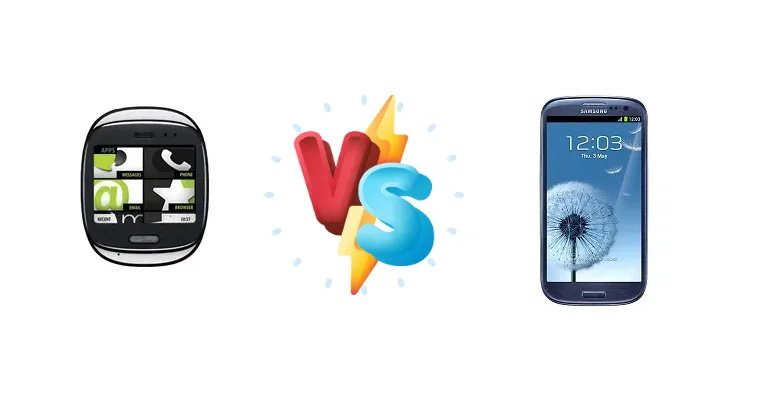
Released in 2011 and 2012 respectively, the Microsoft Kin ONEm and Samsung Galaxy S III represent divergent approaches to the burgeoning smartphone market. The Kin ONEm prioritized a streamlined social experience, while the Galaxy S III aimed for all-around flagship performance. Revisiting these devices reveals how far mobile technology has come and highlights the strengths and weaknesses of each.
🏆 Quick Verdict
For the average user in 2013, and even more so today, the Samsung Galaxy S III is the clear winner. Its Exynos 4412 quad-core processor provides significantly more processing power, enabling a smoother and more versatile user experience than the Kin ONEm’s aging Nvidia Tegra and ARM 11 combination. While the Kin ONEm had a unique social focus, the S III’s broader capabilities and longer software support make it the more practical choice.
| Network |
|---|
| 2G bands | CDMA 800 / 1900 | GSM 850 / 900 / 1800 / 1900 |
| 3G bands | CDMA2000 1xEV-DO | HSDPA 850 / 900 / 1900 / 2100 |
| Speed | EV-DO Rev.A 3.1 Mbps | HSPA 21.1/5.76 Mbps |
| Technology | CDMA / EVDO | GSM / HSPA |
| Launch |
|---|
| Announced | 2010, November. Released 2010, November | 2012, May. Released 2012, May |
| Status | Discontinued | Discontinued |
| Body |
|---|
| Build | - | Glass front (Gorilla Glass 2), plastic back, plastic frame |
| Dimensions | 84.1 x 67.6 x 18.5 mm (3.31 x 2.66 x 0.73 in) | 136.6 x 70.6 x 8.6 mm (5.38 x 2.78 x 0.34 in) |
| Keyboard | QWERTY | - |
| SIM | Mini-SIM | Micro-SIM |
| Weight | 110.6 (3.88 oz) | 133 g (4.69 oz) |
| Display |
|---|
| Protection | - | Corning Gorilla Glass 2 |
| Resolution | 320 x 240 pixels, 4:3 ratio (~154 ppi density) | 720 x 1280 pixels, 16:9 ratio (~306 ppi density) |
| Size | 2.6 inches, 20.9 cm2 (~36.8% screen-to-body ratio) | 4.8 inches, 63.5 cm2 (~65.9% screen-to-body ratio) |
| Type | TFT | Super AMOLED |
| Platform |
|---|
| CPU | 600MHz ARM 11 | Quad-core 1.4 GHz Cortex-A9 |
| Chipset | Nvidia Tegra | Exynos 4412 Quad (32 nm) |
| GPU | - | Mali-400MP4 |
| OS | - | Android 4.0.4 (Ice Cream Sandwich), 4.3 (Jelly Bean), TouchWiz UI |
| Memory |
|---|
| Call records | Practically unlimited | - |
| Card slot | No | microSDXC (dedicated slot) |
| Internal | 4GB 256MB RAM | 16GB 1GB RAM, 32GB 1GB RAM, 64GB 1GB RAM |
| Phonebook | Practically unlimited entries and fields, Photocal | - |
| Main Camera |
|---|
| Features | Dual-LED flash | LED flash |
| Single | 5 MP, AF | 8 MP, f/2.6, 1/3.0", AF |
| Video | 480p@30fps | 1080p@30fps |
| Selfie camera |
|---|
| Single | - | 1.9 MP, f/2.6 |
| Video | - | 720p@30fps |
| | No | - |
| Sound |
|---|
| 3.5mm jack | Yes | Yes |
| 35mm jack | Yes | Yes |
| Loudspeaker | Yes | Yes |
| Comms |
|---|
| Bluetooth | 2.1, A2DP | 4.0, A2DP, EDR, aptX |
| NFC | - | Yes |
| Positioning | GPS, A-GPS | GPS, A-GPS, GLONASS |
| Radio | Stereo FM radio, RDS | Stereo FM radio, RDS |
| USB | microUSB 2.0 | microUSB 2.0 (MHL TV-out), OTG |
| WLAN | Wi-Fi 802.11 b/g | Wi-Fi 802.11 a/b/g/n, dual-band, Wi-Fi Direct, DLNA, hotspot |
| Features |
|---|
| Browser | WAP 2.0/xHTML, HTML | - |
| Games | Yes + downloadable | - |
| Java | Yes, MIDP 2.1 | - |
| Messaging | SMS(threaded view), MMS, Email, Push Email | - |
| Sensors | Accelerometer, proximity | Accelerometer, gyro, proximity, compass, barometer |
| | MP3/WAV/WMA/eAAC+ player
MP4/WMV/H.264 player
Facebook and Twitter integration
YouTube client
MS Office (Word, Excel, PowerPoint, OneNote, PDF viewer)
Voice memo
Predictive text input | S-Voice natural language commands and dictation |
| Battery |
|---|
| Stand-by | Up to 210 h | Up to 590 h (2G) / Up to 790 h (3G) |
| Talk time | Up to 5 h 40 min | Up to 21 h 40 min (2G) / Up to 11 h 40 min (3G) |
| Type | Removable Li-Ion 1240 mAh battery | Removable Li-Ion 2100 mAh battery |
| Misc |
|---|
| Colors | Black | Pebble blue, Marble white, Amber brown, Garnet red, Sapphire black, Titanium grey, La Fleur |
| Models | - | GT-I9300, GT-I9300I, SHV-E210S, SHW-M440S |
| Price | About 90 EUR | About 190 EUR |
| SAR | 1.38 W/kg (head) 0.49 W/kg (body) | 0.55 W/kg (head) 1.49 W/kg (body) |
| SAR EU | - | 0.21 W/kg (head) |
| Tests |
|---|
| Audio quality | - |
Noise -90.3dB / Crosstalk -92.6dB |
| Battery life | - |
Endurance rating 50h
|
| Camera | - |
Photo / Video |
| Display | - |
Contrast ratio: Infinite (nominal) / 3.419:1 (sunlight) |
| Loudspeaker | - |
Voice 75dB / Noise 66dB / Ring 75dB
|
Microsoft Kin ONEm
- Unique social networking focus
- Compact and lightweight design
- Nvidia Tegra graphics capabilities (for its time)
- Underpowered processor
- Limited app ecosystem
- Outdated operating system (Windows Phone 7)
Samsung I9300 Galaxy S III
- Powerful quad-core processor
- Vibrant display with good sunlight visibility
- Mature Android ecosystem with extensive app support
- Plastic build quality
- Potential for software bloat
- Battery life could be strained by demanding apps
Display Comparison
The Galaxy S III boasts an 'infinite' (nominal) contrast ratio, which in reality translates to a 3.419:1 ratio in direct sunlight, indicating a reasonably viewable screen outdoors. While the Kin ONEm’s display specifications are unavailable, its smaller form factor suggests a lower resolution and potentially less vibrant panel. The S III’s larger screen and superior contrast would provide a significantly better viewing experience for media consumption and general use. The lack of detailed display specs for the Kin ONEm highlights its focus on other areas.
Camera Comparison
Both devices offer photo and video capabilities, but details are limited. The Galaxy S III likely benefited from Samsung’s image processing expertise, offering a more refined camera experience. The Kin ONEm’s camera performance is less documented, but given its focus on social sharing, it likely prioritized ease of use over image quality. Without specific sensor size or aperture information for either device, it’s difficult to make a definitive judgment, but the S III’s broader feature set likely included more shooting modes and options.
Performance
The performance gap between these devices is substantial. The Samsung Galaxy S III’s Exynos 4412 Quad, built on a 32nm process, features four 1.4 GHz Cortex-A9 cores. This architecture delivers significantly more processing power than the Kin ONEm’s 600MHz ARM 11 processor paired with an Nvidia Tegra chipset. The Tegra, while capable for its time, was primarily focused on graphics and couldn’t match the overall system performance of the Exynos. This difference translates to faster app loading times, smoother multitasking, and a more responsive user interface on the S III. The Exynos’s quad-core design also allows for better handling of demanding applications.
Battery Life
The Samsung Galaxy S III achieves an endurance rating of 50 hours, indicating solid battery life for its time. This suggests efficient power management alongside a reasonably sized battery. The Kin ONEm’s battery life is unknown, but its less powerful processor and smaller screen size might have resulted in comparable, though likely not superior, endurance. The S III’s 50-hour rating suggests it could comfortably last a full day of moderate use, a crucial advantage for power users.
Buying Guide
Buy the Microsoft Kin ONEm if you're a collector interested in a unique piece of mobile history and appreciate its focused social networking features. Its appeal lies in its niche design and the nostalgia factor. Buy the Samsung I9300 Galaxy S III if you prioritize performance, a vibrant display, and a more comprehensive Android experience. It’s a more capable device for everyday tasks and offers a wider range of app compatibility.
Frequently Asked Questions
❓ Did the Exynos 4412 in the Galaxy S III suffer from overheating issues?
While some early reports indicated potential thermal throttling under sustained heavy load, Samsung addressed these concerns with software updates. The Exynos 4412, built on a 32nm process, was generally well-managed and didn't exhibit widespread overheating problems compared to some later Exynos chips.
❓ Was the Kin ONEm's social integration with Windows Phone 7 truly unique?
Yes, the Kin ONEm’s core strength was its deep integration with social networks, particularly Facebook and Twitter. It streamlined the process of sharing updates and photos, but this came at the cost of broader functionality found in Android or iOS. The 'Loop' feature was designed to aggregate social activity, but ultimately didn't gain widespread adoption.
❓ Could the Kin ONEm run standard Windows Phone 7 apps?
No, the Kin ONEm ran a modified version of Windows Phone 7 called Kin Studio, which was specifically designed for its social-centric features. It lacked support for the full Windows Phone Marketplace and was limited to a curated selection of apps.