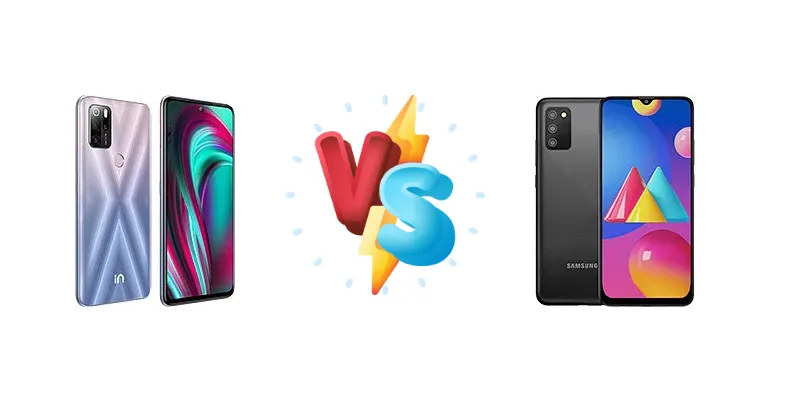
The sub-$150 smartphone market is fiercely competitive. The Micromax In 1 aimed to disrupt with a focus on gaming performance, powered by the MediaTek Helio G80. The Samsung Galaxy M02s, meanwhile, opts for Qualcomm’s Snapdragon 450, prioritizing a balance of efficiency and reliability. This comparison dissects the key differences to help you choose the right device for your needs.
🏆 Quick Verdict
For users prioritizing gaming and responsiveness, the Micromax In 1 is the clear winner. Its Helio G80 chipset offers significantly better CPU and GPU performance than the Snapdragon 450 in the Galaxy M02s. However, the M02s provides a more predictable, if slower, experience for basic tasks and benefits from Samsung’s established software support.
| Network |
|---|
| 2G bands | GSM 850 / 900 / 1800 / 1900 | GSM 850 / 900 / 1800 / 1900 |
| 3G bands | HSDPA 850 / 900 / 2100 | HSDPA 850 / 900 / 2100 |
| 4G bands | 1, 3, 5, 8, 40, 41 | 1, 3, 5, 7, 8, 20, 28, 38, 40, 41 |
| Speed | HSPA, LTE | HSPA 42.2/5.76 Mbps, LTE Cat4 150/50 Mbps |
| Technology | GSM / HSPA / LTE | GSM / HSPA / LTE |
| Launch |
|---|
| Announced | 2021, March 19. Released 2021, March 26 | 2021, January 07 |
| Status | Discontinued | Available. Released 2021, January 19 |
| Body |
|---|
| Build | - | Glass front, plastic back, plastic frame |
| Dimensions | 165.2 x 77 x 9 mm (6.50 x 3.03 x 0.35 in) | 164.2 x 75.9 x 9.1 mm (6.46 x 2.99 x 0.36 in) |
| SIM | Nano-SIM + Nano-SIM | · Nano-SIM· Nano-SIM + Nano-SIM |
| Weight | 195 g (6.88 oz) | 196 g (6.91 oz) |
| Display |
|---|
| Resolution | 1080 x 2400 pixels, 20:9 ratio (~395 ppi density) | 720 x 1600 pixels, 20:9 ratio (~270 ppi density) |
| Size | 6.67 inches, 107.4 cm2 (~84.4% screen-to-body ratio) | 6.5 inches, 102.0 cm2 (~81.8% screen-to-body ratio) |
| Type | IPS LCD, 440 nits (peak) | PLS LCD |
| Platform |
|---|
| CPU | Octa-core (2x2.0 GHz Cortex-A75 & 6x1.8 GHz Cortex-A55) | Octa-core 1.8 GHz Cortex-A53 |
| Chipset | Mediatek MT6769V/CU Helio G80 (12 nm) | Qualcomm SDM450 Snapdragon 450 (14 nm) |
| GPU | Mali-G52 MC2 | Adreno 506 |
| OS | Android 10 | Android 10 |
| Memory |
|---|
| Card slot | microSDXC (dedicated slot) | microSDXC (dedicated slot) |
| Internal | 64GB 4GB RAM, 128GB 6GB RAM | 32GB 3GB RAM, 64GB 4GB RAM |
| | eMMC 5.1 | eMMC 5.1 |
| Main Camera |
|---|
| - | Go |
| Features | LED flash, HDR | LED flash |
| Quad | 48 MP, f/1.8, 26mm (wide), 1/2.0", 0.8µm, PDAF
2 MP (macro)
Auxiliary lens | - |
| Triple | - | 13 MP, f/2.2, (wide), AF
2 MP (macro)
Auxiliary lens |
| Video | 1080p@30fps | 1080p@30fps |
| Selfie camera |
|---|
| Single | 8 MP, f/2.0, (wide), 1/4.0", 1.12µm | 5 MP, f/2.2 |
| Video | 1080p@30fps | - |
| Sound |
|---|
| 3.5mm jack | Yes | Yes |
| 35mm jack | Yes | Yes |
| Loudspeaker | Yes | Yes |
| Comms |
|---|
| Bluetooth | 5.0, A2DP, LE | Yes |
| NFC | No | No |
| Positioning | GPS, GLONASS, GALILEO, BDS | GPS, GLONASS, GALILEO, BDS |
| Radio | FM radio | FM radio |
| USB | USB Type-C 2.0, OTG | Yes |
| WLAN | Wi-Fi 802.11 a/b/g/n/ac, dual-band, Wi-Fi Direct | Wi-Fi 802.11 b/g/n, Wi-Fi Direct |
| Features |
|---|
| Sensors | Fingerprint (rear-mounted), accelerometer, gyro, proximity, compass | Accelerometer, proximity |
| Battery |
|---|
| Charging | 18W wired
2.5W reverse wired | 15W wired |
| Type | Li-Po 5000 mAh | Li-Po 5000 mAh |
| Misc |
|---|
| Colors | Blue, Purple | Black, Blue, Red |
| Models | E6746 | SM-M025F/DS, SM-M025F |
| Price | About 120 EUR | About 100 EUR |
| SAR | 0.96 W/kg (head) | 0.52 W/kg (head) |
| SAR EU | - | 0.40 W/kg (head) 1.37 W/kg (body) |
Micromax In 1
- Significantly faster processor for gaming and multitasking
- Faster 18W charging
- Reverse wired charging capability
- Micromax's software support is less established than Samsung's
- Build quality may not be as refined as Samsung
Samsung Galaxy M02s
- Reliable Qualcomm Snapdragon 450 chipset
- Samsung's brand reputation and software ecosystem
- Potentially better long-term software support (though limited)
- Noticeably slower performance compared to the Micromax In 1
- Slower 15W charging
- Lacks reverse charging
Display Comparison
Neither device boasts a standout display. Both likely utilize LCD panels, a common trait in this price bracket. The focus here isn't on visual fidelity. However, the lack of detailed display specs necessitates a focus on processing power to drive any UI elements. The absence of high refresh rates on either device means the chipset's ability to render frames smoothly is more critical.
Camera Comparison
Camera performance is likely to be similar, with both phones featuring basic camera setups. Without detailed sensor information, it's difficult to make a definitive judgment. However, the focus should be on the image processing capabilities of each chipset. The Helio G80’s ISP (Image Signal Processor) is likely more advanced than the Snapdragon 450’s, potentially resulting in better image quality in challenging lighting conditions. The prevalence of 2MP macro/depth sensors on both devices suggests these are largely marketing features and won't significantly impact image quality.
Performance
The core difference lies in the chipsets. The Micromax In 1’s MediaTek Helio G80 (12nm) features an octa-core configuration with 2x2.0 GHz Cortex-A75 and 6x1.8 GHz Cortex-A55 cores. This architecture is significantly more powerful than the Samsung Galaxy M02s’ Qualcomm Snapdragon 450 (14nm) with its octa-core 1.8 GHz Cortex-A53 setup. The Cortex-A75 cores in the Helio G80 provide a substantial performance uplift in CPU-intensive tasks and gaming. The 12nm process node on the Helio G80 is also more efficient than the 14nm node on the Snapdragon 450, potentially leading to better thermal management under sustained load. While both phones likely have similar RAM configurations, the faster CPU and GPU of the In 1 will translate to a more responsive user experience.
Battery Life
The Micromax In 1 offers 18W wired charging, while the Samsung Galaxy M02s is limited to 15W. This 3W difference translates to faster charging times for the In 1, potentially shaving off 15-20 minutes for a full charge. The In 1 also includes 2.5W reverse wired charging, a feature absent on the M02s, allowing it to top up other devices, albeit slowly. While battery capacity isn't specified, the more efficient Helio G80 chipset in the In 1 could contribute to slightly better battery life despite potentially having a similar capacity to the M02s.
Buying Guide
Buy the Micromax In 1 if you need a phone capable of handling moderately demanding games and apps, and you value raw processing power. You'll benefit from faster app loading times and smoother multitasking. Buy the Samsung Galaxy M02s if you prioritize a stable, reliable experience for everyday tasks like calling, texting, and social media, and prefer a brand with a strong track record for software updates, even if those updates are infrequent.
Frequently Asked Questions
❓ Will the Micromax In 1 overheat during extended gaming sessions?
The Helio G80's 12nm process node and the In 1's likely thermal design should prevent significant overheating during moderate gaming. However, prolonged, high-intensity gaming may lead to some thermal throttling, reducing performance slightly. The Snapdragon 450 in the M02s will likely run cooler, but at the cost of overall performance.
❓ Is the Samsung Galaxy M02s a good choice for someone who primarily uses WhatsApp and Facebook?
Yes, the Galaxy M02s is well-suited for basic tasks like social media, calling, and texting. The Snapdragon 450 is sufficient for these applications, and Samsung's software provides a stable, if basic, user experience. However, it will struggle with more demanding apps or multitasking.
❓ Can the Micromax In 1 handle popular games like PUBG Mobile or Call of Duty Mobile?
The Micromax In 1 can run PUBG Mobile and Call of Duty Mobile, but you'll likely need to lower the graphics settings to achieve a smooth frame rate. The Helio G80 provides enough power for playable performance, but don't expect to max out the settings. The Galaxy M02s will struggle to run these games at acceptable frame rates.