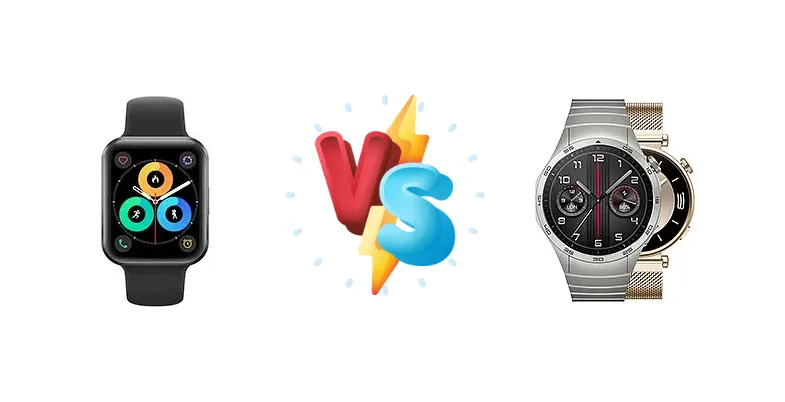
The smartwatch market offers a spectrum of choices, from performance-focused devices to those prioritizing convenience. The Meizu Watch, powered by the Qualcomm Snapdragon Wear 4100, aims to deliver a smooth Wear OS experience. Conversely, the Huawei Watch GT 4 emphasizes lifestyle integration with features like wireless charging, but lacks detailed chipset information. This comparison dissects the core differences to help you determine which smartwatch best aligns with your needs.
🏆 Quick Verdict
For users prioritizing a responsive and capable smartwatch experience, the Meizu Watch emerges as the stronger contender. Its Snapdragon Wear 4100 chipset provides a significant performance advantage, crucial for app usage and system fluidity. However, the Huawei Watch GT 4 appeals to those valuing wireless charging and a potentially longer battery life, though specifics are currently unavailable.
| Network |
|---|
| 2G bands | GSM 900 / 1800 | N/A |
| 3G bands | HSDPA 850 / 900 / 2100 | N/A |
| 4G bands | 1, 3, 5, 7, 8, 20, 38, 39, 40, 41 | N/A |
| EDGE | - | No |
| GPRS | - | No |
| Speed | HSPA, LTE | No |
| Technology | GSM / HSPA / LTE | No cellular connectivity |
| Launch |
|---|
| Announced | 2021, May 31. Released 2021, June 01 | 2023, September 14 |
| Status | Discontinued | Available. Released 2023, October 02 |
| Body |
|---|
| Build | Glass front (Gorilla Glass), ceramic back, aluminum frame | Glass front, plastic back, stainless steel frame |
| Dimensions | 46 x 38.4 x 13 mm (1.81 x 1.51 x 0.51 in) | 46 x 46 x 10.9 mm (1.81 x 1.81 x 0.43 in) |
| SIM | eSIM | No |
| Weight | 43 g (1.52 oz) | 37 g (41mm) / 48 g (46mm) (1.31 oz) |
| | Swimproof | - |
| Display |
|---|
| Protection | Corning Gorilla Glass | - |
| Resolution | 368 x 448 pixels (~326 ppi density) | 466 x 466 pixels (~326 ppi density) |
| Size | 1.78 inches | 1.43 inches |
| Type | AMOLED, 450 nits (typ) | AMOLED |
| Platform |
|---|
| CPU | Quad-core 1.7 GHz Cortex-A53 | - |
| Chipset | Qualcomm Snapdragon Wear 4100 (12 nm) | - |
| GPU | Adreno 504 | - |
| OS | Flyme | HarmonyOS 4.0 |
| Memory |
|---|
| Card slot | No | No |
| Internal | 8GB 1GB RAM | Unspecified |
| | eMMC 4.5 | - |
| Sound |
|---|
| 3.5mm jack | No | - |
| 35mm jack | No | No |
| Loudspeaker | Yes | Yes |
| Comms |
|---|
| Bluetooth | 4.2, A2DP | 5.2, A2DP, LE |
| NFC | Yes | Yes |
| Positioning | GPS, GLONASS, BDS, QZSS | GPS (L1+L5), GLONASS, BDS, GALILEO, QZSS |
| Radio | No | No |
| USB | No | No |
| WLAN | Wi-Fi 802.11 b/g/n | No |
| Features |
|---|
| Sensors | Accelerometer, heart rate, SpO2, gyro, barometer, compass | Accelerometer, gyro, heart rate, barometer, compass, SpO2, thermometer (body temperature) |
| Battery |
|---|
| Charging | - | Wireless |
| Type | Li-Ion 430 mAh | Li-Ion 524 mAh |
| Misc |
|---|
| Colors | Black, Azure | Black, Steel, Silver, Gold |
| Models | - | ARA-B19, PNX-B19 |
| Price | About 190 EUR | About 270 EUR |
Meizu Watch
- Powerful Snapdragon Wear 4100 processor for smooth performance
- Full Wear OS experience with access to a wide range of apps
- Potentially faster app loading and multitasking
- Likely requires wired charging
- Battery life may be shorter due to processor demands
Huawei Watch GT 4
- Convenient wireless charging
- Potentially longer battery life due to less demanding software
- Stylish design and focus on lifestyle features
- Performance likely limited by unknown chipset
- May lack the app ecosystem of Wear OS
Display Comparison
Information regarding the displays of both devices is currently unavailable. However, given the Meizu Watch's focus on a full-featured smartwatch experience, it's reasonable to expect a higher resolution and potentially brighter display than the GT 4, which may prioritize battery efficiency. The absence of LTPO technology in either device would mean less dynamic refresh rate adjustment for power saving.
Camera Comparison
Neither device is marketed as having camera capabilities, so this comparison is not applicable. Smartwatches generally prioritize battery life and size over including a camera.
Performance
The Meizu Watch's Qualcomm Snapdragon Wear 4100 (12 nm) chipset is the clear performance leader. The quad-core 1.7 GHz Cortex-A53 CPU provides a substantial processing advantage over the Huawei Watch GT 4, which lacks publicly available chipset details. While Huawei often optimizes its software for efficiency, the Snapdragon Wear 4100's architecture is designed for a more robust Wear OS experience, enabling faster app loading times and smoother multitasking. The 12nm process node, while not the most cutting-edge, still offers a good balance of performance and power efficiency.
Battery Life
The Huawei Watch GT 4's inclusion of wireless charging is a significant convenience factor, eliminating the need for cables. However, without knowing the battery capacity (mAh) of either device, it's difficult to assess real-world battery life. The Snapdragon Wear 4100 in the Meizu Watch is known to be relatively power-efficient, but its performance demands may offset some of those gains. Wireless charging is typically slower than wired charging, so 0-100% times will likely be longer on the GT 4.
Buying Guide
Buy the Meizu Watch if you need a smartwatch that can handle demanding applications, frequent notifications, and a generally smoother user interface thanks to its powerful processor. Buy the Huawei Watch GT 4 if you prioritize the convenience of wireless charging and are less concerned with raw processing power, potentially benefiting from a more streamlined, less resource-intensive operating system. The GT 4 is geared towards users who want a stylish companion focused on fitness tracking and basic notifications.
Frequently Asked Questions
❓ How will the Snapdragon Wear 4100 in the Meizu Watch affect app responsiveness compared to the Huawei Watch GT 4?
The Snapdragon Wear 4100 is a dedicated smartwatch processor designed for a fluid user experience. Expect significantly faster app launch times, smoother animations, and better multitasking capabilities on the Meizu Watch. The Huawei Watch GT 4, lacking detailed chipset information, likely relies on a less powerful processor, potentially resulting in slower app performance and occasional lag.
❓ Is wireless charging on the Huawei Watch GT 4 worth sacrificing potential performance gains from the Meizu Watch's Snapdragon processor?
That depends on your priorities. If you frequently use wireless chargers and value the convenience of simply placing your watch on a pad, the GT 4's wireless charging is a compelling feature. However, if you prioritize a responsive and capable smartwatch experience, the Meizu Watch's Snapdragon Wear 4100 offers a more substantial benefit, especially for users who utilize apps and notifications extensively.
❓ What kind of software experience can I expect on each device?
The Meizu Watch runs Wear OS, providing access to the Google Play Store and a vast library of apps. The Huawei Watch GT 4 runs Huawei's proprietary operating system, HarmonyOS, which is known for its efficiency but has a more limited app ecosystem. This means the Meizu Watch offers greater flexibility and customization options.