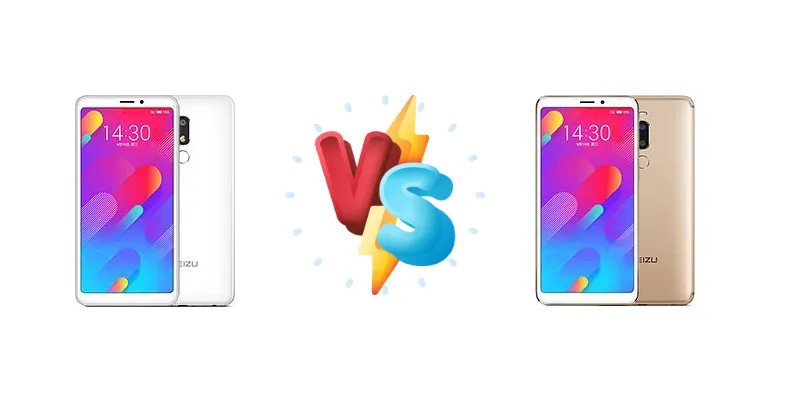
The Meizu V8 and V8 Pro represent a fascinating point in the budget smartphone landscape. Both devices aim to deliver a functional smartphone experience at an accessible price, but a key difference in their chipsets – the Mediatek MT6739 in the V8 versus the MT6762 Helio P22 in the V8 Pro – dictates a significant performance gap. This comparison will dissect those differences and determine which phone offers the best value.
🏆 Quick Verdict
For most users, the Meizu V8 Pro is the clear winner. Its Helio P22 chipset, built on a more efficient 12nm process and featuring an octa-core CPU, provides a noticeably smoother experience for everyday tasks and light gaming compared to the quad-core, 28nm MT6739 in the V8. The performance uplift justifies the likely price difference.
| Network |
|---|
| 2G bands | GSM 850 / 900 / 1800 / 1900 | GSM 850 / 900 / 1800 / 1900 |
| 3G bands | HSDPA 850 / 900 / 2100 - China | HSDPA 850 / 900 / 2100 - China |
| 4G bands | 1, 3, 5, 7, 8, 38, 39, 40, 41 - China | 1, 3, 5, 8, 34, 38, 39, 40, 41 - China |
| Speed | HSPA 42.2/5.76 Mbps, LTE Cat4 150/50 Mbps | HSPA 42.2/11.5 Mbps, LTE (2CA) Cat6 300/50 Mbps |
| Technology | GSM / CDMA / HSPA / LTE | GSM / CDMA / HSPA / LTE |
| | CDMA 800 & TD-SCDMA - China | CDMA 800 & TD-SCDMA - China |
| Launch |
|---|
| Announced | 2018, September. Released 2018, September | 2018, September. Released 2018, September |
| Status | Discontinued | Discontinued |
| Body |
|---|
| Dimensions | 148 x 73 x 8.4 mm (5.83 x 2.87 x 0.33 in) | 147.5 x 72.7 x 8.1 mm (5.81 x 2.86 x 0.32 in) |
| SIM | Nano-SIM + Nano-SIM | Nano-SIM + Nano-SIM |
| Weight | 145 g (5.11 oz) | 159 g (5.61 oz) |
| Display |
|---|
| Resolution | 720 x 1440 pixels, 18:9 ratio (~282 ppi density) | 720 x 1440 pixels, 18:9 ratio (~282 ppi density) |
| Size | 5.7 inches, 83.8 cm2 (~77.6% screen-to-body ratio) | 5.7 inches, 83.8 cm2 (~78.2% screen-to-body ratio) |
| Type | IPS LCD | IPS LCD |
| Platform |
|---|
| CPU | Quad-core 1.5 GHz Cortex-A53 | Octa-core 2.0 GHz Cortex-A53 |
| Chipset | Mediatek MT6739 (28 nm) | Mediatek MT6762 Helio P22 (12 nm) |
| GPU | PowerVR GE8100 | PowerVR GE8320 |
| OS | Android 8.0 (Oreo), Flyme UI | Android 8.0 (Oreo), Flyme UI |
| Memory |
|---|
| Card slot | microSDXC | microSDXC |
| Internal | 32GB 3GB RAM | 64GB 4GB RAM |
| | eMMC 5.1 | eMMC 5.1 |
| Main Camera |
|---|
| Dual | - | 12 MP, f/2.2, AF
5 MP, f/2.2 |
| Features | Dual-LED dual-tone flash, panorama | Dual-LED dual-tone flash, panorama |
| Single | 13 MP, f/2.2, AF | - |
| Video | 1080p@30fps | 1080p@30fps |
| Selfie camera |
|---|
| Single | 5 MP, f/1.9 | 5 MP, f/1.9 |
| Sound |
|---|
| 3.5mm jack | Yes | Yes |
| 35mm jack | Yes | Yes |
| Loudspeaker | Yes | Yes |
| Comms |
|---|
| Bluetooth | 4.2, A2DP, LE | 5.0, A2DP, LE |
| NFC | No | No |
| Positioning | GPS, GLONASS | GPS, GLONASS |
| Radio | No | No |
| USB | microUSB 2.0 | microUSB 2.0 |
| WLAN | Wi-Fi 802.11 b/g/n, Wi-Fi Direct | Wi-Fi 802.11 a/b/g/n, dual-band, Wi-Fi Direct |
| Features |
|---|
| Sensors | Fingerprint (rear-mounted), accelerometer, proximity, compass | Fingerprint (rear-mounted), accelerometer, proximity, compass |
| Battery |
|---|
| Type | Li-Ion 3200 mAh, non-removable | Li-Ion 3100 mAh, non-removable |
| Misc |
|---|
| Colors | Black, White | Black, Gold |
| Price | About 100 EUR | About 150 EUR |
Meizu V8
- Potentially lower price point
- Adequate for basic tasks
- Simpler software experience (potentially)
- Significantly slower performance
- Less efficient chipset
- Limited multitasking capabilities
Meizu V8 Pro
- Faster and more responsive performance
- More power-efficient chipset
- Better multitasking capabilities
- Improved gaming experience
- Likely higher price
- May not be a substantial upgrade for *very* basic users
Display Comparison
Neither Meizu provides detailed display specifications in the provided data. However, given their market positioning, it's reasonable to assume both utilize IPS LCD panels. The difference in chipset suggests the V8 Pro *may* have a slightly higher resolution or better color calibration, but this is speculative. The focus here is on processing power to drive the display, and the V8 Pro has a clear advantage.
Camera Comparison
Without sensor details, a direct camera comparison is difficult. However, the improved processing power of the Helio P22 in the V8 Pro likely translates to faster image processing and potentially better image quality, even with similar sensors. The V8 Pro’s chipset can handle more complex algorithms for noise reduction and dynamic range optimization. It's probable that both phones feature basic camera setups geared towards casual photography, but the V8 Pro will offer a more refined experience.
Performance
The core difference lies in the chipsets. The Meizu V8’s Mediatek MT6739, a 28nm quad-core processor clocked at 1.5 GHz, is a relatively basic SoC. The V8 Pro’s Mediatek MT6762 Helio P22, built on a more efficient 12nm process and boasting an octa-core CPU clocked at 2.0 GHz, represents a significant upgrade. The 12nm process allows for better power efficiency, reducing heat and potentially improving sustained performance. The doubling of cores from four to eight, even with the same Cortex-A53 architecture, translates to a more responsive multitasking experience and improved performance in multi-threaded applications. The V8 Pro will demonstrably outperform the V8 in almost all CPU-bound tasks.
Battery Life
Battery capacity isn't specified for either device. However, the 12nm process of the Helio P22 in the V8 Pro is a key advantage. This process node is inherently more power-efficient than the 28nm process used in the MT6739. This means the V8 Pro will likely deliver longer battery life on a single charge, even if both phones have similar battery capacities. The V8 Pro’s chipset will also be less prone to thermal throttling, maintaining performance for longer periods.
Buying Guide
Buy the Meizu V8 if your primary needs are basic communication – calls, texts, and light social media – and you're on an extremely tight budget. It will handle these tasks adequately. Buy the Meizu V8 Pro if you want a more responsive experience, plan to use more demanding apps, or enjoy occasional mobile gaming. The Pro model’s improved chipset offers a tangible benefit for even moderate usage.
Frequently Asked Questions
❓ Will the Meizu V8 Pro handle popular games like PUBG Mobile?
While the Helio P22 isn't a gaming powerhouse, the Meizu V8 Pro will be able to run PUBG Mobile at lower settings. Expect frame rate dips during intense action, but it will provide a playable experience, unlike the V8 which would likely struggle significantly.
❓ Is the difference in chipset noticeable for everyday tasks like browsing and social media?
Yes, the difference is quite noticeable. The V8 Pro’s octa-core processor and more efficient architecture result in smoother scrolling, faster app loading times, and a more responsive overall experience when browsing the web or using social media apps. The V8 may exhibit lag or stuttering during these tasks.
❓ Does the Meizu V8 Pro run cooler than the Meizu V8 under load?
Absolutely. The 12nm process of the Helio P22 generates less heat than the 28nm MT6739. This means the V8 Pro will maintain its performance for longer periods without thermal throttling, while the V8 is more likely to slow down under sustained load.