
OnePlus 6T McLaren vs. Meizu Note 16: A Deep Dive into Performance and Value
| Phones Images | |||||
|---|---|---|---|---|---|
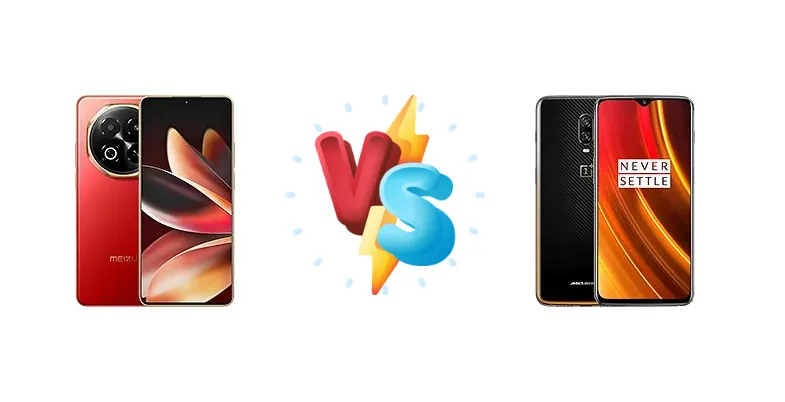
|
🏆 Quick Verdict
For users prioritizing raw performance and a smoother experience with demanding applications, the OnePlus 6T McLaren is the clear winner. However, the Meizu Note 16 offers a compelling alternative for those seeking efficient 40W charging and a potentially more affordable price, making it a strong contender for budget-conscious buyers.
| PHONES | ||
|---|---|---|
| Phone Names | Meizu Note 16 | OnePlus 6T McLaren |
| Network | ||
|---|---|---|
| 2G bands | GSM 850 / 900 / 1800 / 1900 | GSM 850 / 900 / 1800 / 1900 |
| 3G bands | HSDPA 850 / 900 / 2100 | HSDPA 800 / 850 / 900 / 1700(AWS) / 1800 / 1900 / 2100 |
| 4G bands | 1, 3, 5, 8, 34, 38, 39, 40, 41 | 1, 2, 3, 4, 5, 7, 12, 13, 17, 18, 19, 20, 25, 26, 28, 29, 30, 32, 34, 38, 39, 40, 41, 46, 66, 71 |
| 5G bands | 1, 3, 5, 8, 28, 41, 78 SA/NSA | - |
| Speed | HSPA, LTE, 5G | HSPA 42.2/5.76 Mbps, LTE (5CA) Cat16 1024/150 Mbps |
| Technology | GSM / HSPA / LTE / 5G | GSM / HSPA / LTE |
| Launch | ||
|---|---|---|
| Announced | 2025, May 13 | 2018, December 11. Released 2018, December 13 |
| Status | Available. Released 2025, May 16 | Discontinued |
| Body | ||
|---|---|---|
| Build | - | Glass front (Gorilla Glass 6), glass back, aluminum frame |
| Dimensions | 167.6 x 75.8 x 9.2 mm (6.60 x 2.98 x 0.36 in) | 157.5 x 74.8 x 8.2 mm (6.20 x 2.94 x 0.32 in) |
| SIM | Nano-SIM + Nano-SIM | Nano-SIM + Nano-SIM |
| Weight | 217 g (7.65 oz) | 185 g (6.53 oz) |
| Display | ||
|---|---|---|
| Protection | - | Corning Gorilla Glass 6 |
| Resolution | 1080 x 2460 pixels (~396 ppi density) | 1080 x 2340 pixels, 19.5:9 ratio (~402 ppi density) |
| Size | 6.78 inches, 109.2 cm2 (~85.9% screen-to-body ratio) | 6.41 inches, 100.9 cm2 (~85.6% screen-to-body ratio) |
| Type | IPS LCD, 120Hz, 1050 nits (peak) | Optic AMOLED |
| Platform | ||
|---|---|---|
| CPU | Octa-core (2x2.3 GHz Cortex-A76 & 6x2.1 GHz Cortex-A55) | Octa-core (4x2.8 GHz Kryo 385 Gold & 4x1.7 GHz Kryo 385 Silver) |
| Chipset | Unisoc T8200 (6 nm) | Qualcomm SDM845 Snapdragon 845 (10 nm) |
| GPU | Mali-G57 MC2 | Adreno 630 |
| OS | Flyme AIOS 2 | Android 9.0 (Pie), upgradable to Android 10, OxygenOS 10 |
| Memory | ||
|---|---|---|
| Card slot | No | No |
| Internal | 128GB 8GB RAM, 256GB 8GB RAM, 256GB 12GB RAM | 256GB 10GB RAM |
| - | UFS 2.1 | |
| Main Camera | ||
|---|---|---|
| Dual | 50 MP, f/1.8, 26mm (wide), PDAF 2 MP, f/2.4 | 16 MP, f/1.7, 25mm (wide), 1/2.6", 1.22µm, PDAF, OIS 20 MP (16 MP effective), f/1.7, 25mm (wide), 1/2.8", 1.0µm, PDAF |
| Features | LED flash, panorama, HDR | Dual-LED flash, HDR, panorama |
| Video | Yes | 4K@30/60fps, 1080p@30/60/240fps, 720p@480fps, Auto HDR, gyro-EIS |
| Selfie camera | ||
|---|---|---|
| Features | HDR | HDR |
| Single | 8 MP, f/2.0 | 16 MP, f/2.0, 25mm (wide), 1/3.06", 1.0µm |
| Video | Yes | 1080p@30fps, gyro-EIS |
| Sound | ||
|---|---|---|
| 3.5mm jack | - | No |
| 35mm jack | Yes | No |
| Loudspeaker | Yes, with stereo speakers | Yes |
| - | Dirac HD sound | |
| Comms | ||
|---|---|---|
| Bluetooth | 5.0, A2DP, LE, aptX HD | 5.0, A2DP, aptX HD, LE |
| NFC | Yes | Yes |
| Positioning | GPS, GALILEO, BDS | GPS, GLONASS, BDS, GALILEO |
| Radio | Unspecified | No |
| USB | USB Type-C 2.0 | USB Type-C 2.0, OTG |
| WLAN | Wi-Fi 802.11 a/b/g/n/ac, dual-band | Wi-Fi 802.11 a/b/g/n/ac, dual-band, Wi-Fi Direct, DLNA |
| Features | ||
|---|---|---|
| Sensors | Fingerprint (side-mounted), accelerometer, proximity, compass | Fingerprint (under display, optical), accelerometer, gyro, proximity, compass |
| Battery | ||
|---|---|---|
| Charging | 40W wired, QC3+ | 30W wired, 50% in 20 min |
| Type | 6600 mAh | Li-Po 3700 mAh, non-removable |
| Misc | ||
|---|---|---|
| Colors | Black, White, Red | Speed Orange |
| Price | About 100 EUR | About 700 EUR |
| Tests | ||
|---|---|---|
| Performance | - | AnTuTu: 292716 (v7) GeekBench: 9005 (v4.4) |
Meizu Note 16
- Faster 40W wired charging with QC3+ support
- Potentially more affordable price point
- Efficient 6nm Unisoc T8200 chipset
- Significantly lower CPU and GPU performance
- Likely less advanced camera capabilities
- Potentially limited software support
OnePlus 6T McLaren
- Superior CPU and GPU performance with Snapdragon 845
- Advanced image processing capabilities
- Likely better build quality and software support
- Slower 30W wired charging
- Potentially higher price
- 10nm process less efficient than 6nm
Display Comparison
While specific display details are unavailable for the Meizu Note 16, both phones likely feature AMOLED panels common in their respective price brackets. The OnePlus 6T McLaren benefits from the Snapdragon 845's image signal processor, potentially leading to slightly more accurate color reproduction. The 10nm process of the Snapdragon 845 also contributes to better thermal management during sustained display usage, preventing potential brightness throttling. Bezels are expected to be minimal on both devices, reflecting design trends of the time.
Camera Comparison
Without detailed camera specifications, a direct comparison is limited. However, the Snapdragon 845’s image signal processor (ISP) in the OnePlus 6T McLaren offers advanced image processing capabilities, potentially resulting in better dynamic range and low-light performance. The OnePlus 6T McLaren likely features optical image stabilization (OIS) on its main sensor, a feature often found in flagship devices, providing sharper images and smoother video recording. The Meizu Note 16’s camera performance will likely be adequate for everyday photography, but may struggle in challenging lighting conditions compared to the OnePlus.
Performance
The core difference lies in the chipsets. The OnePlus 6T McLaren’s Snapdragon 845 (10nm) boasts a Kryo 385 CPU configuration with peak clock speeds of 2.8 GHz, offering significantly higher single-core and multi-core performance compared to the Meizu Note 16’s Unisoc T8200 (6nm). The Snapdragon 845’s Adreno 630 GPU also provides a substantial advantage in graphics processing. While the Unisoc T8200’s 6nm process is more efficient, the architectural advantages of the Snapdragon 845 translate to a more responsive and capable user experience, particularly for gaming and demanding applications. The 6nm node on the Unisoc T8200 will likely result in lower power consumption during less intensive tasks.
Battery Life
The OnePlus 6T McLaren offers 30W wired charging with a claimed 50% charge in 20 minutes. The Meizu Note 16, however, takes the lead with 40W wired charging and QC3+ support. While the OnePlus 6T McLaren’s battery capacity is unknown, the faster charging speed of the Meizu Note 16 is a significant advantage for users who prioritize quick top-ups. The Unisoc T8200’s 6nm process may contribute to slightly better battery life during light usage, but the Snapdragon 845’s optimizations could offset this difference during more demanding tasks.
Buying Guide
Buy the Meizu Note 16 if you need a phone with exceptionally fast 40W wired charging and are comfortable with a chipset that prioritizes efficiency over peak performance. This phone is ideal for everyday tasks, social media, and moderate gaming. Buy the OnePlus 6T McLaren if you prefer a significantly more powerful processor for demanding games, multitasking, and future-proofing, and are willing to accept slightly slower charging speeds.