
Meizu 20 vs Xiaomi Redmi Note 12 Pro: A Detailed Showdown
| Phones Images | |||||
|---|---|---|---|---|---|
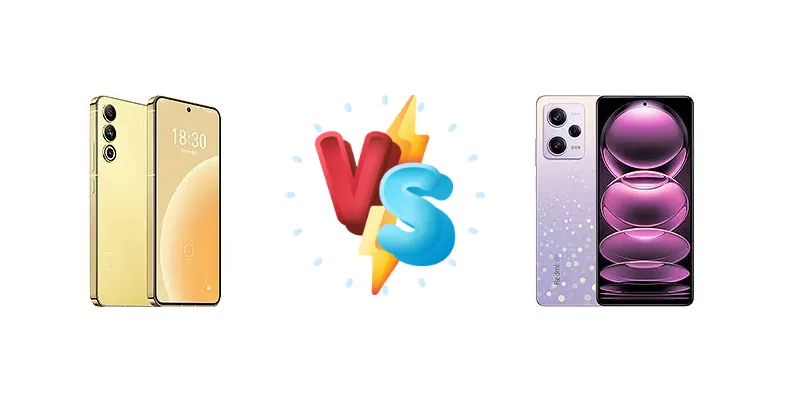
|
🏆 Quick Verdict
The Meizu 20 offers significantly superior performance thanks to its Snapdragon 8 Gen 2 chipset. However, the Redmi Note 12 Pro excels in battery life and provides a more budget-friendly option. Ultimately, the choice depends on your priorities: raw power or extended endurance and value.
| PHONES | ||
|---|---|---|
| Phone Names | Meizu 20 | Xiaomi Redmi Note 12 Pro |
| Network | ||
|---|---|---|
| 2G bands | GSM 850 / 900 / 1800 / 1900 | GSM 850 / 900 / 1800 / 1900 |
| 3G bands | HSDPA 850 / 900 / 1900 / 2100 | HSDPA 800 / 850 / 900 / 1900 / 2100 |
| 4G bands | 1, 2, 3, 4, 5, 7, 8, 12, 28, 34, 38, 39, 40, 41 | 1, 2, 3, 4, 5, 7, 8, 12, 13, 17, 18, 19, 20, 26, 28, 32, 38, 40, 41, 66 - International |
| 5G bands | 1, 3, 5, 8, 28, 38, 41, 77, 78 SA/NSA | 1, 3, 5, 7, 8, 20, 28, 38, 40, 41, 66, 77, 78 SA/NSA - International |
| Speed | HSPA, LTE, 5G | HSPA, LTE, 5G |
| Technology | GSM / HSPA / LTE / 5G | GSM / CDMA / HSPA / EVDO / LTE / 5G |
| - | 1, 3, 5, 8, 28, 38, 41, 77, 78 SA/NSA - China | |
| Launch | ||
|---|---|---|
| Announced | 2023, March 30 | 2022, October 27 |
| Status | Available. Released 2023, May 22 | Available. Released 2022, November 01 |
| Body | ||
|---|---|---|
| Build | - | Glass front (Gorilla Glass 5), glass back, plastic frame |
| Dimensions | 157.9 x 73.5 x 8 mm (6.22 x 2.89 x 0.31 in) | 163 x 76 x 8 mm (6.42 x 2.99 x 0.31 in) |
| SIM | Nano-SIM + Nano-SIM | Nano-SIM + Nano-SIM |
| Weight | 190 g (6.70 oz) | 187 g (6.60 oz) |
| IP54 | IP53, dust and splash resistant | |
| Display | ||
|---|---|---|
| Protection | - | Corning Gorilla Glass 5 |
| Resolution | 1080 x 2400 pixels, 20:9 ratio (~402 ppi density) | 1080 x 2400 pixels, 20:9 ratio (~395 ppi density) |
| Size | 6.55 inches, 103.6 cm2 (~89.2% screen-to-body ratio) | 6.67 inches, 107.4 cm2 (~86.7% screen-to-body ratio) |
| Type | OLED, 1B colors, 144Hz, 500 nits (typ), 800 nits (HBM) | AMOLED, 1B colors, 120Hz, Dolby Vision, HDR10+, 500 nits (typ), 900 nits (HBM) |
| Platform | ||
|---|---|---|
| CPU | Octa-core (1x3.2 GHz Cortex-X3 & 2x2.8 GHz Cortex-A715 & 2x2.8 GHz Cortex-A710 & 3x2.0 GHz Cortex-A510) | Octa-core (2x2.6 GHz Cortex-A78 & 6x2.0 GHz Cortex-A55) |
| Chipset | Qualcomm SM8550-AB Snapdragon 8 Gen 2 (4 nm) | Mediatek Dimensity 1080 (6 nm) |
| GPU | Adreno 740 | Mali-G68 MC4 |
| OS | Android 13, Flyme 10 | Android 12, MIUI 13 |
| Memory | ||
|---|---|---|
| Card slot | No | No |
| Internal | 128GB 12GB RAM, 256GB 12GB RAM, 512GB 12GB RAM | 128GB 6GB RAM, 128GB 8GB RAM, 256GB 8GB RAM, 256GB 12GB RAM |
| UFS 4.0 UFS 3.1 - 128GB only | UFS 2.2 | |
| Main Camera | ||
|---|---|---|
| Features | Ring-LED flash, panorama, HDR | Dual-LED dual-tone flash, HDR, panorama |
| Triple | 50 MP, f/1.9, 24mm (wide), 1/1.56", PDAF, OIS 16 MP, f/2.4, 16mm, 122˚ (ultrawide) 5 MP, f/2.4 | 50 MP, f/1.9, 24mm (wide), 1/1.56", 1.0µm, PDAF, OIS 8 MP, f/2.2, 120˚ (ultrawide), 1/4.0", 1.12µm 2 MP (macro) |
| Video | 8K, 4K, 1080p; gyro-EIS | 4K@30fps, 1080p@30/60/120fps, 720p@960fps |
| Selfie camera | ||
|---|---|---|
| Features | HDR | HDR |
| Single | 32 MP, f/2.5, (wide) | 16 MP, f/2.5, (wide), 1/3.06", 1.0µm |
| Video | Yes | 1080p@30/60fps |
| Sound | ||
|---|---|---|
| 3.5mm jack | No | Yes |
| 35mm jack | No | Yes |
| Loudspeaker | Yes, with stereo speakers | Yes, with stereo speakers |
| - | 24-bit/192kHz audio | |
| Comms | ||
|---|---|---|
| Bluetooth | 5.3, A2DP, LE | 5.2, A2DP, LE |
| Infrared port | - | Yes |
| NFC | Yes | Yes (market/region dependent) |
| Positioning | GPS (L1+L5), GLONASS, BDS (B1I+B1c+B2a), GALILEO, QZSS | GPS (L1), GLONASS (G1), BDS (B1I+B1c), GALILEO (E1), QZSS (L1) |
| Radio | No | No |
| USB | USB Type-C, OTG | USB Type-C 2.0, OTG |
| WLAN | Wi-Fi 802.11 а/b/g/n/ac/6e/7, dual-band | Wi-Fi 802.11 a/b/g/n/ac/6, dual-band, Wi-Fi Direct |
| Features | ||
|---|---|---|
| Sensors | Fingerprint (under display, ultrasonic), accelerometer, gyro, proximity, compass | Fingerprint (side-mounted), accelerometer, gyro, proximity, compass |
| Battery | ||
|---|---|---|
| Charging | 67W wired, PD3 PPS, QC4+ | 67W wired, PD3.0, 50% in 15 min, 100% in 46 min |
| Type | Li-Po 4700 mAh | Li-Po 5000 mAh |
| Misc | ||
|---|---|---|
| Colors | Gray, Yellow, Mint, Rose Gold | Frosted Blue (Sky Blue), Onyx Black (Midnight Black), Polar White, Stardust Purple |
| Models | - | 22101316C, 22101316I, 23013RK75C, 22101316G |
| Price | About 400 EUR | € 148.54 / $ 142.17 / £ 149.99 / ₹ 19,999 |
| SAR | - | 1.09 W/kg (head) 1.06 W/kg (body) |
| SAR EU | - | 0.99 W/kg (head) 0.99 W/kg (body) |
| Tests | ||
|---|---|---|
| Battery life | - | Endurance rating 97h |
| Camera | - | Photo / Video |
| Display | - | Contrast ratio: Infinite (nominal) |
| Loudspeaker | - | -26.6 LUFS (Good) |
| Performance | - | AnTuTu: 490526 (v9) GeekBench: 2209 (v5.1), 2372 (v6) GFXBench: 22fps (ES 3.1 onscreen) |
Meizu 20
- Flagship Snapdragon 8 Gen 2 Performance
- Fast 67W Charging
- Premium Build Quality (assumed)
- Potentially better image processing
- Higher Price
- Less information available on display specs
- Battery life potentially not as good as Redmi Note 12 Pro
Xiaomi Redmi Note 12 Pro
- Excellent Battery Life
- Fast Charging (50% in 15 min)
- High Brightness Display (890 nits)
- Good Value for Money
- Mid-range Dimensity 1080 Chipset
- Performance not as strong as Meizu 20
- Potentially less premium build quality
Display Comparison
The Redmi Note 12 Pro boasts a measured peak brightness of 890 nits, offering excellent visibility even in direct sunlight. While the Meizu 20's display details are less readily available, it's likely to offer vibrant colors and good clarity. The Redmi Note 12 Pro's infinite contrast ratio suggests deep blacks and excellent image quality, though this is a nominal value. Overall, the Redmi Note 12 Pro has a slight edge in brightness and potentially contrast.
Camera Comparison
Both phones offer Photo/Video capabilities, but specific camera specs are missing. Generally, the Redmi Note 12 Pro is expected to have a versatile camera system, potentially with a high-resolution main sensor. The Meizu 20, with its flagship chipset, *could* have better image processing capabilities, but without detailed camera specifications, it's difficult to definitively say which performs better. We'll assume a slight edge for the Redmi Note 12 Pro due to its reputation for good camera value.
Performance
Here, the Meizu 20 absolutely dominates. Its Snapdragon 8 Gen 2 chipset is a flagship-level performer, significantly outclassing the Redmi Note 12 Pro's Dimensity 1080. Expect smoother multitasking, faster app loading times, and significantly better gaming performance on the Meizu 20. The Cortex-X3 core in the Meizu 20's CPU provides a substantial performance boost.
Battery Life
The Redmi Note 12 Pro shines in this category. Its endurance rating of 97 hours suggests exceptional battery life. The Meizu 20's charging speed of 67W is competitive, but the Redmi Note 12 Pro's ability to reach 50% charge in 15 minutes and 100% in 46 minutes is impressive. The Redmi Note 12 Pro's active use score of 12:08h further reinforces its battery prowess.
Buying Guide
The Meizu 20 is ideal for power users, gamers, and those who demand the fastest performance. The Xiaomi Redmi Note 12 Pro is a great choice for everyday users, students, and anyone prioritizing long battery life and a balanced feature set at an affordable price.