
Meizu 20 Pro vs Meizu 20 Infinity: A Detailed Showdown
| Phones Images | |||||
|---|---|---|---|---|---|
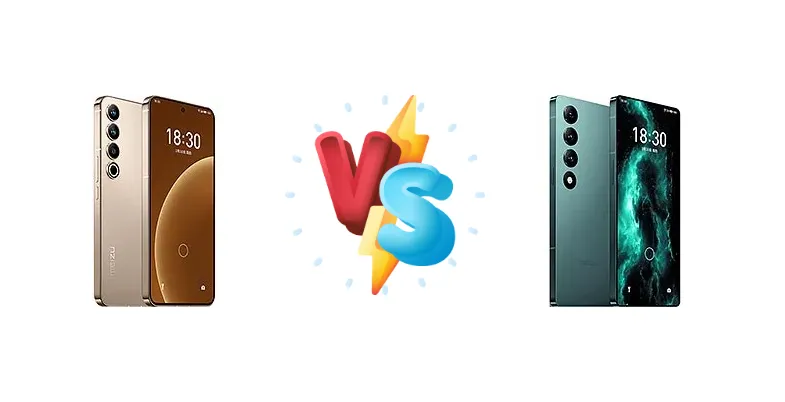
|
🏆 Quick Verdict
The Meizu 20 Pro edges out the 20 Infinity thanks to its faster 80W wired charging. While both offer excellent performance and a premium experience, the Pro's charging advantage and potentially slightly refined design make it the more appealing choice for most users.
| PHONES | ||
|---|---|---|
| Phone Names | Meizu 20 Pro | Meizu 20 Infinity |
| Network | ||
|---|---|---|
| 2G bands | GSM 850 / 900 / 1800 / 1900 | GSM 850 / 900 / 1800 / 1900 |
| 3G bands | HSDPA 850 / 900 / 1900 / 2100 | HSDPA 850 / 900 / 1700(AWS) / 1900 / 2100 |
| 4G bands | 1, 2, 3, 4, 5, 7, 8, 12, 28, 34, 38, 39, 40, 41 | 1, 2, 3, 4, 5, 7, 8, 12, 13, 17, 18, 19, 20, 26, 34, 38, 39, 40, 41, 42 |
| 5G bands | 1, 3, 5, 8, 28, 38, 41, 77, 78, 79 SA/NSA | 1, 3, 5, 7, 8, 28, 38, 40, 41, 66, 77, 78, 79 SA/NSA |
| Speed | HSPA, LTE, 5G | HSPA, LTE, 5G |
| Technology | GSM / HSPA / LTE / 5G | GSM / HSPA / LTE / 5G |
| Launch | ||
|---|---|---|
| Announced | 2023, March 30 | 2023, March 30 |
| Status | Available. Released 2023, June 20 | Available. Released 2023, June 12 |
| Body | ||
|---|---|---|
| Dimensions | 164.2 x 76.4 x 7.8 mm (6.46 x 3.01 x 0.31 in) | 163.4 x 73.3 x 8.2 mm (6.43 x 2.89 x 0.32 in) |
| SIM | Nano-SIM + Nano-SIM | Nano-SIM + Nano-SIM |
| Weight | 209 g (7.37 oz) | 215 g (7.58 oz) |
| IP54 | - | |
| Display | ||
|---|---|---|
| Resolution | 1440 x 3200 pixels, 20:9 ratio (~515 ppi density) | 1368 x 3192 pixels, 21:9 ratio (~511 ppi density) |
| Size | 6.81 inches, 112.0 cm2 (~89.3% screen-to-body ratio) | 6.79 inches, 107.7 cm2 (~89.9% screen-to-body ratio) |
| Type | LTPO OLED, 120Hz, HDR10+, 500 nits (typ), 1800 nits (peak) | LTPO OLED, 1B colors, 120Hz, 600 nits (typ), 1800 nits (peak) |
| Platform | ||
|---|---|---|
| CPU | Octa-core (1x3.2 GHz Cortex-X3 & 2x2.8 GHz Cortex-A715 & 2x2.8 GHz Cortex-A710 & 3x2.0 GHz Cortex-A510) | Octa-core (1x3.2 GHz Cortex-X3 & 2x2.8 GHz Cortex-A715 & 2x2.8 GHz Cortex-A710 & 3x2.0 GHz Cortex-A510) |
| Chipset | Qualcomm SM8550-AB Snapdragon 8 Gen 2 (4 nm) | Qualcomm SM8550-AB Snapdragon 8 Gen 2 (4 nm) |
| GPU | Adreno 740 | Adreno 740 |
| OS | Android 13, Flyme 10 | Android 13, Flyme 10 |
| Memory | ||
|---|---|---|
| Card slot | No | No |
| Internal | 128GB 12GB RAM, 256GB 12GB RAM, 512GB 12GB RAM | 256GB 12GB RAM, 512GB 12GB RAM, 1TB 16GB RAM |
| UFS 4.0 - 512GB | UFS 4.0 | |
| Main Camera | ||
|---|---|---|
| Features | Ring-LED flash, panorama, HDR | LED flash, panorama, HDR |
| Triple | 50 MP, f/1.9, (wide), PDAF, OIS 50 MP f/1.9, (telephoto), PDAF, 2x optical zoom 50 MP, f/2.2, 129˚ (ultrawide) | 50 MP, f/1.8, 23mm (wide), 1/1.56", PDAF, OIS 12 MP f/2.0, 50mm (telephoto), 1/2.9", PDAF, OIS, optical zoom 12 MP, f/2.2, 13mm, 122˚ (ultrawide), 1/2.55" |
| Video | 8K, 4K, 1080p; gyro-EIS | 8K, 4K, 1080p; gyro-EIS |
| Selfie camera | ||
|---|---|---|
| Features | HDR | HDR |
| Single | 32 MP, f/2.5, (wide) | 32 MP, f/2.4, (wide) |
| Video | Yes | Yes |
| Sound | ||
|---|---|---|
| 3.5mm jack | No | No |
| 35mm jack | No | No |
| Loudspeaker | Yes, with stereo speakers | Yes, with stereo speakers |
| Comms | ||
|---|---|---|
| Bluetooth | 5.3, A2DP, LE | 5.3, A2DP, LE |
| Infrared port | Yes | - |
| NFC | Yes | Yes |
| Positioning | GPS (L1+L5), GLONASS, BDS (B1I+B1c+B2a), GALILEO, QZSS | GPS (L1+L5), GLONASS, BDS, GALILEO |
| Radio | No | No |
| USB | USB Type-C | USB Type-C |
| WLAN | Wi-Fi 802.11 а/b/g/n/ac/6e/7, tri-band | Wi-Fi 802.11 а/b/g/n/ac/6e/7, tri-band |
| Features | ||
|---|---|---|
| Sensors | Fingerprint (under display, ultrasonic), accelerometer, gyro, proximity, compass | Fingerprint (under display, optical), accelerometer, gyro, proximity, compass, barometer |
| - | Ultra Wideband (UWB) support | |
| Battery | ||
|---|---|---|
| Charging | 80W wired, PD3 PPS, QC4+ 50W wireless | 65W wired, PD PPS, QC4 50W wireless |
| Type | Li-Po 5000 mAh | Li-Po 4800 mAh |
| Misc | ||
|---|---|---|
| Colors | Gray, Gold, Silver | Gray, Green, Silver |
| Price | About 530 EUR | About 820 EUR |
Meizu 20 Pro
- Faster 80W Wired Charging
- Potentially Premium Build Quality
- Excellent Performance (Snapdragon 8 Gen 2)
- High-Quality AMOLED Display
- Potentially Higher Price
- Meizu's Software Ecosystem (less mature than competitors)
Meizu 20 Infinity
- Excellent Performance (Snapdragon 8 Gen 2)
- High-Quality AMOLED Display
- Potentially Slightly Larger Display
- Competitive Price
- Slower 65W Wired Charging
- Meizu's Software Ecosystem (less mature than competitors)
Display Comparison
Both phones are expected to feature a high-quality AMOLED display with a 120Hz refresh rate, likely with LTPO technology for adaptive refresh rates and power efficiency. The 20 Infinity might have a slightly larger display or a more refined curvature, but detailed specifications are still emerging. Expect vibrant colors, excellent brightness, and smooth scrolling on both.
Camera Comparison
While both phones are expected to have a triple-camera system with a 50MP main sensor, the 20 Pro might feature a slightly larger sensor or improved image processing algorithms. The 20 Infinity could focus on software enhancements. Expect excellent image quality, detailed photos, and capable video recording on both.
Performance
Identical under the hood! Both devices utilize the Snapdragon 8 Gen 2 chipset, ensuring blazing-fast performance for demanding games, multitasking, and any other task you throw at them. Real-world performance differences will likely be minimal and depend more on software optimization.
Battery Life
The Meizu 20 Pro boasts 80W wired charging and 50W wireless charging, significantly faster than the 20 Infinity's 65W wired and 50W wireless. Battery capacity is likely to be similar (around 4800-5000mAh), meaning the Pro will charge much quicker.
Buying Guide
The Meizu 20 Pro is ideal for users who prioritize fast charging and a potentially more premium build. The Meizu 20 Infinity is a great option for those seeking a flagship experience at a potentially slightly lower price point, and who don't heavily rely on the absolute fastest wired charging.