
Meizu 20 Infinity vs Sony Xperia 1 V: A Detailed Showdown
| Phones Images | |||||
|---|---|---|---|---|---|
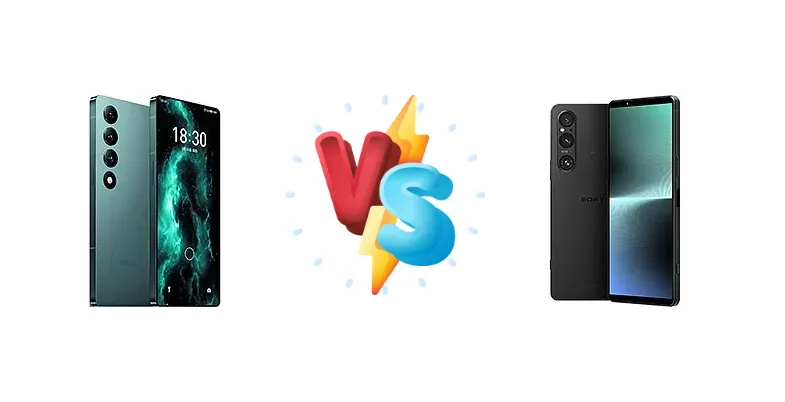
|
🏆 Quick Verdict
The Xperia 1 V offers a more refined, photography-focused experience with exceptional battery life and a stunning display. The Meizu 20 Infinity boasts faster charging and a potentially more vibrant display, but its software and overall ecosystem are less established. Ultimately, the Xperia 1 V is the safer, more well-rounded choice.
| PHONES | ||
|---|---|---|
| Phone Names | Meizu 20 Infinity | Sony Xperia 1 V |
| Network | ||
|---|---|---|
| 2G bands | GSM 850 / 900 / 1800 / 1900 | GSM 850 / 900 / 1800 / 1900 |
| 3G bands | HSDPA 850 / 900 / 1700(AWS) / 1900 / 2100 | HSDPA 800 / 850 / 900 / 1700(AWS) / 1900 / 2100 |
| 4G bands | 1, 2, 3, 4, 5, 7, 8, 12, 13, 17, 18, 19, 20, 26, 34, 38, 39, 40, 41, 42 | 1, 2, 3, 4, 5, 7, 8, 12, 13, 17, 19, 20, 25, 26, 28, 29, 32, 34, 38, 39, 40, 41, 46, 66 - Europe |
| 5G bands | 1, 3, 5, 7, 8, 28, 38, 40, 41, 66, 77, 78, 79 SA/NSA | 1, 3, 5, 7, 8, 20, 28, 38, 40, 41, 77, 78 SA/NSA/Sub6 - Europe |
| Speed | HSPA, LTE, 5G | HSPA, LTE, 5G |
| Technology | GSM / HSPA / LTE / 5G | GSM / HSPA / LTE / 5G |
| - | 1, 3, 5, 7, 8, 28, 38, 40, 41, 77, 78, 79 SA/NSA/Sub6 - Asia | |
| Launch | ||
|---|---|---|
| Announced | 2023, March 30 | 2023, May 11 |
| Status | Available. Released 2023, June 12 | Available. Released 2023, July 28 |
| Body | ||
|---|---|---|
| Build | - | Glass front (Gorilla Glass Victus 2), glass back (Gorilla Glass Victus), aluminum frame |
| Dimensions | 163.4 x 73.3 x 8.2 mm (6.43 x 2.89 x 0.32 in) | 165 x 71 x 8.3 mm (6.50 x 2.80 x 0.33 in) |
| SIM | Nano-SIM + Nano-SIM | · Nano-SIM + eSIM· Nano-SIM + Nano-SIM |
| Weight | 215 g (7.58 oz) | 187 g (6.60 oz) |
| - | IP65/IP68 dust/water resistant (up to 1.5m for 30 min) | |
| Display | ||
|---|---|---|
| Protection | - | Corning Gorilla Glass Victus 2 |
| Resolution | 1368 x 3192 pixels, 21:9 ratio (~511 ppi density) | 1644 x 3840 pixels, 21:9 ratio (~643 ppi density) |
| Size | 6.79 inches, 107.7 cm2 (~89.9% screen-to-body ratio) | 6.5 inches, 98.6 cm2 (~84.2% screen-to-body ratio) |
| Type | LTPO OLED, 1B colors, 120Hz, 600 nits (typ), 1800 nits (peak) | OLED, 1B colors, 120Hz, HDR BT.2020 |
| Platform | ||
|---|---|---|
| CPU | Octa-core (1x3.2 GHz Cortex-X3 & 2x2.8 GHz Cortex-A715 & 2x2.8 GHz Cortex-A710 & 3x2.0 GHz Cortex-A510) | Octa-core (1x3.2 GHz Cortex-X3 & 2x2.8 GHz Cortex-A715 & 2x2.8 GHz Cortex-A710 & 3x2.0 GHz Cortex-A510) |
| Chipset | Qualcomm SM8550-AB Snapdragon 8 Gen 2 (4 nm) | Qualcomm SM8550-AB Snapdragon 8 Gen 2 (4 nm) |
| GPU | Adreno 740 | Adreno 740 |
| OS | Android 13, Flyme 10 | Android 13, upgradable to Android 15 |
| Memory | ||
|---|---|---|
| Card slot | No | microSDXC (uses shared SIM slot) |
| Internal | 256GB 12GB RAM, 512GB 12GB RAM, 1TB 16GB RAM | 256GB 12GB RAM, 512GB 12GB RAM |
| UFS 4.0 | UFS | |
| Main Camera | ||
|---|---|---|
| Features | LED flash, panorama, HDR | Zeiss optics, Zeiss T* lens coating, color spectrum sensor, LED flash, panorama, HDR, eye tracking |
| Triple | 50 MP, f/1.8, 23mm (wide), 1/1.56", PDAF, OIS 12 MP f/2.0, 50mm (telephoto), 1/2.9", PDAF, OIS, optical zoom 12 MP, f/2.2, 13mm, 122˚ (ultrawide), 1/2.55" | 48 MP, f/1.9, 24mm (wide), 1/1.35", 1.12µm, dual pixel PDAF, OIS 12 MP, f/2.3, 85mm (telephoto), f/2.8, 125mm (telephoto), 1/3.5", dual pixel PDAF, 3.5x-5.2x continuous optical zoom, OIS 12 MP, f/2.2, 16mm (ultrawide), 1/2.5", dual pixel PDAF |
| Video | 8K, 4K, 1080p; gyro-EIS | 4K@24/25/30/60/120fps HDR, 1080p@30/60/120fps; 5-axis gyro-EIS, OIS |
| Selfie camera | ||
|---|---|---|
| Features | HDR | HDR |
| Single | 32 MP, f/2.4, (wide) | 12 MP, f/2.0, 24mm (wide), 1/2.9", 1.25µm |
| Video | Yes | 4K@30/60fps, 1080p@30/60fps, 5-axis gyro-EIS |
| Sound | ||
|---|---|---|
| 3.5mm jack | No | Yes |
| 35mm jack | No | Yes |
| Loudspeaker | Yes, with stereo speakers | Yes, with stereo speakers |
| - | 24-bit/192kHz audio Dynamic vibration system | |
| Comms | ||
|---|---|---|
| Bluetooth | 5.3, A2DP, LE | 5.3, A2DP, LE Audio, aptX HD, aptX Adaptive, aptX Lossless |
| NFC | Yes | Yes |
| Positioning | GPS (L1+L5), GLONASS, BDS, GALILEO | GPS, GLONASS, BDS, GALILEO, QZSS |
| Radio | No | No |
| USB | USB Type-C | USB Type-C 3.2, OTG, video output |
| WLAN | Wi-Fi 802.11 а/b/g/n/ac/6e/7, tri-band | Wi-Fi 802.11 a/b/g/n/ac/6e, tri-band, Wi-Fi Direct, DLNA |
| Features | ||
|---|---|---|
| Sensors | Fingerprint (under display, optical), accelerometer, gyro, proximity, compass, barometer | Fingerprint (side-mounted), accelerometer, gyro, proximity, barometer, compass |
| Ultra Wideband (UWB) support | Native Sony Alpha camera support | |
| Battery | ||
|---|---|---|
| Charging | 65W wired, PD PPS, QC4 50W wireless | 30W wired, PD3.0, PPS, 50% in 30 min Wireless Reverse wireless |
| Type | Li-Po 4800 mAh | Li-Po 5000 mAh |
| Misc | ||
|---|---|---|
| Colors | Gray, Green, Silver | Black, Khaki Green, Platinum Silver |
| Models | - | XQDQ62/B, XQ-DQ72, XQ-DQ54 |
| Price | About 820 EUR | € 684.00 / $ 1,409.99 / £ 519.99 |
| Tests | ||
|---|---|---|
| Battery life | - | Endurance rating 115h |
| Camera | - | Photo / Video |
| Display | - | Contrast ratio: Infinite (nominal) |
| Loudspeaker | - | -25.4 LUFS (Very good) |
| Performance | - | AnTuTu: 1127931 (v9) GeekBench: 4916 (v6) GFXBench: 96fps (ES 3.1 onscreen) |
Meizu 20 Infinity
- Faster Charging (65W wired, 50W wireless)
- Potentially more vibrant display
- Modern Design
- Less established brand
- Software may be less polished
- Camera performance needs further evaluation
Sony Xperia 1 V
- Exceptional Battery Life
- Excellent Camera System (especially video)
- Premium Build Quality
- Stable and Reliable Software
- Slower Charging (30W wired)
- Less vibrant display (more accurate colors)
- Higher Price
Display Comparison
Both phones feature excellent displays powered by the Snapdragon 8 Gen 2. The Xperia 1 V boasts a 6.5-inch 4K OLED panel with a 120Hz refresh rate and a remarkable contrast ratio (effectively infinite). It also achieves a peak brightness of 936 nits, making it exceptionally visible outdoors. The Meizu 20 Infinity is expected to have a similarly high-quality OLED display, likely with vibrant colors and a smooth refresh rate, though specific brightness figures are less readily available. Sony's color science is generally more accurate, while Meizu often prioritizes a more saturated look.
Camera Comparison
The Xperia 1 V shines in the camera department. It features a versatile triple-lens setup with a 48MP main sensor, a 12MP ultrawide, and a 12MP telephoto lens. Sony's image processing is renowned for its natural colors and excellent dynamic range. The Meizu 20 Infinity is expected to have a competitive camera system, potentially with a higher megapixel count on the main sensor, but its image quality and video capabilities remain to be fully assessed. Sony's video recording capabilities are particularly strong.
Performance
Under the hood, both devices share the same Snapdragon 8 Gen 2 chipset, ensuring flagship-level performance. Expect blazing-fast speeds, smooth multitasking, and excellent gaming capabilities on both. Real-world performance differences will likely be minimal, though Meizu's software optimization could play a role. The Xperia 1 V's software is known for its stability and minimal bloatware.
Battery Life
Battery life is a significant advantage for the Xperia 1 V. It consistently delivers excellent endurance, with an active use score of 12 hours and an impressive endurance rating of 115 hours. The Meizu 20 Infinity's battery capacity is likely comparable, but its battery life may be slightly lower due to software optimization and display characteristics. The Xperia 1 V also supports 30W wired charging, reverse wireless charging, and wireless charging, while the Meizu 20 Infinity offers faster 65W wired charging and 50W wireless charging.
Buying Guide
The Meizu 20 Infinity is ideal for users seeking a powerful phone with fast charging and a modern design, who are comfortable with a less established brand and potentially less polished software. The Sony Xperia 1 V is perfect for photography enthusiasts, content creators, and those who prioritize battery life, a premium build, and a consistent, reliable user experience.