
Meizu 18 vs 18s: Unpacking the Snapdragon 888+ Upgrade
| Phones Images | |||||
|---|---|---|---|---|---|
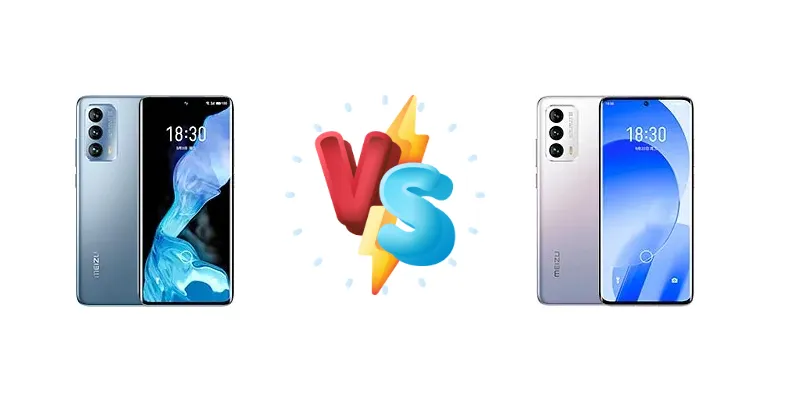
|
🏆 Quick Verdict
For most users, the Meizu 18s is the superior choice. The Snapdragon 888+ offers a noticeable performance uplift, particularly in sustained workloads, and the improved charging speed – reaching 80% in just 33 minutes – is a significant convenience. However, the Meizu 18 remains a strong contender for budget-conscious buyers.
| PHONES | ||
|---|---|---|
| Phone Names | Meizu 18 | Meizu 18s |
| Network | ||
|---|---|---|
| 2G bands | GSM 850 / 900 / 1800 / 1900 | GSM 850 / 900 / 1800 / 1900 |
| 3G bands | HSDPA 850 / 900 / 1900 / 2100 | HSDPA 850 / 900 / 1900 / 2100 |
| 4G bands | 1, 3, 4, 5, 7, 8, 34, 38, 39, 40, 41 | 1, 3, 4, 5, 7, 8, 34, 38, 39, 40, 41 |
| 5G bands | 1, 3, 41, 77, 78, 79 SA/NSA | 1, 3, 41, 77, 78, 79 SA/NSA |
| Speed | HSPA, LTE, 5G | HSPA, LTE, 5G |
| Technology | GSM / HSPA / LTE / 5G | GSM / HSPA / LTE / 5G |
| Launch | ||
|---|---|---|
| Announced | 2021, March 03. Released 2021, March 08 | 2021, September 22. Released 2021, September 23 |
| Status | Discontinued | Discontinued |
| Body | ||
|---|---|---|
| Dimensions | 152.4 x 69.2 x 8.2 mm (6.00 x 2.72 x 0.32 in) | 152.4 x 69.2 x 8.2 mm (6.00 x 2.72 x 0.32 in) |
| SIM | Nano-SIM + Nano-SIM | Nano-SIM + Nano-SIM |
| Weight | 162 g (5.71 oz) | 162 g (5.71 oz) |
| Display | ||
|---|---|---|
| Resolution | 1440 x 3200 pixels, 20:9 ratio (~563 ppi density) | 1440 x 3200 pixels, 20:9 ratio (~563 ppi density) |
| Size | 6.2 inches, 93.8 cm2 (~88.9% screen-to-body ratio) | 6.2 inches, 93.8 cm2 (~88.9% screen-to-body ratio) |
| Type | Super AMOLED, 120Hz, HDR10+, 420 nits (typ), 1300 nits (peak) | Super AMOLED, 120Hz, HDR10+, 420 nits (typ), 1300 nits (peak) |
| Platform | ||
|---|---|---|
| CPU | Octa-core (1x2.84 GHz Cortex-X1 & 3x2.42 GHz Cortex-A78 & 4x1.80 GHz Cortex-A55) | Octa-core (1x3.0 GHz Cortex-X1 & 3x2.42 GHz Cortex-A78 & 4x1.80 GHz Cortex-A55) |
| Chipset | Qualcomm SM8350 Snapdragon 888 5G (5 nm) | Qualcomm SM8350 Snapdragon 888+ 5G (5 nm) |
| GPU | Adreno 660 | Adreno 660 |
| OS | Android 11, Flyme 9 | Android 11, Flyme 9.2 |
| Memory | ||
|---|---|---|
| Card slot | No | No |
| Internal | 128GB 8GB RAM, 256GB 8GB RAM, 256GB 12GB RAM | 128GB 8GB RAM, 256GB 8GB RAM, 256GB 12GB RAM |
| UFS 3.1 | UFS 3.1 | |
| Main Camera | ||
|---|---|---|
| Features | Dual-LED dual-tone flash, HDR, panorama | Dual-LED dual-tone flash, HDR, panorama |
| Triple | 64 MP, f/1.6, 26mm (wide), 1/1.73", 0.8µm, PDAF, OIS 8 MP f/2.4, 79mm (telephoto), 1/4.4", 1.0µm, PDAF, 3x optical zoom 16 MP, f/2.2, 15mm, 122˚ (ultrawide), 1/3.0", 1.0µm | 64 MP, f/1.6, 26mm (wide), 1/1.73", 0.8µm, PDAF, OIS 8 MP f/2.4, 79mm (telephoto), 1/4.4", 1.0µm, PDAF, 3x optical zoom 16 MP, f/2.2, 15mm, 122˚ (ultrawide), 1/3.0", 1.0µm |
| Video | 4K@30/60fps, 1080p; gyro-EIS | 4K@30/60fps, 1080p; gyro-EIS |
| Selfie camera | ||
|---|---|---|
| Features | HDR | HDR |
| Single | 20 MP, f/2.2, 26mm (wide), 1/3.4", 0.8µm | 20 MP, f/2.2, 26mm (wide), 1/3.4", 0.8µm |
| Video | 1080p@30fps | 1080p@30fps |
| Sound | ||
|---|---|---|
| 3.5mm jack | No | No |
| 35mm jack | No | No |
| Loudspeaker | Yes, with stereo speakers | Yes, with stereo speakers |
| Comms | ||
|---|---|---|
| Bluetooth | 5.2, A2DP, LE | 5.2, A2DP, LE |
| NFC | Yes | Yes |
| Positioning | GPS (L1+L5), GLONASS, BDS, GALILEO, QZSS, NavIC | GPS (L1+L5), GLONASS, BDS, GALILEO, QZSS |
| Radio | No | No |
| USB | USB Type-C | USB Type-C |
| WLAN | Wi-Fi 802.11 а/b/g/n/ac/6e, dual-band, Wi-Fi Direct | Wi-Fi 802.11 а/b/g/n/ac/6e, dual-band, Wi-Fi Direct |
| Features | ||
|---|---|---|
| Sensors | Fingerprint (under display, ultrasonic), accelerometer, gyro, proximity, compass | Fingerprint (under display, ultrasonic), accelerometer, gyro, proximity, compass |
| Battery | ||
|---|---|---|
| Charging | 36W wired, PD3.0, QC3, 40% in 15 min, 100% in 50 min | 36W wired, PD3.0, QC3, 80% in 33 min, 100% in 55 min |
| Type | Li-Po 4000 mAh | Li-Po 4000 mAh |
| Misc | ||
|---|---|---|
| Colors | Light Blue, White, Aurora | Light Blue, White, Aurora, Pink/Violet |
| Price | About 560 EUR | About 490 EUR |
Meizu 18
- More affordable price point
- Excellent performance for everyday tasks
- Compact and ergonomic design
- Snapdragon 888 can throttle under sustained load
- Slower charging speed compared to 18s
Meizu 18s
- Superior performance with Snapdragon 888+
- Faster charging to 80% in 33 minutes
- Improved thermal management for sustained performance
- Higher price tag
- Marginally slower to reach 100% charge
Display Comparison
Both the Meizu 18 and 18s share a similar display profile, though specific details like peak brightness and color accuracy aren't provided. The focus here is on the compact size, a rarity in today's market. The absence of information on refresh rate or panel technology (LTPO) limits a deeper comparison, but the shared form factor suggests a similar viewing experience. Bezels are likely minimal, consistent with Meizu's design language.
Camera Comparison
Detailed camera specifications are absent, making a direct comparison challenging. However, the image signal processor (ISP) within the Snapdragon 888+ offers improvements in image processing speed and quality. This means the 18s will likely capture slightly more detailed photos and videos, particularly in low-light conditions. Without knowing sensor sizes or lens apertures, it's difficult to assess the overall camera capabilities, but the 888+ provides a computational advantage. We can assume both phones will offer similar features like night mode and portrait mode.
Performance
The core difference lies in the chipset: the Meizu 18 utilizes the Snapdragon 888 5G, while the 18s boasts the Snapdragon 888+. While both are 5nm chips with the same CPU core configuration (1x2.84 GHz Cortex-X1, 3x2.42 GHz Cortex-A78, 4x1.80 GHz Cortex-A55), the 18s’ CPU is clocked slightly higher at 3.0 GHz. This, combined with improvements to the Adreno 660 GPU in the 888+, translates to a tangible performance increase, especially in GPU-intensive tasks. The 18s will exhibit less thermal throttling during prolonged gaming, maintaining higher frame rates for longer periods. Both devices utilize LPDDR5 RAM, but the 888+'s improved memory controller may offer slightly faster data access.
Battery Life
Both phones feature 36W wired charging, supporting PD3.0 and QC3. However, the charging times differ significantly. The Meizu 18 reaches 100% in 50 minutes, while the 18s achieves the same in 55 minutes, but hits 80% in a remarkably quick 33 minutes. This faster initial charge rate on the 18s is a practical benefit for users who need a quick power boost. The actual battery capacity isn't specified, but the improved efficiency of the Snapdragon 888+ could translate to slightly better real-world battery life on the 18s, despite the similar charging wattage.
Buying Guide
Buy the Meizu 18 if you prioritize value and are content with excellent, but not bleeding-edge, performance. It's ideal for everyday tasks, social media, and casual gaming. Buy the Meizu 18s if you demand the best possible performance from a compact phone, frequently engage in demanding tasks like video editing or extended gaming sessions, and appreciate faster charging speeds.