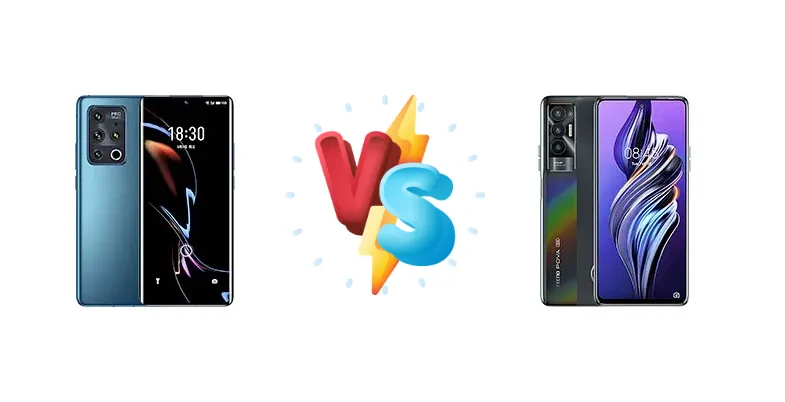
The smartphone landscape is increasingly segmented. The Meizu 18 Pro represents a shrinking breed – the compact flagship – packing top-tier silicon into a smaller chassis. Conversely, the Tecno Pova 5G targets the burgeoning 5G market with a focus on affordability and essential features. This comparison dissects their core differences to help you determine which device best suits your needs and budget.
🏆 Quick Verdict
For users prioritizing raw performance and a premium, pocketable experience, the Meizu 18 Pro is the clear winner. However, the Tecno Pova 5G delivers exceptional 5G value, making it the more sensible choice for budget-conscious consumers who don't require the absolute fastest processing speeds.
| Network |
|---|
| 2G bands | GSM 850 / 900 / 1800 / 1900 | GSM 850 / 900 / 1800 / 1900 |
| 3G bands | HSDPA 850 / 900 / 1700(AWS) / 1900 / 2100 | HSDPA 850 / 900 / 1900 / 2100 |
| 4G bands | 1, 2, 3, 4, 5, 7, 8, 12, 34, 38, 39, 40, 41 | LTE |
| 5G bands | 1, 3, 41, 77, 78, 79 SA/NSA | SA/NSA |
| Speed | HSPA, LTE, 5G | HSPA, LTE, 5G |
| Technology | GSM / HSPA / LTE / 5G | GSM / HSPA / LTE / 5G |
| Launch |
|---|
| Announced | 2021, March 03. Released 2021, March 08 | 2021, December 27 |
| Status | Discontinued | Available. Released 2021, December 27 |
| Body |
|---|
| Dimensions | 162.5 x 73 x 8.1 mm (6.40 x 2.87 x 0.32 in) | 172.8 x 78.2 x 9.1 mm (6.80 x 3.08 x 0.36 in) |
| SIM | Nano-SIM + Nano-SIM | Nano-SIM + Nano-SIM |
| Weight | 189 g (6.67 oz) | - |
| | Waterproof | - |
| Display |
|---|
| Protection | Corning Gorilla Glass 6 | - |
| Resolution | 1440 x 3200 pixels, 20:9 ratio (~526 ppi density) | 1080 x 2460 pixels (~389 ppi density) |
| Size | 6.7 inches, 107.6 cm2 (~90.7% screen-to-body ratio) | 6.9 inches, 113.1 cm2 (~83.7% screen-to-body ratio) |
| Type | Super AMOLED, 120Hz, HDR10+, 420 nits (typ), 1300 nits (peak) | IPS LCD, 120Hz |
| Platform |
|---|
| CPU | Octa-core (1x2.84 GHz Cortex-X1 & 3x2.42 GHz Cortex-A78 & 4x1.80 GHz Cortex-A55) | Octa-core (2x2.4 GHz Cortex-A78 & 6x2.0 GHz Cortex-A55) |
| Chipset | Qualcomm SM8350 Snapdragon 888 5G (5 nm) | Mediatek Dimensity 900 (6 nm) |
| GPU | Adreno 660 | Mali-G68 MC4 |
| OS | Android 11, Flyme 9 | Android 11, HIOS 8.0 |
| Memory |
|---|
| Card slot | No | Unspecified |
| Internal | 128GB 8GB RAM, 256GB 8GB RAM, 256GB 12GB RAM | 128GB 8GB RAM |
| | UFS 3.1 | UFS 3.1 |
| Main Camera |
|---|
| Features | LED flash, HDR, panorama | Quad-LED flash, panorama, HDR |
| Single | - | 16 MP, (wide) |
| Triple | 50 MP, f/1.9, 23mm (wide), 1/1.31", 1.2µm, dual pixel PDAF, OIS
8 MP f/2.4, 79mm (telephoto), 1/4.4", 1.0µm, PDAF, 3x optical zoom
32 MP, f/2.2, 15mm, 130˚ (ultrawide), 1/2.8", 0.8µm
0.3 MP, TOF 3D, f/1.4, (depth) | 50 MP, (wide), PDAF
2 MP
Auxiliary lens |
| Video | 8K, 4K@30/60fps, 1080p; gyro-EIS | 4K@30fps, 1080p@30/60fps |
| Selfie camera |
|---|
| Features | HDR | Dual-LED flash |
| Single | 44 MP, f/2.4, (wide), 1/2.65”, 0.7µm | 16 MP, (wide) |
| Video | 4K@30fps, 1080p@30fps | 4K@30fps, 1080p@30/60fps |
| Sound |
|---|
| 3.5mm jack | No | Yes |
| 35mm jack | No | Yes |
| Loudspeaker | Yes, with stereo speakers | Yes |
| Comms |
|---|
| Bluetooth | 5.2, A2DP, LE | Yes |
| NFC | Yes | Yes |
| Positioning | GPS (L1+L5), GLONASS, BDS, GALILEO, QZSS, NavIC | GPS |
| Radio | No | FM radio |
| USB | USB Type-C | Yes |
| WLAN | Wi-Fi 802.11 а/b/g/n/ac/6e, dual-band, Wi-Fi Direct | Yes |
| Features |
|---|
| Sensors | Fingerprint (under display, ultrasonic), accelerometer, gyro, proximity, compass | Fingerprint (side-mounted), accelerometer proximity |
| Battery |
|---|
| Charging | 40W wired, PD3.0, QC4, 40% in 15 min, 100% in 50 min
40W wireless
10W reverse wireless | 18W wired |
| Type | Li-Po 4500 mAh | 6000 mAh |
| Misc |
|---|
| Colors | Blue, White, Gray | Aether Black |
| Models | - | LE8 |
| Price | About 640 EUR | About 270 EUR |
Meizu 18 Pro
- Significantly faster processor (Snapdragon 888)
- Faster charging speeds (40W wired & wireless)
- Compact and premium design
- Potential for thermal throttling
- Higher price point
Tecno Pova 5G
- Affordable 5G connectivity
- Potentially larger battery capacity
- More power-efficient chipset (6nm)
- Slower charging speed (18W)
- Less powerful processor
Display Comparison
While display specifications aren't provided, the Meizu 18 Pro, being a flagship, likely features a higher-quality AMOLED panel with superior color accuracy and potentially a higher refresh rate than the Tecno Pova 5G. The Pova 5G’s larger size suggests a focus on media consumption, but the Meizu’s smaller form factor will appeal to those seeking one-handed usability. The absence of LTPO information for either device suggests neither prioritizes variable refresh rate technology for power saving.
Camera Comparison
Without detailed camera specs, it’s difficult to make a definitive judgment. However, the Meizu 18 Pro, as a flagship, likely incorporates a more sophisticated camera system with a larger sensor and optical image stabilization (OIS). The Tecno Pova 5G will likely focus on providing a versatile camera setup at a lower cost, potentially sacrificing low-light performance and image detail. The absence of information regarding sensor sizes and lens apertures makes a precise comparison impossible, but the Meizu’s flagship status suggests a superior imaging experience.
Performance
The core difference lies in the chipsets. The Meizu 18 Pro’s Snapdragon 888 (5nm) boasts a more powerful CPU configuration – an octa-core setup with a Cortex-X1 prime core clocked at 2.84GHz – compared to the Tecno Pova 5G’s Dimensity 900 (6nm). This translates to significantly faster processing speeds in demanding tasks like video editing and gaming. However, the Dimensity 900’s 6nm process *should* offer better power efficiency. The Snapdragon 888 is known to throttle under sustained load, a potential drawback for extended gaming sessions. The Pova 5G’s CPU, while less powerful, is still an octa-core unit with capable Cortex-A78 cores, sufficient for smooth everyday performance. The 5nm vs 6nm node difference is crucial; the Meizu will likely deliver peak performance, but the Tecno may maintain sustained performance for longer.
Battery Life
The Tecno Pova 5G’s 18W charging is significantly slower than the Meizu 18 Pro’s 40W wired and 40W wireless charging capabilities. The Meizu can reach 40% charge in just 15 minutes and 100% in 50 minutes, offering a substantial convenience advantage. While the Pova 5G’s battery capacity isn’t specified, its focus on affordability suggests a larger battery to compensate for the slower charging speed. The Meizu 18 Pro also offers 10W reverse wireless charging, a feature absent on the Tecno Pova 5G.
Buying Guide
Buy the Meizu 18 Pro if you need a powerful, compact Android phone with fast charging and are willing to pay a premium for a refined experience. It’s ideal for users who value one-handed usability and flagship-level performance. Buy the Tecno Pova 5G if you prioritize 5G connectivity, a large display, and long battery life on a tight budget. It’s perfect for streaming, casual gaming, and everyday tasks without breaking the bank.
Frequently Asked Questions
❓ Is the Snapdragon 888 in the Meizu 18 Pro prone to overheating during extended gaming sessions?
Yes, the Snapdragon 888 is known to generate significant heat under sustained load. While the Meizu 18 Pro likely incorporates cooling solutions, users may experience throttling during prolonged gaming, potentially impacting performance. The Tecno Pova 5G’s Dimensity 900, with its 6nm process, is generally more efficient and less prone to overheating.
❓ Does the Tecno Pova 5G support carrier aggregation for faster 5G speeds?
While the context data doesn't specify, the Dimensity 900 chipset *does* support carrier aggregation, allowing it to combine multiple 5G channels for faster download and upload speeds. However, actual speeds will depend on your carrier's network and coverage.
❓ How does the 40W wireless charging on the Meizu 18 Pro compare to standard wireless charging speeds?
40W wireless charging is exceptionally fast, significantly exceeding the 15W-25W typically found in most wireless charging phones. It allows for a substantial charge in a relatively short amount of time, making it a convenient alternative to wired charging.
❓ Is the difference in CPU performance between the Snapdragon 888 and Dimensity 900 noticeable in everyday tasks?
For basic tasks like browsing, social media, and messaging, the difference will be minimal. Both processors are capable of handling these workloads smoothly. However, the Snapdragon 888’s superior processing power will be more apparent in demanding applications like video editing, gaming, and multitasking with resource-intensive apps.