
Meizu 18 Pro vs Sony Xperia 1 III: A Deep Dive into Two Snapdragon 888 Flagships
| Phones Images | |||||
|---|---|---|---|---|---|
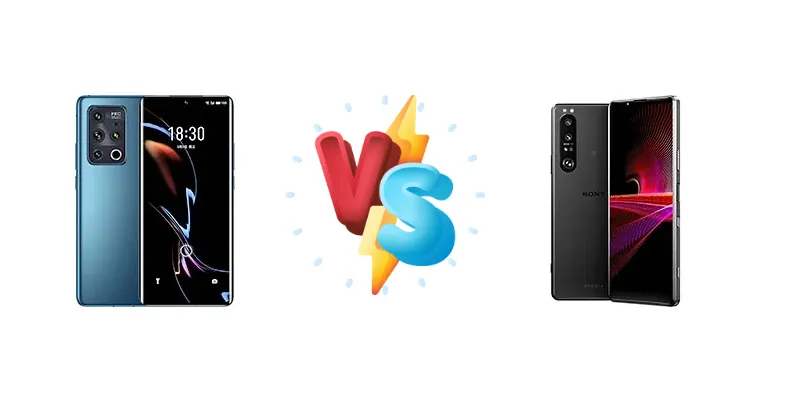
|
🏆 Quick Verdict
For the average user prioritizing rapid charging and a more compact form factor, the Meizu 18 Pro emerges as the stronger choice. Its 40W wired and wireless charging capabilities significantly outperform the Xperia 1 III’s 30W wired charging, and its overall package offers a compelling value proposition. However, the Xperia 1 III’s display brightness and Sony’s camera processing may appeal to specific enthusiasts.
| PHONES | ||
|---|---|---|
| Phone Names | Meizu 18 Pro | Sony Xperia 1 III |
| Network | ||
|---|---|---|
| 2G bands | GSM 850 / 900 / 1800 / 1900 | GSM 850 / 900 / 1800 / 1900 |
| 3G bands | HSDPA 850 / 900 / 1700(AWS) / 1900 / 2100 | HSDPA 800 / 850 / 900 / 1700(AWS) / 1900 / 2100 |
| 4G bands | 1, 2, 3, 4, 5, 7, 8, 12, 34, 38, 39, 40, 41 | 1, 2, 3, 4, 5, 7, 8, 12, 13, 17, 19, 20, 25, 26, 28, 29, 32, 34, 38, 39, 40, 41, 46, 66 - Europe |
| 5G bands | 1, 3, 41, 77, 78, 79 SA/NSA | 1, 3, 5, 7, 8, 20, 28, 38, 40, 41, 77, 78 SA/NSA/Sub6 - Europe |
| Speed | HSPA, LTE, 5G | HSPA, LTE, 5G |
| Technology | GSM / HSPA / LTE / 5G | GSM / HSPA / LTE / 5G |
| - | SA/NSA/Sub6/mmWave - USA (specific) | |
| Launch | ||
|---|---|---|
| Announced | 2021, March 03. Released 2021, March 08 | 2021, April 14 |
| Status | Discontinued | Available. Released 2021, August 25 |
| Body | ||
|---|---|---|
| Build | - | Glass front (Gorilla Glass Victus), glass back (Gorilla Glass 6), aluminum frame |
| Dimensions | 162.5 x 73 x 8.1 mm (6.40 x 2.87 x 0.32 in) | 165 x 71 x 8.2 mm (6.50 x 2.80 x 0.32 in) |
| SIM | Nano-SIM + Nano-SIM | Nano-SIM + Nano-SIM |
| Weight | 189 g (6.67 oz) | 186 g / 187.1 g (mmWave) (6.56 oz) |
| Waterproof | IP65/IP68 dust/water resistant (up to 1.5m for 30 min) | |
| Display | ||
|---|---|---|
| Protection | Corning Gorilla Glass 6 | Corning Gorilla Glass Victus |
| Resolution | 1440 x 3200 pixels, 20:9 ratio (~526 ppi density) | 1644 x 3840 pixels, 21:9 ratio (~643 ppi density) |
| Size | 6.7 inches, 107.6 cm2 (~90.7% screen-to-body ratio) | 6.5 inches, 98.6 cm2 (~84.2% screen-to-body ratio) |
| Type | Super AMOLED, 120Hz, HDR10+, 420 nits (typ), 1300 nits (peak) | OLED, 1B colors, 120Hz, HDR BT.2020 |
| - | Runs at 1096 x 2560 pixels except for select use cases | |
| Platform | ||
|---|---|---|
| CPU | Octa-core (1x2.84 GHz Cortex-X1 & 3x2.42 GHz Cortex-A78 & 4x1.80 GHz Cortex-A55) | Octa-core (1x2.84 GHz Cortex-X1 & 3x2.42 GHz Cortex-A78 & 4x1.80 GHz Cortex-A55) |
| Chipset | Qualcomm SM8350 Snapdragon 888 5G (5 nm) | Qualcomm SM8350 Snapdragon 888 5G (5 nm) |
| GPU | Adreno 660 | Adreno 660 |
| OS | Android 11, Flyme 9 | Android 11, upgradable to Android 13 |
| Memory | ||
|---|---|---|
| Card slot | No | microSDXC (uses shared SIM slot) |
| Internal | 128GB 8GB RAM, 256GB 8GB RAM, 256GB 12GB RAM | 256GB 12GB RAM, 512GB 12GB RAM |
| UFS 3.1 | UFS 3.X | |
| Main Camera | ||
|---|---|---|
| Features | LED flash, HDR, panorama | Zeiss optics, Zeiss T* lens coating, color spectrum sensor, LED flash, panorama, HDR, eye tracking |
| Single | - | 8 MP, f/2.0, 24mm (wide), 1/4", 1.12µm |
| Triple | 50 MP, f/1.9, 23mm (wide), 1/1.31", 1.2µm, dual pixel PDAF, OIS 8 MP f/2.4, 79mm (telephoto), 1/4.4", 1.0µm, PDAF, 3x optical zoom 32 MP, f/2.2, 15mm, 130˚ (ultrawide), 1/2.8", 0.8µm 0.3 MP, TOF 3D, f/1.4, (depth) | 12 MP, f/1.7, 24mm (wide), 1/1.7", 1.8µm, dual pixel PDAF, OIS 12 MP, f/2.3, 70mm (telephoto), f/2.8, 105mm (telephoto), 1/2.9", dual pixel PDAF, 3x/4.4x optical zoom, OIS 12 MP, f/2.2, 124˚, 16mm (ultrawide), 1/2.6", dual pixel PDAF 0.3 MP, TOF 3D, (depth) |
| Video | 8K, 4K@30/60fps, 1080p; gyro-EIS | 4K@24/25/30/60/120fps HDR, 1080p@30/60/120fps; 5-axis gyro-EIS, OIS |
| Selfie camera | ||
|---|---|---|
| Features | HDR | HDR |
| Single | 44 MP, f/2.4, (wide), 1/2.65”, 0.7µm | 8 MP, f/2.0, 24mm (wide), 1/4.0", 1.12µm |
| Video | 4K@30fps, 1080p@30fps | 1080p@30fps, 5-axis gyro-EIS |
| Sound | ||
|---|---|---|
| 3.5mm jack | No | Yes |
| 35mm jack | No | Yes |
| Loudspeaker | Yes, with stereo speakers | Yes, with stereo speakers |
| - | 24-bit/192kHz audio Dynamic vibration system | |
| Comms | ||
|---|---|---|
| Bluetooth | 5.2, A2DP, LE | 5.2, A2DP, LE, aptX HD, aptX Adaptive |
| NFC | Yes | Yes |
| Positioning | GPS (L1+L5), GLONASS, BDS, GALILEO, QZSS, NavIC | GPS, GLONASS, BDS, GALILEO, QZSS |
| Radio | No | No |
| USB | USB Type-C | USB Type-C 3.1, OTG, video output |
| WLAN | Wi-Fi 802.11 а/b/g/n/ac/6e, dual-band, Wi-Fi Direct | Wi-Fi 802.11 a/b/g/n/ac/6, dual-band, Wi-Fi Direct, DLNA |
| Features | ||
|---|---|---|
| Sensors | Fingerprint (under display, ultrasonic), accelerometer, gyro, proximity, compass | Fingerprint (side-mounted), accelerometer, gyro, proximity, barometer, compass |
| - | Native Sony Alpha camera support | |
| Battery | ||
|---|---|---|
| Charging | 40W wired, PD3.0, QC4, 40% in 15 min, 100% in 50 min 40W wireless 10W reverse wireless | 30W wired, PD, 50% in 30 min Wireless Reverse wireless |
| Type | Li-Po 4500 mAh | Li-Po 4500 mAh |
| Misc | ||
|---|---|---|
| Colors | Blue, White, Gray | Frosted Black, Frosted Gray, Frosted Purple |
| Models | - | XQBC62/V, XQBC52V.UKCX, SO-51B, SOG03, A101SO, XQ-BC62, XQ-BC72, XQ-BC52, XQ-BC01, XQ-BC11, XQ-BC21, XQ-BC72 |
| Price | About 640 EUR | € 505.26 / $ 903.43 |
| Tests | ||
|---|---|---|
| Battery life | - | Endurance rating 82h |
| Camera | - | Photo / Video |
| Display | - | Contrast ratio: Infinite (nominal) |
| Loudspeaker | - | -26.5 LUFS (Good) |
| Performance | - | AnTuTu: 607423 (v8) GeekBench: 3515 (v5.1) GFXBench: 54fps (ES 3.1 onscreen) |
Meizu 18 Pro
- Significantly faster 40W wired and wireless charging
- Potential for better thermal management due to smaller size
- Reverse wireless charging for accessories
- Camera specifications are unknown, making comparison difficult
- Battery capacity is unknown
Sony Xperia 1 III
- Brighter display for outdoor visibility (620 nits)
- Sony’s renowned camera image processing, especially for video
- Longer battery endurance rating (82 hours)
- Slower 30W wired charging
- Larger size may be less comfortable for some users
Display Comparison
Both devices utilize the Snapdragon 888, meaning graphical performance will be similar. However, the Xperia 1 III boasts a measured peak brightness of 620 nits, suggesting superior visibility in direct sunlight compared to the Meizu 18 Pro (brightness data unavailable). While both have an 'infinite' contrast ratio (nominal), the Xperia 1 III’s larger 6.5-inch display (vs. the Meizu 18 Pro’s 6.2-inch) offers a more immersive viewing experience. The absence of refresh rate data for the Meizu 18 Pro means we can't assess smoothness compared to the Xperia 1 III, which likely features a 120Hz panel given its flagship status.
Camera Comparison
Both phones are described as having 'Photo / Video' capabilities, but detailed sensor information is lacking for the Meizu 18 Pro. The Xperia 1 III’s camera system is known for its focus on professional-grade video recording and photography, leveraging Sony’s expertise in image sensor technology. Without specifics on the Meizu 18 Pro’s sensor sizes, apertures, and OIS implementation, it’s difficult to make a direct comparison. The Xperia 1 III’s image processing is characterized by a more natural look, while Meizu’s processing style is unknown. The absence of details on the Meizu 18 Pro’s camera system makes a comprehensive assessment impossible.
Performance
Both the Meizu 18 Pro and Sony Xperia 1 III are powered by the Qualcomm SM8350 Snapdragon 888 5G (5 nm) chipset, featuring an Octa-core CPU configuration (1x2.84 GHz Cortex-X1, 3x2.42 GHz Cortex-A78, and 4x1.80 GHz Cortex-A55). This means raw processing power will be nearly identical. However, thermal management could differentiate the experience. The Meizu 18 Pro’s smaller size *may* offer a slight advantage in heat dissipation, but without specific thermal testing data, this remains speculative. Both likely utilize LPDDR5 RAM, but the speed (e.g., LPDDR5X) is unknown, impacting multitasking performance.
Battery Life
The Xperia 1 III has an endurance rating of 82 hours, indicating respectable battery life. The Meizu 18 Pro’s battery capacity is unknown, but its charging capabilities are a significant advantage. It supports 40W wired charging (PD3.0, QC4), achieving 40% charge in 15 minutes and 100% in 50 minutes, alongside 40W wireless charging and 10W reverse wireless charging. The Xperia 1 III offers 30W wired charging (PD) reaching 50% in 30 minutes, and also supports wireless and reverse wireless charging, but at lower speeds. The Meizu 18 Pro’s faster charging significantly reduces downtime, making it more convenient for users who need to quickly replenish their battery.
Buying Guide
Buy the Meizu 18 Pro if you need blazing-fast charging, both wired and wireless, and appreciate a more manageable phone size. It’s ideal for users who frequently top up their battery throughout the day and value convenience. Buy the Sony Xperia 1 III if you prioritize a brighter display for outdoor visibility and prefer Sony’s distinct camera image processing, particularly for video recording, and are willing to trade off charging speed for these features.