
Meizu 18 Pro vs Samsung Galaxy S21 Ultra 5G: Which Snapdragon Flagship Wins?
| Phones Images | |||||
|---|---|---|---|---|---|
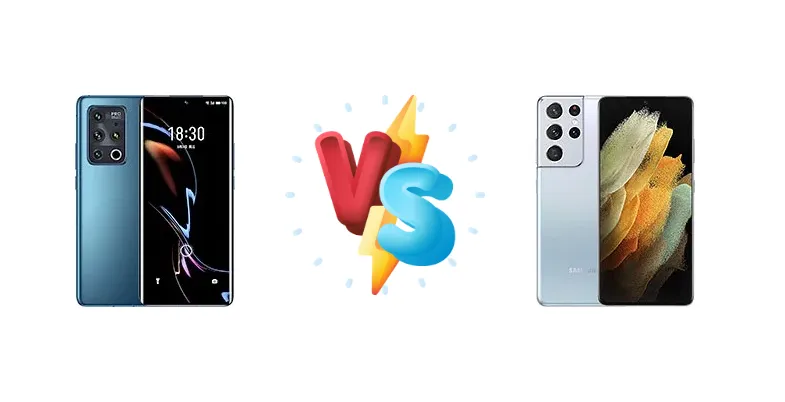
|
🏆 Quick Verdict
For most users, the Samsung Galaxy S21 Ultra 5G offers a more complete package. Its superior display brightness, versatile camera system, and wider availability outweigh the Meizu 18 Pro’s faster charging and slightly more compact design. However, users prioritizing a smaller phone and rapid charging will find the Meizu compelling.
| PHONES | ||
|---|---|---|
| Phone Names | Meizu 18 Pro | Samsung Galaxy S21 Ultra 5G |
| Network | ||
|---|---|---|
| 2G bands | GSM 850 / 900 / 1800 / 1900 | GSM 850 / 900 / 1800 / 1900 |
| 3G bands | HSDPA 850 / 900 / 1700(AWS) / 1900 / 2100 | HSDPA 850 / 900 / 1700(AWS) / 1900 / 2100 |
| 4G bands | 1, 2, 3, 4, 5, 7, 8, 12, 34, 38, 39, 40, 41 | 1, 2, 3, 4, 5, 7, 8, 12, 13, 14, 18, 19, 20, 25, 26, 28, 30, 38, 39, 40, 41, 46, 48, 66, 71 - SM-G998U1 |
| 5G bands | 1, 3, 41, 77, 78, 79 SA/NSA | 2, 5, 25, 41, 66, 71, 260, 261 SA/NSA/Sub6/mmWave - SM-G998U1 |
| Speed | HSPA, LTE, 5G | HSPA 42.2/5.76 Mbps, LTE (7CA) Cat20 2000/200 Mbps, 5G (5+ Gbps DL) |
| Technology | GSM / HSPA / LTE / 5G | GSM / CDMA / HSPA / EVDO / LTE / 5G |
| - | 1, 3, 5, 7, 8, 20, 28, 38, 40, 41, 66, 77, 78 SA/NSA/Sub6 - SM-G998B | |
| Launch | ||
|---|---|---|
| Announced | 2021, March 03. Released 2021, March 08 | 2021, January 14 |
| Status | Discontinued | Available. Released 2021, January 29 |
| Body | ||
|---|---|---|
| Build | - | Glass front (Gorilla Glass Victus), glass back (Gorilla Glass Victus), aluminum frame |
| Dimensions | 162.5 x 73 x 8.1 mm (6.40 x 2.87 x 0.32 in) | 165.1 x 75.6 x 8.9 mm (6.5 x 2.98 x 0.35 in) |
| SIM | Nano-SIM + Nano-SIM | · Nano-SIM + eSIM· Nano-SIM + Nano-SIM + eSIM (max 2 at a time) |
| Weight | 189 g (6.67 oz) | 227 g (Sub6), 229 g (mmWave) (8.01 oz) |
| Waterproof | IP68 dust/water resistant (up to 1.5m for 30 min) Stylus support | |
| Display | ||
|---|---|---|
| Protection | Corning Gorilla Glass 6 | Corning Gorilla Glass Victus |
| Resolution | 1440 x 3200 pixels, 20:9 ratio (~526 ppi density) | 1440 x 3200 pixels, 20:9 ratio (~515 ppi density) |
| Size | 6.7 inches, 107.6 cm2 (~90.7% screen-to-body ratio) | 6.8 inches, 112.1 cm2 (~89.8% screen-to-body ratio) |
| Type | Super AMOLED, 120Hz, HDR10+, 420 nits (typ), 1300 nits (peak) | Dynamic AMOLED 2X, 120Hz, HDR10+, 1500 nits (peak) |
| - | Always-on display | |
| Platform | ||
|---|---|---|
| CPU | Octa-core (1x2.84 GHz Cortex-X1 & 3x2.42 GHz Cortex-A78 & 4x1.80 GHz Cortex-A55) | Octa-core (1x2.9 GHz Cortex-X1 & 3x2.80 GHz Cortex-A78 & 4x2.2 GHz Cortex-A55) - InternationalOcta-core (1x2.84 GHz Cortex-X1 & 3x2.42 GHz Cortex-A78 & 4x1.80 GHz Cortex-A55) - USA/China |
| Chipset | Qualcomm SM8350 Snapdragon 888 5G (5 nm) | Exynos 2100 (5 nm) - InternationalQualcomm SM8350 Snapdragon 888 5G (5 nm) - USA/China |
| GPU | Adreno 660 | Mali-G78 MP14 - InternationalAdreno 660 - USA/China |
| OS | Android 11, Flyme 9 | Android 11, up to 4 major Android upgrades, One UI 6.1 |
| Memory | ||
|---|---|---|
| Card slot | No | No |
| Internal | 128GB 8GB RAM, 256GB 8GB RAM, 256GB 12GB RAM | 128GB 8GB RAM, 128GB 12GB RAM, 256GB 12GB RAM, 256GB 16GB RAM, 512GB 12GB RAM, 512GB 16GB RAM |
| UFS 3.1 | UFS 3.1 | |
| Main Camera | ||
|---|---|---|
| Features | LED flash, HDR, panorama | Laser AF, LED flash, auto-HDR, panorama |
| Quad | - | 108 MP, f/1.8, 24mm (wide), 1/1.33", 0.8µm, PDAF, OIS 10 MP, f/2.4, 72mm (telephoto), 1/3.24", 1.22µm, dual pixel PDAF, OIS, 3x optical zoom 10 MP, f/4.9, 240mm (periscope telephoto), 1/3.24", 1.22µm, dual pixel PDAF, OIS, 10x optical zoom 12 MP, f/2.2, 13mm (ultrawide), 1/2.55", 1.4µm, dual pixel PDAF, Super Steady video |
| Triple | 50 MP, f/1.9, 23mm (wide), 1/1.31", 1.2µm, dual pixel PDAF, OIS 8 MP f/2.4, 79mm (telephoto), 1/4.4", 1.0µm, PDAF, 3x optical zoom 32 MP, f/2.2, 15mm, 130˚ (ultrawide), 1/2.8", 0.8µm 0.3 MP, TOF 3D, f/1.4, (depth) | - |
| Video | 8K, 4K@30/60fps, 1080p; gyro-EIS | 8K@24fps, 4K@30/60fps, 1080p@30/60/120/240fps, HDR10+, stereo sound rec., gyro-EIS |
| Selfie camera | ||
|---|---|---|
| Features | HDR | HDR |
| Single | 44 MP, f/2.4, (wide), 1/2.65”, 0.7µm | 40 MP, f/2.2, 26mm (wide), 1/2.8", 0.7µm, PDAF |
| Video | 4K@30fps, 1080p@30fps | 4K@30/60fps, 1080p@30fps |
| Sound | ||
|---|---|---|
| 3.5mm jack | No | No |
| 35mm jack | No | No |
| Loudspeaker | Yes, with stereo speakers | Yes, with stereo speakers |
| - | 32-bit/384kHz audio Tuned by AKG | |
| Comms | ||
|---|---|---|
| Bluetooth | 5.2, A2DP, LE | 5.2, A2DP, LE |
| NFC | Yes | Yes |
| Positioning | GPS (L1+L5), GLONASS, BDS, GALILEO, QZSS, NavIC | GPS, GLONASS, BDS, GALILEO |
| Radio | No | FM radio (Snapdragon model only; market/operator dependent) |
| USB | USB Type-C | USB Type-C 3.2, OTG |
| WLAN | Wi-Fi 802.11 а/b/g/n/ac/6e, dual-band, Wi-Fi Direct | Wi-Fi 802.11 a/b/g/n/ac/6e, dual-band, Wi-Fi Direct |
| Features | ||
|---|---|---|
| Sensors | Fingerprint (under display, ultrasonic), accelerometer, gyro, proximity, compass | Fingerprint (under display, ultrasonic), accelerometer, gyro, proximity, compass, barometer |
| - | Samsung DeX, Samsung Wireless DeX (desktop experience support) Bixby natural language commands and dictation Samsung Pay (Visa, MasterCard certified) Ultra Wideband (UWB) support | |
| Battery | ||
|---|---|---|
| Charging | 40W wired, PD3.0, QC4, 40% in 15 min, 100% in 50 min 40W wireless 10W reverse wireless | 25W wired, PD3.0 15W wireless (Qi) 4.5W reverse wireless |
| Type | Li-Po 4500 mAh | Li-Ion 5000 mAh |
| Misc | ||
|---|---|---|
| Colors | Blue, White, Gray | Phantom Black, Phantom Silver, Phantom Titanium, Phantom Navy, Phantom Brown, Navy |
| Models | - | SM-G998B, SM-G998B/DS, SM-G998U, SM-G998U1, SM-G998W, SM-G998N, SM-G9980 |
| Price | About 640 EUR | $ 240.01 / C$ 353.20 / £ 202.99 / € 264.99 |
| SAR | - | 0.77 W/kg (head) 1.02 W/kg (body) |
| SAR EU | - | 0.71 W/kg (head) 1.58 W/kg (body) |
| Pricing | ||
|---|---|---|
| 128GB 12GB RAM | - | $ 384.99 |
| 256GB 12GB RAM | - | $ 998.00 |
| 512GB 12GB RAM | - | $ 1,179.99 |
| RENEWED | - | $ 459.00 |
| Tests | ||
|---|---|---|
| Battery life | - | Endurance rating 114h |
| Camera | - | Photo / Video |
| Display | - | Contrast ratio: Infinite (nominal) |
| Loudspeaker | - | -25.5 LUFS (Very good) |
| Performance | - | AnTuTu: 657150 (v8) GeekBench: 3518 (v5.1) GFXBench: 33fps (ES 3.1 onscreen) |
Meizu 18 Pro
- Significantly faster wired and wireless charging
- More compact and pocketable design
- Potentially better thermal management due to smaller size
- Less versatile camera system
- Lower display brightness
- Limited availability compared to Samsung
Samsung Galaxy S21 Ultra 5G
- Brighter and more vibrant display
- More versatile camera system with superior zoom
- Wider availability and ecosystem support
- Slower charging speeds
- Larger and less comfortable to hold for some users
- Exynos variant may exhibit thermal throttling
Display Comparison
The Samsung Galaxy S21 Ultra boasts a significantly brighter display, peaking at 1023 nits measured, compared to the Meizu 18 Pro’s unspecified peak brightness. This translates to better outdoor visibility. While both likely utilize high refresh rate panels, Samsung’s display benefits from its larger size and potentially more advanced LTPO technology for adaptive refresh rate control, improving battery efficiency. The S21 Ultra’s ‘Infinite’ contrast ratio suggests a superior OLED panel with deeper blacks, enhancing the viewing experience for media consumption.
Camera Comparison
The Samsung Galaxy S21 Ultra’s camera system is far more comprehensive. While both phones offer excellent photo and video capabilities, the S21 Ultra’s multiple lenses (including a dedicated telephoto lens with significant optical zoom) provide greater versatility. The Meizu 18 Pro’s camera specs are less detailed, lacking information on sensor sizes and lens apertures. The S21 Ultra’s larger main sensor and advanced image processing algorithms will likely result in superior low-light performance and dynamic range. Ignoring the often-underperforming 2MP macro lenses found on many phones, the S21 Ultra’s overall camera package is a clear advantage.
Performance
Both phones utilize the Qualcomm Snapdragon 888 5G (5nm) in the USA/China markets, meaning CPU performance will be very similar. The S21 Ultra’s international variant with the Exynos 2100, while also 5nm, historically exhibits slightly lower sustained performance and potentially higher thermal throttling compared to the Snapdragon variant. The S21 Ultra’s CPU clocks slightly higher (2.9 GHz vs 2.84 GHz on the Meizu’s X1 core), but this difference is unlikely to be noticeable in everyday use. Both devices feature ample RAM (12GB in comparable configurations) and LPDDR5 support, ensuring smooth multitasking. Thermal management will be a key differentiator, with the Meizu’s smaller form factor potentially offering better heat dissipation.
Battery Life
Both devices have an endurance rating of 114h, suggesting similar overall battery life despite differing battery capacities (not specified for the Meizu). However, the Meizu 18 Pro significantly outperforms the S21 Ultra in charging speed. 40W wired charging allows for a 40% charge in 15 minutes and a full charge in 50 minutes, compared to the S21 Ultra’s slower 25W wired charging. The Meizu also offers 40W wireless charging, dwarfing the S21 Ultra’s 15W Qi wireless charging. The Meizu’s 10W reverse wireless charging is also more useful than the S21 Ultra’s 4.5W offering.
Buying Guide
Buy the Meizu 18 Pro if you need a genuinely compact flagship experience, value extremely fast 40W wireless charging, and prefer a cleaner, less feature-bloated Android skin. Buy the Samsung Galaxy S21 Ultra 5G if you prioritize a stunning, bright display, a highly versatile camera system with excellent zoom capabilities, and a broader ecosystem of accessories and support.