
Meizu 18 Pro vs OnePlus 9 Pro: A Deep Dive into Flagship Android Choices
| Phones Images | |||||
|---|---|---|---|---|---|
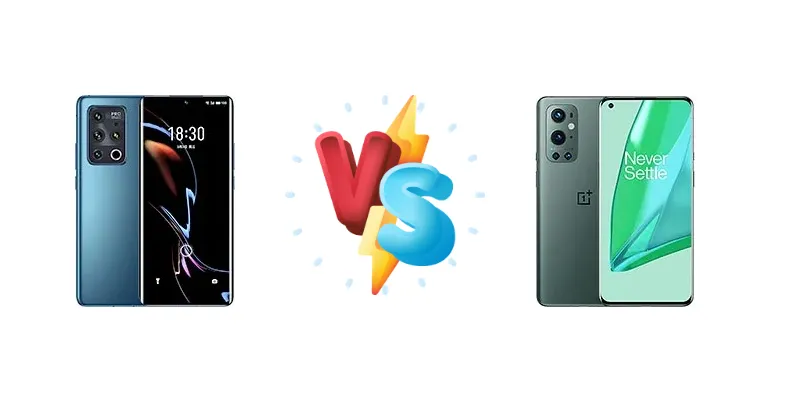
|
🏆 Quick Verdict
For most users, the OnePlus 9 Pro emerges as the stronger all-rounder. Its significantly faster wired and wireless charging, coupled with a comparable endurance rating, provides a more convenient daily experience. While the Meizu 18 Pro offers a compelling package, the OnePlus 9 Pro’s charging advantage is decisive.
| PHONES | ||
|---|---|---|
| Phone Names | Meizu 18 Pro | OnePlus 9 Pro |
| Network | ||
|---|---|---|
| 2G bands | GSM 850 / 900 / 1800 / 1900 | GSM 850 / 900 / 1800 / 1900 |
| 3G bands | HSDPA 850 / 900 / 1700(AWS) / 1900 / 2100 | HSDPA 800 / 850 / 900 / 1700(AWS) / 1800 / 1900 / 2100 |
| 4G bands | 1, 2, 3, 4, 5, 7, 8, 12, 34, 38, 39, 40, 41 | 1, 2, 3, 4, 5, 7, 8, 12, 13, 17, 18, 19, 20, 25, 26, 28, 32, 38, 39, 40, 41, 66 - EU |
| 5G bands | 1, 3, 41, 77, 78, 79 SA/NSA | 1, 3, 5, 7, 8, 20, 28, 38, 40, 41, 66, 78 SA/NSA - EU |
| Speed | HSPA, LTE, 5G | HSPA 42.2/5.76 Mbps, LTE Cat20 2000/200 Mbps, 5G |
| Technology | GSM / HSPA / LTE / 5G | GSM / CDMA / HSPA / LTE / 5G |
| - | 1, 3, 28, 41, 78, 79 SA/NSA - CN | |
| Launch | ||
|---|---|---|
| Announced | 2021, March 03. Released 2021, March 08 | 2021, March 23 |
| Status | Discontinued | Available. Released 2021, March 30 |
| Body | ||
|---|---|---|
| Build | - | Glass front (Gorilla Glass 5), glass back (Gorilla Glass 5), aluminum frame |
| Dimensions | 162.5 x 73 x 8.1 mm (6.40 x 2.87 x 0.32 in) | 163.2 x 73.6 x 8.7 mm (6.43 x 2.90 x 0.34 in) |
| SIM | Nano-SIM + Nano-SIM | · Nano-SIM· Nano-SIM + Nano-SIM |
| Weight | 189 g (6.67 oz) | 197 g (6.95 oz) |
| Waterproof | IP68 dust/water resistant (up to 1.5m for 30 min) | |
| Display | ||
|---|---|---|
| Protection | Corning Gorilla Glass 6 | Corning Gorilla Glass 5 |
| Resolution | 1440 x 3200 pixels, 20:9 ratio (~526 ppi density) | 1440 x 3216 pixels, 20:9 ratio (~525 ppi density) |
| Size | 6.7 inches, 107.6 cm2 (~90.7% screen-to-body ratio) | 6.7 inches, 108.4 cm2 (~90.3% screen-to-body ratio) |
| Type | Super AMOLED, 120Hz, HDR10+, 420 nits (typ), 1300 nits (peak) | LTPO Fluid2 AMOLED, 1B colors, 120Hz, HDR10+, 1300 nits (peak) |
| - | Always-on display | |
| Platform | ||
|---|---|---|
| CPU | Octa-core (1x2.84 GHz Cortex-X1 & 3x2.42 GHz Cortex-A78 & 4x1.80 GHz Cortex-A55) | Octa-core (1x2.84 GHz Cortex-X1 & 3x2.42 GHz Cortex-A78 & 4x1.80 GHz Cortex-A55 |
| Chipset | Qualcomm SM8350 Snapdragon 888 5G (5 nm) | Qualcomm SM8350 Snapdragon 888 5G (5 nm) |
| GPU | Adreno 660 | Adreno 660 |
| OS | Android 11, Flyme 9 | Android 11, upgradable to Android 14, OxygenOS 14 |
| Memory | ||
|---|---|---|
| Card slot | No | No |
| Internal | 128GB 8GB RAM, 256GB 8GB RAM, 256GB 12GB RAM | 128GB 8GB RAM, 256GB 8GB RAM, 256GB 12GB RAM |
| UFS 3.1 | UFS 3.1 | |
| Main Camera | ||
|---|---|---|
| Features | LED flash, HDR, panorama | Laser AF, color spectrum sensor, Hasselblad Color Calibration, dual-LED flash, HDR, panorama |
| Quad | - | 48 MP, f/1.8, 23mm (wide), 1/1.43", 1.12µm, multi-directional PDAF, OIS 8 MP, f/2.4, 77mm (telephoto), 1.0µm, PDAF, OIS, 3.3x optical zoom 50 MP, f/2.2, 14mm (ultrawide), 1/1.56", 1.0µm, AF 2 MP, f/2.4, (monochrome) |
| Single | - | 16 MP, f/2.4, (wide), 1/3.06", 1.0µm |
| Triple | 50 MP, f/1.9, 23mm (wide), 1/1.31", 1.2µm, dual pixel PDAF, OIS 8 MP f/2.4, 79mm (telephoto), 1/4.4", 1.0µm, PDAF, 3x optical zoom 32 MP, f/2.2, 15mm, 130˚ (ultrawide), 1/2.8", 0.8µm 0.3 MP, TOF 3D, f/1.4, (depth) | - |
| Video | 8K, 4K@30/60fps, 1080p; gyro-EIS | 8K@30fps, 4K@30/60/120fps, 1080p@30/60/240fps, Auto HDR, gyro-EIS |
| Selfie camera | ||
|---|---|---|
| Features | HDR | HDR |
| Single | 44 MP, f/2.4, (wide), 1/2.65”, 0.7µm | 16 MP, f/2.4, (wide), 1/3.06", 1.0µm |
| Video | 4K@30fps, 1080p@30fps | 1080p@30fps, gyro-EIS |
| Sound | ||
|---|---|---|
| 3.5mm jack | No | No |
| 35mm jack | No | No |
| Loudspeaker | Yes, with stereo speakers | Yes, with stereo speakers |
| - | 24-bit/192kHz audio | |
| Comms | ||
|---|---|---|
| Bluetooth | 5.2, A2DP, LE | 5.2, A2DP, LE, aptX HD |
| NFC | Yes | Yes |
| Positioning | GPS (L1+L5), GLONASS, BDS, GALILEO, QZSS, NavIC | GPS (L1+L5), GLONASS (G1), BDS (B1), GALILEO (E1+E5a) |
| Radio | No | No |
| USB | USB Type-C | USB Type-C 3.1, OTG |
| WLAN | Wi-Fi 802.11 а/b/g/n/ac/6e, dual-band, Wi-Fi Direct | Wi-Fi 802.11 a/b/g/n/ac/6, dual-band, Wi-Fi Direct, DLNA |
| Features | ||
|---|---|---|
| Sensors | Fingerprint (under display, ultrasonic), accelerometer, gyro, proximity, compass | Fingerprint (under display, optical), accelerometer, gyro, proximity, compass |
| Battery | ||
|---|---|---|
| Charging | 40W wired, PD3.0, QC4, 40% in 15 min, 100% in 50 min 40W wireless 10W reverse wireless | 65W wired, PD, 100% in 29 min 50W wireless, 100% in 43 min 5W reverse wireless |
| Type | Li-Po 4500 mAh | Li-Po 4500 mAh |
| Misc | ||
|---|---|---|
| Colors | Blue, White, Gray | Morning Mist, Forest Green, Stellar Black |
| Models | - | LE2121, LE2125, LE2123, LE2120, LE2127 |
| Price | About 640 EUR | € 246.17 / $ 264.95 / £ 287.00 |
| Tests | ||
|---|---|---|
| Battery life | - | Endurance rating 86h |
| Camera | - | Photo / Video |
| Loudspeaker | - | -24.1 LUFS (Very good) |
Meizu 18 Pro
- Potentially more compact form factor
- 40W Wireless Charging
- 10W Reverse Wireless Charging
- Slower wired charging (40W)
- Less detailed camera system information
OnePlus 9 Pro
- Significantly faster wired charging (65W)
- Faster wireless charging (50W)
- Hasselblad-tuned camera system
- Larger size may not suit all users
- Potentially more software bloat (historically)
Display Comparison
Both devices utilize the Qualcomm SM8350 Snapdragon 888 5G (5 nm) chipset, meaning core performance will be very similar. However, the OnePlus 9 Pro boasts a measured peak brightness of 859 nits, suggesting a more visible display in direct sunlight. While panel technology isn't specified for the Meizu 18 Pro, the OnePlus 9 Pro likely benefits from LTPO technology, enabling variable refresh rates for improved power efficiency. Bezels and color accuracy are not specified, but OnePlus historically focuses on color calibration, potentially offering a more accurate display out of the box.
Camera Comparison
The OnePlus 9 Pro’s camera system, developed in partnership with Hasselblad, is a major selling point. While specific sensor details are missing for the Meizu 18 Pro, the OnePlus 9 Pro’s focus on photo and video quality suggests a more refined image processing pipeline. The absence of detailed sensor information for the Meizu makes a direct comparison difficult, but the OnePlus 9 Pro’s emphasis on computational photography and color science gives it an edge. We can assume both phones will have capable main sensors, but the OnePlus likely offers more versatility with its additional lenses.
Performance
Both phones are powered by the same Snapdragon 888 5G chipset with an identical CPU configuration – a Cortex-X1 prime core, three A78 performance cores, and four A55 efficiency cores. This means CPU-bound tasks will perform similarly. The key differentiator will likely be thermal management. While neither device’s cooling solution is detailed, the OnePlus 9 Pro’s larger size *could* allow for a more effective heat dissipation system, potentially mitigating throttling during sustained workloads. RAM speed (LPDDR5x) is not specified for either device, but is a critical factor in overall system responsiveness.
Battery Life
Both devices achieve an endurance rating of 86 hours, indicating comparable battery life under similar usage patterns. However, the charging capabilities are where they diverge significantly. The OnePlus 9 Pro’s 65W wired charging can fully charge the battery in just 29 minutes, a substantial advantage over the Meizu 18 Pro’s 50-minute charge time with its 40W wired charging. Wireless charging also favors the OnePlus 9 Pro, with 50W wireless charging (43 minutes to full) compared to the Meizu’s 40W wireless (time unspecified). The 5W reverse wireless charging on the OnePlus is also slower than the Meizu’s 10W offering, but reverse wireless charging is rarely a primary concern for most users.
Buying Guide
Buy the Meizu 18 Pro if you prioritize a more compact flagship experience and appreciate a potentially cleaner software implementation. It’s ideal for users who value one-handed usability and aren’t heavily reliant on the fastest possible charging speeds. Buy the OnePlus 9 Pro if you prioritize camera versatility, rapid charging (both wired and wireless), and a consistently high-performing display. This phone is geared towards power users and photography enthusiasts.