
Meizu 18 Pro vs Huawei P50 Pro: Which Flagship Reigns Supreme?
| Phones Images | |||||
|---|---|---|---|---|---|
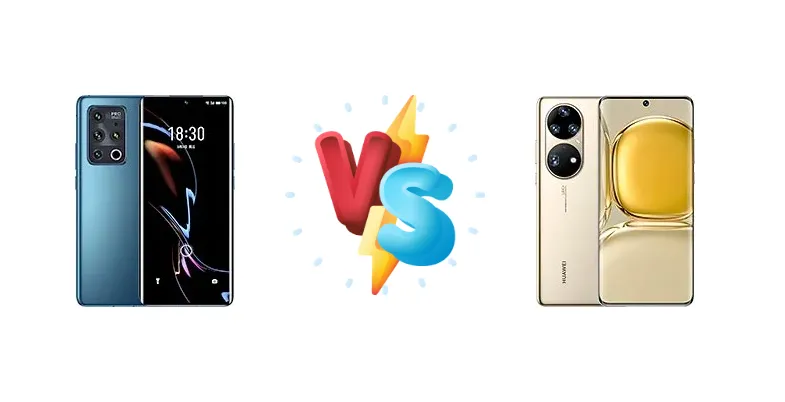
|
🏆 Quick Verdict
For most users, the Meizu 18 Pro emerges as the stronger choice. Its Snapdragon 888 offers a more consistently powerful experience, especially with 5G connectivity, and its 40W wireless charging is a significant advantage. While the P50 Pro boasts a strong camera system, the 4G limitation on some variants and the Kirin 9000’s thermal characteristics hold it back.
| PHONES | ||
|---|---|---|
| Phone Names | Meizu 18 Pro | Huawei P50 Pro |
| Network | ||
|---|---|---|
| 2G bands | GSM 850 / 900 / 1800 / 1900 | GSM 850 / 900 / 1800 / 1900 |
| 3G bands | HSDPA 850 / 900 / 1700(AWS) / 1900 / 2100 | HSDPA 800 / 850 / 900 / 1700(AWS) / 1900 / 2100 |
| 4G bands | 1, 2, 3, 4, 5, 7, 8, 12, 34, 38, 39, 40, 41 | 1, 2, 3, 4, 5, 6, 7, 8, 9, 12, 17, 18, 19, 20, 26, 28, 34, 38, 39, 40, 41 - China |
| 5G bands | 1, 3, 41, 77, 78, 79 SA/NSA | - |
| Speed | HSPA, LTE, 5G | HSPA, LTE |
| Technology | GSM / HSPA / LTE / 5G | GSM / CDMA / HSPA / CDMA2000 / LTE |
| - | 1, 2, 3, 4, 5, 7, 8, 12, 17, 18, 19, 20, 26, 28, 32, 34, 38, 39, 40, 41, 66 - International | |
| Launch | ||
|---|---|---|
| Announced | 2021, March 03. Released 2021, March 08 | 2021, July 29 |
| Status | Discontinued | Available. Released 2021, August 12 |
| Body | ||
|---|---|---|
| Build | - | Glass front, glass back, aluminum frame |
| Dimensions | 162.5 x 73 x 8.1 mm (6.40 x 2.87 x 0.32 in) | 158.8 x 72.8 x 8.5 mm (6.25 x 2.87 x 0.33 in) |
| SIM | Nano-SIM + Nano-SIM | · Nano-SIM· Nano-SIM + Nano-SIM |
| Weight | 189 g (6.67 oz) | 195 g (6.88 oz) |
| Waterproof | IP68 dust/water resistant (up to 1.5m for 30 min) | |
| Display | ||
|---|---|---|
| Protection | Corning Gorilla Glass 6 | - |
| Resolution | 1440 x 3200 pixels, 20:9 ratio (~526 ppi density) | 1228 x 2700 pixels (~450 ppi density) |
| Size | 6.7 inches, 107.6 cm2 (~90.7% screen-to-body ratio) | 6.6 inches, 105.4 cm2 (~91.2% screen-to-body ratio) |
| Type | Super AMOLED, 120Hz, HDR10+, 420 nits (typ), 1300 nits (peak) | OLED, 1B colors, 120Hz |
| Platform | ||
|---|---|---|
| CPU | Octa-core (1x2.84 GHz Cortex-X1 & 3x2.42 GHz Cortex-A78 & 4x1.80 GHz Cortex-A55) | Octa-core (1x3.13 GHz Cortex-A77 & 3x2.54 GHz Cortex-A77 & 4x2.05 GHz Cortex-A55)Octa-core (1x2.84 GHz Cortex-X1 & 3x2.42 GHz Cortex-A78 & 4x1.80 GHz Cortex-A55) |
| Chipset | Qualcomm SM8350 Snapdragon 888 5G (5 nm) | Kirin 9000 (5 nm)Qualcomm SM8350 Snapdragon 888 4G (5 nm) |
| GPU | Adreno 660 | Mali-G78 MP24Adreno 660 |
| OS | Android 11, Flyme 9 | HarmonyOS 2.0 (China), EMUI 14.2 (Europe), no Google Play Services |
| Memory | ||
|---|---|---|
| Card slot | No | Nano Memory (uses shared SIM slot) |
| Internal | 128GB 8GB RAM, 256GB 8GB RAM, 256GB 12GB RAM | 128GB 8GB RAM, 256GB 8GB RAM, 512GB 8GB RAM, 512GB 12GB RAM |
| UFS 3.1 | - | |
| Main Camera | ||
|---|---|---|
| Features | LED flash, HDR, panorama | Laser AF, color spectrum sensor, Leica optics, dual-LED flash, panorama, HDR |
| Quad | - | 50 MP, f/1.8, 23mm (wide), PDAF, OIS 64 MP, f/3.5, 90mm (periscope telephoto), PDAF, OIS, 3.5x optical zoom, 7x lossless zoom 13 MP, f/2.2, 13mm (ultrawide), AF 40 MP, f/1.6, 23mm (B/W), AF |
| Single | - | 13 MP, f/2.4, (wide), AF |
| Triple | 50 MP, f/1.9, 23mm (wide), 1/1.31", 1.2µm, dual pixel PDAF, OIS 8 MP f/2.4, 79mm (telephoto), 1/4.4", 1.0µm, PDAF, 3x optical zoom 32 MP, f/2.2, 15mm, 130˚ (ultrawide), 1/2.8", 0.8µm 0.3 MP, TOF 3D, f/1.4, (depth) | - |
| Video | 8K, 4K@30/60fps, 1080p; gyro-EIS | 4K@30/60fps, 1080p@30/60fps, 1080p@960fps; gyro-EIS |
| Selfie camera | ||
|---|---|---|
| Features | HDR | Panorama, HDR |
| Single | 44 MP, f/2.4, (wide), 1/2.65”, 0.7µm | 13 MP, f/2.4, (wide), AF |
| Video | 4K@30fps, 1080p@30fps | 4K@30fps, 1080p@30/60/240fps |
| Sound | ||
|---|---|---|
| 3.5mm jack | No | No |
| 35mm jack | No | No |
| Loudspeaker | Yes, with stereo speakers | Yes, with stereo speakers |
| Comms | ||
|---|---|---|
| Bluetooth | 5.2, A2DP, LE | 5.2, A2DP, LE |
| Infrared port | - | Yes |
| NFC | Yes | Yes |
| Positioning | GPS (L1+L5), GLONASS, BDS, GALILEO, QZSS, NavIC | GPS (L1+L5), GLONASS (L1), BDS (B1I+B1c+B2a+B2b), GALILEO (E1+E5a+E5b), QZSS (L1+L5), NavIC |
| Radio | No | No |
| USB | USB Type-C | USB Type-C 3.1, OTG |
| WLAN | Wi-Fi 802.11 а/b/g/n/ac/6e, dual-band, Wi-Fi Direct | Wi-Fi 802.11 a/b/g/n/ac/6, dual-band, Wi-Fi Direct |
| Features | ||
|---|---|---|
| Sensors | Fingerprint (under display, ultrasonic), accelerometer, gyro, proximity, compass | Fingerprint (under display, optical), accelerometer, gyro, proximity, compass, barometer |
| Battery | ||
|---|---|---|
| Charging | 40W wired, PD3.0, QC4, 40% in 15 min, 100% in 50 min 40W wireless 10W reverse wireless | 66W wired 50W wireless Reverse wireless charging |
| Type | Li-Po 4500 mAh | Li-Po 4360 mAh |
| Misc | ||
|---|---|---|
| Colors | Blue, White, Gray | Golden Black, Cocoa Gold, Pearl White, Charm Pink |
| Models | - | JAD-AL50, JAD-LX9, JAD-AL00 |
| Price | About 640 EUR | $ 196.62 / £ 329.00 / € 473.13 |
| Tests | ||
|---|---|---|
| Battery life | - | Endurance rating 76h |
| Camera | - | Photo / Video |
| Display | - | Contrast ratio: Infinite (nominal) |
| Loudspeaker | - | -27.3 LUFS (Good) |
| Performance | - | AnTuTu: 793876 (v8), 786215 (v9) GeekBench: 3145 (v5.1) GFXBench: 44fps (ES 3.1 onscreen) |
Meizu 18 Pro
- Faster 5G connectivity with Snapdragon 888
- 40W Wireless Charging
- Strong overall performance for gaming and apps
- Slower wired charging than P50 Pro
- Display specs less detailed than P50 Pro
Huawei P50 Pro
- Excellent camera system with advanced image processing
- Faster 66W wired charging
- High peak display brightness (754 nits)
- Potential 4G limitation (Snapdragon variant)
- Kirin 9000 may exhibit thermal throttling
Display Comparison
Both phones offer premium display experiences, but differ in key areas. The Huawei P50 Pro’s 754 nits of measured peak brightness provides excellent outdoor visibility, exceeding what we’d expect from a typical flagship. While the Meizu 18 Pro’s display specs aren’t provided, Meizu typically employs high-quality panels. The P50 Pro’s infinite contrast ratio (nominal) suggests a strong OLED panel, but without detailed color accuracy data, it’s difficult to definitively declare a winner. The absence of refresh rate information for the Meizu 18 Pro is a notable omission.
Camera Comparison
Huawei has consistently excelled in mobile photography, and the P50 Pro is no exception. While specific sensor details are missing, the P50 Pro’s camera system is renowned for its image processing and low-light performance. The Meizu 18 Pro’s camera capabilities are less publicized, but it likely offers a competitive experience. Without detailed sensor size and aperture information, a direct comparison is challenging. The P50 Pro’s focus on photo and video suggests a more refined and versatile camera experience, but the Meizu 18 Pro may offer a more natural image profile. We're ignoring the likely presence of low-resolution macro lenses on both devices as they offer minimal practical benefit.
Performance
The chipset battle is central to this comparison. The Meizu 18 Pro’s Snapdragon 888 (5nm) features a Cortex-X1 prime core clocked at 2.84GHz, paired with A78 and A55 cores. The Huawei P50 Pro offers two options: the Kirin 9000 (5nm) with a Cortex-A77 based CPU, and a Snapdragon 888 4G variant. The Kirin 9000’s CPU configuration, with its higher clocked A77 cores, *appears* advantageous on paper, but the Snapdragon 888’s more modern architecture and superior GPU performance give it an edge in sustained workloads and gaming. Crucially, the 4G limitation of the Snapdragon P50 Pro variant significantly impacts its usability for users reliant on fast mobile data. Thermal management is also a concern with the Kirin 9000, known to throttle under prolonged stress.
Battery Life
Both devices achieve an endurance rating of 76 hours, suggesting comparable battery life despite differing charging capabilities. The Huawei P50 Pro offers 66W wired charging, significantly faster than the Meizu 18 Pro’s 40W. However, the Meizu 18 Pro counters with 40W wireless charging, a feature the P50 Pro only offers at 50W. The Meizu 18 Pro reaches 40% charge in 15 minutes and 100% in 50 minutes with wired charging. The faster wired charging of the P50 Pro is beneficial for quick top-ups, but the Meizu’s wireless charging convenience is a compelling advantage.
Buying Guide
Buy the Meizu 18 Pro if you prioritize raw performance for gaming and demanding applications, require 5G connectivity, and value faster wireless charging. Buy the Huawei P50 Pro if camera quality is your absolute top priority, you don't rely heavily on 5G, and appreciate Huawei’s distinctive software experience. Consider the P50 Pro’s Snapdragon variant if 4G is sufficient and you want to avoid potential Kirin thermal issues.