
Meizu 18 Pro vs Google Pixel 7: A Detailed Comparison of Flagship Androids
| Phones Images | |||||
|---|---|---|---|---|---|
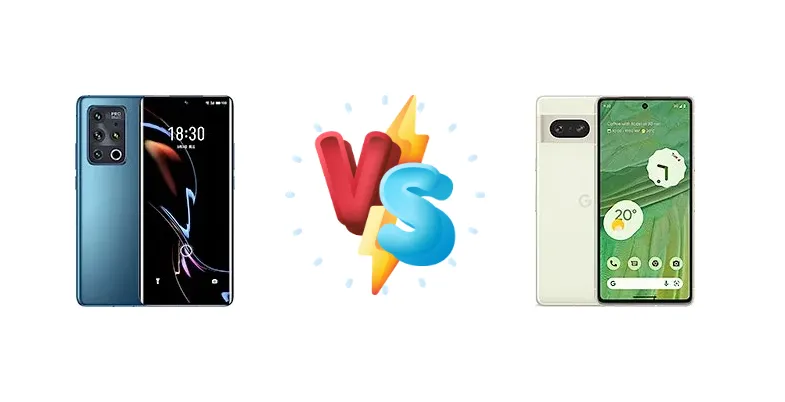
|
🏆 Quick Verdict
For most users, the Google Pixel 7 emerges as the better choice. While the Meizu 18 Pro offers competitive specs and faster charging, the Pixel 7’s superior software support, refined camera experience, and comparable battery life make it a more compelling long-term investment.
| PHONES | ||
|---|---|---|
| Phone Names | Meizu 18 Pro | Google Pixel 7 |
| Network | ||
|---|---|---|
| 2G bands | GSM 850 / 900 / 1800 / 1900 | GSM 850 / 900 / 1800 / 1900 |
| 3G bands | HSDPA 850 / 900 / 1700(AWS) / 1900 / 2100 | HSDPA 800 / 850 / 900 / 1700(AWS) / 1900 / 2100 |
| 4G bands | 1, 2, 3, 4, 5, 7, 8, 12, 34, 38, 39, 40, 41 | 1, 2, 3, 4, 5, 7, 8, 12, 13, 14, 17, 18, 19, 20, 25, 26, 28, 29, 30, 38, 40, 41, 42, 46, 48, 66, 71 - GQML3 |
| 5G bands | 1, 3, 41, 77, 78, 79 SA/NSA | 1, 2, 3, 4, 5, 7, 8, 12, 13, 14, 17, 18, 19, 20, 25, 26, 28, 29, 30, 38, 40, 41, 46, 48, 66, 71, 260, 261 SA/NSA/Sub6/mmWave - GQML3 |
| Speed | HSPA, LTE, 5G | HSPA, LTE, 5G |
| Technology | GSM / HSPA / LTE / 5G | GSM / CDMA / HSPA / EVDO / LTE / 5G |
| - | 1, 2, 3, 5, 7, 8, 12, 14, 20, 25, 28, 30, 38, 40, 41, 48, 66, 71, 75, 76, 77, 78 SA/NSA/Sub6 - GVU6C | |
| Launch | ||
|---|---|---|
| Announced | 2021, March 03. Released 2021, March 08 | 2022, October 06 |
| Status | Discontinued | Available. Released 2022, October 13 |
| Body | ||
|---|---|---|
| Build | - | Glass front (Gorilla Glass Victus), glass back (Gorilla Glass Victus), aluminum frame |
| Dimensions | 162.5 x 73 x 8.1 mm (6.40 x 2.87 x 0.32 in) | 155.6 x 73.2 x 8.7 mm (6.13 x 2.88 x 0.34 in) |
| SIM | Nano-SIM + Nano-SIM | Nano-SIM + eSIM |
| Weight | 189 g (6.67 oz) | 197 g (6.95 oz) |
| Waterproof | IP68 dust/water resistant (up to 1.5m for 30 min) | |
| Display | ||
|---|---|---|
| Protection | Corning Gorilla Glass 6 | Corning Gorilla Glass Victus |
| Resolution | 1440 x 3200 pixels, 20:9 ratio (~526 ppi density) | 1080 x 2400 pixels, 20:9 ratio (~416 ppi density) |
| Size | 6.7 inches, 107.6 cm2 (~90.7% screen-to-body ratio) | 6.3 inches, 96.7 cm2 (~84.9% screen-to-body ratio) |
| Type | Super AMOLED, 120Hz, HDR10+, 420 nits (typ), 1300 nits (peak) | AMOLED, 90Hz, HDR10+, 1000 nits (HBM), 1400 nits (peak) |
| - | Always-on display | |
| Platform | ||
|---|---|---|
| CPU | Octa-core (1x2.84 GHz Cortex-X1 & 3x2.42 GHz Cortex-A78 & 4x1.80 GHz Cortex-A55) | Octa-core (2x2.85 GHz Cortex-X1 & 2x2.35 GHz Cortex-A78 & 4x1.80 GHz Cortex-A55) |
| Chipset | Qualcomm SM8350 Snapdragon 888 5G (5 nm) | Google Tensor G2 (5 nm) |
| GPU | Adreno 660 | Mali-G710 MP7 |
| OS | Android 11, Flyme 9 | Android 13, upgradable to Android 15, up to 5 major Android upgrades |
| Memory | ||
|---|---|---|
| Card slot | No | No |
| Internal | 128GB 8GB RAM, 256GB 8GB RAM, 256GB 12GB RAM | 128GB 8GB RAM, 256GB 8GB RAM |
| UFS 3.1 | UFS 3.1 | |
| Main Camera | ||
|---|---|---|
| Dual | - | 50 MP, f/1.9, 25mm (wide), 1/1.31", 1.2µm, dual pixel PDAF, OIS 12 MP, f/2.2, 114˚ (ultrawide), 1/2.9", 1.25µm |
| Features | LED flash, HDR, panorama | Laser AF, Dual-LED flash, Pixel Shift, Auto-HDR, panorama |
| Single | - | 10.8 MP, f/2.2, 21mm (ultrawide), 1/3.1", 1.22µm |
| Triple | 50 MP, f/1.9, 23mm (wide), 1/1.31", 1.2µm, dual pixel PDAF, OIS 8 MP f/2.4, 79mm (telephoto), 1/4.4", 1.0µm, PDAF, 3x optical zoom 32 MP, f/2.2, 15mm, 130˚ (ultrawide), 1/2.8", 0.8µm 0.3 MP, TOF 3D, f/1.4, (depth) | - |
| Video | 8K, 4K@30/60fps, 1080p; gyro-EIS | 4K@30/60fps, 1080p@30/60/120/240fps; gyro-EIS, OIS, 10-bit HDR |
| Selfie camera | ||
|---|---|---|
| Features | HDR | HDR, panorama |
| Single | 44 MP, f/2.4, (wide), 1/2.65”, 0.7µm | 10.8 MP, f/2.2, 21mm (ultrawide), 1/3.1", 1.22µm |
| Video | 4K@30fps, 1080p@30fps | 4K@30/60fps, 1080p@30/60fps |
| Sound | ||
|---|---|---|
| 3.5mm jack | No | No |
| 35mm jack | No | No |
| Loudspeaker | Yes, with stereo speakers | Yes, with stereo speakers |
| Comms | ||
|---|---|---|
| Bluetooth | 5.2, A2DP, LE | 5.2, A2DP, LE, aptX HD |
| NFC | Yes | Yes |
| Positioning | GPS (L1+L5), GLONASS, BDS, GALILEO, QZSS, NavIC | GPS (L1+L5), GLONASS (G1), BDS (B1I+B1c+B2a), GALILEO (E1+E5a), QZSS (L1+L5) |
| Radio | No | No |
| USB | USB Type-C | USB Type-C 3.2 |
| WLAN | Wi-Fi 802.11 а/b/g/n/ac/6e, dual-band, Wi-Fi Direct | Wi-Fi 802.11 a/b/g/n/ac/6e, tri-band, Wi-Fi Direct |
| Features | ||
|---|---|---|
| Sensors | Fingerprint (under display, ultrasonic), accelerometer, gyro, proximity, compass | Fingerprint (under display, optical), accelerometer, gyro, proximity, compass, barometer |
| Battery | ||
|---|---|---|
| Charging | 40W wired, PD3.0, QC4, 40% in 15 min, 100% in 50 min 40W wireless 10W reverse wireless | 20W wired, PD3.0, 50% in 30 min 20W wireless Reverse wireless |
| Type | Li-Po 4500 mAh | Li-Ion 4355 mAh |
| Misc | ||
|---|---|---|
| Colors | Blue, White, Gray | Obsidian, Lemongrass, Snow |
| Models | - | GVU6C, GQML3, GO3Z5 |
| Price | About 640 EUR | € 199.00 / $ 179.26 / £ 189.99 / ₹ 28,499 |
| Tests | ||
|---|---|---|
| Battery life | - | Endurance rating 96h |
| Camera | - | Photo / Video |
| Display | - | Contrast ratio: Infinite (nominal) |
| Loudspeaker | - | -26.2 LUFS (Good) |
| Performance | - | AnTuTu: 813114 (v9) GeekBench: 3288 (v5.1) GFXBench: 59fps (ES 3.1 onscreen) |
Meizu 18 Pro
- Faster 40W wired and wireless charging
- Compact and ergonomic design
- Reverse wireless charging capability
- Potentially limited software support
- Snapdragon 888 prone to throttling
- Less advanced camera software
Google Pixel 7
- Guaranteed software updates and feature drops
- Superior camera image processing and AI features
- Brighter and more vibrant display
- Slower 20W charging speeds
- Larger form factor compared to Meizu 18 Pro
- Less focus on raw hardware specifications
Display Comparison
The Google Pixel 7 boasts a significantly brighter display, reaching a measured 974 nits, compared to the Meizu 18 Pro’s unspecified peak brightness. While the Meizu 18 Pro likely offers excellent color accuracy, the Pixel 7’s higher brightness enhances outdoor visibility. Both displays feature an infinite (nominal) contrast ratio, suggesting deep blacks. The Pixel 7’s display technology is likely optimized for Google’s Material You design language, offering a more cohesive visual experience.
Camera Comparison
The Google Pixel 7’s camera system is renowned for its computational photography prowess, leveraging the Tensor G2’s AI capabilities. While specific sensor sizes aren’t provided, the Pixel 7’s image processing excels in dynamic range, low-light performance, and portrait mode accuracy. The Meizu 18 Pro’s camera system, while capable, relies more on hardware specifications. Both phones offer photo and video recording, but the Pixel 7’s Magic Eraser and Photo Unblur features provide unique post-processing advantages. The absence of detailed camera specs for the Meizu 18 Pro makes a direct sensor comparison difficult, but Google’s software advantage is a significant differentiator.
Performance
Both phones utilize an octa-core CPU configuration with a Cortex-X1 prime core, Cortex-A78 performance cores, and Cortex-A55 efficiency cores. However, the Google Pixel 7’s Tensor G2, fabricated on a 5nm process, features a different architectural approach focused on machine learning tasks. The Pixel 7’s CPU clocks slightly higher at 2.85 GHz versus the Meizu 18 Pro’s 2.84 GHz. While synthetic benchmarks might show marginal differences, the Tensor G2 excels in on-device AI processing, impacting features like voice recognition and image processing. The Meizu 18 Pro’s Snapdragon 888, while powerful, is known to throttle under sustained load, potentially impacting long gaming sessions. Both devices likely utilize LPDDR5 RAM, but the Pixel 7 benefits from Google’s software optimizations for memory management.
Battery Life
Both the Meizu 18 Pro and Google Pixel 7 achieve an endurance rating of 96 hours, suggesting comparable real-world battery life despite potentially different battery capacities. However, charging speeds differ significantly. The Meizu 18 Pro supports 40W wired charging, achieving 40% charge in 15 minutes and 100% in 50 minutes, alongside 40W wireless charging and 10W reverse wireless. The Pixel 7 offers a slower 20W wired charge (50% in 30 minutes) and 20W wireless charging. The Meizu 18 Pro’s faster charging is a clear advantage for users who prioritize quick top-ups.
Buying Guide
Buy the Meizu 18 Pro if you prioritize a truly compact flagship form factor, exceptionally fast 40W wireless charging, and don’t mind potentially limited software updates. Buy the Google Pixel 7 if you value a consistently excellent camera experience, guaranteed software support and feature drops from Google, and a more modern, AI-enhanced user experience.