
Meizu 16T vs Realme X2 Pro: A Deep Dive into Snapdragon 855 Flagship Value
| Phones Images | |||||
|---|---|---|---|---|---|
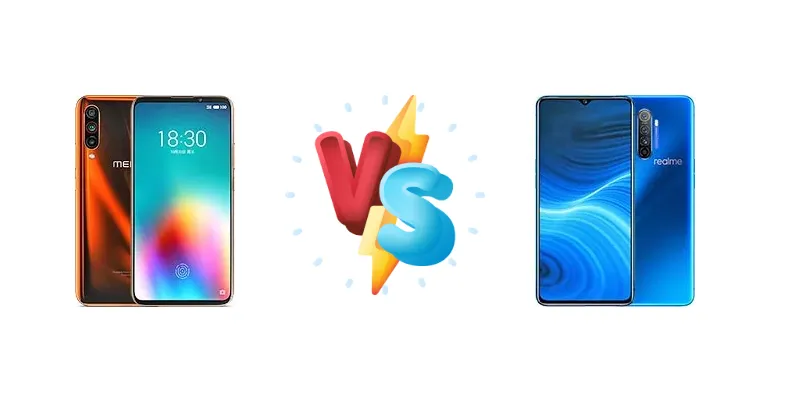
|
🏆 Quick Verdict
For the average user prioritizing battery life and charging speed, the Realme X2 Pro is the clear winner. Its 50W SuperVOOC charging, capable of a full charge in just 35 minutes, significantly outperforms the Meizu 16T’s 18W charging. While both share the Snapdragon 855 platform, the X2 Pro’s ‘Plus’ variant offers a slight performance edge.
| PHONES | ||
|---|---|---|
| Phone Names | Meizu 16T | Realme X2 Pro |
| Network | ||
|---|---|---|
| 2G bands | GSM 850 / 900 / 1800 / 1900 | GSM 850 / 900 / 1800 / 1900 |
| 3G bands | HSDPA 850 / 900 / 1700(AWS) / 1900 / 2100 | HSDPA 850 / 900 / 1700(AWS) / 1900 / 2100 - China |
| 4G bands | 1, 3, 4, 5, 7, 8, 20, 34, 38, 39, 40, 41 | 1, 2, 3, 4, 5, 7, 8, 12, 17, 18, 19, 20, 26, 34, 38, 39, 40, 41 - China |
| Speed | HSPA 42.2/5.76 Mbps, LTE (6CA) Cat20 2000/150 Mbps | HSPA, LTE |
| Technology | GSM / CDMA / HSPA / LTE | GSM / CDMA / HSPA / EVDO / LTE |
| CDMA 800 & TD-SCDMA | 1, 2, 3, 4, 5, 7, 8, 12, 17, 18, 19, 20, 26, 28, 34, 38, 39, 40, 41 - EMEA | |
| Launch | ||
|---|---|---|
| Announced | 2019, October. Released 2019, October | 2019, October 15. Released 2019, October |
| Status | Discontinued | Discontinued |
| Body | ||
|---|---|---|
| Build | - | Glass front (Gorilla Glass 5), glass back (Gorilla Glass 5), aluminum frame |
| Dimensions | 159.6 x 78.2 x 8.3 mm (6.28 x 3.08 x 0.33 in) | 161 x 75.7 x 8.7 mm (6.34 x 2.98 x 0.34 in) |
| SIM | Nano-SIM + Nano-SIM | Nano-SIM + Nano-SIM |
| Weight | 183 g (6.46 oz) | 199 g (7.02 oz) |
| Display | ||
|---|---|---|
| Protection | - | Corning Gorilla Glass 5 |
| Resolution | 1080 x 2232 pixels, 18.5:9 ratio (~382 ppi density) | 1080 x 2400 pixels, 20:9 ratio (~402 ppi density) |
| Size | 6.5 inches, 106.3 cm2 (~85.2% screen-to-body ratio) | 6.5 inches, 103.5 cm2 (~84.9% screen-to-body ratio) |
| Type | Super AMOLED, 430 nits (typ) | Super AMOLED, 90Hz, HDR10+, 1000 nits (peak) |
| Platform | ||
|---|---|---|
| CPU | Octa-core (1x2.84 GHz Kryo 485 & 3x2.42 GHz Kryo 485 & 4x1.78 GHz Kryo 485) | Octa-core (1x2.96 GHz Kryo 485 & 3x2.42 GHz Kryo 485 & 4x1.8 GHz Kryo 485) |
| Chipset | Qualcomm SM8150 Snapdragon 855 (7 nm) | Qualcomm SM8150 Snapdragon 855+ (7 nm) |
| GPU | Adreno 640 | Adreno 640 (700 MHz) |
| OS | Android 9.0 (Pie), Flyme 8 | Android 9.0 (Pie), upgradable to Android 11, Realme UI 2.0 |
| Memory | ||
|---|---|---|
| Card slot | No | No |
| Internal | 128GB 6GB RAM, 128GB 8GB RAM, 256GB 8GB RAM | 64GB 6GB RAM, 128GB 8GB RAM, 256GB 8GB RAM, 256GB 12GB RAM |
| UFS 3.0 | 64GB UFS 2.1, 128/256GB UFS 3.0 | |
| Main Camera | ||
|---|---|---|
| Features | LED flash, HDR, panorama | Dual-LED flash, HDR, panorama |
| Quad | - | 64 MP, f/1.8, 26mm (wide), 1/1.72", 0.8µm, PDAF 13 MP, f/2.5, 52mm (telephoto), 1/3.4", 1.0µm, PDAF, 2x optical zoom 8 MP, f/2.2, 16mm (ultrawide) Auxiliary lens |
| Triple | 12 MP, f/1.9, 24mm (wide), 1/2.55", 1.4µm, PDAF 8 MP, f/2.2, 15mm (ultrawide), 1/4.0", 1.12µm, PDAF 5 MP, f/1.9, 23mm (wide), 1/5.0", 1.12µm, PDAF | - |
| Video | 4K@30/60fps | 4K@30/60fps, 1080p@30/60/120fps, 720p@960fps, gyro-EIS |
| Selfie camera | ||
|---|---|---|
| Features | HDR | HDR |
| Single | 16 MP, f/2.2, 26mm (wide), 1/3.06", 1.0µm | 16 MP, f/2.0, 25mm (wide), 1/3.06", 1.0µm |
| Video | 1080p@30fps | 1080p@30fps, gyro-EIS |
| Sound | ||
|---|---|---|
| 3.5mm jack | Yes | Yes |
| 35mm jack | Yes | Yes |
| Loudspeaker | Yes, with stereo speakers | Yes, with Dolby Atmos stereo speakers (2 dedicated amplifiers) |
| - | 24-bit/192kHz audio (incl. speakers) | |
| Comms | ||
|---|---|---|
| Bluetooth | 5.0, A2DP, LE | 5.0, A2DP, LE |
| NFC | No | Yes |
| Positioning | GPS, GLONASS, BDS | GPS (L1+L5), GLONASS, BDS, GALILEO |
| Radio | No | No |
| USB | USB Type-C 2.0 | USB Type-C 2.0 |
| WLAN | Wi-Fi 802.11 а/b/g/n/ac, dual-band, Wi-Fi Direct | Wi-Fi 802.11 a/b/g/n/ac, dual-band, Wi-Fi Direct |
| Features | ||
|---|---|---|
| Sensors | Fingerprint (under display, optical), accelerometer, gyro, proximity, compass | Fingerprint (under display, optical), accelerometer, gyro, proximity, compass |
| Battery | ||
|---|---|---|
| Charging | 18W wired | 50W wired, 100% in 35 min |
| Type | Li-Po 4500 mAh, non-removable | 4000 mAh, non-removable |
| Misc | ||
|---|---|---|
| Colors | Orange, Blue, Green | Lunar White, Neptune Blue, Red Master Edition, Gray Master Edition |
| Models | - | RMX1931 |
| Price | About 250 EUR | About 440 EUR |
| Tests | ||
|---|---|---|
| Audio quality | - | Noise -91.3dB / Crosstalk -92.5dB |
| Battery life | - | Endurance rating 94h |
| Camera | - | Photo / Video |
| Display | - | Contrast ratio: Infinite (nominal) |
| Loudspeaker | - | Voice 82dB / Noise 75dB / Ring 91dB |
| Performance | - | AnTuTu: 396827 (v7), 467653 (v8) GeekBench: 10373 (v4.4) GFXBench: 37fps (ES 3.1 onscreen) |
Meizu 16T
- Potentially cleaner software experience (Meizu Flyme OS)
- Sleek and minimalist design
- Competitive price point
- Slower 18W charging
- Less powerful Snapdragon 855 chipset
- Limited camera details available
Realme X2 Pro
- Faster Snapdragon 855+ chipset
- Blazing-fast 50W SuperVOOC charging
- Likely superior camera system
- Realme UI can be feature-rich (and potentially bloated)
- May lack the refined build quality of the Meizu 16T
- Software updates may be less consistent
Display Comparison
Both the Meizu 16T and Realme X2 Pro feature displays with an 'Infinite' (nominal) contrast ratio, suggesting excellent black levels likely achieved through OLED technology. However, specific details like peak brightness and color accuracy are missing. Given Realme’s focus on display technology in later models, it’s reasonable to assume the X2 Pro’s panel might offer slightly better color calibration. The absence of high refresh rate support on either device is notable, a feature becoming increasingly common even in this price bracket at the time.
Camera Comparison
Both phones are listed as having 'Photo / Video' capabilities, but specific details are lacking. Without sensor size, aperture, or OIS information, a direct comparison is difficult. However, Realme generally focused on camera performance as a key selling point, suggesting the X2 Pro likely has a more sophisticated camera system. The inclusion of a 2MP macro camera on either device is likely a marketing gimmick, offering limited real-world benefit. Image processing algorithms will also play a significant role, and Realme’s typically leans towards more vibrant, saturated images.
Performance
The core difference in performance lies in the chipsets. The Realme X2 Pro boasts the Snapdragon 855+ (7nm), clocked slightly higher at 2.96 GHz compared to the Meizu 16T’s Snapdragon 855 (7nm) at 2.84 GHz. While both are based on the same architecture, the 855+ benefits from a slightly improved process node and higher clock speeds, resulting in a roughly 15% performance increase in sustained workloads. The CPU core configuration is similar – 1x Kryo 485 prime core, 3x Kryo 485 performance cores, and 4x Kryo 485 efficiency cores – but the X2 Pro’s higher clocks will translate to faster app loading and smoother multitasking. Both likely utilize LPDDR4X RAM, as LPDDR5 was still emerging at this time.
Battery Life
Both devices achieve an impressive endurance rating of 94 hours, indicating similar overall battery life. However, the charging experience is where they diverge dramatically. The Meizu 16T is limited to 18W wired charging, while the Realme X2 Pro supports 50W SuperVOOC charging, achieving a full charge in just 35 minutes. This difference is substantial; the X2 Pro’s charging speed is a game-changer for users who frequently need to top up their battery quickly. The similar endurance ratings suggest the X2 Pro’s slightly more powerful chipset doesn’t significantly impact battery drain, making the faster charging even more valuable.
Buying Guide
Buy the Meizu 16T if you value a minimalist software experience and a potentially more refined build quality, and aren't overly concerned with the fastest possible charging. Buy the Realme X2 Pro if you prioritize rapid charging, a slightly more powerful processor for sustained performance, and don't mind a more feature-rich (and potentially bloated) software experience. The X2 Pro is the better choice for power users and gamers.