
Meizu 16T vs OnePlus 7T Pro 5G McLaren: A Detailed Performance and Value Comparison
| Phones Images | |||||
|---|---|---|---|---|---|
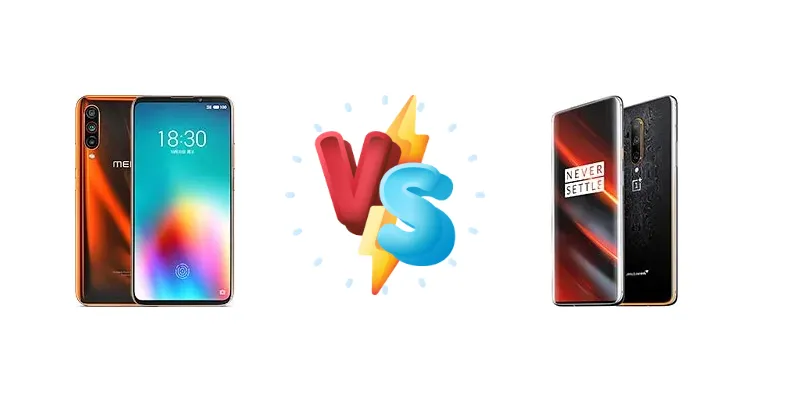
|
🏆 Quick Verdict
For the average user prioritizing speed and convenience, the OnePlus 7T Pro 5G McLaren is the superior choice. Its Snapdragon 855+ chipset and significantly faster 30W charging outweigh the Meizu 16T’s lower price point, offering a smoother, more responsive experience and less downtime.
| PHONES | ||
|---|---|---|
| Phone Names | Meizu 16T | OnePlus 7T Pro 5G McLaren |
| Network | ||
|---|---|---|
| 2G bands | GSM 850 / 900 / 1800 / 1900 | GSM 850 / 900 / 1800 / 1900 |
| 3G bands | HSDPA 850 / 900 / 1700(AWS) / 1900 / 2100 | HSDPA 850 / 900 / 1700(AWS) / 1900 / 2100 |
| 4G bands | 1, 3, 4, 5, 7, 8, 20, 34, 38, 39, 40, 41 | 1, 2, 3, 4, 5, 1, 2, 3, 4, 5, 7, 8, 12, 13, 17, 18, 19, 20, 25, 26, 28, 29, 30, 34, 38, 39, 40, 41, 46, 48, 66, 71 |
| 5G bands | - | 71 SA |
| Speed | HSPA 42.2/5.76 Mbps, LTE (6CA) Cat20 2000/150 Mbps | HSPA 42.2/5.76 Mbps, LTE (5CA) Cat18 1200/150 Mbps, 5G (2+ Gbps DL) |
| Technology | GSM / CDMA / HSPA / LTE | GSM / CDMA / HSPA / LTE / 5G |
| CDMA 800 & TD-SCDMA | CDMA 800 / 1900 & TD-SCDMA | |
| Launch | ||
|---|---|---|
| Announced | 2019, October. Released 2019, October | 2019, October 23. Released 2019, November 05 |
| Status | Discontinued | Discontinued |
| Body | ||
|---|---|---|
| Build | - | Glass front (Gorilla Glass 6), glass back (Gorilla Glass 5), aluminum frame |
| Dimensions | 159.6 x 78.2 x 8.3 mm (6.28 x 3.08 x 0.33 in) | 162.6 x 75.9 x 8.8 mm (6.40 x 2.99 x 0.35 in) |
| SIM | Nano-SIM + Nano-SIM | Nano-SIM + Nano-SIM |
| Weight | 183 g (6.46 oz) | 206 g (7.27 oz) |
| Display | ||
|---|---|---|
| Protection | - | Corning Gorilla Glass 6 |
| Resolution | 1080 x 2232 pixels, 18.5:9 ratio (~382 ppi density) | 1440 x 3120 pixels, 19.5:9 ratio (~516 ppi density) |
| Size | 6.5 inches, 106.3 cm2 (~85.2% screen-to-body ratio) | 6.67 inches, 108.8 cm2 (~88.1% screen-to-body ratio) |
| Type | Super AMOLED, 430 nits (typ) | Fluid AMOLED, 90Hz, HDR10+ |
| Platform | ||
|---|---|---|
| CPU | Octa-core (1x2.84 GHz Kryo 485 & 3x2.42 GHz Kryo 485 & 4x1.78 GHz Kryo 485) | Octa-core (1x2.96 GHz Kryo 485 & 3x2.42 GHz Kryo 485 & 4x1.78 GHz Kryo 485) |
| Chipset | Qualcomm SM8150 Snapdragon 855 (7 nm) | Qualcomm SM8150 Snapdragon 855+ (7 nm) |
| GPU | Adreno 640 | Adreno 640 (700 MHz) |
| OS | Android 9.0 (Pie), Flyme 8 | Android 10, OxygenOS 10.0 |
| Memory | ||
|---|---|---|
| Card slot | No | No |
| Internal | 128GB 6GB RAM, 128GB 8GB RAM, 256GB 8GB RAM | 256GB 12GB RAM |
| UFS 3.0 | UFS 3.0 | |
| Main Camera | ||
|---|---|---|
| Features | LED flash, HDR, panorama | Laser AF, Dual-LED flash, HDR, panorama |
| Triple | 12 MP, f/1.9, 24mm (wide), 1/2.55", 1.4µm, PDAF 8 MP, f/2.2, 15mm (ultrawide), 1/4.0", 1.12µm, PDAF 5 MP, f/1.9, 23mm (wide), 1/5.0", 1.12µm, PDAF | 48 MP, f/1.6, (wide), 1/2.0", 0.8µm, PDAF, OIS 8 MP, f/2.4, (telephoto), 1.0µm, PDAF, OIS, 3x optical zoom 16 MP, f/2.2, 13mm (ultrawide), AF |
| Video | 4K@30/60fps | 4K@30/60fps, 1080p@30/60/240fps, 720p@960fps, Auto HDR, gyro-EIS |
| Selfie camera | ||
|---|---|---|
| Features | HDR | HDR |
| Single | 16 MP, f/2.2, 26mm (wide), 1/3.06", 1.0µm | Motorized pop-up 16 MP, f/2.0, 25mm (wide), 1/3.06", 1.0µm |
| Video | 1080p@30fps | 1080p@30fps, gyro-EIS |
| Sound | ||
|---|---|---|
| 3.5mm jack | Yes | No |
| 35mm jack | Yes | No |
| Loudspeaker | Yes, with stereo speakers | Yes, with stereo speakers |
| Comms | ||
|---|---|---|
| Bluetooth | 5.0, A2DP, LE | 5.1, A2DP, LE, aptX HD |
| NFC | No | Yes |
| Positioning | GPS, GLONASS, BDS | GPS (L1+L5), GLONASS (G1), BDS (B1), GALILEO (E1+E5a) |
| Radio | No | No |
| USB | USB Type-C 2.0 | USB Type-C 3.1, OTG |
| WLAN | Wi-Fi 802.11 а/b/g/n/ac, dual-band, Wi-Fi Direct | Wi-Fi 802.11 a/b/g/n/ac, dual-band, Wi-Fi Direct, DLNA |
| Features | ||
|---|---|---|
| Sensors | Fingerprint (under display, optical), accelerometer, gyro, proximity, compass | Fingerprint (under display, optical), accelerometer, gyro, compass |
| - | Virtual proximity sensing | |
| Battery | ||
|---|---|---|
| Charging | 18W wired | 30W wired |
| Type | Li-Po 4500 mAh, non-removable | Li-Po 4085 mAh, non-removable |
| Misc | ||
|---|---|---|
| Colors | Orange, Blue, Green | Papaya Orange |
| Models | - | HD1925 |
| Price | About 250 EUR | About 800 EUR |
Meizu 16T
- More affordable price point
- Clean and minimalist design (typical of Meizu)
- Capable Snapdragon 855 performance
- Slower 18W charging
- Lacks 5G connectivity
- Potentially inferior camera system
OnePlus 7T Pro 5G McLaren
- Faster Snapdragon 855+ processor
- Significantly faster 30W Warp Charge
- 5G connectivity for future-proofing
- Higher price tag
- OxygenOS, while generally well-regarded, may not appeal to all users
- Potential for software bloat (compared to Meizu's Flyme OS)
Display Comparison
While both devices likely feature AMOLED panels (based on brand history), specific details like peak brightness and color accuracy are unavailable. However, the OnePlus 7T Pro 5G McLaren, being a flagship, likely boasts a higher peak brightness and potentially a more refined color calibration. The 7T Pro’s fluid display technology (90Hz) is a significant advantage, offering a smoother visual experience compared to the Meizu 16T’s presumed standard 60Hz refresh rate. Bezels are expected to be minimal on both, reflecting the design trends of the time.
Camera Comparison
Without detailed camera specs, a direct comparison is challenging. However, the OnePlus 7T Pro 5G McLaren, positioned as a flagship, likely incorporates a more sophisticated camera system with a larger main sensor and potentially more advanced image processing algorithms. The inclusion of Optical Image Stabilization (OIS) is probable on the OnePlus, offering sharper images and smoother video recording. The Meizu 16T likely offers a competent camera experience, but may fall short in low-light performance and dynamic range compared to its rival.
Performance
The core difference lies in the chipsets: the Meizu 16T utilizes the Snapdragon 855, while the OnePlus 7T Pro 5G McLaren features the Snapdragon 855+. The ‘+’ variant offers a slightly higher clock speed (2.96 GHz vs 2.84 GHz on the Kryo 485 prime core), resulting in a modest performance uplift in CPU-intensive tasks. Both share the same GPU, but the 855+ benefits from improved thermal management, potentially leading to sustained performance during prolonged gaming sessions. Both devices likely utilize LPDDR4X RAM, but the OnePlus’s optimized software and cooling could provide a more consistent experience.
Battery Life
The Meizu 16T is limited to 18W wired charging, while the OnePlus 7T Pro 5G McLaren boasts a significantly faster 30W Warp Charge technology. This translates to a substantial difference in charging times – the OnePlus can likely charge from 0-100% in under an hour, while the Meizu will require considerably longer. While battery capacity isn’t specified, the faster charging of the OnePlus effectively mitigates any potential disadvantage from a slightly smaller battery size, offering greater convenience for users on the go.
Buying Guide
Buy the Meizu 16T if you need a capable Snapdragon 855 phone on a strict budget and aren't concerned with the latest charging speeds or 5G connectivity. Buy the OnePlus 7T Pro 5G McLaren if you prioritize faster performance, quicker charging, and future-proofing with 5G support, even at a higher price.