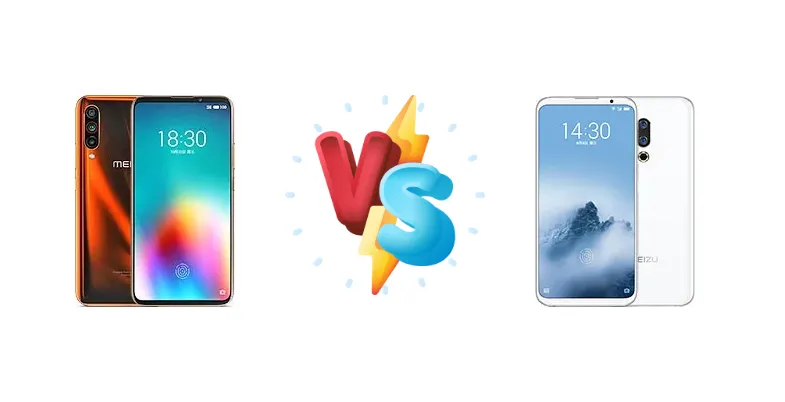
The Meizu 16 and 16T represent a fascinating period for the brand – a focus on near-stock Android, premium build quality, and competitive pricing. While visually similar, the core difference lies under the hood: the Meizu 16T boasts the newer Snapdragon 855, while the 16 relies on the Snapdragon 845. This comparison dissects these key components and their impact on real-world performance, battery life, and overall user experience.
🏆 Quick Verdict
For most users, the Meizu 16T is the better buy. The Snapdragon 855 offers a noticeable performance uplift, particularly in sustained workloads and gaming, despite the slightly slower 18W charging. The 16T delivers more future-proofing for a similar price point, making it the more compelling option.
| Network |
|---|
| 2G bands | GSM 850 / 900 / 1800 / 1900 | GSM 850 / 900 / 1800 / 1900 |
| 3G bands | HSDPA 850 / 900 / 1700(AWS) / 1900 / 2100 | HSDPA 850 / 900 / 1700(AWS) / 1900 / 2100 - Global |
| 4G bands | 1, 3, 4, 5, 7, 8, 20, 34, 38, 39, 40, 41 | 1, 2, 3, 4, 5, 7, 8, 20, 40 - Global |
| Speed | HSPA 42.2/5.76 Mbps, LTE (6CA) Cat20 2000/150 Mbps | HSPA 42.2/5.76 Mbps, LTE (4CA) Cat16 1024/150 Mbps |
| Technology | GSM / CDMA / HSPA / LTE | GSM / CDMA / HSPA / LTE |
| | CDMA 800 & TD-SCDMA | 1, 3, 4, 5, 8, 34, 38, 39, 40, 41 - China |
| Launch |
|---|
| Announced | 2019, October. Released 2019, October | 2018, August. Released 2018, August |
| Status | Discontinued | Discontinued |
| Body |
|---|
| Dimensions | 159.6 x 78.2 x 8.3 mm (6.28 x 3.08 x 0.33 in) | 150.5 x 73.2 x 7.3 mm (5.93 x 2.88 x 0.29 in) |
| SIM | Nano-SIM + Nano-SIM | Nano-SIM + Nano-SIM |
| Weight | 183 g (6.46 oz) | 152 g (5.36 oz) |
| Display |
|---|
| Resolution | 1080 x 2232 pixels, 18.5:9 ratio (~382 ppi density) | 1080 x 2160 pixels, 18:9 ratio (~402 ppi density) |
| Size | 6.5 inches, 106.3 cm2 (~85.2% screen-to-body ratio) | 6.0 inches, 92.9 cm2 (~84.3% screen-to-body ratio) |
| Type | Super AMOLED, 430 nits (typ) | Super AMOLED |
| Platform |
|---|
| CPU | Octa-core (1x2.84 GHz Kryo 485 & 3x2.42 GHz Kryo 485 & 4x1.78 GHz Kryo 485) | Octa-core (4x2.8 GHz Kryo 385 Gold & 4x1.7 GHz Kryo 385 Silver) |
| Chipset | Qualcomm SM8150 Snapdragon 855 (7 nm) | Qualcomm SDM845 Snapdragon 845 (10 nm) |
| GPU | Adreno 640 | Adreno 630 |
| OS | Android 9.0 (Pie), Flyme 8 | Android 8.1 (Oreo), Flyme UI |
| Memory |
|---|
| Card slot | No | No |
| Internal | 128GB 6GB RAM, 128GB 8GB RAM, 256GB 8GB RAM | 64GB 6GB RAM, 128GB 8GB RAM |
| | UFS 3.0 | UFS 2.1 |
| Main Camera |
|---|
| Dual | - | 12 MP, f/1.8, 25mm (wide), 1/2.3", 1.55µm, dual pixel PDAF, 4-axis OIS
20 MP, f/2.6, 1/2.6", 1.0µm |
| Features | LED flash, HDR, panorama | Laser AF, Six-LED dual-tone flash, Auto-HDR, panorama |
| Triple | 12 MP, f/1.9, 24mm (wide), 1/2.55", 1.4µm, PDAF
8 MP, f/2.2, 15mm (ultrawide), 1/4.0", 1.12µm, PDAF
5 MP, f/1.9, 23mm (wide), 1/5.0", 1.12µm, PDAF | - |
| Video | 4K@30/60fps | 4K@30fps, 1080p@30fps (gyro-EIS) |
| Selfie camera |
|---|
| Features | HDR | - |
| Single | 16 MP, f/2.2, 26mm (wide), 1/3.06", 1.0µm | 20 MP, f/2.0, 27mm (wide), 1/2.8", 1.0µm |
| Video | 1080p@30fps | 1080p@30fps |
| Sound |
|---|
| 3.5mm jack | Yes | Yes |
| 35mm jack | Yes | Yes |
| Loudspeaker | Yes, with stereo speakers | Yes, with stereo speakers |
| Comms |
|---|
| Bluetooth | 5.0, A2DP, LE | 5.0, A2DP, LE |
| NFC | No | No |
| Positioning | GPS, GLONASS, BDS | GPS, GLONASS, BDS, GALILEO, SBAS, QZSS |
| Radio | No | No |
| USB | USB Type-C 2.0 | USB Type-C 2.0 |
| WLAN | Wi-Fi 802.11 а/b/g/n/ac, dual-band, Wi-Fi Direct | Wi-Fi 802.11 а/b/g/n/ac, dual-band, Wi-Fi Direct |
| Features |
|---|
| Sensors | Fingerprint (under display, optical), accelerometer, gyro, proximity, compass | Fingerprint (under display, optical), accelerometer, gyro, proximity, compass |
| Battery |
|---|
| Charging | 18W wired | 24W wired |
| Type | Li-Po 4500 mAh, non-removable | Li-Ion 3010 mAh, non-removable |
| Misc |
|---|
| Colors | Orange, Blue, Green | Black, White |
| Price | About 250 EUR | About 410 EUR |
Meizu 16T
- More powerful Snapdragon 855 chipset
- Improved thermal efficiency for sustained performance
- Potentially better image processing
- Slower 18W charging
- May be slightly more expensive
Meizu 16
- Faster 24W wired charging
- Potentially lower price point
- Still a capable Snapdragon 845 processor
- Less powerful Snapdragon 845 chipset
- Less efficient 10nm process
Display Comparison
Both the Meizu 16 and 16T feature AMOLED displays, but detailed specs like resolution and refresh rate are not provided. However, the focus here is on the internal differences. The lack of information prevents a detailed comparison of color accuracy or brightness. The similar design language suggests comparable bezel sizes, prioritizing a high screen-to-body ratio.
Camera Comparison
Without detailed camera specifications beyond the chipsets, a direct comparison is limited. Both phones likely employ similar image signal processors (ISPs) within their respective Snapdragon SoCs. The 855’s ISP offers improvements in image processing, potentially leading to better dynamic range and low-light performance on the 16T. However, the quality of the lenses and sensor size (not provided) will be equally crucial. We can assume both phones offer a flagship-level camera experience for their time, but the 16T likely has a slight edge in computational photography.
Performance
The core distinction lies in the chipsets. The Meizu 16T’s Snapdragon 855, built on a 7nm process, offers a significant architectural advantage over the Meizu 16’s Snapdragon 845 (10nm). The 855’s Kryo 485 cores, with a prime core clocked at 2.84 GHz, provide a performance boost over the 845’s 2.8 GHz Kryo 385 Gold cores. This translates to faster app loading times, smoother multitasking, and improved gaming performance. The 7nm process also contributes to better thermal efficiency, potentially reducing throttling during extended gaming sessions. While both are octa-core CPUs, the 855’s architecture is more efficient and powerful.
Battery Life
The Meizu 16T’s 18W wired charging is slower than the Meizu 16’s 24W wired charging. This means the 16 will charge from 0-100% faster. However, the Snapdragon 855’s improved power efficiency could offset some of this difference in real-world usage. Without knowing the battery capacity of each device, it’s difficult to definitively say which offers better battery life. The 855’s efficiency gains are likely to provide a longer screen-on time for similar usage patterns, despite the slower charging.
Buying Guide
Buy the Meizu 16T if you prioritize raw performance for gaming or demanding applications and want a phone that will feel snappy for longer. Buy the Meizu 16 if you value faster charging speeds and can find it at a significantly lower price, accepting a slight performance compromise. Both phones excel in design and software, making this a chipset-centric decision.
Frequently Asked Questions
❓ Will the Snapdragon 855 in the Meizu 16T handle demanding games like PUBG or Genshin Impact at high settings?
Yes, the Snapdragon 855 is more than capable of handling demanding games like PUBG and Genshin Impact at high settings. Its improved GPU and CPU architecture provide a smoother and more consistent gaming experience compared to the Snapdragon 845 in the Meizu 16, with less frame rate drops during intense scenes.
❓ Is the difference in charging speed between 18W and 24W significant in everyday use?
While 24W charging is faster, the difference isn't massive. Expect the Meizu 16 to charge approximately 20-30% faster from 0-100%. However, the Snapdragon 855’s efficiency in the 16T might mean you need to charge less frequently, mitigating the slower charging speed.
❓ Does the Snapdragon 855 in the Meizu 16T offer noticeable improvements in app loading times compared to the Meizu 16?
Yes, you'll likely notice faster app loading times with the Meizu 16T. The Snapdragon 855’s faster CPU and improved memory controller contribute to quicker app launches and smoother multitasking.