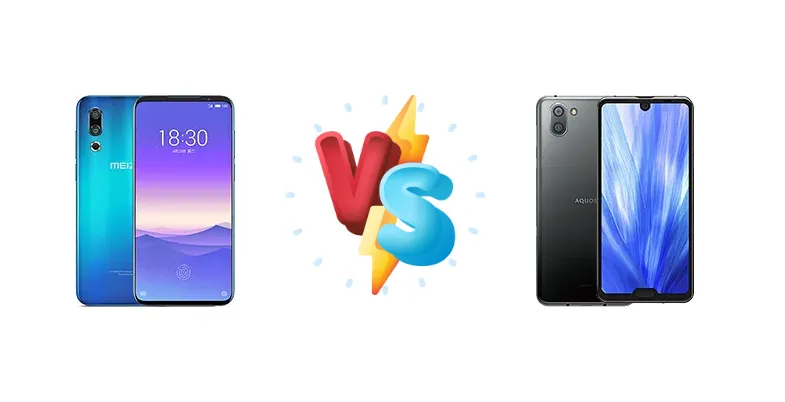
The Meizu 16s and Sharp Aquos R3 represent a fascinating intersection of flagship power and varying feature priorities. Both devices launched with Qualcomm’s Snapdragon 855, but diverge significantly in areas like charging technology and overall ecosystem approach. This comparison dissects these differences to determine which phone delivers the most compelling experience in 2024, especially considering their current market positioning.
🏆 Quick Verdict
For the average user prioritizing convenience and future-proofing, the Sharp Aquos R3 emerges as the better choice. Its inclusion of both wired Power Delivery (PD) and wireless charging provides greater flexibility, while the identical Snapdragon 855 performance ensures a comparable experience in demanding tasks. The Meizu 16s remains a viable option for those seeking a potentially lower price point.
| Network |
|---|
| 2G bands | GSM 850 / 900 / 1800 / 1900 | GSM 850 / 900 / 1800 / 1900 |
| 3G bands | HSDPA 850 / 900 / 1700(AWS) / 1900 / 2100 | HSDPA 900 / 2100 |
| 4G bands | 1, 2, 3, 4, 5, 7, 8, 20, 40 | 1, 3, 7, 8, 28, 38 |
| Speed | HSPA 42.2/5.76 Mbps, LTE (5CA) Cat18 1200/150 Mbps | HSPA 42.2/5.76 Mbps, LTE (3CA) Cat15 1024/50 Mbps |
| Technology | GSM / CDMA / HSPA / LTE | GSM / HSPA / LTE |
| | CDMA 800 & TD-SCDMA | - |
| Launch |
|---|
| Announced | 2019, April. Released 2019, April | 2019, August. Released 2019, August |
| Status | Discontinued | Discontinued |
| Body |
|---|
| Dimensions | 151.9 x 73.4 x 7.6 mm (5.98 x 2.89 x 0.30 in) | 156 x 74 x 8.9 mm (6.14 x 2.91 x 0.35 in) |
| SIM | Nano-SIM + Nano-SIM | Nano-SIM + Nano-SIM |
| Weight | 165 g (5.82 oz) | 185 g (6.53 oz) |
| | - | IPX5/IP6X/IPX8 water/dust resistant (up to 1.5m for 30 min) |
| Display |
|---|
| Protection | - | Corning Gorilla Glass 5 |
| Resolution | 1080 x 2232 pixels, 18.5:9 ratio (~400 ppi density) | 1440 x 3120 pixels, 19.5:9 ratio (~554 ppi density) |
| Size | 6.2 inches, 97.2 cm2 (~87.2% screen-to-body ratio) | 6.2 inches, 94.4 cm2 (~81.7% screen-to-body ratio) |
| Type | AMOLED | IGZO IPS LCD, 1B colors, 120Hz, HDR10, Dolby Vision |
| Platform |
|---|
| CPU | Octa-core (1x2.84 GHz Kryo 485 & 3x2.42 GHz Kryo 485 & 4x1.78 GHz Kryo 485) | Octa-core (1x2.84 GHz Kryo 485 & 3x2.42 GHz Kryo 485 & 4x1.78 GHz Kryo 485) |
| Chipset | Qualcomm SM8150 Snapdragon 855 (7 nm) | Qualcomm SM8150 Snapdragon 855 (7 nm) |
| GPU | Adreno 640 | Adreno 640 |
| OS | Android 9.0 (Pie), Flyme 7.3 | Android 9.0 (Pie), upgradable to Android 10 |
| Memory |
|---|
| Card slot | No | microSDXC (uses shared SIM slot) |
| Internal | 128GB 6GB RAM, 128GB 8GB RAM, 256GB 8GB RAM | 128GB 6GB RAM |
| | UFS 2.1 | UFS |
| Main Camera |
|---|
| Dual | 48 MP, f/1.7, (wide), 1/2.0", 0.8µm, PDAF, OIS
20MP, f/2.6, (telephoto), PDAF | 12.2 MP, f/1.7, (wide), 1/2.55", 1.4µm, dual pixel PDAF, OIS
20 MP, f/2.4, 125˚ (ultrawide), AF, OIS |
| Features | Six-LED dual-tone flash, Auto-HDR, panorama | Dual-LED flash, HDR, panorama |
| Video | 4K@30fps, 1080p@30fps (gyro-EIS) | 1080p@30fps |
| Selfie camera |
|---|
| Features | HDR | - |
| Single | 20MP, f/2.2 | 16 MP, f/2.0 |
| Video | 1080p@30fps | 1080p@30fps |
| Sound |
|---|
| 3.5mm jack | No | Yes |
| 35mm jack | No | Yes |
| Loudspeaker | Yes | Yes, with stereo speakers |
| | - | 24-bit/192kHz audio |
| Comms |
|---|
| Bluetooth | 5.0, A2DP, LE | 5.0, A2DP, LE |
| NFC | Yes | Yes |
| Positioning | GPS, BDS | GPS, GLONASS |
| Radio | No | No |
| USB | USB Type-C 2.0 | USB Type-C 3.0 |
| WLAN | Wi-Fi 802.11 а/b/g/n/ac, dual-band, Wi-Fi Direct | Wi-Fi 802.11 a/b/g/n/ac, dual-band, Wi-Fi Direct |
| Features |
|---|
| Sensors | Fingerprint (under display, optical), accelerometer, gyro, proximity, compass | Fingerprint (front-mounted), accelerometer, gyro, proximity, compass |
| Battery |
|---|
| Charging | 24W wired | Wired, PD
Wireless |
| Type | Li-Po 3600 mAh, non-removable | Li-Po 3200 mAh |
| Misc |
|---|
| Colors | Carbon Black, Pearl White, Phantom Blue | Classic Black |
| Price | About 420 EUR | About 750 EUR |
Meizu 16s
- Potentially lower price point
- Clean, minimalist design (typical of Meizu)
- Identical Snapdragon 855 performance
- Limited charging options (24W wired only)
- Flyme OS may not appeal to all users
- Lack of wireless charging
Sharp Aquos R3
- Wired Power Delivery (PD) charging
- Wireless charging support
- Potentially superior display quality (based on Sharp's history)
- May be more expensive than the Meizu 16s
- Software experience may vary
- Potential for software bloat
Display Comparison
While specific display details beyond the chipset are absent, both phones likely feature high-quality AMOLED panels given their flagship status. The Aquos R3’s brand history suggests a focus on color accuracy and potentially higher peak brightness, typical of Sharp displays. The Meizu 16s, known for its design aesthetic, likely prioritizes a near-bezel-less experience. The absence of refresh rate data suggests neither phone boasts a high-refresh-rate display, a common omission in 2019 flagships.
Camera Comparison
Without detailed camera specifications, a direct comparison is limited. However, both devices, as flagships, likely feature capable camera systems. The Aquos R3, given Sharp’s imaging expertise, may emphasize computational photography and image stabilization. The Meizu 16s, while potentially offering a strong main sensor, may lean towards a more natural image processing style. The absence of information regarding sensor size and aperture makes a definitive assessment impossible, but both phones likely feature multi-camera setups to offer versatility.
Performance
Both the Meizu 16s and Sharp Aquos R3 are powered by the Qualcomm SM8150 Snapdragon 855 (7 nm) with an identical CPU configuration: Octa-core (1x2.84 GHz Kryo 485 & 3x2.42 GHz Kryo 485 & 4x1.78 GHz Kryo 485). This means raw processing power will be virtually indistinguishable between the two. Performance differences will likely stem from RAM management and software optimization, areas where Meizu’s Flyme OS and Sharp’s Android skin may diverge. Thermal throttling, a common concern with the Snapdragon 855 under sustained load, will depend on the internal cooling solutions, a detail not provided. However, the 7nm process node offers a reasonable level of efficiency.
Battery Life
The Meizu 16s offers 24W wired charging, a respectable speed for its time. The Sharp Aquos R3, however, significantly expands charging options with both wired Power Delivery (PD) and wireless charging. PD allows for faster charging with compatible adapters, while wireless charging provides added convenience. While battery capacity isn’t specified, the R3’s charging versatility provides a clear advantage for users who value flexibility and don’t want to be tethered to a cable. The R3’s wireless charging capability is particularly beneficial for users invested in the wireless charging ecosystem.
Buying Guide
Buy the Meizu 16s if you prioritize a potentially lower entry cost and are comfortable with a single, 24W wired charging solution. This phone suits users who don't rely heavily on wireless charging or fast-charging standards beyond the included adapter. Buy the Sharp Aquos R3 if you value charging versatility – benefiting from both wired PD and wireless charging – and appreciate the convenience of a more modern charging ecosystem. This is the better choice for users who frequently use wireless chargers or travel with multiple devices.
Frequently Asked Questions
❓ Does the Sharp Aquos R3 support Quick Charge standards beyond Power Delivery?
While the Aquos R3 prominently features Power Delivery (PD) for fast charging, it's likely compatible with some Quick Charge versions as well, though PD is its primary fast-charging protocol. This ensures compatibility with a wider range of chargers.
❓ Is the 24W charging on the Meizu 16s sufficient for daily use?
24W charging is adequate for most users, providing a full charge in approximately 1.5 to 2 hours. However, it's slower than the charging speeds offered by the Aquos R3's PD support, making it less convenient for those who frequently need to quickly top up their battery.
❓ How does Flyme OS on the Meizu 16s compare to stock Android?
Flyme OS is a heavily customized Android skin known for its unique aesthetic and features. It differs significantly from stock Android in terms of UI design, pre-installed apps, and system-level customizations. Users accustomed to stock Android may find Flyme OS requires a learning curve.
❓ Will the Snapdragon 855 in either phone struggle with demanding games in 2024?
While not the latest chipset, the Snapdragon 855 remains capable of running most modern games at reasonable settings. However, demanding titles may require reduced graphics settings to maintain stable frame rates. Thermal throttling could also become a factor during extended gaming sessions.