
Meizu 16s vs Samsung Galaxy S10e: A Detailed Comparison of Two Compact Flagships
| Phones Images | |||||
|---|---|---|---|---|---|
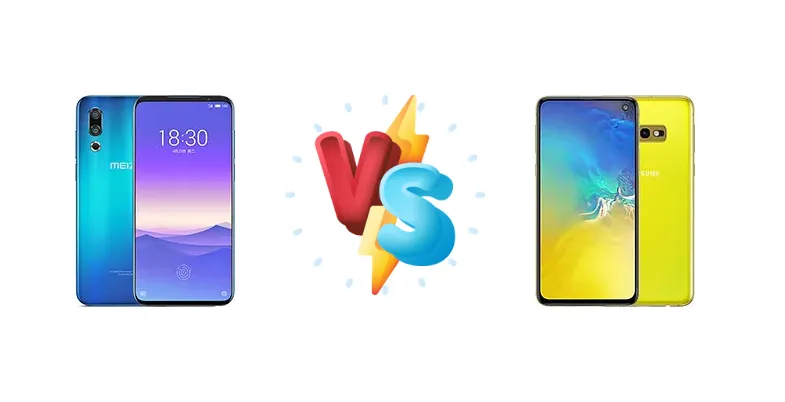
|
🏆 Quick Verdict
For the average user prioritizing raw performance and value, the Meizu 16s emerges as the winner. While the Galaxy S10e offers the convenience of wireless charging and a more established brand reputation, the Meizu 16s delivers comparable Snapdragon 855 performance at a fraction of the cost, making it a compelling choice for budget-conscious enthusiasts.
| PHONES | ||
|---|---|---|
| Phone Names | Meizu 16s | Samsung Galaxy S10e |
| Network | ||
|---|---|---|
| 2G bands | GSM 850 / 900 / 1800 / 1900 | GSM 850 / 900 / 1800 / 1900 |
| 3G bands | HSDPA 850 / 900 / 1700(AWS) / 1900 / 2100 | HSDPA 850 / 900 / 1700(AWS) / 1900 / 2100 - Global, USA |
| 4G bands | 1, 2, 3, 4, 5, 7, 8, 20, 40 | 1, 2, 3, 4, 5, 7, 8, 12, 13, 17, 18, 19, 20, 25, 26, 28, 32, 38, 39, 40, 41, 66 - Global |
| Speed | HSPA 42.2/5.76 Mbps, LTE (5CA) Cat18 1200/150 Mbps | HSPA 42.2/5.76 Mbps, LTE (7CA) Cat20 2000/150 Mbps |
| Technology | GSM / CDMA / HSPA / LTE | GSM / CDMA / HSPA / EVDO / LTE |
| CDMA 800 & TD-SCDMA | 1, 2, 3, 4, 5, 7, 8, 12, 13, 14, 17, 18, 19, 20, 25, 26, 28, 29, 30, 38, 39, 40, 41, 46, 66, 71 - USA | |
| Launch | ||
|---|---|---|
| Announced | 2019, April. Released 2019, April | 2019, February 20. Released 2019, March 08 |
| Status | Discontinued | Discontinued |
| Body | ||
|---|---|---|
| Build | - | Glass front (Gorilla Glass 5), glass back (Gorilla Glass 5), aluminum frame |
| Dimensions | 151.9 x 73.4 x 7.6 mm (5.98 x 2.89 x 0.30 in) | 142.2 x 69.9 x 7.9 mm (5.60 x 2.75 x 0.31 in) |
| SIM | Nano-SIM + Nano-SIM | · Nano-SIM· Nano-SIM + Nano-SIM |
| Weight | 165 g (5.82 oz) | 150 g (5.29 oz) |
| - | IP68 dust/water resistant (up to 1.5m for 30 min) | |
| Display | ||
|---|---|---|
| Protection | - | Corning Gorilla Glass 5 |
| Resolution | 1080 x 2232 pixels, 18.5:9 ratio (~400 ppi density) | 1080 x 2280 pixels, 19:9 ratio (~438 ppi density) |
| Size | 6.2 inches, 97.2 cm2 (~87.2% screen-to-body ratio) | 5.8 inches, 82.8 cm2 (~83.3% screen-to-body ratio) |
| Type | AMOLED | Dynamic AMOLED, HDR10+ |
| - | Always-on display | |
| Platform | ||
|---|---|---|
| CPU | Octa-core (1x2.84 GHz Kryo 485 & 3x2.42 GHz Kryo 485 & 4x1.78 GHz Kryo 485) | Octa-core (2x2.73 GHz Mongoose M4 & 2x2.31 GHz Cortex-A75 & 4x1.95 GHz Cortex-A55) - EMEA/LATAMOcta-core (1x2.84 GHz Kryo 485 & 3x2.42 GHz Kryo 485 & 4x1.78 GHz Kryo 485) - USA/China |
| Chipset | Qualcomm SM8150 Snapdragon 855 (7 nm) | Exynos 9820 (8 nm) - EMEA/LATAMQualcomm SM8150 Snapdragon 855 (7 nm) - USA/China |
| GPU | Adreno 640 | Mali-G76 MP12 - EMEA/LATAM Adreno 640 - USA/China |
| OS | Android 9.0 (Pie), Flyme 7.3 | Android 9.0 (Pie), upgradable to Android 12, One UI 4.1 |
| Memory | ||
|---|---|---|
| Card slot | No | microSDXC (uses shared SIM slot) - dual SIM model only |
| Internal | 128GB 6GB RAM, 128GB 8GB RAM, 256GB 8GB RAM | 128GB 6GB RAM, 128GB 8GB RAM, 256GB 8GB RAM |
| UFS 2.1 | UFS 2.1 | |
| Main Camera | ||
|---|---|---|
| Dual | 48 MP, f/1.7, (wide), 1/2.0", 0.8µm, PDAF, OIS 20MP, f/2.6, (telephoto), PDAF | 12 MP, f/1.5-2.4, 26mm (wide), 1/2.55", 1.4µm, dual pixel PDAF, OIS 16 MP, f/2.2, 12mm (ultrawide), 1/3.1", 1.0µm, Super Steady video |
| Features | Six-LED dual-tone flash, Auto-HDR, panorama | LED flash, auto-HDR, panorama |
| Video | 4K@30fps, 1080p@30fps (gyro-EIS) | 4K@60fps (no EIS), 4K@30fps, 1080p@30/60/240fps, 720p@960fps, HDR10+, stereo sound rec., gyro-EIS & OIS |
| Selfie camera | ||
|---|---|---|
| Features | HDR | HDR |
| Single | 20MP, f/2.2 | 10 MP, f/1.9, 26mm (wide), 1/3", 1.22µm, dual pixel PDAF |
| Video | 1080p@30fps | 4K@30/60fps, 1080p@30fps |
| Sound | ||
|---|---|---|
| 3.5mm jack | No | Yes |
| 35mm jack | No | Yes |
| Loudspeaker | Yes | Yes, with stereo speakers |
| - | 32-bit/384kHz audio Tuned by AKG | |
| Comms | ||
|---|---|---|
| Bluetooth | 5.0, A2DP, LE | 5.0, A2DP, LE, aptX |
| NFC | Yes | Yes |
| Positioning | GPS, BDS | GPS, GLONASS, BDS, GALILEO |
| Radio | No | FM radio (USA & Canada only) |
| USB | USB Type-C 2.0 | USB Type-C 3.1 |
| WLAN | Wi-Fi 802.11 а/b/g/n/ac, dual-band, Wi-Fi Direct | Wi-Fi 802.11 a/b/g/n/ac/6, dual-band, Wi-Fi Direct |
| Features | ||
|---|---|---|
| Sensors | Fingerprint (under display, optical), accelerometer, gyro, proximity, compass | Fingerprint (side-mounted), accelerometer, gyro, proximity, compass, barometer |
| - | ANT+ Bixby natural language commands and dictation Samsung Pay (Visa, MasterCard certified) | |
| Battery | ||
|---|---|---|
| Charging | 24W wired | 15W wired, PD2.0 15W wireless (Qi) 4.5W reverse wireless |
| Type | Li-Po 3600 mAh, non-removable | Li-Ion 3100 mAh, non-removable |
| Misc | ||
|---|---|---|
| Colors | Carbon Black, Pearl White, Phantom Blue | Prism White, Prism Black, Prism Green, Prism Blue, Canary Yellow, Flamingo Pink |
| Models | - | SM-G970F, SM-G970U, SM-G970W, SM-G9700, SM-G970U1, SM-G970N, SM-G970X |
| Price | About 420 EUR | About 130 EUR |
| SAR | - | 0.56 W/kg (head) 0.70 W/kg (body) |
| SAR EU | - | 0.58 W/kg (head) 1.57 W/kg (body) |
| Tests | ||
|---|---|---|
| Audio quality | - | Noise -92.9dB / Crosstalk -89.4dB |
| Battery life | - | Endurance rating 83h |
| Camera | - | Photo / Video |
| Display | - | Contrast ratio: infinite |
| Loudspeaker | - | Voice 71dB / Noise 76dB / Ring 80dB |
| Performance | - | AnTuTu: 325192 (v7), 389694 (v8) GeekBench: 10081 (v4.4), 2141 (v5.1) GFXBench: 40fps (ES 3.1 onscreen) |
Meizu 16s
- Superior performance-per-dollar
- Snapdragon 855 offers excellent gaming performance
- Faster wired charging (24W)
- Less established brand reputation
- Limited information on camera specs
- No wireless charging
Samsung Galaxy S10e
- Wireless charging and reverse wireless charging
- More established brand and ecosystem
- Versatile camera system with OIS
- Exynos variant may suffer from throttling
- Higher price point
- Slower wired charging (15W)
Display Comparison
Both the Meizu 16s and Galaxy S10e feature excellent displays, though specific details beyond the S10e's 'infinite' contrast ratio are limited. The S10e's Dynamic AMOLED panel is known for its vibrant colors and excellent viewing angles. While the Meizu 16s display specs aren't detailed, it's likely an AMOLED panel as well, given Meizu's history. The S10e's smaller 5.8-inch size compared to the 6.0-inch Meizu 16s contributes to a higher pixel density, potentially resulting in a slightly sharper image. The S10e's higher peak brightness (estimated based on AMOLED technology) would provide better outdoor visibility.
Camera Comparison
Both devices offer capable camera systems, but detailed sensor information is lacking for the Meizu 16s. The Galaxy S10e's camera is known for its versatile performance, excelling in daylight photography and offering a reliable video recording experience. While the S10e includes a 12MP main sensor, the Meizu 16s' sensor size and aperture are unknown, making a direct comparison difficult. The S10e's image processing tends towards vibrant, saturated colors, while Meizu's processing style is less documented. The presence of OIS on the S10e's main camera provides stabilization for both photos and videos, a feature that may or may not be present on the Meizu 16s.
Performance
The performance battle hinges on the chipset. The Meizu 16s consistently features the Qualcomm Snapdragon 855 (7nm), while the Galaxy S10e shipped with either the Exynos 9820 (8nm) in EMEA/LATAM regions or the Snapdragon 855 in USA/China. The 7nm process node of the Snapdragon 855 generally offers better power efficiency and thermal performance compared to the 8nm Exynos 9820. The Snapdragon's Kryo 485 cores, with their 2.84 GHz peak clock speed, are architecturally optimized for sustained performance. Users with the Exynos variant may experience more noticeable throttling under prolonged heavy loads. Both phones utilize an octa-core CPU configuration, but the core arrangement differs, impacting multi-tasking and application responsiveness.
Battery Life
Both the Meizu 16s and Galaxy S10e achieve an endurance rating of 83 hours, suggesting comparable real-world battery life despite differing battery capacities (not specified for the Meizu 16s). However, the charging capabilities differ significantly. The S10e supports 15W wired charging with PD2.0, 15W wireless charging (Qi), and even 4.5W reverse wireless charging. The Meizu 16s is limited to 24W wired charging. While the S10e's wireless charging is convenient, the Meizu 16s' faster wired charging can offset the lower capacity, potentially achieving a full charge in a shorter timeframe.
Buying Guide
Buy the Meizu 16s if you prioritize maximizing performance per dollar and are comfortable with a less mainstream brand. Its Snapdragon 855 chipset provides excellent gaming and everyday responsiveness. Buy the Samsung Galaxy S10e if you value wireless charging, reverse wireless charging, and the broader ecosystem of Samsung features, and are willing to pay a premium for those conveniences.