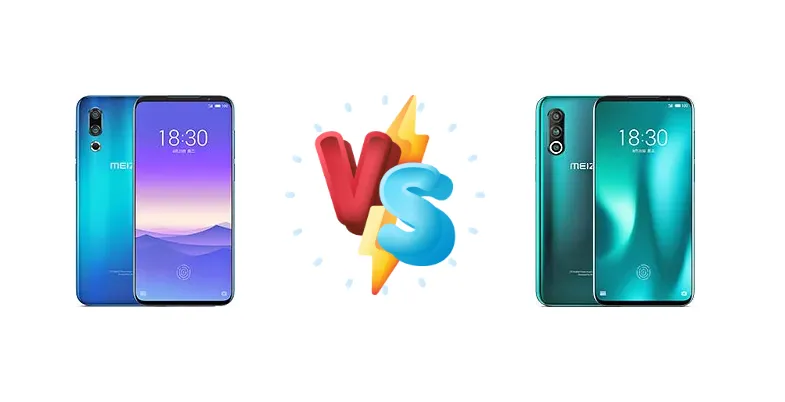
The Meizu 16s and 16s Pro represent a fascinating moment in Android history – a time when flagship specs were becoming increasingly refined. Both devices center around the Qualcomm Snapdragon 855, but the 16s Pro introduces the slightly enhanced 855+ variant. This comparison dissects the nuances between these two models, focusing on how the chipset upgrade and other subtle changes impact real-world performance and user experience.
🏆 Quick Verdict
For most users, the Meizu 16s offers an excellent balance of performance and value. However, the Meizu 16s Pro is the clear winner for power users and gamers who demand sustained peak performance, thanks to the Snapdragon 855+’s higher clock speeds and improved thermal headroom.
| Network |
|---|
| 2G bands | GSM 850 / 900 / 1800 / 1900 | GSM 850 / 900 / 1800 / 1900 |
| 3G bands | HSDPA 850 / 900 / 1700(AWS) / 1900 / 2100 | HSDPA 850 / 900 / 1900 / 2100 |
| 4G bands | 1, 2, 3, 4, 5, 7, 8, 20, 40 | 1, 3, 5, 8, 34, 38, 39, 40, 41 |
| Speed | HSPA 42.2/5.76 Mbps, LTE (5CA) Cat18 1200/150 Mbps | HSPA 42.2/5.76 Mbps, LTE (5CA) Cat18 1200/150 Mbps |
| Technology | GSM / CDMA / HSPA / LTE | GSM / CDMA / HSPA / LTE |
| | CDMA 800 & TD-SCDMA | CDMA 800 & TD-SCDMA |
| Launch |
|---|
| Announced | 2019, April. Released 2019, April | 2019, August. Released 2019, August |
| Status | Discontinued | Discontinued |
| Body |
|---|
| Dimensions | 151.9 x 73.4 x 7.6 mm (5.98 x 2.89 x 0.30 in) | 151.9 x 73.4 x 7.7 mm (5.98 x 2.89 x 0.30 in) |
| SIM | Nano-SIM + Nano-SIM | Nano-SIM + Nano-SIM |
| Weight | 165 g (5.82 oz) | 166 g (5.86 oz) |
| Display |
|---|
| Resolution | 1080 x 2232 pixels, 18.5:9 ratio (~400 ppi density) | 1080 x 2232 pixels, 18.5:9 ratio (~403 ppi density) |
| Size | 6.2 inches, 97.2 cm2 (~87.2% screen-to-body ratio) | 6.2 inches, 95.8 cm2 (~85.9% screen-to-body ratio) |
| Type | AMOLED | Super AMOLED |
| Platform |
|---|
| CPU | Octa-core (1x2.84 GHz Kryo 485 & 3x2.42 GHz Kryo 485 & 4x1.78 GHz Kryo 485) | Octa-core (1x2.96 GHz Kryo 485 & 3x2.42 GHz Kryo 485 & 4x1.78 GHz Kryo 485) |
| Chipset | Qualcomm SM8150 Snapdragon 855 (7 nm) | Qualcomm SM8150 Snapdragon 855+ (7 nm) |
| GPU | Adreno 640 | Adreno 640 (700 MHz) |
| OS | Android 9.0 (Pie), Flyme 7.3 | Android 9.0 (Pie), Flyme 8 |
| Memory |
|---|
| Card slot | No | No |
| Internal | 128GB 6GB RAM, 128GB 8GB RAM, 256GB 8GB RAM | 128GB 6GB RAM, 128GB 8GB RAM, 256GB 8GB RAM |
| | UFS 2.1 | UFS 3.0 |
| Main Camera |
|---|
| Dual | 48 MP, f/1.7, (wide), 1/2.0", 0.8µm, PDAF, OIS
20MP, f/2.6, (telephoto), PDAF | - |
| Features | Six-LED dual-tone flash, Auto-HDR, panorama | Six-LED dual-tone flash, Auto-HDR, panorama |
| Triple | - | 48 MP, f/1.7, (wide), 1/2.0", 0.8µm, PDAF, OIS
20MP, f/2.6, (telephoto), 1/2.8", 1.0µm, PDAF
16 MP, f/2.2, 16mm (ultrawide), 1/3.6", 1.0µm |
| Video | 4K@30fps, 1080p@30fps (gyro-EIS) | 4K@30/60fps, 1080p@30fps (gyro-EIS) |
| Selfie camera |
|---|
| Features | HDR | HDR |
| Single | 20MP, f/2.2 | 20MP, f/2.2 |
| Video | 1080p@30fps | 1080p@30fps |
| Sound |
|---|
| 3.5mm jack | No | No |
| 35mm jack | No | No |
| Loudspeaker | Yes | Yes |
| Comms |
|---|
| Bluetooth | 5.0, A2DP, LE | 5.0, A2DP, LE |
| NFC | Yes | Yes |
| Positioning | GPS, BDS | GPS (L1+L5), GLONASS, BDS, GALILEO |
| Radio | No | No |
| USB | USB Type-C 2.0 | USB Type-C 2.0 |
| WLAN | Wi-Fi 802.11 а/b/g/n/ac, dual-band, Wi-Fi Direct | Wi-Fi 802.11 а/b/g/n/ac, dual-band, Wi-Fi Direct |
| Features |
|---|
| Sensors | Fingerprint (under display, optical), accelerometer, gyro, proximity, compass | Fingerprint (under display, optical), accelerometer, gyro, proximity, compass |
| Battery |
|---|
| Charging | 24W wired | 24W wired |
| Type | Li-Po 3600 mAh, non-removable | Li-Po 3600 mAh, non-removable |
| Misc |
|---|
| Colors | Carbon Black, Pearl White, Phantom Blue | Twilight Forest, Dream Unicorn, Black Mirror, White story |
| Price | About 420 EUR | About 340 EUR |
Meizu 16s
- More affordable price point
- Excellent performance for everyday tasks
- Sleek and modern design
- Snapdragon 855 may throttle under sustained load
- Potentially shorter battery life compared to the Pro
Meizu 16s Pro
- Snapdragon 855+ offers superior sustained performance
- Improved thermal management for gaming
- Potentially better camera image processing
- Higher price tag
- Marginal performance gains for casual users
Display Comparison
While both devices share a similar form factor and likely utilize AMOLED panels (spec not provided), the display comparison hinges on potential differences in calibration and peak brightness. Without specific nit ratings, it's difficult to definitively state a winner. However, the focus on a bezel-less design in both models suggests a similar immersive viewing experience. Color accuracy is likely comparable, given Meizu’s historical emphasis on display quality.
Camera Comparison
Unfortunately, detailed camera specifications are absent. However, given the flagship positioning of both devices, we can assume they feature capable camera systems. The 16s Pro likely benefits from slightly improved image signal processing (ISP) capabilities inherent in the Snapdragon 855+ chipset, potentially leading to faster image capture and enhanced low-light performance. Without sensor size or aperture information, a definitive camera comparison is impossible, but the 16s Pro’s chipset advantage suggests a slight edge in image quality and processing speed.
Performance
The core difference lies in the chipset: the Meizu 16s features the Snapdragon 855, clocked at 2.84 GHz, while the 16s Pro boasts the Snapdragon 855+, reaching 2.96 GHz. This 120 MHz clock speed increase, coupled with slightly higher GPU frequencies in the 855+, translates to a measurable performance uplift in demanding applications. The CPU architecture remains identical – an octa-core configuration with 1x Kryo 485 prime core, 3x Kryo 485 performance cores, and 4x Kryo 485 efficiency cores. This means the 16s Pro will exhibit better sustained performance under heavy load, reducing the likelihood of thermal throttling during extended gaming sessions. Both devices utilize LPDDR4X RAM, so memory bandwidth isn't a differentiating factor.
Battery Life
Both the Meizu 16s and 16s Pro support 24W wired charging. While the battery capacity isn’t specified, the 16s Pro’s more efficient Snapdragon 855+ could translate to slightly longer battery life under similar usage conditions. The 24W charging speed is relatively standard for the time, suggesting similar 0-100% charge times – likely around 75-90 minutes. The 855+'s improved efficiency means less power draw during demanding tasks, extending usable battery life for gamers and power users.
Buying Guide
Buy the Meizu 16s if you prioritize value and a smooth, responsive experience for everyday tasks like browsing, social media, and casual gaming. It delivers flagship-level performance without the premium price tag. Buy the Meizu 16s Pro if you’re a demanding user who frequently engages in graphically intensive gaming, video editing, or other resource-heavy activities, and you want the best possible sustained performance.
Frequently Asked Questions
❓ Will the Meizu 16s Pro noticeably outperform the 16s in games like PUBG or Genshin Impact?
Yes, the Snapdragon 855+ in the 16s Pro will deliver a smoother and more consistent gaming experience, particularly during prolonged sessions. The higher clock speeds and improved thermal management minimize throttling, allowing the GPU to maintain peak performance for longer periods. Expect higher average frame rates and fewer stutters.
❓ Is the difference in performance between the two phones significant enough to justify the price increase for the 16s Pro?
For casual users, the difference is likely minimal. However, if you frequently engage in demanding tasks like video editing, graphic design, or extended gaming, the 16s Pro’s sustained performance advantage is worth the extra investment. It’s a trade-off between cost and peak performance.
❓ Does the Meizu 16s Pro support faster charging speeds than the 16s?
No, both devices are limited to 24W wired charging. While the 16s Pro might reach full charge slightly faster due to the chipset's efficiency, the charging wattage remains the same.