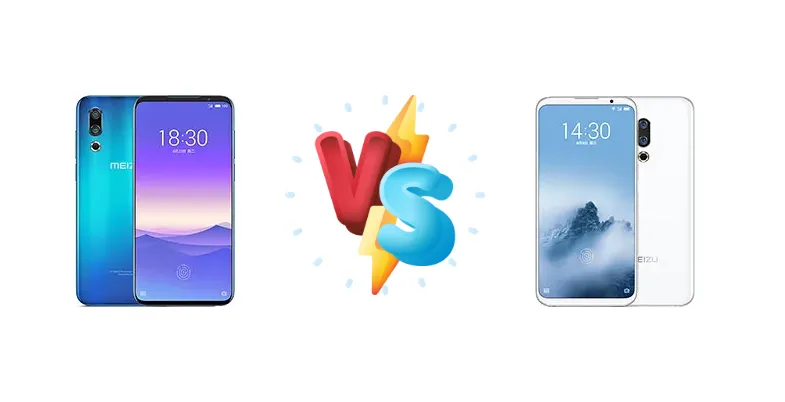
The Meizu 16 and 16s represent a fascinating period for the brand – a focus on compact flagships with premium build quality. While visually similar, the core difference lies beneath the surface: the Snapdragon 845 in the 16 versus the Snapdragon 855 in the 16s. This comparison dissects those differences, revealing which phone delivers the best experience in 2024, considering price drops and evolving software demands.
🏆 Quick Verdict
For most users, the Meizu 16s is the superior choice. The Snapdragon 855 offers a noticeable performance uplift over the 845, coupled with improved thermal efficiency, translating to sustained performance during demanding tasks. While both charge at the same speed, the 16s’s chipset provides a future-proofed experience.
| Network |
|---|
| 2G bands | GSM 850 / 900 / 1800 / 1900 | GSM 850 / 900 / 1800 / 1900 |
| 3G bands | HSDPA 850 / 900 / 1700(AWS) / 1900 / 2100 | HSDPA 850 / 900 / 1700(AWS) / 1900 / 2100 - Global |
| 4G bands | 1, 2, 3, 4, 5, 7, 8, 20, 40 | 1, 2, 3, 4, 5, 7, 8, 20, 40 - Global |
| Speed | HSPA 42.2/5.76 Mbps, LTE (5CA) Cat18 1200/150 Mbps | HSPA 42.2/5.76 Mbps, LTE (4CA) Cat16 1024/150 Mbps |
| Technology | GSM / CDMA / HSPA / LTE | GSM / CDMA / HSPA / LTE |
| | CDMA 800 & TD-SCDMA | 1, 3, 4, 5, 8, 34, 38, 39, 40, 41 - China |
| Launch |
|---|
| Announced | 2019, April. Released 2019, April | 2018, August. Released 2018, August |
| Status | Discontinued | Discontinued |
| Body |
|---|
| Dimensions | 151.9 x 73.4 x 7.6 mm (5.98 x 2.89 x 0.30 in) | 150.5 x 73.2 x 7.3 mm (5.93 x 2.88 x 0.29 in) |
| SIM | Nano-SIM + Nano-SIM | Nano-SIM + Nano-SIM |
| Weight | 165 g (5.82 oz) | 152 g (5.36 oz) |
| Display |
|---|
| Resolution | 1080 x 2232 pixels, 18.5:9 ratio (~400 ppi density) | 1080 x 2160 pixels, 18:9 ratio (~402 ppi density) |
| Size | 6.2 inches, 97.2 cm2 (~87.2% screen-to-body ratio) | 6.0 inches, 92.9 cm2 (~84.3% screen-to-body ratio) |
| Type | AMOLED | Super AMOLED |
| Platform |
|---|
| CPU | Octa-core (1x2.84 GHz Kryo 485 & 3x2.42 GHz Kryo 485 & 4x1.78 GHz Kryo 485) | Octa-core (4x2.8 GHz Kryo 385 Gold & 4x1.7 GHz Kryo 385 Silver) |
| Chipset | Qualcomm SM8150 Snapdragon 855 (7 nm) | Qualcomm SDM845 Snapdragon 845 (10 nm) |
| GPU | Adreno 640 | Adreno 630 |
| OS | Android 9.0 (Pie), Flyme 7.3 | Android 8.1 (Oreo), Flyme UI |
| Memory |
|---|
| Card slot | No | No |
| Internal | 128GB 6GB RAM, 128GB 8GB RAM, 256GB 8GB RAM | 64GB 6GB RAM, 128GB 8GB RAM |
| | UFS 2.1 | UFS 2.1 |
| Main Camera |
|---|
| Dual | 48 MP, f/1.7, (wide), 1/2.0", 0.8µm, PDAF, OIS
20MP, f/2.6, (telephoto), PDAF | 12 MP, f/1.8, 25mm (wide), 1/2.3", 1.55µm, dual pixel PDAF, 4-axis OIS
20 MP, f/2.6, 1/2.6", 1.0µm |
| Features | Six-LED dual-tone flash, Auto-HDR, panorama | Laser AF, Six-LED dual-tone flash, Auto-HDR, panorama |
| Video | 4K@30fps, 1080p@30fps (gyro-EIS) | 4K@30fps, 1080p@30fps (gyro-EIS) |
| Selfie camera |
|---|
| Features | HDR | - |
| Single | 20MP, f/2.2 | 20 MP, f/2.0, 27mm (wide), 1/2.8", 1.0µm |
| Video | 1080p@30fps | 1080p@30fps |
| Sound |
|---|
| 3.5mm jack | No | Yes |
| 35mm jack | No | Yes |
| Loudspeaker | Yes | Yes, with stereo speakers |
| Comms |
|---|
| Bluetooth | 5.0, A2DP, LE | 5.0, A2DP, LE |
| NFC | Yes | No |
| Positioning | GPS, BDS | GPS, GLONASS, BDS, GALILEO, SBAS, QZSS |
| Radio | No | No |
| USB | USB Type-C 2.0 | USB Type-C 2.0 |
| WLAN | Wi-Fi 802.11 а/b/g/n/ac, dual-band, Wi-Fi Direct | Wi-Fi 802.11 а/b/g/n/ac, dual-band, Wi-Fi Direct |
| Features |
|---|
| Sensors | Fingerprint (under display, optical), accelerometer, gyro, proximity, compass | Fingerprint (under display, optical), accelerometer, gyro, proximity, compass |
| Battery |
|---|
| Charging | 24W wired | 24W wired |
| Type | Li-Po 3600 mAh, non-removable | Li-Ion 3010 mAh, non-removable |
| Misc |
|---|
| Colors | Carbon Black, Pearl White, Phantom Blue | Black, White |
| Price | About 420 EUR | About 410 EUR |
Meizu 16s
- Superior performance with Snapdragon 855
- Improved thermal efficiency for sustained performance
- More efficient ISP for better image processing
- Potentially higher price than the Meizu 16
- May be harder to find new
Meizu 16
- Potentially lower price point
- Still capable for everyday tasks
- Compact and well-built design
- Snapdragon 845 is less efficient and prone to throttling
- Noticeably slower performance compared to the 16s
Display Comparison
Both the Meizu 16 and 16s feature AMOLED displays, but detailed specs like resolution, peak brightness, and color accuracy are not provided. However, given Meizu’s focus on visual quality, we can assume both offer vibrant colors and good viewing angles. The key difference isn’t the display itself, but what’s driving it – the more powerful GPU in the 16s can render graphics more smoothly, enhancing the visual experience, especially in games. The lack of high refresh rate support on either device is a notable omission by today's standards.
Camera Comparison
Without detailed camera specifications, a direct comparison is difficult. However, both phones likely feature similar camera setups geared towards general photography. The Snapdragon 855 in the 16s offers improved image signal processing (ISP) capabilities, potentially resulting in better dynamic range, noise reduction, and overall image quality, especially in challenging lighting conditions. The ISP improvements are more likely to be noticeable in video recording, offering better stabilization and detail. The absence of information on sensor sizes prevents a more definitive assessment.
Performance
The core of the difference lies in the chipsets. The Meizu 16s boasts the Qualcomm SM8150 Snapdragon 855 (7nm), while the 16 utilizes the SDM845 Snapdragon 845 (10nm). The 855’s 7nm process is significantly more efficient than the 845’s 10nm, leading to lower power consumption and reduced thermal throttling. The CPU architecture also differs; the 855’s Kryo 485 cores offer improved performance per clock compared to the 845’s Kryo 385 cores. This translates to faster app loading times, smoother multitasking, and a more responsive user interface on the 16s. The 855’s Adreno 640 GPU is also a substantial upgrade over the 845’s Adreno 630, delivering a better gaming experience.
Battery Life
Both devices support 24W wired charging, suggesting similar charging speeds – approximately 1 hour to fully charge. While battery capacity isn’t specified, the Snapdragon 855’s improved efficiency in the 16s means it will likely deliver longer battery life than the 16, despite potentially having a similar capacity. The 7nm process allows the 16s to accomplish the same tasks with less power draw, extending usage time between charges.
Buying Guide
Buy the Meizu 16s if you prioritize sustained performance for gaming, multitasking, or demanding applications and want a phone that will feel responsive for longer. Buy the Meizu 16 if you are on a tighter budget and primarily use your phone for everyday tasks like browsing, social media, and light photography, and appreciate a potentially lower price point.
Frequently Asked Questions
❓ Will the Snapdragon 845 in the Meizu 16 struggle with modern app updates and software bloat?
The Snapdragon 845 is showing its age. While it was a flagship chip in its time, newer app updates and increasingly demanding software can lead to noticeable slowdowns and stuttering on the Meizu 16, especially over time. The 855 in the 16s offers more headroom for future software updates.
❓ Does the improved thermal management of the Snapdragon 855 in the 16s translate to noticeably less throttling during extended gaming sessions?
Yes, absolutely. The 7nm process of the Snapdragon 855 generates less heat than the 10nm process of the 845. This means the Meizu 16s can maintain peak performance for longer periods during demanding tasks like gaming, experiencing less throttling and maintaining higher frame rates.
❓ Is the difference in performance between the two phones noticeable for everyday tasks like browsing and social media?
For basic tasks, the difference is less pronounced. Both phones will handle browsing, social media, and messaging without issue. However, the 16s will feel snappier and more responsive when switching between apps or loading complex web pages due to its more powerful processor.