
Meizu 16s Pro vs. iPhone 13 mini: A Clash of Chipsets and Philosophies
| Phones Images | |||||
|---|---|---|---|---|---|
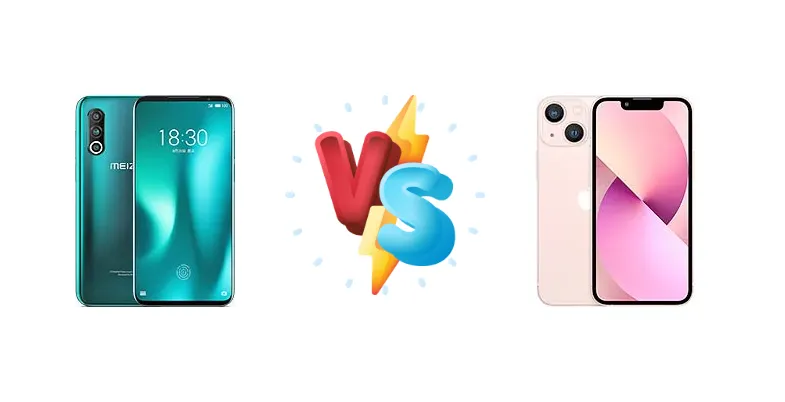
|
🏆 Quick Verdict
For the average user prioritizing longevity, software support, and a refined user experience, the iPhone 13 mini is the clear winner. While the Meizu 16s Pro offers a compelling hardware package for its time, the A15 Bionic’s superior efficiency and Apple’s long-term software commitment outweigh the Snapdragon 855+'s initial performance advantage.
| PHONES | ||
|---|---|---|
| Phone Names | Meizu 16s Pro | Apple iPhone 13 mini |
| Network | ||
|---|---|---|
| 2G bands | GSM 850 / 900 / 1800 / 1900 | GSM 850 / 900 / 1800 / 1900 |
| 3G bands | HSDPA 850 / 900 / 1900 / 2100 | HSDPA 850 / 900 / 1700(AWS) / 1900 / 2100 |
| 4G bands | 1, 3, 5, 8, 34, 38, 39, 40, 41 | 1, 2, 3, 4, 5, 7, 8, 12, 13, 17, 18, 19, 20, 25, 26, 28, 30, 32, 34, 38, 39, 40, 41, 42, 46, 48, 66 - A2628, A2629, A2630 |
| 5G bands | - | 1, 2, 3, 5, 7, 8, 12, 20, 25, 28, 29, 30, 38, 40, 41, 48, 66, 71, 77, 78, 79 Sub6/mmWave - A2628 |
| Speed | HSPA 42.2/5.76 Mbps, LTE (5CA) Cat18 1200/150 Mbps | HSPA, LTE, 5G, EV-DO Rev.A 3.1 Mbps |
| Technology | GSM / CDMA / HSPA / LTE | GSM / CDMA / HSPA / EVDO / LTE / 5G |
| CDMA 800 & TD-SCDMA | 1, 2, 3, 5, 7, 8, 12, 20, 25, 28, 30, 38, 40, 41, 48, 66, 77, 78, 79 SA/NSA/Sub6 - A2629, A2630 | |
| Launch | ||
|---|---|---|
| Announced | 2019, August. Released 2019, August | 2021, September 14 |
| Status | Discontinued | Available. Released 2021, September 24 |
| Body | ||
|---|---|---|
| Build | - | Glass front, glass back, aluminum frame |
| Dimensions | 151.9 x 73.4 x 7.7 mm (5.98 x 2.89 x 0.30 in) | 131.5 x 64.2 x 7.7 mm (5.18 x 2.53 x 0.30 in) |
| SIM | Nano-SIM + Nano-SIM | · Nano-SIM + eSIM· Nano-SIM + Nano-SIM |
| Weight | 166 g (5.86 oz) | 141 g (4.97 oz) |
| - | IP68 dust/water resistant (up to 6m for 30 min) Apple Pay (Visa, MasterCard, AMEX certified) | |
| Display | ||
|---|---|---|
| Protection | - | Ceramic Shield glass |
| Resolution | 1080 x 2232 pixels, 18.5:9 ratio (~403 ppi density) | 1080 x 2340 pixels, 19.5:9 ratio (~476 ppi density) |
| Size | 6.2 inches, 95.8 cm2 (~85.9% screen-to-body ratio) | 5.4 inches, 71.9 cm2 (~85.1% screen-to-body ratio) |
| Type | Super AMOLED | Super Retina XDR OLED, HDR10, Dolby Vision, 800 nits (HBM), 1200 nits (peak) |
| Platform | ||
|---|---|---|
| CPU | Octa-core (1x2.96 GHz Kryo 485 & 3x2.42 GHz Kryo 485 & 4x1.78 GHz Kryo 485) | Hexa-core (2x3.23 GHz Avalanche + 4x1.82 GHz Blizzard) |
| Chipset | Qualcomm SM8150 Snapdragon 855+ (7 nm) | Apple A15 Bionic (5 nm) |
| GPU | Adreno 640 (700 MHz) | Apple GPU (4-core graphics) |
| OS | Android 9.0 (Pie), Flyme 8 | iOS 15, upgradable to iOS 26.1 |
| Memory | ||
|---|---|---|
| Card slot | No | No |
| Internal | 128GB 6GB RAM, 128GB 8GB RAM, 256GB 8GB RAM | 128GB 4GB RAM, 256GB 4GB RAM, 512GB 4GB RAM |
| UFS 3.0 | NVMe | |
| Main Camera | ||
|---|---|---|
| Dual | - | 12 MP, f/1.6, 26mm (wide), 1/1.9", 1.7µm, dual pixel PDAF, sensor-shift OIS 12 MP, f/2.4, 120˚, 13mm (ultrawide), 1/3.4", 1.0µm |
| Features | Six-LED dual-tone flash, Auto-HDR, panorama | Dual-LED dual-tone flash, HDR (photo/panorama) |
| Single | - | 12 MP, f/2.2, 23mm (wide), 1/3.6" SL 3D, (depth/biometrics sensor) |
| Triple | 48 MP, f/1.7, (wide), 1/2.0", 0.8µm, PDAF, OIS 20MP, f/2.6, (telephoto), 1/2.8", 1.0µm, PDAF 16 MP, f/2.2, 16mm (ultrawide), 1/3.6", 1.0µm | - |
| Video | 4K@30/60fps, 1080p@30fps (gyro-EIS) | 4K@24/25/30/60fps, 1080p@25/30/60/120/240fps, HDR, Dolby Vision HDR (up to 60fps), stereo sound rec. |
| Selfie camera | ||
|---|---|---|
| Features | HDR | HDR |
| Single | 20MP, f/2.2 | 12 MP, f/2.2, 23mm (wide), 1/3.6", 1.0µm SL 3D, (depth/biometrics sensor) |
| Video | 1080p@30fps | 4K@24/25/30/60fps, 1080p@25/30/60/120fps, gyro-EIS |
| Sound | ||
|---|---|---|
| 3.5mm jack | No | No |
| 35mm jack | No | No |
| Loudspeaker | Yes | Yes, with stereo speakers |
| Comms | ||
|---|---|---|
| Bluetooth | 5.0, A2DP, LE | 5.0, A2DP, LE |
| NFC | Yes | Yes |
| Positioning | GPS (L1+L5), GLONASS, BDS, GALILEO | GPS, GLONASS, GALILEO, BDS, QZSS |
| Radio | No | No |
| USB | USB Type-C 2.0 | Lightning, USB 2.0 |
| WLAN | Wi-Fi 802.11 а/b/g/n/ac, dual-band, Wi-Fi Direct | Wi-Fi 802.11 a/b/g/n/ac/6, dual-band, hotspot |
| Features | ||
|---|---|---|
| Sensors | Fingerprint (under display, optical), accelerometer, gyro, proximity, compass | Face ID, accelerometer, gyro, proximity, compass, barometer |
| - | Ultra Wideband (UWB) support | |
| Battery | ||
|---|---|---|
| Charging | 24W wired | Wired, PD2.0, 50% in 30 min 15W wireless (MagSafe) 15W wireless (Qi2) - requires iOS 17.2 update |
| Type | Li-Po 3600 mAh, non-removable | Li-Ion 2438 mAh (9.34 Wh) |
| Misc | ||
|---|---|---|
| Colors | Twilight Forest, Dream Unicorn, Black Mirror, White story | Starlight, Midnight, Blue, Pink, Red, Green |
| Models | - | A2628, A2481, A2626, A2629, A2630, iphone14,4 |
| Price | About 340 EUR | € 299.00 / $ 240.00 / £ 244.89 |
| SAR | - | 1.19 W/kg (head) 1.19 W/kg (body) |
| SAR EU | - | 0.97 W/kg (head) 0.98 W/kg (body) |
| Tests | ||
|---|---|---|
| Battery life | - | Endurance rating 75h |
| Camera | - | Photo / Video |
| Display | - | Contrast ratio: Infinite (nominal) |
| Loudspeaker | - | -25.9 LUFS (Very good) |
| Performance | - | AnTuTu: 772512 (v9) GeekBench: 4681 (v5.1) GFXBench: 60fps (ES 3.1 onscreen) |
Meizu 16s Pro
- Potentially lower price point
- Near-bezel-less display design
- Android customization options
- Limited software update support
- Older chipset (Snapdragon 855+)
- Less efficient power management
Apple iPhone 13 mini
- Long-term software support
- Superior performance (A15 Bionic)
- More versatile charging options (MagSafe, Qi2)
- Higher price point
- Smaller display size may not suit all users
- iOS ecosystem lock-in
Display Comparison
The iPhone 13 mini boasts a measured peak brightness of 831 nits, ensuring excellent visibility outdoors, a metric the Meizu 16s Pro’s display specifications don’t directly address. While the Meizu likely offers vibrant colors, Apple’s ‘infinite’ contrast ratio (typical of OLED panels) delivers deeper blacks and a more dynamic image. The iPhone 13 mini’s smaller size (6.1” vs. the Meizu’s 6.3”) is a key differentiator for those prioritizing one-handed use. The lack of LTPO on either device means refresh rates are fixed, but the iPhone’s color accuracy is generally considered best-in-class.
Camera Comparison
Both devices offer capable photo and video recording, but the specifics are limited in the provided data. The iPhone 13 mini likely benefits from Apple’s advanced image processing pipeline and computational photography features. While the Meizu 16s Pro may have a competitive sensor, Apple’s consistent software updates and optimizations give it an edge in image quality and video stabilization. Without sensor size details for the Meizu, it’s difficult to assess low-light performance, but Apple’s larger sensors generally excel in this area.
Performance
The Apple A15 Bionic, fabricated on a 5nm process, demonstrably outperforms the Qualcomm Snapdragon 855+ (7nm) in both CPU and GPU benchmarks. The A15’s hexa-core architecture (2x3.23 GHz Avalanche + 4x1.82 GHz Blizzard) is optimized for efficiency, while the Snapdragon 855+'s octa-core configuration (1x2.96 GHz Kryo 485 & 3x2.42 GHz Kryo 485 & 4x1.78 GHz Kryo 485) relies on higher clock speeds. This translates to better sustained performance and less thermal throttling on the iPhone 13 mini, especially during demanding tasks like gaming. The iPhone also benefits from Apple’s tight software-hardware integration.
Battery Life
Both phones achieve an endurance rating of 75 hours, suggesting comparable battery life despite the Meizu 16s Pro’s unspecified battery capacity. However, the iPhone 13 mini’s charging capabilities are more versatile, offering 50% charge in 30 minutes with wired PD2.0, 15W wireless charging with MagSafe, and 15W Qi2 (with iOS 17.2). The Meizu 16s Pro is limited to 24W wired charging, which, while respectable, isn’t as convenient or feature-rich as Apple’s options. The A15 Bionic’s efficiency also contributes to the iPhone’s sustained battery performance.
Buying Guide
Buy the Meizu 16s Pro if you prioritize a near-bezel-less display, are comfortable with Android customization, and seek a powerful phone at a significantly lower price point, understanding software updates will be limited. Buy the Apple iPhone 13 mini if you value a compact, premium build, guaranteed software updates for years to come, and a seamless ecosystem experience, even if it comes at a higher cost.