
Meizu 16 vs. Samsung Galaxy S9: A Detailed Comparison of 2018 Flagships
| Phones Images | |||||
|---|---|---|---|---|---|
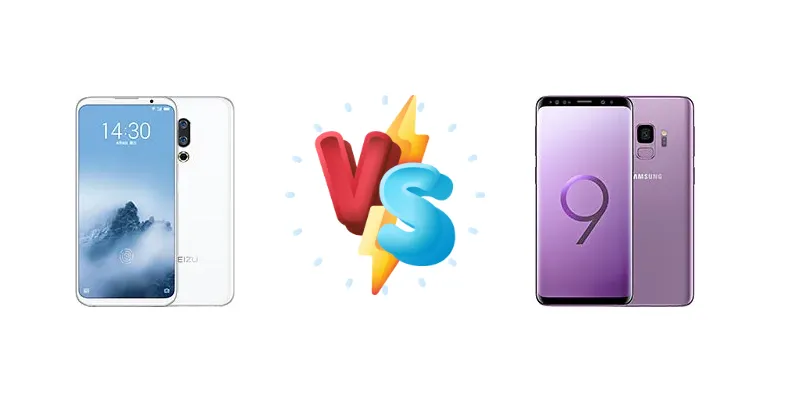
|
🏆 Quick Verdict
For the average user seeking a balance of performance and value, the Meizu 16 emerges as the slightly stronger choice. While both phones share the Snapdragon 845 in some regions, the Meizu 16’s cleaner software and potentially more aggressive pricing give it an edge, especially for those prioritizing a near-stock Android experience.
| PHONES | ||
|---|---|---|
| Phone Names | Meizu 16 | Samsung Galaxy S9 |
| Network | ||
|---|---|---|
| 2G bands | GSM 850 / 900 / 1800 / 1900 | GSM 850 / 900 / 1800 / 1900 - SIM 1 & SIM 2 (dual-SIM model only) |
| 3G bands | HSDPA 850 / 900 / 1700(AWS) / 1900 / 2100 - Global | HSDPA 850 / 900 / 1700(AWS) / 1900 / 2100 - Global, USA |
| 4G bands | 1, 2, 3, 4, 5, 7, 8, 20, 40 - Global | 1, 2, 3, 4, 5, 7, 8, 12, 13, 17, 18, 19, 20, 25, 26, 28, 32, 38, 39, 40, 41, 66 - Global |
| Speed | HSPA 42.2/5.76 Mbps, LTE (4CA) Cat16 1024/150 Mbps | HSPA 42.2/5.76 Mbps, LTE (6CA) Cat18 1200/200 Mbps |
| Technology | GSM / CDMA / HSPA / LTE | GSM / CDMA / HSPA / EVDO / LTE |
| 1, 3, 4, 5, 8, 34, 38, 39, 40, 41 - China | 1, 2, 3, 4, 5, 7, 8, 12, 13, 14, 17, 18, 19, 20, 25, 26, 28, 29, 30, 38, 39, 40, 41, 46, 66, 71 - USA | |
| Launch | ||
|---|---|---|
| Announced | 2018, August. Released 2018, August | 2018, February 25. Released 2018, March 09 |
| Status | Discontinued | Discontinued |
| Body | ||
|---|---|---|
| Build | - | Glass front (Gorilla Glass 5), glass back (Gorilla Glass 5), aluminum frame |
| Dimensions | 150.5 x 73.2 x 7.3 mm (5.93 x 2.88 x 0.29 in) | 147.7 x 68.7 x 8.5 mm (5.81 x 2.70 x 0.33 in) |
| SIM | Nano-SIM + Nano-SIM | · Nano-SIM· Nano-SIM + Nano-SIM |
| Weight | 152 g (5.36 oz) | 163 g (5.75 oz) |
| - | IP68 dust/water resistant (up to 1.5m for 30 min) | |
| Display | ||
|---|---|---|
| Protection | - | Corning Gorilla Glass 5 |
| Resolution | 1080 x 2160 pixels, 18:9 ratio (~402 ppi density) | 1440 x 2960 pixels, 18.5:9 ratio (~570 ppi density) |
| Size | 6.0 inches, 92.9 cm2 (~84.3% screen-to-body ratio) | 5.8 inches, 84.8 cm2 (~83.6% screen-to-body ratio) |
| Type | Super AMOLED | Super AMOLED, HDR10 |
| - | 3D Touch (home button only) Always-on display | |
| Platform | ||
|---|---|---|
| CPU | Octa-core (4x2.8 GHz Kryo 385 Gold & 4x1.7 GHz Kryo 385 Silver) | Octa-core (4x2.7 GHz Mongoose M3 & 4x1.8 GHz Cortex-A55) - EMEAOcta-core (4x2.8 GHz Kryo 385 Gold & 4x1.7 GHz Kryo 385 Silver) - USA/LATAM, China |
| Chipset | Qualcomm SDM845 Snapdragon 845 (10 nm) | Exynos 9810 (10 nm) - EMEAQualcomm SDM845 Snapdragon 845 (10 nm) - USA/LATAM, China |
| GPU | Adreno 630 | Mali-G72 MP18 - EMEAAdreno 630 - USA/LATAM, China |
| OS | Android 8.1 (Oreo), Flyme UI | Android 8.0 (Oreo), upgradable to Android 10, One UI 2.5 |
| Memory | ||
|---|---|---|
| Card slot | No | microSDXC (uses shared SIM slot) - dual SIM model only |
| Internal | 64GB 6GB RAM, 128GB 8GB RAM | 64GB 4GB RAM, 128GB 4GB RAM, 256GB 4GB RAM |
| UFS 2.1 | UFS 2.1 | |
| Main Camera | ||
|---|---|---|
| Dual | 12 MP, f/1.8, 25mm (wide), 1/2.3", 1.55µm, dual pixel PDAF, 4-axis OIS 20 MP, f/2.6, 1/2.6", 1.0µm | - |
| Features | Laser AF, Six-LED dual-tone flash, Auto-HDR, panorama | LED flash, auto-HDR, panorama |
| Single | - | 12 MP, f/1.5-2.4, 26mm (wide), 1/2.55", 1.4µm, dual pixel PDAF, OIS |
| Video | 4K@30fps, 1080p@30fps (gyro-EIS) | 4K@30/60fps, 1080p@30/60/240fps, 720p@960fps, HDR, stereo sound rec., gyro-EIS & OIS (30fps) |
| Selfie camera | ||
|---|---|---|
| Dual | - | 8 MP, f/1.7, 25mm (wide), 1/3.6", 1.22µm, AF 2 MP (dedicated iris scanner camera) |
| Features | - | HDR |
| Single | 20 MP, f/2.0, 27mm (wide), 1/2.8", 1.0µm | - |
| Video | 1080p@30fps | 1440p@30fps |
| Sound | ||
|---|---|---|
| 3.5mm jack | Yes | Yes |
| 35mm jack | Yes | Yes |
| Loudspeaker | Yes, with stereo speakers | Yes, with stereo speakers |
| - | 32-bit/384kHz audio Tuned by AKG | |
| Comms | ||
|---|---|---|
| Bluetooth | 5.0, A2DP, LE | 5.0, A2DP, LE, aptX |
| NFC | No | Yes |
| Positioning | GPS, GLONASS, BDS, GALILEO, SBAS, QZSS | GPS, GLONASS, BDS, GALILEO |
| Radio | No | FM radio (USA & Canada only) |
| USB | USB Type-C 2.0 | USB Type-C 3.1 |
| WLAN | Wi-Fi 802.11 а/b/g/n/ac, dual-band, Wi-Fi Direct | Wi-Fi 802.11 a/b/g/n/ac, dual-band, Wi-Fi Direct |
| Features | ||
|---|---|---|
| Sensors | Fingerprint (under display, optical), accelerometer, gyro, proximity, compass | Iris scanner, fingerprint (rear-mounted), accelerometer, gyro, proximity, compass, barometer, heart rate, SpO2 |
| - | ANT+ Bixby natural language commands and dictation Samsung Pay (Visa, MasterCard certified) | |
| Battery | ||
|---|---|---|
| Charging | 24W wired | 15W wired, QC2 Wireless (Qi) (market dependent) |
| Type | Li-Ion 3010 mAh, non-removable | Li-Ion 3000 mAh, non-removable (11.55 Wh) |
| Misc | ||
|---|---|---|
| Colors | Black, White | Midnight Black, Coral Blue, Titanium Gray, Lilac Purple, Burgundy Red, Sunrise Gold, Ice Blue |
| Models | - | SM-G960F, SM-G960, SM-G960F, SM-G960U, SM-G960W, SM-G9600, SM-G960U1, SM-G960N, SCV38, SM-G960X, SC-02K |
| Price | About 410 EUR | About 110 EUR |
| SAR | - | 0.63 W/kg (head) 0.96 W/kg (body) |
| SAR EU | - | 0.36 W/kg (head) 1.18 W/kg (body) |
| Tests | ||
|---|---|---|
| Audio quality | - | Noise -93.4dB / Crosstalk -93.9dB |
| Battery life | - | Endurance rating 78h |
| Camera | - | Photo / Video |
| Display | - | Contrast ratio: Infinite (nominal), 4.630 (sunlight) |
| Loudspeaker | - | Voice 68dB / Noise 74dB / Ring 81dB |
| Performance | - | AnTuTu: 250156 (v7) GeekBench: 8830 (v4.4) GFXBench: 14fps (ES 3.1 onscreen) |
Meizu 16
- Faster 24W charging
- Potentially cleaner software experience
- High screen-to-body ratio (implied)
- Less established brand
- Camera system less refined than S9
Samsung Galaxy S9
- Superior display quality (brightness, contrast)
- More versatile camera system
- Wider brand recognition and support
- Slower 15W charging
- Exynos variant prone to throttling (EMEA)
Display Comparison
Both the Meizu 16 and Galaxy S9 boast excellent displays, though with different strengths. The S9’s Super AMOLED panel offers an 'Infinite' contrast ratio (4.630 in sunlight) and is renowned for its vibrant colors and excellent outdoor visibility. While the Meizu 16’s display specs aren’t detailed in the provided data, Meizu historically focused on high screen-to-body ratios, suggesting a visually immersive experience. However, the S9’s superior contrast and brightness likely provide a better viewing experience in direct sunlight. The S9’s display technology is a clear advantage for media consumption.
Camera Comparison
Both phones were flagship camera contenders in 2018, but approach image processing differently. The Galaxy S9’s camera is known for its vibrant, sometimes oversaturated, images, appealing to a wider audience. The Meizu 16’s camera details are limited, but Meizu typically favored a more natural color profile. Both phones offer photo and video capabilities, but the S9’s more mature camera software and potentially larger sensor (based on Samsung’s camera history) likely provide greater versatility and image quality, particularly in low-light conditions. The S9’s camera system is more refined and feature-rich.
Performance
The performance landscape is nuanced. The Galaxy S9 shipped with either the Exynos 9810 (EMEA) or the Snapdragon 845 (USA/LATAM, China). The Meizu 16 exclusively features the Snapdragon 845. The Exynos 9810, with its custom Mongoose M3 cores, aimed to outperform the Snapdragon, but often struggled with thermal throttling under sustained load. The Snapdragon 845, while slightly less powerful on paper, generally offered more consistent performance due to its superior thermal efficiency. Crucially, the USA/LATAM/China versions of the S9 *match* the Meizu 16’s chipset. Both CPUs feature an octa-core configuration (4x2.8 GHz Kryo 385 Gold & 4x1.7 GHz Kryo 385 Silver for the Snapdragon, and 4x2.7 GHz Mongoose M3 & 4x1.8 GHz Cortex-A55 for the Exynos). This means performance will be nearly identical in those regions, with the Meizu 16 potentially having a slight edge due to software optimization.
Battery Life
Both the Meizu 16 and Galaxy S9 achieve an endurance rating of 78h, suggesting similar real-world battery life. However, charging speeds differ significantly. The Meizu 16 supports 24W wired charging, while the S9 offers 15W wired charging with Quick Charge 2.0 and optional Qi wireless charging (market dependent). The Meizu 16’s faster charging allows for quicker top-ups, a significant convenience factor. While battery capacity isn’t specified, the faster charging speed gives the Meizu 16 a practical advantage for users who frequently need to recharge.
Buying Guide
Buy the Meizu 16 if you prioritize a clean, minimalist software experience, value a high screen-to-body ratio, and are comfortable with a less mainstream brand. Buy the Samsung Galaxy S9 if you prefer a more established brand with wider support, a superior display with excellent outdoor visibility, and a more versatile camera system with established brand recognition.