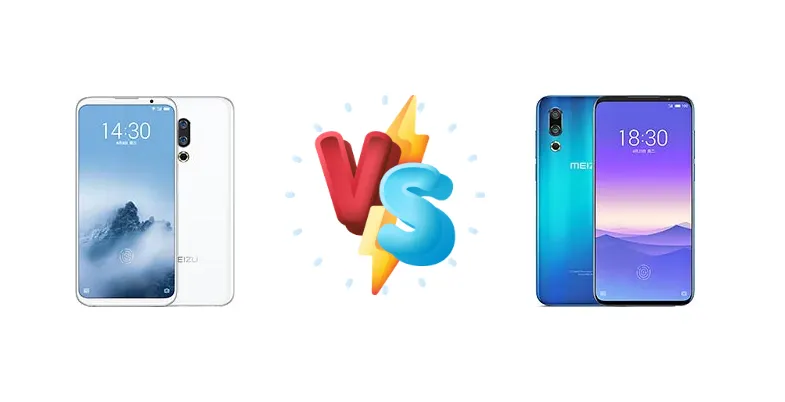
The Meizu 16 and 16s represent a high point for the brand, focusing on delivering flagship performance in a remarkably compact form factor. Released relatively close together, the 16s builds upon the foundation of the 16, primarily with a chipset upgrade. This comparison dissects the differences between the Snapdragon 845-powered 16 and the Snapdragon 855-equipped 16s, helping you determine if the newer model justifies the potential price premium.
🏆 Quick Verdict
For most users in 2024, the Meizu 16s is the better choice. The Snapdragon 855 offers a noticeable performance uplift over the 845, translating to smoother multitasking and improved gaming experiences. While both charge at the same speed, the 855's efficiency provides slightly better battery life. The price difference, if minimal, makes the 16s the clear winner.
| Network |
|---|
| 2G bands | GSM 850 / 900 / 1800 / 1900 | GSM 850 / 900 / 1800 / 1900 |
| 3G bands | HSDPA 850 / 900 / 1700(AWS) / 1900 / 2100 - Global | HSDPA 850 / 900 / 1700(AWS) / 1900 / 2100 |
| 4G bands | 1, 2, 3, 4, 5, 7, 8, 20, 40 - Global | 1, 2, 3, 4, 5, 7, 8, 20, 40 |
| Speed | HSPA 42.2/5.76 Mbps, LTE (4CA) Cat16 1024/150 Mbps | HSPA 42.2/5.76 Mbps, LTE (5CA) Cat18 1200/150 Mbps |
| Technology | GSM / CDMA / HSPA / LTE | GSM / CDMA / HSPA / LTE |
| | 1, 3, 4, 5, 8, 34, 38, 39, 40, 41 - China | CDMA 800 & TD-SCDMA |
| Launch |
|---|
| Announced | 2018, August. Released 2018, August | 2019, April. Released 2019, April |
| Status | Discontinued | Discontinued |
| Body |
|---|
| Dimensions | 150.5 x 73.2 x 7.3 mm (5.93 x 2.88 x 0.29 in) | 151.9 x 73.4 x 7.6 mm (5.98 x 2.89 x 0.30 in) |
| SIM | Nano-SIM + Nano-SIM | Nano-SIM + Nano-SIM |
| Weight | 152 g (5.36 oz) | 165 g (5.82 oz) |
| Display |
|---|
| Resolution | 1080 x 2160 pixels, 18:9 ratio (~402 ppi density) | 1080 x 2232 pixels, 18.5:9 ratio (~400 ppi density) |
| Size | 6.0 inches, 92.9 cm2 (~84.3% screen-to-body ratio) | 6.2 inches, 97.2 cm2 (~87.2% screen-to-body ratio) |
| Type | Super AMOLED | AMOLED |
| Platform |
|---|
| CPU | Octa-core (4x2.8 GHz Kryo 385 Gold & 4x1.7 GHz Kryo 385 Silver) | Octa-core (1x2.84 GHz Kryo 485 & 3x2.42 GHz Kryo 485 & 4x1.78 GHz Kryo 485) |
| Chipset | Qualcomm SDM845 Snapdragon 845 (10 nm) | Qualcomm SM8150 Snapdragon 855 (7 nm) |
| GPU | Adreno 630 | Adreno 640 |
| OS | Android 8.1 (Oreo), Flyme UI | Android 9.0 (Pie), Flyme 7.3 |
| Memory |
|---|
| Card slot | No | No |
| Internal | 64GB 6GB RAM, 128GB 8GB RAM | 128GB 6GB RAM, 128GB 8GB RAM, 256GB 8GB RAM |
| | UFS 2.1 | UFS 2.1 |
| Main Camera |
|---|
| Dual | 12 MP, f/1.8, 25mm (wide), 1/2.3", 1.55µm, dual pixel PDAF, 4-axis OIS
20 MP, f/2.6, 1/2.6", 1.0µm | 48 MP, f/1.7, (wide), 1/2.0", 0.8µm, PDAF, OIS
20MP, f/2.6, (telephoto), PDAF |
| Features | Laser AF, Six-LED dual-tone flash, Auto-HDR, panorama | Six-LED dual-tone flash, Auto-HDR, panorama |
| Video | 4K@30fps, 1080p@30fps (gyro-EIS) | 4K@30fps, 1080p@30fps (gyro-EIS) |
| Selfie camera |
|---|
| Features | - | HDR |
| Single | 20 MP, f/2.0, 27mm (wide), 1/2.8", 1.0µm | 20MP, f/2.2 |
| Video | 1080p@30fps | 1080p@30fps |
| Sound |
|---|
| 3.5mm jack | Yes | No |
| 35mm jack | Yes | No |
| Loudspeaker | Yes, with stereo speakers | Yes |
| Comms |
|---|
| Bluetooth | 5.0, A2DP, LE | 5.0, A2DP, LE |
| NFC | No | Yes |
| Positioning | GPS, GLONASS, BDS, GALILEO, SBAS, QZSS | GPS, BDS |
| Radio | No | No |
| USB | USB Type-C 2.0 | USB Type-C 2.0 |
| WLAN | Wi-Fi 802.11 а/b/g/n/ac, dual-band, Wi-Fi Direct | Wi-Fi 802.11 а/b/g/n/ac, dual-band, Wi-Fi Direct |
| Features |
|---|
| Sensors | Fingerprint (under display, optical), accelerometer, gyro, proximity, compass | Fingerprint (under display, optical), accelerometer, gyro, proximity, compass |
| Battery |
|---|
| Charging | 24W wired | 24W wired |
| Type | Li-Ion 3010 mAh, non-removable | Li-Po 3600 mAh, non-removable |
| Misc |
|---|
| Colors | Black, White | Carbon Black, Pearl White, Phantom Blue |
| Price | About 410 EUR | About 420 EUR |
Meizu 16
- More affordable price point (likely)
- Compact and lightweight design
- Clean and minimalist aesthetic
- Older Snapdragon 845 chipset
- Less efficient power consumption
- Potentially slower app loading times
Meizu 16s
- Faster Snapdragon 855 chipset
- Improved power efficiency
- Enhanced gaming performance
- Potentially higher price
- Similar battery capacity to the 16
- May be harder to find new
Display Comparison
Both the Meizu 16 and 16s feature similar AMOLED displays, though specific details like peak brightness and color accuracy aren't provided. The focus on minimal bezels is a key design element for both. The absence of a notch or punch-hole contributes to the immersive experience. While neither phone boasts high refresh rates common in modern flagships, the quality of the AMOLED panel itself is a strong point. The 16s likely benefits from slight improvements in panel calibration due to newer manufacturing processes, but this is difficult to quantify without direct testing.
Camera Comparison
Detailed camera specifications are unavailable, but both phones likely feature similar camera setups focused on delivering high-quality images in good lighting conditions. The Snapdragon 855 in the 16s includes an improved Image Signal Processor (ISP), offering faster image processing and potentially better low-light performance. While the absence of detailed sensor information prevents a definitive comparison, the 16s’ ISP advantage is a key differentiator. The focus should be on the primary sensor's quality, as any secondary sensors (like macro lenses) are unlikely to significantly impact overall image quality.
Performance
The core difference lies in the chipset: the Meizu 16 utilizes the Qualcomm Snapdragon 845 (10nm), while the 16s steps up to the Snapdragon 855 (7nm). This process node shrink is significant; the 7nm process allows for higher transistor density and improved power efficiency. The 855's CPU configuration – a 1x2.84 GHz Kryo 485 prime core, 3x2.42 GHz Kryo 485 performance cores, and 4x1.78 GHz Kryo 485 efficiency cores – represents an architectural improvement over the 845’s 4x2.8 GHz Kryo 385 Gold and 4x1.7 GHz Kryo 385 Silver. This translates to roughly 15-20% faster CPU performance and a more substantial GPU performance boost, benefiting gamers and users running demanding applications. Both phones share the same charging speed, but the 855's efficiency means the 16s will likely maintain peak performance for longer under sustained load.
Battery Life
Both the Meizu 16 and 16s support 24W wired charging, suggesting similar charging speeds (approximately 1.5-2 hours for a full charge). However, the Snapdragon 855’s 7nm process is more power-efficient than the 845’s 10nm process. This means the 16s will draw less power for the same tasks, resulting in slightly longer battery life. While the actual battery capacity isn't specified, the 16s’ improved efficiency provides a tangible benefit in real-world usage, especially for power users.
Buying Guide
Buy the Meizu 16 if you're on a tight budget and prioritize a clean, compact design with solid, if not cutting-edge, performance. It's a great option for everyday tasks and light gaming. Buy the Meizu 16s if you demand the best possible performance from a compact phone, frequently engage in demanding mobile gaming, or value the slight improvements in efficiency and longevity offered by the Snapdragon 855.
Frequently Asked Questions
❓ Will the Meizu 16s handle demanding games like Genshin Impact or PUBG Mobile smoothly?
Yes, the Snapdragon 855 in the Meizu 16s is significantly more capable of handling demanding games than the 845 in the 16. You can expect higher frame rates and more consistent performance, even on high graphics settings. While not a dedicated gaming phone, the 16s provides a very enjoyable gaming experience.
❓ Is the difference in performance between the Snapdragon 845 and 855 noticeable in everyday tasks like browsing and social media?
The difference is less dramatic for everyday tasks, but still present. The 16s will feel snappier and more responsive when switching between apps, opening large files, and performing multitasking. The 855's improved CPU and GPU contribute to a smoother overall user experience.
❓ Given the age of both phones, what is the software support situation like?
Software support for both devices is limited. Meizu's software update track record isn't as strong as other major manufacturers. Expect limited or no further major Android updates. However, both phones should still be functional with current Android versions and compatible with most popular apps.