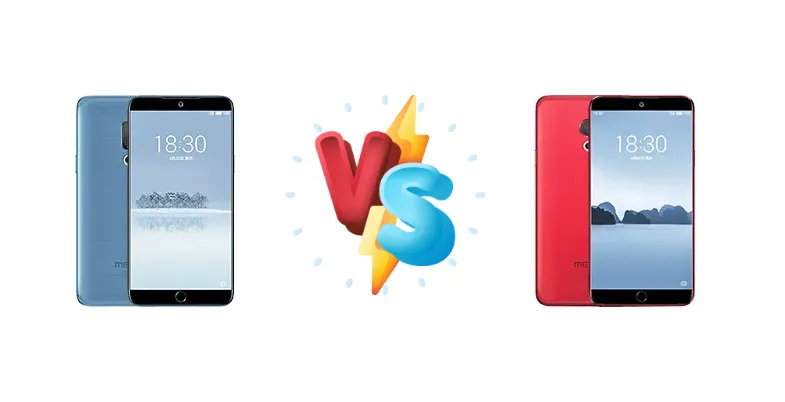
The Meizu 15 and 15 Lite represent an interesting dichotomy: a flagship attempting to deliver a premium experience, and a more affordable variant aiming for broader accessibility. Released in the same timeframe, they share a design language but diverge significantly in internal components. This comparison dissects those differences, helping you determine which Meizu best suits your needs and budget.
🏆 Quick Verdict
For most users, the Meizu 15 offers a superior experience thanks to its significantly more powerful Snapdragon 660 chipset and longer 77-hour endurance rating. While the 15 Lite provides a more affordable entry point, the performance compromise is substantial, making the 15 the better choice for demanding tasks and longevity.
| Network |
|---|
| 2G bands | GSM 850 / 900 / 1800 / 1900 | GSM 850 / 900 / 1800 / 1900 |
| 3G bands | HSDPA 850 / 900 / 1900 / 2100 | HSDPA 850 / 900 / 1900 / 2100 |
| 4G bands | 1, 3, 4, 5, 7, 8, 34, 38, 39, 40, 41 | 1, 3, 5, 8, 34, 38, 39, 40, 41 |
| Speed | HSPA 42.2/5.76 Mbps, LTE (2CA) Cat6 300/50 Mbps | HSPA, LTE |
| Technology | GSM / CDMA / HSPA / LTE | GSM / CDMA / HSPA / LTE |
| | 1, 3, 5, 8, 34, 38, 39, 40, 41 | CDMA 800 & TD-SCDMA |
| Launch |
|---|
| Announced | 2018, April. Released 2018, April | 2018, April. Released 2018, May |
| Status | Discontinued | Discontinued |
| Body |
|---|
| Dimensions | 143 x 72 x 7.3 mm (5.63 x 2.83 x 0.29 in) | 143.6 x 72.4 x 7.5 mm (5.65 x 2.85 x 0.30 in) |
| SIM | Nano-SIM + Nano-SIM | Nano-SIM + Nano-SIM |
| Weight | 152 g (5.36 oz) | 145 g (5.11 oz) |
| Display |
|---|
| Resolution | 1080 x 1920 pixels, 16:9 ratio (~403 ppi density) | 1080 x 1920 pixels, 16:9 ratio (~403 ppi density) |
| Size | 5.46 inches, 82.2 cm2 (~79.8% screen-to-body ratio) | 5.46 inches, 82.2 cm2 (~79.0% screen-to-body ratio) |
| Type | Super AMOLED | IPS LCD |
| Platform |
|---|
| CPU | Octa-core (4x2.2 GHz Kryo 260 Gold & 4x1.8 GHz Kryo 260 Silver) | Octa-core 2.2 GHz Cortex-A53 |
| Chipset | Qualcomm SDM660 Snapdragon 660 (14 nm) | Qualcomm MSM8953-Pro Snapdragon 626 (14 nm) |
| GPU | Adreno 512 | Adreno 506 |
| OS | Android 7.1.2 (Nougat), Flyme 7.3 | Android 7.1.2 (Nougat), Flyme 7 |
| Memory |
|---|
| Card slot | No | microSDXC (uses shared SIM slot) |
| Internal | 64GB 4GB RAM, 128GB 4GB RAM | 64GB 4GB RAM |
| | eMMC 5.1 | eMMC 5.1 |
| Main Camera |
|---|
| Dual | 12 MP, f/1.8, 1/2.3", 1.55 µm, dual pixel PDAF, 4-axis OIS
20 MP, 1/2.8", 1.0 µm, AF, portraits only | - |
| Features | Laser AF, Six-LED dual-tone flash, HDR, panorama | Six-LED dual-tone flash, HDR, panorama |
| Single | - | 12 MP, f/1.9, 1.4 µm, dual pixel PDAF |
| Video | 4K@30fps, 1080p@30fps | 1080p@30fps |
| Selfie camera |
|---|
| Single | 20 MP, f/2.0, (wide), 1/2.8", 1.0µm | 20 MP, f/2.0, (wide), 1/2.8", 1.0µm |
| Video | 1080p@30fps | 1080p@30fps |
| Sound |
|---|
| 3.5mm jack | Yes | Yes |
| 35mm jack | Yes | Yes |
| Loudspeaker | Yes, with stereo speakers | Yes |
| Comms |
|---|
| Bluetooth | 4.2, A2DP, LE | 4.2, A2DP, LE |
| NFC | No | No |
| Positioning | GPS, GLONASS, BDS | GPS, GLONASS, BDS |
| Radio | No | No |
| USB | USB Type-C 2.0 | USB Type-C 2.0 |
| WLAN | Wi-Fi 802.11 b/g/n/ac, dual-band, Wi-Fi Direct | Wi-Fi 802.11 a/b/g/n, Wi-Fi Direct |
| Features |
|---|
| Sensors | Fingerprint (front-mounted), accelerometer, gyro, proximity, compass, barometer | Fingerprint (front-mounted), accelerometer, gyro, proximity, compass |
| Battery |
|---|
| Charging | 24W wired | 18W wired |
| Type | Li-Ion 3000 mAh, non-removable | Li-Ion 3000 mAh, non-removable |
| Misc |
|---|
| Colors | Ink, Yakin, Indigo, White | Black, Gold, Red |
| Models | - | 15 Lite |
| Price | About 400 EUR | About 240 EUR |
| Tests |
|---|
| Audio quality |
Noise -93.2dB / Crosstalk -93.9dB | - |
| Battery life |
Endurance rating 77h
| - |
| Camera |
Photo / Video | - |
| Display |
Contrast ratio: Infinite (nominal), 4.082 (sunlight) | - |
| Loudspeaker |
Voice 77dB / Noise 74dB / Ring 80dB
| - |
| Performance |
AnTuTu: 128680 (v7)
GeekBench: 5770 (v4.4)
GFXBench: 9.2fps (ES 3.1 onscreen) |
GeekBench: 4464 (v4.4) |
Meizu 15
- Superior performance with Snapdragon 660
- Longer battery life (77h endurance)
- Faster 24W charging
- Likely better camera quality
- Higher price point
- May be harder to find new
Meizu 15 Lite
- More affordable price
- Decent performance for basic tasks
- 18W fast charging
- Similar design aesthetic
- Significantly weaker Snapdragon 626 processor
- Lower battery endurance
- Likely inferior camera performance
Display Comparison
Both devices share a similar display philosophy, prioritizing a high contrast ratio. The Meizu 15 boasts an 'Infinite' (nominal) contrast ratio, with a more quantifiable 4.082 ratio under sunlight, suggesting excellent outdoor visibility. While the 15 Lite's display specs are not provided, it's reasonable to assume a lower contrast ratio given its more budget-oriented positioning. This impacts the vibrancy and clarity of images, particularly in bright conditions, favoring the Meizu 15.
Camera Comparison
Both phones are listed as having 'Photo / Video' capabilities, but detailed camera specifications are absent. Given the Meizu 15's flagship aspirations, it likely features a more sophisticated camera system with a larger sensor and potentially optical image stabilization (OIS). The 15 Lite, being a budget model, likely utilizes a simpler camera setup. Without specific sensor sizes or aperture information, it's difficult to make a definitive judgment, but the 15 is expected to deliver superior image quality, especially in low-light conditions.
Performance
The core difference lies in the chipsets. The Meizu 15 utilizes the Qualcomm Snapdragon 660 (14nm), an octa-core processor with a Kryo 260 architecture (4x2.2 GHz Gold & 4x1.8 GHz Silver). This architecture provides a balance of performance and efficiency. In contrast, the 15 Lite is equipped with the Snapdragon 626 (14nm) featuring an octa-core 2.2 GHz Cortex-A53 processor. The Kryo cores in the 660 offer a significant architectural advantage, resulting in faster processing speeds and improved multitasking capabilities. The 660's superior GPU also translates to a better gaming experience. The 15 Lite will struggle with graphically intensive games, while the 15 can handle them with more ease.
Battery Life
The Meizu 15 achieves an impressive endurance rating of 77 hours, indicating excellent battery life. This is likely due to a combination of its efficient Snapdragon 660 chipset and optimized software. The 15 Lite, while offering 18W wired charging, lacks the same endurance rating. The 24W charging on the 15 allows for faster top-ups, but the 77-hour rating suggests the 15 can go significantly longer between charges, making it the better choice for users who prioritize longevity.
Buying Guide
Buy the Meizu 15 if you prioritize performance for gaming, multitasking, and future-proofing, and value the longer battery life. It's ideal for users who want a near-flagship experience without the flagship price tag. Buy the Meizu 15 Lite if your primary needs are basic communication, social media, and light web browsing, and you're on a very tight budget. It's a suitable option for those who prioritize affordability over raw power.
Frequently Asked Questions
❓ Will the Snapdragon 626 in the Meizu 15 Lite struggle with modern mobile games?
Yes, the Snapdragon 626 is a relatively older and less powerful chipset. While it can handle less demanding games, you'll likely experience noticeable lag and reduced frame rates in graphically intensive titles like PUBG or Genshin Impact. The Meizu 15's Snapdragon 660 is far better suited for gaming.
❓ How much faster is the 24W charging on the Meizu 15 compared to the 18W charging on the 15 Lite?
While both support fast charging, the 24W on the Meizu 15 will replenish the battery more quickly. Expect a noticeable difference in 0-100% charge times, with the 15 likely taking around 90-120 minutes, while the 15 Lite could take closer to 120-150 minutes. However, the 15's superior battery endurance means you'll likely need to charge it less frequently.
❓ Is the difference in CPU performance between the Snapdragon 660 and 626 noticeable in everyday tasks?
Absolutely. The Snapdragon 660's Kryo architecture provides a significant performance boost over the Cortex-A53 cores in the 626. This translates to snappier app launches, smoother multitasking, and a more responsive overall user experience. You'll notice the difference when switching between apps, browsing the web, and editing photos.