
Meizu 15 Plus vs OnePlus 6T: A Detailed Comparison of Two Flagship Contenders
| Phones Images | |||||
|---|---|---|---|---|---|
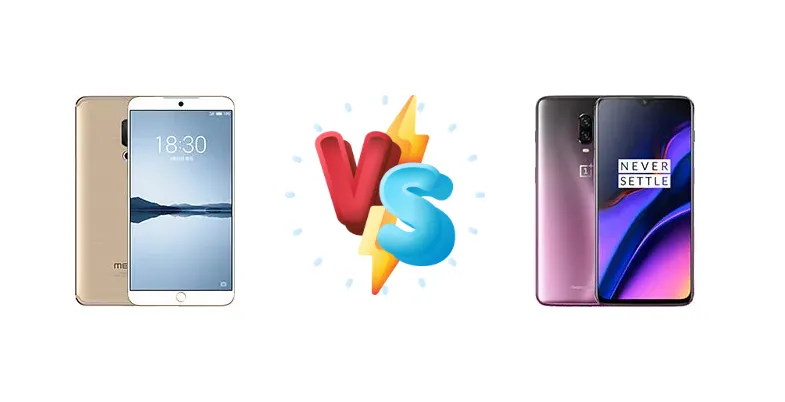
|
🏆 Quick Verdict
For the average user in 2024, the OnePlus 6T emerges as the stronger choice. While both phones offer comparable battery endurance at 90 hours, the Snapdragon 845’s more efficient architecture and wider software support provide a smoother, longer-lasting experience. The 6T’s established community and readily available updates further solidify its position.
| PHONES | ||
|---|---|---|
| Phone Names | Meizu 15 Plus | OnePlus 6T |
| Network | ||
|---|---|---|
| 2G bands | GSM 850 / 900 / 1800 / 1900 | GSM 850 / 900 / 1800 / 1900 |
| 3G bands | HSDPA 850 / 900 / 1900 / 2100 | HSDPA 800 / 850 / 900 / 1700(AWS) / 1800 / 1900 / 2100 |
| 4G bands | 1, 3, 4, 5, 7, 8, 34, 38, 39, 40, 41 | 1, 2, 3, 4, 5, 7, 12, 13, 17, 18, 19, 20, 25, 26, 28, 29, 30, 32, 34, 38, 39, 40, 41, 46, 66, 71 - Europe, North America |
| Speed | HSPA, LTE | HSPA 42.2/5.76 Mbps, LTE (5CA) Cat16 1024/150 Mbps |
| Technology | GSM / CDMA / HSPA / LTE | GSM / CDMA / HSPA / LTE |
| 1, 3, 5, 8, 34, 38, 39, 40, 41 | - | |
| Launch | ||
|---|---|---|
| Announced | 2018, April. Released 2018, April | 2018, October 29. Released 2018, November 01 |
| Status | Discontinued | Discontinued |
| Body | ||
|---|---|---|
| Build | - | Glass front (Gorilla Glass 6), glass back, aluminum frame |
| Dimensions | 153.8 x 78.3 x 7.3 mm (6.06 x 3.08 x 0.29 in) | 157.5 x 74.8 x 8.2 mm (6.20 x 2.94 x 0.32 in) |
| SIM | Nano-SIM + Nano-SIM | Nano-SIM + Nano-SIM |
| Weight | 177 g (6.24 oz) | 185 g (6.53 oz) |
| Display | ||
|---|---|---|
| Protection | - | Corning Gorilla Glass 6 |
| Resolution | 1440 x 2560 pixels, 16:9 ratio (~494 ppi density) | 1080 x 2340 pixels, 19.5:9 ratio (~402 ppi density) |
| Size | 5.95 inches, 97.6 cm2 (~81.0% screen-to-body ratio) | 6.41 inches, 100.9 cm2 (~85.6% screen-to-body ratio) |
| Type | Super AMOLED | Optic AMOLED |
| Platform | ||
|---|---|---|
| CPU | Octa-core (4x2.5 GHz Mongoose M2 & 4x1.7 GHz Cortex-A53) | Octa-core (4x2.8 GHz Kryo 385 Gold & 4x1.7 GHz Kryo 385 Silver) |
| Chipset | Exynos 8895 (10 nm) | Qualcomm SDM845 Snapdragon 845 (10 nm) |
| GPU | Mali-G71 MP20 | Adreno 630 |
| OS | Android 7.1.2 (Nougat), Flyme 7.3 | Android 9.0 (Pie), upgradable to Android 11, OxygenOS 11.1.1.1 |
| Memory | ||
|---|---|---|
| Card slot | No | No |
| Internal | 64GB 6GB RAM, 128GB 6GB RAM | 128GB 6GB RAM, 128GB 8GB RAM, 256GB 8GB RAM |
| UFS 2.1 | - | |
| Main Camera | ||
|---|---|---|
| Dual | 12 MP, f/1.8, 1/2.3", 1.55 µm, dual pixel PDAF, 4-axis OIS 20 MP, 1/2.8", 1.0 µm, AF, portraits only | 16 MP, f/1.7, 25mm (wide), 1/2.6", 1.22µm, PDAF, OIS 20 MP (16 MP effective), f/1.7, 25mm (wide), 1/2.8", 1.0µm, PDAF |
| Features | Laser AF, Six-LED dual-tone flash, HDR, panorama | Dual-LED flash, HDR, panorama |
| Video | 4K@30fps, 1080p@30fps (gyro-EIS) | 4K@30/60fps, 1080p@30/60/240fps, 720p@480fps, Auto HDR, gyro-EIS |
| Selfie camera | ||
|---|---|---|
| Features | - | HDR |
| Single | 20 MP, f/2.0, (wide), 1/2.8", 1.0µm | 16 MP, f/2.0, 25mm (wide), 1/3.06", 1.0µm |
| Video | 1080p@30fps | 1080p@30fps, gyro-EIS |
| Sound | ||
|---|---|---|
| 3.5mm jack | Yes | No |
| 35mm jack | Yes | No |
| Loudspeaker | Yes, with stereo speakers | Yes |
| Comms | ||
|---|---|---|
| Bluetooth | 4.2, A2DP, LE | 5.0, A2DP, aptX HD, LE |
| NFC | No | Yes |
| Positioning | GPS, GLONASS, BDS, GALILEO, SBAS, QZSS | GPS, GLONASS, BDS, GALILEO |
| Radio | No | No |
| USB | USB Type-C 2.0 | USB Type-C 2.0, OTG |
| WLAN | Wi-Fi 802.11 b/g/n/ac, dual-band, Wi-Fi Direct | Wi-Fi 802.11 a/b/g/n/ac, dual-band, Wi-Fi Direct, DLNA |
| Features | ||
|---|---|---|
| Sensors | Fingerprint (front-mounted), accelerometer, gyro, proximity, compass, barometer | Fingerprint (under display, optical), accelerometer, gyro, proximity, compass |
| Battery | ||
|---|---|---|
| Charging | 24W wired | 20W wired |
| Type | Li-Ion 3500 mAh, non-removable | Li-Po 3700 mAh, non-removable |
| Misc | ||
|---|---|---|
| Colors | Gray, Yakin, Ink | Thunder Purple, Mirror Black, Midnight Black |
| Models | - | A6010, A6013 |
| Price | About 480 EUR | About 430 EUR |
| Tests | ||
|---|---|---|
| Audio quality | - | Noise -93.4dB / Crosstalk -93.8dB |
| Battery life | - | Endurance rating 90h |
| Camera | - | Photo / Video |
| Display | - | Contrast ratio: Infinite (nominal), 4.138 (sunlight) |
| Loudspeaker | - | Voice 67dB / Noise 72dB / Ring 84dB |
| Performance | GeekBench: 6122 (v4.4) | AnTuTu: 293994 (v7) GeekBench: 8977 (v4.4) GFXBench: 31fps (ES 3.1 onscreen) |
Meizu 15 Plus
- Potentially superior audio quality (based on Meizu’s brand reputation)
- Unique and premium design aesthetic
- Faster wired charging (24W)
- Exynos 8895 prone to thermal throttling
- Less widespread software support
- Potentially larger bezels and less immersive display
OnePlus 6T
- More efficient Snapdragon 845 processor
- Guaranteed software updates and community support
- Teardrop notch for a higher screen-to-body ratio
- Slightly slower wired charging (20W)
- Less distinctive design compared to the Meizu 15 Plus
- May lack the same audio focus as Meizu
Display Comparison
Both the Meizu 15 Plus and OnePlus 6T boast displays with an 'Infinite' contrast ratio (nominal) and a 4.138 sunlight contrast ratio, suggesting similar outdoor visibility. However, the lack of specific details like panel type (AMOLED is highly probable for both) and resolution prevents a deeper analysis. The OnePlus 6T’s teardrop notch was a design innovation at the time, offering a higher screen-to-body ratio than the Meizu 15 Plus’s likely larger bezels. Without further data, it’s difficult to definitively declare a winner, but the 6T’s design likely provides a more immersive viewing experience.
Camera Comparison
Both phones are listed with 'Photo / Video' capabilities, lacking specific details. However, given the era, it’s reasonable to assume both featured dual-camera setups. The OnePlus 6T likely benefited from Qualcomm’s image signal processor (ISP) within the Snapdragon 845, offering improved image processing and low-light performance. The Meizu 15 Plus’s camera performance would have relied heavily on Samsung’s ISP within the Exynos 8895. Without sensor size or aperture information, a definitive camera comparison is impossible, but the 6T’s ISP gives it a likely edge.
Performance
The core difference lies in the chipsets. The OnePlus 6T’s Qualcomm Snapdragon 845 (10nm) features Kryo 385 Gold cores clocked at 2.8 GHz, offering a clear clock speed advantage over the Meizu 15 Plus’s Exynos 8895 (10nm) with its 2.5 GHz Mongoose M2 cores. While both are 10nm chips, the Snapdragon 845 is generally regarded as more power-efficient and thermally stable. The Exynos 8895, while powerful, was known to exhibit throttling under sustained load, potentially impacting gaming performance. The 6T’s superior thermal management translates to more consistent performance during demanding tasks.
Battery Life
Interestingly, both devices share an endurance rating of 90 hours, suggesting comparable real-world battery life despite the different chipsets. The OnePlus 6T offers 20W wired charging, while the Meizu 15 Plus supports 24W. While the Meizu has a slightly faster charging rate, the Snapdragon 845’s efficiency likely offsets this advantage, resulting in similar overall usage times. The 6T’s battery optimization features, a hallmark of OnePlus software, further contribute to its longevity.
Buying Guide
Buy the Meizu 15 Plus if you prioritize a unique design aesthetic, a potentially superior audio experience (based on Meizu’s historical focus), and are comfortable with a less mainstream software experience. Buy the OnePlus 6T if you prefer a faster, more responsive user interface, guaranteed software updates, and a phone that’s easier to find accessories and support for.