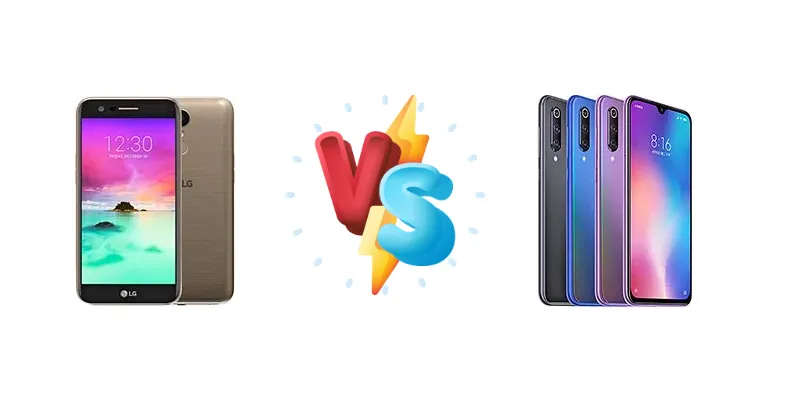
The LG X4+ and Xiaomi Mi 9 SE represent different approaches to the budget smartphone market. The X4+ aims for basic functionality at a low price point, while the Mi 9 SE, though older, packs considerably more processing power and a superior display. This comparison dissects their key differences to help you determine which device best suits your needs.
🏆 Quick Verdict
For the vast majority of users, the Xiaomi Mi 9 SE is the clear winner. Its Snapdragon 712 chipset delivers significantly faster performance than the X4+'s Snapdragon 425, and its brighter 637 nit display provides a much better viewing experience. While both phones offer similar battery endurance, the Mi 9 SE’s overall capabilities justify its slightly higher price.
| Network |
|---|
| 2G bands | GSM 850 / 900 / 1800 / 1900 | GSM 850 / 900 / 1800 / 1900 |
| 3G bands | HSDPA 850 / 900 / 1900 / 2100 | HSDPA 850 / 900 / 1900 / 2100 |
| 4G bands | 1, 3, 5, 7, 8, 28, 38 | 1, 3, 4, 5, 7, 8, 20, 38, 40 - Global |
| Speed | HSPA, LTE | HSPA, LTE |
| Technology | GSM / HSPA / LTE | GSM / CDMA / HSPA / LTE |
| | - | 1, 3, 5, 7, 8, 34, 38, 39, 40, 41 - China |
| Launch |
|---|
| Announced | 2018, January. Released 2018, February | 2019, February 20. Released 2019, March |
| Status | Discontinued | Discontinued |
| Body |
|---|
| Build | - | Glass front (Gorilla Glass 5), glass back, aluminum frame |
| Dimensions | 148.6 x 75.1 x 8.6 mm (5.85 x 2.96 x 0.34 in) | 147.5 x 70.5 x 7.5 mm (5.81 x 2.78 x 0.30 in) |
| SIM | Nano-SIM + Nano-SIM | Nano-SIM + Nano-SIM |
| Weight | 172.3 g (6.07 oz) | 155 g (5.47 oz) |
| Display |
|---|
| Protection | - | Corning Gorilla Glass 5 |
| Resolution | 720 x 1280 pixels, 16:9 ratio (~277 ppi density) | 1080 x 2340 pixels, 19.5:9 ratio (~432 ppi density) |
| Size | 5.3 inches, 77.4 cm2 (~69.4% screen-to-body ratio) | 5.97 inches, 87.5 cm2 (~84.1% screen-to-body ratio) |
| Type | IPS LCD | Super AMOLED, HDR |
| Platform |
|---|
| CPU | Quad-core 1.4 GHz Cortex-A53 | Octa-core (2x2.3 GHz Kryo 360 Gold & 6x1.7 GHz Kryo 360 Silver) |
| Chipset | Qualcomm MSM8917 Snapdragon 425 (28 nm) | Qualcomm SDM712 Snapdragon 712 (10 nm) |
| GPU | Adreno 308 | Adreno 616 |
| OS | Android 7.0 (Nougat) | Android 9.0 (Pie), upgradable to Android 11, MIUI 12.5 |
| Memory |
|---|
| Card slot | microSDXC | No |
| Internal | 32GB 2GB RAM | 64GB 6GB RAM, 128GB 6GB RAM |
| | - | UFS 2.0 |
| Main Camera |
|---|
| Features | LED flash, HDR | Dual-LED flash, HDR, panorama |
| Single | 13 MP, f/2.2, 1/3.1", 1.12µm, AF | - |
| Triple | - | 48 MP, f/1.8, (wide), 1/2.0", 0.8µm, PDAF
8 MP, f/2.4, (telephoto), 1/4.0", 1.12µm, PDAF
13 MP, f/2.4, (ultrawide), 1/3.1", 1.12µm |
| Video | 1080p@30fps | 4K@30fps, 1080p@30/60/120fps, 720p@960fps, gyro-EIS |
| Selfie camera |
|---|
| Features | - | HDR |
| Single | 5 MP, f/2.4, 1/5.0", 1.12µm | 20 MP, f/2.0, (wide), 1/3", 0.9µm |
| Video | 1080p@30fps | 1080p@30fps |
| Sound |
|---|
| 3.5mm jack | - | No |
| 35mm jack | Yes | No |
| Loudspeaker | Yes | Yes |
| Comms |
|---|
| Bluetooth | 4.2, A2DP, LE | 5.0, A2DP, LE, aptX HD |
| Infrared port | - | Yes |
| NFC | Yes | Yes |
| Positioning | GPS | GPS, GLONASS, GALILEO, BDS |
| Radio | FM radio | No |
| USB | microUSB 2.0 | USB Type-C 2.0, OTG |
| WLAN | Wi-Fi 802.11 a/b/g/n, dual-band, Wi-Fi Direct | Wi-Fi 802.11 a/b/g/n/ac, dual-band, Wi-Fi Direct, DLNA |
| Features |
|---|
| Sensors | Fingerprint (rear-mounted), accelerometer, proximity, compass | Fingerprint (under display, optical), accelerometer, gyro, compass |
| | - | Virtual proximity sensing |
| Battery |
|---|
| Charging | - | 18W wired |
| Type | Li-Ion 3000 mAh, non-removable | Li-Po 3070 mAh, non-removable |
| Misc |
|---|
| Colors | Lavender Violet, Moroccan Blue | Violet, Blue, Gray |
| Models | LM-X415L, LM-X410L, LM-X415S | M1903F2G |
| Price | About 200 EUR | About 460 EUR |
| SAR | - | 1.39 W/kg (head) 1.39 W/kg (body) |
| SAR EU | - | 1.19 W/kg (head) 1.17 W/kg (body) |
| Tests |
|---|
| Audio quality | - |
Noise -93.5dB / Crosstalk -93.5dB |
| Battery life | - |
Endurance rating 73h
|
| Camera | - |
Photo / Video |
| Display | - |
Contrast ratio: Infinite (nominal) |
| Loudspeaker | - |
Voice 86dB / Noise 79dB / Ring 87dB
|
| Performance | - |
AnTuTu: 180057 (v7)
GeekBench: 6017 (v4.4)
GFXBench: 14fps (ES 3.1 onscreen) |
LG X4+
- Lowest possible price point
- Simple and easy-to-use interface
- Decent battery endurance
- Significantly slower performance
- Lower quality display
- Limited camera capabilities
Xiaomi Mi 9 SE
- Much faster performance with Snapdragon 712
- Brighter and more vibrant display
- Faster 18W charging
- Slightly higher price
- Older model (potential software support concerns)
- May not be as readily available
Display Comparison
The Xiaomi Mi 9 SE boasts a significantly brighter display, reaching a measured 637 nits, compared to the LG X4+'s unspecified brightness. This difference is crucial for outdoor visibility. While both displays have an 'infinite' (nominal) contrast ratio, the higher brightness of the Mi 9 SE translates to a more vivid and engaging viewing experience. The X4+'s display specifications are minimal, suggesting a lower-quality panel overall. The Mi 9 SE’s display is a clear advantage for media consumption and general usability.
Camera Comparison
Both devices offer photo and video capabilities, but the specifics are limited. Without detailed sensor information, it’s difficult to make a precise comparison. However, the Mi 9 SE’s more powerful image signal processor (ISP) within the Snapdragon 712 chipset will likely result in better image quality, particularly in low-light conditions. The X4+'s older chipset lacks the advanced processing capabilities needed for sophisticated image enhancement. It's reasonable to assume the Mi 9 SE offers a more versatile and capable camera system.
Performance
The performance gap between these two devices is substantial. The Xiaomi Mi 9 SE’s Snapdragon 712, built on a 10nm process, features an octa-core CPU (2x2.3 GHz Kryo 360 Gold & 6x1.7 GHz Kryo 360 Silver) offering a significant leap in processing power over the LG X4+'s quad-core 1.4 GHz Cortex-A53 processor based on the older 28nm Snapdragon 425. The 10nm process also contributes to better thermal efficiency, reducing the likelihood of throttling during sustained workloads. This means the Mi 9 SE will handle multitasking, gaming, and demanding apps far more smoothly than the X4+.
Battery Life
Interestingly, both the LG X4+ and Xiaomi Mi 9 SE achieve an endurance rating of 73 hours. This suggests similar real-world battery life despite the Mi 9 SE’s more powerful processor. However, the Mi 9 SE supports 18W wired charging, allowing for significantly faster recharge times compared to the X4+'s likely slower charging speed. This faster charging capability provides a practical advantage, minimizing downtime and ensuring the phone is ready when you need it.
Buying Guide
Buy the LG X4+ if you absolutely need the lowest possible price and only require a phone for basic tasks like calls, texts, and light web browsing. Buy the Xiaomi Mi 9 SE if you prioritize performance for social media, streaming, and occasional gaming, and value a brighter, more vibrant display. The Mi 9 SE is the better choice for anyone seeking a more versatile and future-proof device.
Frequently Asked Questions
❓ Is the Xiaomi Mi 9 SE still receiving software updates?
As an older model, the Mi 9 SE may have limited future software updates. However, it likely still receives security patches. Check Xiaomi’s official website or community forums for the latest update information.
❓ Will the Snapdragon 425 in the LG X4+ struggle with modern apps?
Yes, the Snapdragon 425 is a very basic processor and will likely struggle with demanding apps and multitasking. Expect slow loading times and potential lag when running multiple applications simultaneously.
❓ How much faster is the Snapdragon 712 compared to the Snapdragon 425 in real-world use?
The Snapdragon 712 is significantly faster – roughly 2-3 times the performance in CPU benchmarks and a substantial improvement in GPU performance. This translates to smoother app launches, faster web browsing, and a more enjoyable gaming experience on the Mi 9 SE.
❓ Does the Xiaomi Mi 9 SE support fast charging with any charger other than the included one?
The Mi 9 SE supports Quick Charge 3.0, meaning it can utilize compatible chargers from other brands that support this standard to achieve its 18W charging speed.