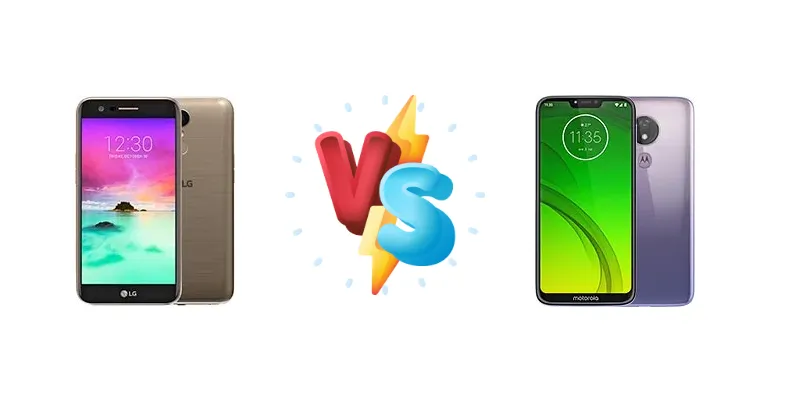
The LG X4+ and Motorola Moto G7 Power represent two distinct approaches to the budget smartphone market. The X4+ aims for basic functionality at an extremely low price point, while the Moto G7 Power prioritizes extended battery life and a more modern chipset. This comparison dissects their key differences to determine which device delivers the best value.
🏆 Quick Verdict
For most users, the Motorola Moto G7 Power is the superior choice. Its Snapdragon 632 chipset offers significantly better performance than the X4+'s Snapdragon 425, making it more capable for everyday tasks and even light gaming. While both boast similar endurance ratings, the G7 Power's faster charging and overall responsiveness justify the likely price premium.
| Network |
|---|
| 2G bands | GSM 850 / 900 / 1800 / 1900 | GSM 850 / 900 / 1800 / 1900 |
| 3G bands | HSDPA 850 / 900 / 1900 / 2100 | HSDPA 850 / 900 / 1900 / 2100 - Europe |
| 4G bands | 1, 3, 5, 7, 8, 28, 38 | 1, 2, 3, 4, 5, 7, 8, 19, 20, 28, 38, 40, 41 - Europe |
| Speed | HSPA, LTE | HSPA 42.2/5.76 Mbps, LTE (2CA) Cat7 300/50 Mbps |
| Technology | GSM / HSPA / LTE | GSM / HSPA / LTE |
| Launch |
|---|
| Announced | 2018, January. Released 2018, February | 2019, February 07. Released 2019, February 15 |
| Status | Discontinued | Discontinued |
| Body |
|---|
| Build | - | Glass front (Gorilla Glass 3), plastic back, plastic frame |
| Dimensions | 148.6 x 75.1 x 8.6 mm (5.85 x 2.96 x 0.34 in) | 159.4 x 76 x 9.3 mm (6.28 x 2.99 x 0.37 in) |
| SIM | Nano-SIM + Nano-SIM | · Nano-SIM· Nano-SIM + Nano-SIM |
| Weight | 172.3 g (6.07 oz) | 193 g (6.81 oz) |
| Display |
|---|
| Protection | - | Corning Gorilla Glass 3 (market dependent) |
| Resolution | 720 x 1280 pixels, 16:9 ratio (~277 ppi density) | 720 x 1570 pixels, 19.5:9 ratio (~279 ppi density) |
| Size | 5.3 inches, 77.4 cm2 (~69.4% screen-to-body ratio) | 6.2 inches, 94.0 cm2 (~77.6% screen-to-body ratio) |
| Type | IPS LCD | IPS LCD |
| Platform |
|---|
| CPU | Quad-core 1.4 GHz Cortex-A53 | Octa-core (4x1.8 GHz Kryo 250 Gold & 4x1.8 GHz Kryo 250 Silver) |
| Chipset | Qualcomm MSM8917 Snapdragon 425 (28 nm) | Qualcomm SDM632 Snapdragon 632 (14 nm) |
| GPU | Adreno 308 | Adreno 506 |
| OS | Android 7.0 (Nougat) | Android 9.0 (Pie), upgradable to Android 10 |
| Memory |
|---|
| Card slot | microSDXC | microSDXC (dedicated slot) |
| Internal | 32GB 2GB RAM | 32GB 3GB RAM, 64GB 3GB RAM, 64GB 4GB RAM |
| Main Camera |
|---|
| Features | LED flash, HDR | LED flash, panorama, HDR |
| Single | 13 MP, f/2.2, 1/3.1", 1.12µm, AF | 12 MP, f2.0, 1/2.8", 1.25µm, PDAF |
| Video | 1080p@30fps | 4K@30fps, 1080p@30fps |
| Selfie camera |
|---|
| Features | - | HDR |
| Single | 5 MP, f/2.4, 1/5.0", 1.12µm | 8 MP, f/2.2, 1/4.0", 1.12µm |
| Video | 1080p@30fps | 1080p@30fps |
| Sound |
|---|
| 3.5mm jack | - | Yes |
| 35mm jack | Yes | Yes |
| Loudspeaker | Yes | Yes |
| Comms |
|---|
| Bluetooth | 4.2, A2DP, LE | 4.2, A2DP, LE |
| NFC | Yes | Yes (market dependent) |
| Positioning | GPS | GPS, GLONASS |
| Radio | FM radio | FM radio |
| USB | microUSB 2.0 | USB Type-C 2.0, OTG |
| WLAN | Wi-Fi 802.11 a/b/g/n, dual-band, Wi-Fi Direct | Wi-Fi 802.11 b/g/n |
| Features |
|---|
| Sensors | Fingerprint (rear-mounted), accelerometer, proximity, compass | Fingerprint (rear-mounted), accelerometer, gyro, proximity, compass (market dependent) |
| Battery |
|---|
| Charging | - | 15W / 18W wired (market dependent) |
| Type | Li-Ion 3000 mAh, non-removable | Li-Po 5000 mAh, non-removable |
| Misc |
|---|
| Colors | Lavender Violet, Moroccan Blue | Ceramic Black, Marine Blue, Iced Violet |
| Models | LM-X415L, LM-X410L, LM-X415S | XT1955, XT1955-4 |
| Price | About 200 EUR | About 200 EUR |
| SAR | - | 0.86 W/kg (head) 1.44 W/kg (body) |
| SAR EU | - | 0.49 W/kg (head) 0.86 W/kg (body) |
| Tests |
|---|
| Audio quality | - |
Noise -90.6dB / Crosstalk -89.9dB |
| Battery life | - |
Endurance rating 147h
|
| Camera | - |
Photo / Video |
| Display | - |
Contrast ratio: 1674:1 (nominal), 3.176 (sunlight) |
| Loudspeaker | - |
Voice 75dB / Noise 75dB / Ring 82dB
|
| Performance | - |
AnTuTu: 107495 (v7)
GeekBench: 4534 (v4.4)
GFXBench: 7.7fps (ES 3.1 onscreen) |
LG X4+
- Extremely affordable price point
- Basic functionality for essential tasks
- Lightweight and compact design (likely)
- Weak processor performance
- Likely low-quality display
- Limited camera capabilities
Motorola Moto G7 Power
- Significantly better performance with Snapdragon 632
- Faster charging speeds (15W/18W)
- Improved user experience and multitasking
- Potentially higher price than the X4+
- May not be as compact as the X4+
- Camera performance still limited compared to flagships
Display Comparison
Both the LG X4+ and Motorola Moto G7 Power share a similar contrast ratio of 1674:1 (nominal) and 3.176 (sunlight), suggesting comparable outdoor visibility. However, the context data lacks specifics on panel type, resolution, or brightness (in nits) for the X4+. Given its lower price point, it's likely to feature a lower-quality panel than the G7 Power. The G7 Power's display, while not high-end, benefits from the more powerful chipset's ability to drive it smoothly.
Camera Comparison
Both phones are listed as having 'Photo / Video' capabilities, but the context data provides no details on sensor size, aperture, or image processing. Given the X4+'s budget positioning, its camera is likely to be significantly inferior to the G7 Power's. While neither phone will compete with flagship camera systems, the G7 Power's more powerful chipset allows for more sophisticated image processing, potentially resulting in better image quality, especially in low-light conditions. The lack of detail makes a definitive comparison impossible, but the G7 Power has a clear advantage based on its overall hardware.
Performance
The performance gap between these two devices is substantial. The Motorola Moto G7 Power’s Qualcomm SDM632 Snapdragon 632, with its octa-core CPU (4x1.8 GHz Kryo 250 Gold & 4x1.8 GHz Kryo 250 Silver), is a significant upgrade over the LG X4+'s quad-core 1.4 GHz Cortex-A53 processor built on the older 28nm process. The 14nm process of the Snapdragon 632 also contributes to better power efficiency. This translates to faster app loading times, smoother multitasking, and a more responsive overall experience on the Moto G7 Power. The X4+ will struggle with demanding applications and may exhibit noticeable lag.
Battery Life
Both devices boast an endurance rating of 147 hours, indicating similar battery life under comparable usage scenarios. However, the Moto G7 Power offers 15W/18W wired charging (market dependent), significantly faster than what the X4+ likely supports. This faster charging capability means less time tethered to a wall outlet. While both phones prioritize longevity, the G7 Power’s faster charging provides a more convenient user experience.
Buying Guide
Buy the LG X4+ if you absolutely need the cheapest possible smartphone for basic communication – calls, texts, and minimal app usage. It's a viable option for first-time smartphone users or as a temporary device. Buy the Motorola Moto G7 Power if you prioritize battery life, smoother performance, and a more responsive user experience. It's ideal for users who rely heavily on their phone throughout the day and want a device that can handle more than just basic tasks.
Frequently Asked Questions
❓ Will the Motorola Moto G7 Power struggle with popular apps like Facebook or WhatsApp?
No, the Snapdragon 632 is more than capable of handling everyday apps like Facebook, WhatsApp, and web browsing. While it won't offer a flagship-level experience, it provides a smooth and responsive user interface for these common tasks, unlike the LG X4+'s Snapdragon 425 which may exhibit lag.
❓ Is the LG X4+ a good option for someone who primarily uses their phone for calls and texts?
Yes, the LG X4+ is a suitable option if your primary use case is basic communication. Its low price point makes it an attractive choice for users who don't require advanced features or high performance. However, be prepared for a slower and less responsive experience compared to more modern smartphones.
❓ Can the Moto G7 Power handle light gaming?
The Moto G7 Power can handle light gaming, such as casual puzzle games or older titles. The Snapdragon 632's Adreno 509 GPU provides sufficient graphical power for these types of games. However, it will struggle with more demanding, graphically intensive games.
❓ What type of charging connector does the Moto G7 Power use?
The Motorola Moto G7 Power uses a micro-USB port for charging. While not as modern as USB-C, it's still a widely compatible standard. The 15W/18W charging support, however, is a significant advantage over the likely slower charging speeds of the LG X4+.