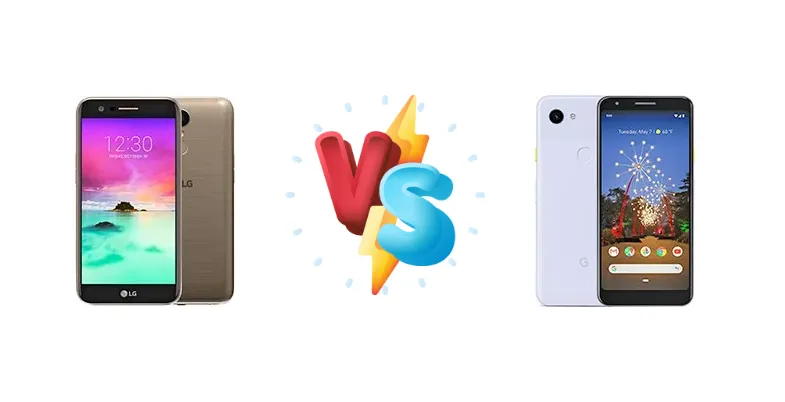
The LG X4+ and Google Pixel 3a represent different approaches to the budget smartphone market. The X4+ aims for ultimate affordability, while the Pixel 3a prioritizes a streamlined software experience and a more capable chipset. This comparison dissects their key differences to determine which device delivers the best value for your money.
🏆 Quick Verdict
For most users, the Google Pixel 3a is the superior choice. Its Snapdragon 670 chipset provides a significantly smoother and more responsive experience, especially for multitasking and demanding applications. While the LG X4+ offers a lower price point, the performance trade-offs are substantial.
| Network |
|---|
| 2G bands | GSM 850 / 900 / 1800 / 1900 | GSM 850 / 900 / 1800 / 1900 |
| 3G bands | HSDPA 850 / 900 / 1900 / 2100 | HSDPA 850 / 900 / 1700(AWS) / 1900 / 2100 |
| 4G bands | 1, 3, 5, 7, 8, 28, 38 | 1, 2, 3, 4, 5, 7, 8, 12, 13, 17, 20, 25, 26, 28, 32, 38, 40, 41, 66, 71 |
| Speed | HSPA, LTE | HSPA 42.2/5.76 Mbps, LTE (3CA) Cat11 600/75 Mbps |
| Technology | GSM / HSPA / LTE | GSM / CDMA / HSPA / EVDO / LTE |
| | - | CDMA2000 1xEV-DO |
| Launch |
|---|
| Announced | 2018, January. Released 2018, February | 2019, May 07. Released 2019, May 15 |
| Status | Discontinued | Discontinued |
| Body |
|---|
| Build | - | Glass front (Asahi Dragontrail), plastic back, plastic frame |
| Dimensions | 148.6 x 75.1 x 8.6 mm (5.85 x 2.96 x 0.34 in) | 151.3 x 70.1 x 8.2 mm (5.96 x 2.76 x 0.32 in) |
| SIM | Nano-SIM + Nano-SIM | Nano-SIM + eSIM |
| Weight | 172.3 g (6.07 oz) | 147 g (5.19 oz) |
| Display |
|---|
| Protection | - | Asahi Dragontrail Glass |
| Resolution | 720 x 1280 pixels, 16:9 ratio (~277 ppi density) | 1080 x 2220 pixels, 18.5:9 ratio (~441 ppi density) |
| Size | 5.3 inches, 77.4 cm2 (~69.4% screen-to-body ratio) | 5.6 inches, 79.6 cm2 (~75.0% screen-to-body ratio) |
| Type | IPS LCD | OLED |
| | - | Always-on display |
| Platform |
|---|
| CPU | Quad-core 1.4 GHz Cortex-A53 | Octa-core (2x2.0 GHz 360 Gold & 6x1.7 GHz Kryo 360 Silver) |
| Chipset | Qualcomm MSM8917 Snapdragon 425 (28 nm) | Qualcomm SDM670 Snapdragon 670 (10 nm) |
| GPU | Adreno 308 | Adreno 615 |
| OS | Android 7.0 (Nougat) | Android 9.0 (Pie), upgradable to Android 12 |
| Memory |
|---|
| Card slot | microSDXC | No |
| Internal | 32GB 2GB RAM | 64GB 4GB RAM |
| | - | eMMC 5.1 |
| Main Camera |
|---|
| Features | LED flash, HDR | Dual-LED flash, Pixel Shift, HDR, panorama |
| Single | 13 MP, f/2.2, 1/3.1", 1.12µm, AF | 12.2 MP, f/1.8, 28mm (wide), 1/2.55", 1.4µm, dual pixel PDAF, OIS |
| Video | 1080p@30fps | 4K@30fps, 1080p@30/60/120fps |
| Selfie camera |
|---|
| Features | - | HDR |
| Single | 5 MP, f/2.4, 1/5.0", 1.12µm | 8 MP, f/2.0, 24mm (wide), 1/4.0", 1.12µm |
| Video | 1080p@30fps | 1080p@30fps |
| Sound |
|---|
| 3.5mm jack | - | Yes |
| 35mm jack | Yes | Yes |
| Loudspeaker | Yes | Yes, with stereo speakers |
| Comms |
|---|
| Bluetooth | 4.2, A2DP, LE | 5.0, A2DP, LE, aptX HD |
| NFC | Yes | Yes |
| Positioning | GPS | GPS, GLONASS, GALILEO |
| Radio | FM radio | No |
| USB | microUSB 2.0 | USB Type-C 2.0 |
| WLAN | Wi-Fi 802.11 a/b/g/n, dual-band, Wi-Fi Direct | Wi-Fi 802.11 a/b/g/n/ac, dual-band, Wi-Fi Direct |
| Features |
|---|
| Sensors | Fingerprint (rear-mounted), accelerometer, proximity, compass | Fingerprint (rear-mounted), accelerometer, gyro, proximity, compass, barometer |
| Battery |
|---|
| Charging | - | 18W wired, PD2.0 |
| Type | Li-Ion 3000 mAh, non-removable | Li-Po 3000 mAh, non-removable |
| Misc |
|---|
| Colors | Lavender Violet, Moroccan Blue | Just Black, Clearly White, Purple-ish |
| Models | LM-X415L, LM-X410L, LM-X415S | G020A, G020E, G020B, G020G, G020H |
| Price | About 200 EUR | About 120 EUR |
LG X4+
- Lower price point makes it highly accessible.
- Potentially longer battery life with minimal usage (spec dependent).
- Simple and straightforward Android experience.
- Significantly slower performance compared to the Pixel 3a.
- Likely inferior camera quality.
- Limited software support and updates.
Google Pixel 3a
- Much faster and smoother performance with the Snapdragon 670.
- Excellent camera quality thanks to Google’s software.
- Guaranteed software updates and features from Google.
- Higher price point.
- May not have expandable storage.
- Battery life is good, but not exceptional.
Display Comparison
Neither device boasts a standout display. Both likely utilize IPS LCD panels, common in this price bracket. However, details like resolution and brightness are missing for the X4+. The Pixel 3a benefits from Google’s image processing, potentially offering more accurate colors. The absence of high refresh rates on both devices is expected, but the Pixel 3a’s display is likely sharper given its target market.
Camera Comparison
While specific camera specs for the LG X4+ are unavailable, the Pixel 3a is known for its excellent computational photography. The Snapdragon 670’s image signal processor (ISP) combined with Google’s software algorithms delivers impressive image quality, especially in low-light conditions. The Pixel 3a’s camera is likely to offer superior dynamic range and detail compared to the X4+, even if the sensor sizes are similar. The X4+ likely relies more heavily on software processing to compensate for a less capable ISP.
Performance
The performance gap is the most significant differentiator. The LG X4+’s Snapdragon 425, built on a 28nm process, features a quad-core Cortex-A53 CPU. This is a basic processor designed for essential tasks. Conversely, the Pixel 3a’s Snapdragon 670 (10nm) utilizes an octa-core configuration with a mix of Kryo 360 Gold and Silver cores. This architecture provides a substantial performance boost, particularly in multi-threaded applications. The 10nm process also contributes to better power efficiency. The Pixel 3a will handle multitasking, gaming, and demanding apps with far greater ease.
Battery Life
Battery capacity details for the X4+ are missing. The Pixel 3a supports 18W wired charging with PD2.0, a significant advantage over the X4+, which likely uses slower charging standards. While the Pixel 3a’s battery life is respectable, the Snapdragon 670’s efficiency and the faster charging speed provide a more convenient user experience. The X4+ may offer comparable battery life with conservative usage, but will take considerably longer to recharge.
Buying Guide
Buy the LG X4+ if you need a functional smartphone for basic tasks like calls, texts, and light web browsing, and your budget is extremely limited. You're willing to accept slower performance and limited multitasking capabilities. Buy the Google Pixel 3a if you prioritize a fluid user experience, better camera performance, and the benefits of Google's software updates and features, even at a higher price.
Frequently Asked Questions
❓ Will the LG X4+ struggle with popular apps like Facebook or YouTube?
Yes, the Snapdragon 425 is a low-end processor. Expect noticeable lag and slowdowns when using resource-intensive apps like Facebook, YouTube, or even modern web browsers with multiple tabs open. The X4+ is best suited for basic communication and light tasks.
❓ Does the Pixel 3a's Snapdragon 670 offer a good gaming experience?
The Snapdragon 670 is capable of handling many popular mobile games at medium settings. While it won't deliver flagship-level performance, it provides a significantly smoother and more enjoyable gaming experience than the X4+. Expect playable frame rates in titles like PUBG Mobile and Call of Duty Mobile.
❓ How long will the Pixel 3a receive software updates?
The Pixel 3a is no longer receiving guaranteed software updates from Google. However, the Android Open Source Project (AOSP) community provides custom ROMs that can extend the device's lifespan and provide security updates.
❓ Is the lack of expandable storage on the Pixel 3a a major drawback?
It depends on your usage. The Pixel 3a comes in 64GB and 128GB storage options. If you take a lot of photos and videos or download many apps, the 64GB model might fill up quickly. Cloud storage can mitigate this, but requires a data connection.