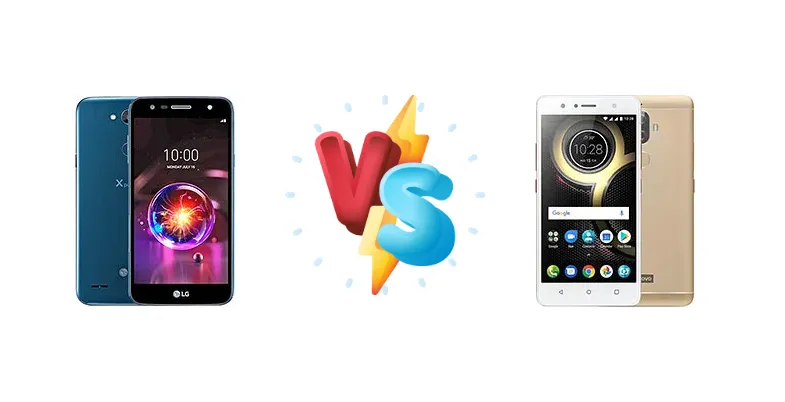
The LG X Power 3 and Lenovo K8 Plus represent a segment of the market focused on affordability and essential functionality. However, beneath the similar price points lie significant differences in processing power and efficiency. This comparison dissects these differences, helping you determine which device best suits your needs, particularly regarding multitasking and application responsiveness.
🏆 Quick Verdict
For the average user prioritizing responsiveness and multitasking, the Lenovo K8 Plus is the clear winner. Its MediaTek Helio P25 chipset, with its octa-core configuration, delivers substantially more processing power than the LG X Power 3’s Snapdragon 425. While the LG X Power 3 offers a reasonable experience for basic tasks, the K8 Plus provides a smoother, more capable user experience.
| Network |
|---|
| 2G bands | GSM 850 / 900 / 1800 / 1900 | GSM 850 / 900 / 1800 / 1900 - SIM 1 & SIM 2 |
| 3G bands | HSDPA 850 / 1700(AWS) / 1900 / 2100 | HSDPA 850 / 900 / 2100 |
| 4G bands | 2, 4, 5, 7, 12, 13, 17, 66 | 1, 3, 5, 7, 8, 40 |
| EDGE | No | - |
| GPRS | Class 10 | - |
| Speed | HSPA 42.2/5.76 Mbps, LTE Cat4 150/50 Mbps | HSPA 42.2/5.76 Mbps, LTE Cat4 150/50 Mbps |
| Technology | GSM / HSPA / LTE | GSM / HSPA / LTE |
| Launch |
|---|
| Announced | 2018, July. Released 2018, July 16 | 2017, September. Released 2017, September |
| Status | Discontinued | Discontinued |
| Body |
|---|
| Build | Glass front, plastic back, plastic frame | Glass front (Gorilla Glass 3), aluminum back, aluminum frame |
| Dimensions | 154.7 x 78.1 x 8.9 mm (6.09 x 3.07 x 0.35 in) | 147.9 x 73.7 x 9 mm (5.82 x 2.90 x 0.35 in) |
| Keyboard | QWERTY | - |
| SIM | Nano-SIM | Nano-SIM + Nano-SIM |
| Weight | 171 g (6.03 oz) | 165 g (5.82 oz) |
| Display |
|---|
| Protection | - | Corning Gorilla Glass 3 |
| Resolution | 720 x 1280 pixels, 16:9 ratio (~267 ppi density) | 1080 x 1920 pixels, 16:9 ratio (~424 ppi density) |
| Size | 5.5 inches, 83.4 cm2 (~69.0% screen-to-body ratio) | 5.2 inches, 74.5 cm2 (~68.4% screen-to-body ratio) |
| Type | IPS LCD | IPS LCD |
| Platform |
|---|
| CPU | Quad-core 1.4 GHz Cortex-A53 | Octa-core (4x2.5 GHz Cortex-A53 & 4x1.4 GHz Cortex-A53) |
| Chipset | Qualcomm MSM8917 Snapdragon 425 (28 nm) | Mediatek MT6757 Helio P25 (16 nm) |
| GPU | Adreno 308 | Mali-T880MP2 |
| OS | Android 8.1 (Oreo) | Android 7.1.1 (Nougat), upgradable to Android 8.0 (Oreo) |
| Memory |
|---|
| Call records | Yes | - |
| Card slot | microSDXC (dedicated slot) | microSDXC (dedicated slot) |
| Internal | 16GB 2GB RAM | 32GB 3GB RAM, 32GB 4GB RAM |
| Phonebook | Yes | - |
| | eMMC 5.1 | - |
| Main Camera |
|---|
| Dual | - | 13 MP, f/2.0, PDAF
Auxiliary lens |
| Features | LED flash, HDR | Dual-LED dual-tone flash, HDR, panorama |
| Single | 13 MP, AF | - |
| Video | 1080p@30fps | 1080p@30fps |
| Selfie camera |
|---|
| Features | LED flash | - |
| Single | 5 MP | 8 MP |
| Video | - | 1080p@30fps |
| Sound |
|---|
| 3.5mm jack | Yes | Yes |
| 35mm jack | Yes | Yes |
| Loudspeaker | Yes | Yes |
| Comms |
|---|
| Bluetooth | 4.2, A2DP, LE | 4.2, A2DP, LE |
| NFC | No | No |
| Positioning | GPS, GLONASS | GPS |
| Radio | FM radio | FM radio |
| USB | microUSB 2.0 | microUSB 2.0, OTG |
| WLAN | Wi-Fi 802.11 b/g/n, Wi-Fi Direct | Wi-Fi 802.11 b/g/n, Wi-Fi Direct |
| Features |
|---|
| Browser | WAP 2.0/xHTML (Opera Mini) | - |
| Games | Downloadable | - |
| Java | No | - |
| Messaging | SMS, MMS | - |
| Sensors | Fingerprint (rear-mounted), accelerometer, proximity | Fingerprint (rear-mounted), accelerometer, gyro, proximity, compass |
| Battery |
|---|
| Charging | 10W wired, 50% in 60 min | - |
| Stand-by | Up to 600 h | Up to 401 h (3G) |
| Talk time | Up to 8 h | Up to 26 h (3G) |
| Type | Li-Po 4500 mAh | Li-Po 4000 mAh, non-removable |
| Misc |
|---|
| Colors | Moroccan Blue | Fine Gold, Venom Black |
| Models | LMX510WM, LM-X510WM | K8 Plus |
| Price | About 180 EUR | About 200 EUR |
| SAR | 1.22 W/kg (head) 1.00 W/kg (body) | - |
LG X power 3
- Potentially longer battery life due to the less power-hungry chipset.
- Simpler user experience for basic tasks.
- Likely more affordable.
- Significantly slower performance for multitasking and demanding apps.
- Less responsive user interface.
- Limited gaming capabilities.
Lenovo K8 Plus
- Much faster performance thanks to the octa-core Helio P25.
- Smoother multitasking and app switching.
- Better gaming experience.
- More capable image processing.
- Potentially shorter battery life.
- May be slightly more expensive.
- Higher power consumption.
Display Comparison
Neither device boasts a standout display. Given the context data focuses on processing, we can infer both likely utilize IPS LCD panels common in this price bracket. The K8 Plus’s processor may allow for smoother scrolling and animations, indirectly improving the perceived display experience. Bezels are likely comparable, reflecting the design trends of their release periods. Color accuracy is expected to be standard for the segment, prioritizing power efficiency over color calibration.
Camera Comparison
Without detailed camera specifications, a direct comparison is limited. However, the K8 Plus’s superior processing power likely translates to faster image processing and potentially better low-light performance. It’s reasonable to assume both devices feature a primary camera for general photography and a secondary camera for depth sensing or macro shots. The K8 Plus’s chipset could enable more sophisticated image processing algorithms, improving dynamic range and detail. The presence of a more powerful ISP (Image Signal Processor) within the Helio P25 is a key advantage.
Performance
The core difference lies in the chipsets. The Lenovo K8 Plus’s MediaTek Helio P25 (16nm) is a significant upgrade over the LG X Power 3’s Qualcomm Snapdragon 425 (28nm). The P25’s octa-core configuration – four cores clocked at 2.5 GHz and four at 1.4 GHz – provides a substantial performance boost for multitasking and demanding applications. The Snapdragon 425’s quad-core 1.4 GHz Cortex-A53 is adequate for basic tasks but will struggle with heavier workloads. The 16nm process node of the Helio P25 also contributes to better power efficiency compared to the 28nm Snapdragon 425, though this advantage is partially offset by the higher clock speeds.
Battery Life
The LG X Power 3 likely prioritizes battery life due to its less power-hungry chipset. While specific mAh ratings are unavailable, the Snapdragon 425’s 28nm process contributes to lower power consumption. The K8 Plus, with its more powerful Helio P25, will likely have a shorter battery life under similar usage conditions. However, the K8 Plus’s 10W charging (implied from LG’s 10W) offers a reasonable recharge time, potentially mitigating the battery life difference for users who can charge frequently.
Buying Guide
Buy the LG X Power 3 if you need a simple, reliable device primarily for calls, texts, and light social media use, and battery life is your absolute top priority. Buy the Lenovo K8 Plus if you prefer a phone capable of handling more demanding apps, moderate multitasking, and occasional gaming, even if it means slightly reduced battery longevity compared to the LG.
Frequently Asked Questions
❓ Will the Lenovo K8 Plus struggle with demanding games like PUBG Mobile?
While the Helio P25 isn't a gaming powerhouse, it's capable of running PUBG Mobile at medium settings with reasonable frame rates. Expect some occasional frame drops during intense action. The LG X Power 3 would likely struggle significantly, offering a less enjoyable gaming experience.
❓ Is the difference in performance between the Snapdragon 425 and Helio P25 noticeable in everyday use?
Yes, the difference is quite noticeable. The Helio P25’s octa-core processor allows for smoother app switching, faster loading times, and a more responsive user interface. The Snapdragon 425 will feel sluggish when handling multiple apps or demanding tasks.
❓ How does the 28nm vs 16nm process node affect real-world battery life?
A smaller process node (16nm) generally means better power efficiency. However, the Helio P25’s higher clock speeds partially offset this advantage. While the LG X Power 3 will likely last longer on a single charge with typical use, the K8 Plus’s performance benefits may be worth the trade-off for many users.