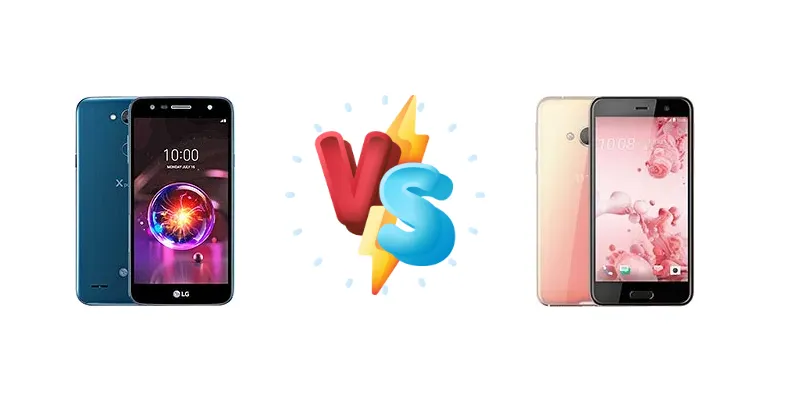
The LG X power 3 and HTC U Play represent a fascinating intersection of budget-friendly design and varying chipset philosophies. Released in a similar timeframe, both phones aimed to deliver a functional Android experience without breaking the bank. However, their core components – Qualcomm’s Snapdragon 425 versus MediaTek’s Helio P10 – dictate significantly different performance characteristics, making a direct comparison crucial for prospective buyers.
🏆 Quick Verdict
For the average user prioritizing multitasking and responsiveness, the HTC U Play emerges as the better choice. Its octa-core Helio P10 chipset offers a substantial performance advantage over the quad-core Snapdragon 425 in the LG X power 3, despite both being manufactured on a 28nm process. While the LG X power 3 may offer slightly better battery endurance due to its more efficient processor, the U Play’s performance gains are more impactful for daily use.
| Network |
|---|
| 2G bands | GSM 850 / 900 / 1800 / 1900 | GSM 850 / 900 / 1800 / 1900 - SIM 1 & SIM 2 |
| 3G bands | HSDPA 850 / 1700(AWS) / 1900 / 2100 | HSDPA 850 / 900 / 1900 / 2100 |
| 4G bands | 2, 4, 5, 7, 12, 13, 17, 66 | 1, 3, 5, 7, 8, 20, 28, 38, 40 |
| EDGE | No | - |
| GPRS | Class 10 | - |
| Speed | HSPA 42.2/5.76 Mbps, LTE Cat4 150/50 Mbps | HSPA 42.2/5.76 Mbps, LTE (2CA) Cat6 300/50 Mbps |
| Technology | GSM / HSPA / LTE | GSM / HSPA / LTE |
| Launch |
|---|
| Announced | 2018, July. Released 2018, July 16 | 2017, January. Released 2017, February |
| Status | Discontinued | Discontinued |
| Body |
|---|
| Build | Glass front, plastic back, plastic frame | Glass front (Gorilla Glass), plastic back, plastic frame |
| Dimensions | 154.7 x 78.1 x 8.9 mm (6.09 x 3.07 x 0.35 in) | 146 x 72.9 x 8 mm (5.75 x 2.87 x 0.31 in) |
| Keyboard | QWERTY | - |
| SIM | Nano-SIM | Nano-SIM + Nano-SIM |
| Weight | 171 g (6.03 oz) | 145 g (5.11 oz) |
| Display |
|---|
| Protection | - | Corning Gorilla Glass (unspecified version) |
| Resolution | 720 x 1280 pixels, 16:9 ratio (~267 ppi density) | 1080 x 1920 pixels, 16:9 ratio (~428 ppi density) |
| Size | 5.5 inches, 83.4 cm2 (~69.0% screen-to-body ratio) | 5.2 inches, 73.2 cm2 (~68.7% screen-to-body ratio) |
| Type | IPS LCD | Super LCD |
| Platform |
|---|
| CPU | Quad-core 1.4 GHz Cortex-A53 | Octa-core (4x2.0 GHz Cortex-A53 & 4x1.1 GHz Cortex-A53) |
| Chipset | Qualcomm MSM8917 Snapdragon 425 (28 nm) | Mediatek MT6755 Helio P10 (28 nm) |
| GPU | Adreno 308 | Mali-T860MP2 |
| OS | Android 8.1 (Oreo) | Android 6.0 (Marshmallow) |
| Memory |
|---|
| Call records | Yes | - |
| Card slot | microSDXC (dedicated slot) | microSDXC (uses shared SIM slot) |
| Internal | 16GB 2GB RAM | 32GB 3GB RAM, 64GB 4GB RAM |
| Phonebook | Yes | - |
| | eMMC 5.1 | eMMC 5.1 |
| Main Camera |
|---|
| Features | LED flash, HDR | Dual-LED dual-tone flash, panorama |
| Single | 13 MP, AF | 16 MP, f/2.0, 28mm (wide), 1/3.1", 1.0µm, PDAF, OIS |
| Video | 1080p@30fps | 1080p@30fps |
| Selfie camera |
|---|
| Features | LED flash | HDR |
| Single | 5 MP | 16 MP, f/2.0, 27mm (wide), 1/3.06", 1.0µm |
| Video | - | 1080p@30fps |
| Sound |
|---|
| 3.5mm jack | Yes | No |
| 35mm jack | Yes | No |
| Loudspeaker | Yes | Yes |
| Comms |
|---|
| Bluetooth | 4.2, A2DP, LE | 4.2, A2DP, LE |
| NFC | No | Yes |
| Positioning | GPS, GLONASS | GPS, GLONASS |
| Radio | FM radio | No |
| USB | microUSB 2.0 | USB Type-C 2.0 |
| WLAN | Wi-Fi 802.11 b/g/n, Wi-Fi Direct | Wi-Fi 802.11 a/b/g/n/ac, dual-band, Wi-Fi Direct, DLNA |
| Features |
|---|
| Browser | WAP 2.0/xHTML (Opera Mini) | - |
| Games | Downloadable | - |
| Java | No | - |
| Messaging | SMS, MMS | - |
| Sensors | Fingerprint (rear-mounted), accelerometer, proximity | Fingerprint (front-mounted), accelerometer, gyro, proximity, compass |
| Battery |
|---|
| Charging | 10W wired, 50% in 60 min | 10W wired |
| Stand-by | Up to 600 h | Up to 427 h (3G) |
| Talk time | Up to 8 h | Up to 15 h (3G) |
| Type | Li-Po 4500 mAh | Li-Ion 2500 mAh, non-removable |
| Misc |
|---|
| Colors | Moroccan Blue | Brilliant Black, Cosmetic Pink, Ice White, Sapphire Blue |
| Models | LMX510WM, LM-X510WM | U Play, U-2u, 2PZM3 |
| Price | About 180 EUR | About 150 EUR |
| SAR | 1.22 W/kg (head) 1.00 W/kg (body) | - |
LG X power 3
- Potentially longer battery life due to efficient Snapdragon 425.
- Lower price point (likely, given the chipset).
- Simpler user experience for basic tasks.
- Significantly slower performance compared to the U Play.
- Struggles with multitasking and demanding applications.
- Likely limited gaming capabilities.
HTC U Play
- Faster and more responsive performance thanks to the Helio P10.
- Better multitasking capabilities.
- More suitable for gaming and demanding apps.
- Shorter battery life compared to the X power 3.
- Potentially higher price point.
- May experience more heat under heavy load.
Display Comparison
Neither device boasts a standout display. Given the context data focuses on processing power, we can infer both likely utilize IPS LCD panels common in this price bracket. The absence of specifications like resolution or brightness suggests neither phone prioritizes display quality. Bezels were likely substantial, typical of phones from this era. Color accuracy is expected to be standard for the segment, leaning towards warmer tones to enhance perceived contrast.
Camera Comparison
Without detailed camera specifications, a direct comparison is limited. However, it’s safe to assume both phones feature modest camera setups geared towards casual photography. The market segment suggests primary sensors around 8-13 megapixels. The presence of a 2MP macro camera on either device is largely a marketing gimmick, offering minimal practical benefit due to the low resolution and lack of optical image stabilization (OIS). Image processing will likely be basic, with limited dynamic range and noise reduction capabilities. The U Play *may* have a slight edge due to the more powerful ISP within the Helio P10 chipset, potentially enabling faster image processing and slightly better low-light performance.
Performance
The core difference lies in the chipset architecture. The HTC U Play’s MediaTek Helio P10 is an octa-core processor, featuring four Cortex-A53 cores clocked at 2.0 GHz and another four at 1.1 GHz. This big.LITTLE architecture allows for efficient power management – the slower cores handle background tasks while the faster cores kick in for demanding applications. Conversely, the LG X power 3’s Qualcomm Snapdragon 425 is a quad-core processor with all cores clocked at 1.4 GHz. While both are built on a 28nm process, the Helio P10’s additional cores and higher clock speeds translate to significantly better multi-core performance. This impacts app loading times, multitasking, and overall system responsiveness. The U Play will demonstrably outperform the X power 3 in CPU-intensive tasks.
Battery Life
Both phones offer 10W wired charging, indicating similar charging speeds – approximately 60 minutes to reach 50% charge. The LG X power 3, with its more power-efficient Snapdragon 425, likely achieves slightly longer battery life on a single charge. However, the difference is unlikely to be dramatic. The U Play’s more powerful processor will consume more power during active use, but the big.LITTLE architecture helps mitigate this. Real-world battery life will heavily depend on usage patterns, but the X power 3 is positioned as the endurance champion.
Buying Guide
Buy the LG X power 3 if you absolutely need maximum battery life and are primarily using the phone for basic tasks like calls, texts, and light social media. Its Snapdragon 425 is optimized for efficiency. Buy the HTC U Play if you value a smoother, more responsive user experience, enjoy occasional gaming, or frequently switch between applications. The Helio P10’s octa-core architecture provides a noticeable performance boost, making it better suited for demanding tasks.
Frequently Asked Questions
❓ Will the HTC U Play struggle with demanding games like PUBG Mobile?
While the Helio P10 can run PUBG Mobile, expect to play at medium settings with moderate frame rates. It's not a gaming powerhouse, and prolonged gaming sessions may lead to some thermal throttling. The LG X power 3 would likely struggle even at the lowest settings.
❓ Is the difference in performance between the Snapdragon 425 and Helio P10 noticeable in everyday tasks?
Yes, the difference is quite noticeable. The Helio P10’s octa-core architecture provides a smoother and more responsive experience when opening apps, switching between tasks, and browsing the web. The Snapdragon 425 can feel sluggish in comparison, especially with multiple apps open.
❓ Does either phone support fast charging beyond the stated 10W?
Neither phone officially supports fast charging beyond 10W. While some third-party chargers *may* offer slightly faster charging speeds, the phones are not designed to take full advantage of them.
❓ Which phone is better for taking quick photos of documents?
Both phones will likely produce acceptable results for document scanning, but the U Play's potentially better image processing could yield slightly clearer and more legible images, especially in less-than-ideal lighting conditions.