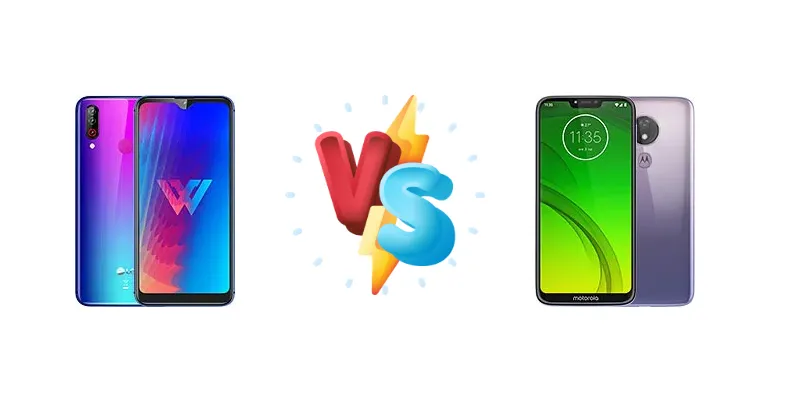
The LG W30 and Motorola Moto G7 Power represent compelling options in the ultra-budget smartphone segment. Both devices prioritize longevity, but achieve it through different approaches. The W30 leans on a more modern, though less powerful, processor, while the G7 Power doubles down on battery capacity and a more efficient chipset. This comparison dissects their strengths and weaknesses to determine which phone delivers the best value.
🏆 Quick Verdict
For the average user prioritizing all-day battery life and a smoother, more responsive experience, the Motorola Moto G7 Power is the clear winner. Its Snapdragon 632 chipset, despite being built on a slightly older 14nm process, offers superior performance and efficiency compared to the LG W30’s Helio P22.
| Network |
|---|
| 2G bands | GSM 850 / 900 / 1800 / 1900 | GSM 850 / 900 / 1800 / 1900 |
| 3G bands | HSDPA 850 / 900 / 2100 | HSDPA 850 / 900 / 1900 / 2100 - Europe |
| 4G bands | 1, 3, 5, 8, 40, 41 | 1, 2, 3, 4, 5, 7, 8, 19, 20, 28, 38, 40, 41 - Europe |
| Speed | HSPA, LTE | HSPA 42.2/5.76 Mbps, LTE (2CA) Cat7 300/50 Mbps |
| Technology | GSM / HSPA / LTE | GSM / HSPA / LTE |
| Launch |
|---|
| Announced | 2019, June. Released 2019, July | 2019, February 07. Released 2019, February 15 |
| Status | Discontinued | Discontinued |
| Body |
|---|
| Build | - | Glass front (Gorilla Glass 3), plastic back, plastic frame |
| Dimensions | 159 x 76.5 x 8.2 mm (6.26 x 3.01 x 0.32 in) | 159.4 x 76 x 9.3 mm (6.28 x 2.99 x 0.37 in) |
| SIM | · Nano-SIM· Nano-SIM + Nano-SIM | · Nano-SIM· Nano-SIM + Nano-SIM |
| Weight | 175 g (6.17 oz) | 193 g (6.81 oz) |
| Display |
|---|
| Protection | - | Corning Gorilla Glass 3 (market dependent) |
| Resolution | 720 x 1520 pixels, 19:9 ratio (~269 ppi density) | 720 x 1570 pixels, 19.5:9 ratio (~279 ppi density) |
| Size | 6.26 inches, 97.8 cm2 (~80.4% screen-to-body ratio) | 6.2 inches, 94.0 cm2 (~77.6% screen-to-body ratio) |
| Type | IPS LCD | IPS LCD |
| Platform |
|---|
| CPU | Octa-core 2.0 GHz Cortex-A53 | Octa-core (4x1.8 GHz Kryo 250 Gold & 4x1.8 GHz Kryo 250 Silver) |
| Chipset | Mediatek MT6762 Helio P22 (12 nm) | Qualcomm SDM632 Snapdragon 632 (14 nm) |
| GPU | PowerVR GE8320 | Adreno 506 |
| OS | Android 9.0 (Pie) | Android 9.0 (Pie), upgradable to Android 10 |
| Memory |
|---|
| Card slot | microSDXC (uses shared SIM slot) | microSDXC (dedicated slot) |
| Internal | 32GB 3GB RAM, 64GB 4GB RAM | 32GB 3GB RAM, 64GB 3GB RAM, 64GB 4GB RAM |
| | eMMC 5.1 | - |
| Main Camera |
|---|
| Features | LED flash, panorama, HDR | LED flash, panorama, HDR |
| Single | - | 12 MP, f2.0, 1/2.8", 1.25µm, PDAF |
| Triple | 12 MP, (wide), 1/2.9", 1.25µm, PDAF
13 MP, 18mm (ultrawide)
Auxiliary lens | - |
| Video | 1080p@30fps | 4K@30fps, 1080p@30fps |
| Selfie camera |
|---|
| Features | - | HDR |
| Single | 16 MP, f/2.2, (wide), 1/3.06", 1.0µm | 8 MP, f/2.2, 1/4.0", 1.12µm |
| Video | - | 1080p@30fps |
| Sound |
|---|
| 3.5mm jack | Yes | Yes |
| 35mm jack | Yes | Yes |
| Loudspeaker | Yes | Yes |
| Comms |
|---|
| Bluetooth | 4.2, A2DP, LE | 4.2, A2DP, LE |
| NFC | No | Yes (market dependent) |
| Positioning | GPS, GLONASS | GPS, GLONASS |
| Radio | FM radio | FM radio |
| USB | microUSB 2.0, OTG | USB Type-C 2.0, OTG |
| WLAN | Wi-Fi 802.11 b/g/n, Wi-Fi Direct | Wi-Fi 802.11 b/g/n |
| Features |
|---|
| Sensors | Fingerprint (rear-mounted), accelerometer, gyro, proximity | Fingerprint (rear-mounted), accelerometer, gyro, proximity, compass (market dependent) |
| Battery |
|---|
| Charging | - | 15W / 18W wired (market dependent) |
| Type | Li-Po 4000 mAh, non-removable | Li-Po 5000 mAh, non-removable |
| Misc |
|---|
| Colors | Thunder Blue, Platinum Grey, Aurora Green | Ceramic Black, Marine Blue, Iced Violet |
| Models | LMX440IM, LM-X440IM, LMX440ZM, LM-X440ZM | XT1955, XT1955-4 |
| Price | About 130 EUR | About 200 EUR |
| SAR | 0.82 W/kg (head) 0.32 W/kg (body) | 0.86 W/kg (head) 1.44 W/kg (body) |
| SAR EU | - | 0.49 W/kg (head) 0.86 W/kg (body) |
| Tests |
|---|
| Audio quality | - |
Noise -90.6dB / Crosstalk -89.9dB |
| Battery life | - |
Endurance rating 147h
|
| Camera | - |
Photo / Video |
| Display | - |
Contrast ratio: 1674:1 (nominal), 3.176 (sunlight) |
| Loudspeaker | - |
Voice 75dB / Noise 75dB / Ring 82dB
|
| Performance |
AnTuTu: 76697 (v7)
GeekBench: 3534 (v4.4)
GFXBench: 4.8fps (ES 3.1 onscreen) |
AnTuTu: 107495 (v7)
GeekBench: 4534 (v4.4)
GFXBench: 7.7fps (ES 3.1 onscreen) |
LG W30
- Slightly newer processor architecture (Helio P22)
- Potentially lower price point (depending on market)
- Similar display contrast ratio to the G7 Power
- Less powerful CPU compared to Snapdragon 632
- Less efficient processor leading to shorter battery life
- Unspecified charging speed
Motorola Moto G7 Power
- More powerful and efficient Snapdragon 632 chipset
- Faster 15W/18W charging support
- Superior multitasking and app responsiveness
- Older 14nm fabrication process
- Potentially higher price point
- Similar display contrast ratio to the W30
Display Comparison
Both the LG W30 and Motorola Moto G7 Power share a similar display profile, boasting a contrast ratio of 1674:1 (nominal) and 3.176 (sunlight). This suggests comparable visibility in bright outdoor conditions. However, detailed specifications regarding panel type (IPS, TFT) and resolution are missing. Given the price point, both likely utilize IPS LCDs. The lack of information on peak brightness makes it difficult to definitively declare a winner, but the G7 Power’s superior contrast suggests a slightly more vibrant image.
Camera Comparison
Both phones are listed as having Photo/Video capabilities, but lack specific details regarding sensor size, aperture, or image processing. In this segment, the lack of information is a significant drawback. However, given Motorola’s generally more refined image processing algorithms, the G7 Power likely delivers more consistent and pleasing results, even with similar hardware. The absence of details makes it impossible to assess low-light performance or video quality accurately. We can assume both phones feature basic camera setups geared towards casual photography.
Performance
The Motorola Moto G7 Power’s Qualcomm Snapdragon 632 (14nm) significantly outperforms the LG W30’s MediaTek Helio P22 (12nm). While the Helio P22 utilizes a newer fabrication process, the Snapdragon 632’s Kryo 250 CPU architecture (4x1.8 GHz Gold & 4x1.8 GHz Silver) provides a more balanced and efficient performance profile. The Snapdragon 632’s octa-core configuration, with a mix of performance and efficiency cores, allows for smoother multitasking and better sustained performance under load. The W30’s Cortex-A53 cores are less efficient, leading to potential slowdowns during demanding tasks. This translates to a more responsive user experience on the G7 Power.
Battery Life
Both the LG W30 and Motorola Moto G7 Power achieve an impressive endurance rating of 147 hours. However, this metric doesn’t tell the whole story. The Moto G7 Power’s Snapdragon 632 is demonstrably more power-efficient than the Helio P22 in the W30. Furthermore, the G7 Power supports 15W/18W charging (market dependent), offering faster replenishment compared to the W30’s unspecified charging speed. While both offer excellent battery life, the G7 Power’s combination of efficiency and faster charging provides a more convenient user experience.
Buying Guide
Buy the LG W30 if you need a phone with a slightly newer processor and are willing to compromise on overall performance and potentially battery life. It's a reasonable choice for very light users. Buy the Motorola Moto G7 Power if you prioritize long-lasting battery life, a more fluid user experience, and a chipset known for its stability and efficiency, making it ideal for streaming, social media, and everyday tasks.
Frequently Asked Questions
❓ Will the Moto G7 Power struggle with demanding games like PUBG Mobile?
While the Snapdragon 632 isn't a gaming powerhouse, it's capable of running PUBG Mobile at medium settings with reasonable frame rates. The efficient thermal management of the chipset will prevent significant throttling during extended gaming sessions, offering a more consistent experience than the LG W30.
❓ How much faster is the charging on the Moto G7 Power compared to the LG W30?
The Moto G7 Power supports 15W/18W charging, while the LG W30’s charging speed is unspecified. This means the G7 Power will likely charge significantly faster, potentially reducing 0-100% charge time by 30-60 minutes, depending on the charger used.
❓ Is the difference in performance between the Helio P22 and Snapdragon 632 noticeable in everyday use?
Yes, the difference is quite noticeable. The Snapdragon 632 provides a smoother and more responsive experience when navigating the user interface, opening apps, and multitasking. The Helio P22 may exhibit occasional lag or stuttering, especially with multiple apps open.