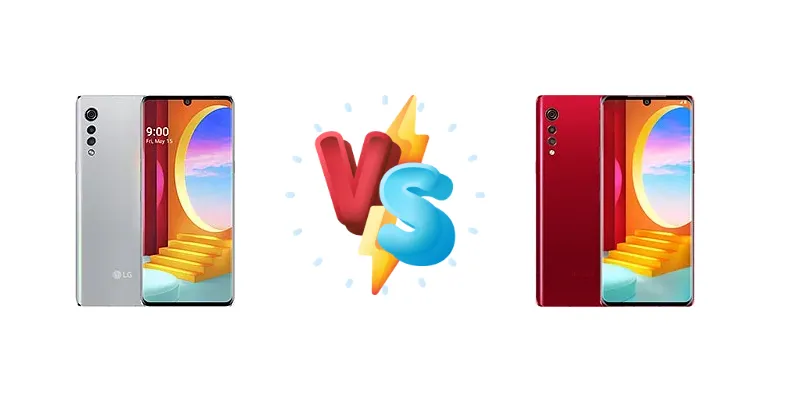
The LG Velvet and Velvet 5G UW represent interesting points in LG's smartphone history, offering a premium design at varying price points. While visually similar, the core differences lie beneath the surface, specifically in their chipsets and charging capabilities. This comparison dissects those differences to determine which Velvet best suits your needs.
🏆 Quick Verdict
For users prioritizing raw performance and sustained gaming, the LG Velvet with its Snapdragon 845 is the better choice, despite its slower charging. However, the LG Velvet 5G UW’s Snapdragon 765G and 25W charging offer a more modern, efficient experience for everyday tasks and those seeking 5G connectivity, making it ideal for casual users.
| Network |
|---|
| 2G bands | GSM 850 / 900 / 1800 / 1900 | GSM 850 / 900 / 1800 / 1900 |
| 3G bands | HSDPA 850 / 900 / 1900 / 2100 | HSDPA 850 / 900 / 1700(AWS) / 1900 / 2100 |
| 4G bands | 1, 3, 7, 8, 20, 28, 38, 40 | 2, 3, 4, 5, 7, 12, 13, 20, 28, 46, 48, 66 |
| 5G bands | - | 260, 261 mmWave |
| Speed | HSPA, LTE | HSPA 42.2/5.76 Mbps, LTE (5CA) Cat16 1000/75 Mbps, 5G 2Gbps |
| Technology | GSM / HSPA / LTE | GSM / CDMA / HSPA / LTE / 5G |
| | - | CDMA 800 / 1900 |
| Launch |
|---|
| Announced | 2020, July 28. Released 2020, July 31 | 2020, August 19. Released 2020, August 21 |
| Status | Discontinued | Discontinued |
| Body |
|---|
| Build | Glass front, glass back, aluminum frame | Glass front, glass back, aluminum frame |
| Dimensions | 167.1 x 74.1 x 7.9 mm (6.58 x 2.92 x 0.31 in) | 167.2 x 74.1 x 7.9 mm (6.58 x 2.92 x 0.31 in) |
| SIM | Nano-SIM + Nano-SIM | Nano-SIM (pre-installed) |
| Weight | 180 g (6.35 oz) | - |
| | IP68 dust/water resistant (up to 1.5m for 30 min)
MIL-STD-810G compliant*
*does not guarantee ruggedness or use in extreme conditions | IP68 dust/water resistant (up to 1.5m for 30 mins)
MIL-STD-810G compliant*
*does not guarantee ruggedness or use in extreme conditions |
| Display |
|---|
| Resolution | 1080 x 2460 pixels (~395 ppi density) | 1080 x 2460 pixels (~395 ppi density) |
| Size | 6.8 inches, 109.8 cm2 (~88.7% screen-to-body ratio) | 6.8 inches, 109.8 cm2 (~88.6% screen-to-body ratio) |
| Type | P-OLED | P-OLED |
| Platform |
|---|
| CPU | Octa-core (4x2.8 GHz Kryo 385 Gold & 4x1.8 GHz Kryo 385 Silver) | Octa-core (1x2.4 GHz Kryo 475 Prime & 1x2.2 GHz Kryo 475 Gold & 6x1.8 GHz Kryo 475 Silver) |
| Chipset | Qualcomm SDM845 Snapdragon 845 (10 nm) | Qualcomm SM7250 Snapdragon 765G 5G (7 nm) |
| GPU | Adreno 630 | Adreno 620 |
| OS | Android 10, upgradable to Android 12 | Android 10, upgradable to Android 11, LG UX |
| Memory |
|---|
| Card slot | microSDXC (uses shared SIM slot) | microSDXC (uses shared SIM slot) |
| Internal | 128GB 6GB RAM | 128GB 6GB RAM |
| | UFS 2.1 | UFS 2.1 |
| Main Camera |
|---|
| Features | LED flash, panorama, HDR | LED flash, panorama, HDR |
| Triple | 48 MP, f/1.8, 26mm (wide), 1/2.0", 0.8µm, PDAF
8 MP, f/2.2, 120˚, 15mm (ultrawide), 1/4.0", 1.12µm
Auxiliary lens | 48 MP, f/1.8, 26mm (wide), 1/2.0", 0.8µm, PDAF
8 MP, f/2.2, 120˚, 15mm (ultrawide), 1/4.0", 1.12µm
Auxiliary lens |
| Video | 4K@30fps, 1080p@30/60fps, gyro-EIS | 4K@30fps, 1080p@30/60fps, gyro-EIS |
| Selfie camera |
|---|
| Features | HDR | HDR |
| Single | 16 MP, f/1.9, 29mm (standard), 1/3.06, 1.0µm | 16 MP, f/1.9, 29mm (standard), 1/3.06, 1.0µm |
| Video | 4K@30fps, 1080p@30fps | 1080p@30fps |
| Sound |
|---|
| 3.5mm jack | Yes | Yes |
| 35mm jack | Yes | Yes |
| Loudspeaker | Yes, with stereo speakers | Yes, with stereo speakers |
| Comms |
|---|
| Bluetooth | 5.1, A2DP, LE | 5.1, A2DP, LE, aptX HD |
| NFC | Yes | Yes |
| Positioning | GPS | GPS (L1+L5), GLONASS, BDS, GALILEO, QZSS |
| Radio | FM radio | No |
| USB | USB Type-C, OTG | USB Type-C 2.0, OTG |
| WLAN | Wi-Fi 802.11 a/b/g/n/ac, dual-band, Wi-Fi Direct | Wi-Fi 802.11 a/b/g/n/ac, dual-band, Wi-Fi Direct, DLNA |
| Features |
|---|
| Sensors | Fingerprint (under display, optical), accelerometer, gyro, proximity, compass, barometer | Fingerprint (under display, optical), accelerometer, gyro, proximity, compass, barometer |
| Battery |
|---|
| Charging | 15W wired, QC3
9W wireless | 25W wired, PD3.0, QC4
9W wireless |
| Type | Li-Po 4300 mAh | Li-Po 4300 mAh |
| Misc |
|---|
| Colors | Black, Aurora Silver | Aurora Red |
| Models | LMG910EMW, LM-G910EMW | LM-G900V, LM-G900V |
| Price | About 360 EUR | About 590 EUR |
LG Velvet
- Superior CPU performance with Snapdragon 845
- Potentially better camera image processing
- More affordable price point (likely, given age)
- Slower 15W wired charging
- Less efficient 10nm process
- No integrated 5G modem
LG Velvet 5G UW
- Faster 25W wired charging with PD3.0/QC4
- Integrated 5G modem for faster data speeds
- More efficient 7nm Snapdragon 765G
- Lower CPU performance compared to Snapdragon 845
- Potentially less capable ISP
- May be more expensive
Display Comparison
Both devices share a 6.8-inch OLED display, but detailed specs like peak brightness and color gamut coverage aren't provided. However, the Velvet's position as a flagship suggests a potentially higher quality panel. The absence of high refresh rate technology on either device is a notable omission compared to competitors at the time. Bezels are likely similar, given the shared design language.
Camera Comparison
Without detailed camera sensor information, a direct comparison is difficult. Both likely feature similar camera setups focused on versatility. The Velvet’s flagship status *might* indicate a slightly larger main sensor or more advanced image processing algorithms, but this is speculative. The 765G’s image signal processor (ISP) is capable, but the 845’s ISP is generally considered more robust. The presence of OIS (Optical Image Stabilization) is likely on the main sensor of both devices, but confirmation is needed.
Performance
The core divergence lies in the chipsets. The LG Velvet’s Snapdragon 845 (10nm) boasts a more powerful CPU configuration – Octa-core (4x2.8 GHz Kryo 385 Gold & 4x1.8 GHz Kryo 385 Silver) – compared to the Velvet 5G UW’s Snapdragon 765G (7nm) – Octa-core (1x2.4 GHz Kryo 475 Prime & 1x2.2 GHz Kryo 475 Gold & 6x1.8 GHz Kryo 475 Silver). While the 765G benefits from a smaller 7nm process for improved efficiency, the 845’s higher clock speeds translate to superior single-core and multi-core performance. This difference is particularly noticeable in graphically intensive games and demanding applications. The 765G’s integrated 5G modem, however, is a key advantage for users in 5G-covered areas.
Battery Life
Both devices offer 9W wireless charging, but the wired charging speeds differ significantly. The Velvet supports 15W QC3.0, while the 5G UW jumps to 25W with PD3.0 and QC4. This means the 5G UW will charge considerably faster – potentially reaching a full charge in under 90 minutes compared to the Velvet’s likely 2+ hours. Battery capacity isn’t specified, but the more efficient 7nm process of the 765G could offset a potentially smaller battery in the 5G UW, resulting in comparable real-world battery life.
Buying Guide
Buy the LG Velvet if you need maximum processing power for demanding applications, enjoy extended gaming sessions, and don't mind slower charging speeds. Buy the LG Velvet 5G UW if you prioritize 5G connectivity, faster charging, and a more efficient chipset for everyday tasks like browsing, social media, and streaming, even if it means a slight performance compromise.
Frequently Asked Questions
❓ Will the Snapdragon 765G in the Velvet 5G UW struggle with demanding games like Genshin Impact?
While the Snapdragon 765G is capable, it won't deliver the same sustained performance as the Snapdragon 845 in the standard Velvet. Expect to lower graphics settings and potentially experience some frame drops during extended gaming sessions. The 765G is better suited for less demanding titles.
❓ Does the faster charging on the Velvet 5G UW significantly impact battery health over the long term?
The use of PD3.0 and QC4 on the Velvet 5G UW incorporates intelligent charging protocols designed to minimize battery degradation. These protocols adjust charging speed based on battery level and temperature, reducing stress on the battery cells. While all batteries degrade over time, the faster charging shouldn't drastically accelerate the process.
❓ Is the 5G connectivity on the Velvet 5G UW worth the trade-off in processing power for someone who doesn't live in a 5G area?
If you don't have access to 5G, the primary benefit of the Velvet 5G UW is diminished. In that scenario, the standard Velvet's superior processing power becomes a more compelling advantage. The 765G still supports 4G LTE, but the performance difference makes the Velvet a better choice without 5G access.