
Pixel 6a vs LG Velvet: A Detailed Comparison of Performance, Camera, and Value
| Phones Images | |||||
|---|---|---|---|---|---|
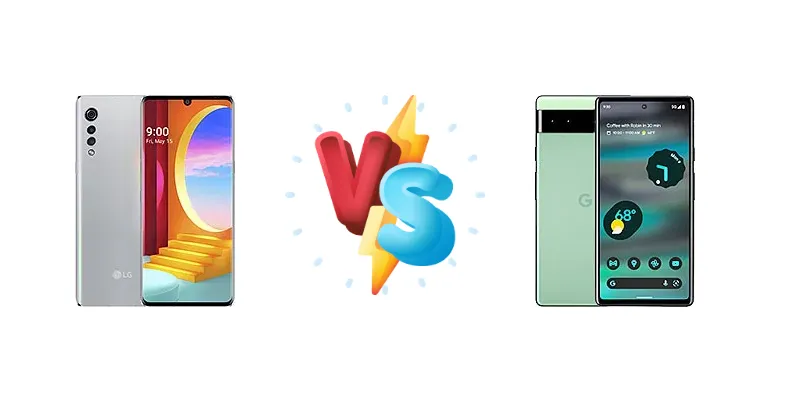
|
🏆 Quick Verdict
For most users, the Google Pixel 6a is the better choice. Its Google Tensor chipset offers superior performance and efficiency, coupled with Google’s exceptional camera processing and guaranteed software updates. However, the LG Velvet remains a viable option for those prioritizing a unique design and potentially lower cost.
| PHONES | ||
|---|---|---|
| Phone Names | LG Velvet | Google Pixel 6a |
| Network | ||
|---|---|---|
| 2G bands | GSM 850 / 900 / 1800 / 1900 | GSM 850 / 900 / 1800 / 1900 |
| 3G bands | HSDPA 850 / 900 / 1900 / 2100 | HSDPA 800 / 850 / 900 / 1700(AWS) / 1900 / 2100 |
| 4G bands | 1, 3, 7, 8, 20, 28, 38, 40 | 1, 2, 3, 4, 5, 7, 8, 12, 13, 14, 17, 18, 19, 20, 25, 26, 28, 29, 30, 38, 39, 40, 41, 42, 48, 66, 71 - GX7AS, GB62Z (USA/Canada) |
| 5G bands | - | 1, 2, 3, 5, 7, 8, 12, 20, 25, 28, 30, 38, 40, 41, 48, 66, 71, 77, 78 SA/NSA/Sub6 - GX7AS (USA/Canada) |
| Speed | HSPA, LTE | HSPA, LTE, 5G |
| Technology | GSM / HSPA / LTE | GSM / HSPA / LTE / 5G |
| - | 1, 2, 3, 5, 7, 8, 12, 20, 25, 28, 30, 40, 48, 66, 71, 77, 78 SA/NSA/Sub6 - G1AZG (International) | |
| Launch | ||
|---|---|---|
| Announced | 2020, July 28. Released 2020, July 31 | 2022, May 11 |
| Status | Discontinued | Available. Released 2022, July 21 |
| Body | ||
|---|---|---|
| Build | Glass front, glass back, aluminum frame | Glass front (Gorilla Glass 3), aluminum frame, plastic back |
| Dimensions | 167.1 x 74.1 x 7.9 mm (6.58 x 2.92 x 0.31 in) | 152.2 x 71.8 x 8.9 mm (5.99 x 2.83 x 0.35 in) |
| SIM | Nano-SIM + Nano-SIM | Nano-SIM + eSIM |
| Weight | 180 g (6.35 oz) | 178 g (6.28 oz) |
| IP68 dust/water resistant (up to 1.5m for 30 min) MIL-STD-810G compliant* *does not guarantee ruggedness or use in extreme conditions | IP67 dust/water resistant (up to 1m for 30 min) | |
| Display | ||
|---|---|---|
| Protection | - | Corning Gorilla Glass 3 |
| Resolution | 1080 x 2460 pixels (~395 ppi density) | 1080 x 2400 pixels, 20:9 ratio (~429 ppi density) |
| Size | 6.8 inches, 109.8 cm2 (~88.7% screen-to-body ratio) | 6.1 inches, 90.7 cm2 (~83.0% screen-to-body ratio) |
| Type | P-OLED | OLED, HDR |
| - | Always-on display | |
| Platform | ||
|---|---|---|
| CPU | Octa-core (4x2.8 GHz Kryo 385 Gold & 4x1.8 GHz Kryo 385 Silver) | Octa-core (2x2.80 GHz Cortex-X1 & 2x2.25 GHz Cortex-A76 & 4x1.80 GHz Cortex-A55) |
| Chipset | Qualcomm SDM845 Snapdragon 845 (10 nm) | Google Tensor (5 nm) |
| GPU | Adreno 630 | Mali-G78 MP20 |
| OS | Android 10, upgradable to Android 12 | Android 12, upgradable to Android 15, up to 5 major Android upgrades |
| Memory | ||
|---|---|---|
| Card slot | microSDXC (uses shared SIM slot) | No |
| Internal | 128GB 6GB RAM | 128GB 6GB RAM |
| UFS 2.1 | UFS 3.1 | |
| Main Camera | ||
|---|---|---|
| Dual | - | 12.2 MP, f/1.7, 27mm, (wide), 1/2.55", 1.4µm, dual pixel PDAF, OIS 12 MP, f/2.2, 17mm, 114˚ (ultrawide), 1.25µm |
| Features | LED flash, panorama, HDR | Dual-LED flash, Pixel Shift, Auto-HDR, panorama |
| Single | - | 8 MP, f/2.0, 24mm (wide), 1.12µm |
| Triple | 48 MP, f/1.8, 26mm (wide), 1/2.0", 0.8µm, PDAF 8 MP, f/2.2, 120˚, 15mm (ultrawide), 1/4.0", 1.12µm Auxiliary lens | - |
| Video | 4K@30fps, 1080p@30/60fps, gyro-EIS | 4K@30/60fps, 1080p@30/60/120/240fps; gyro-EIS, OIS |
| Selfie camera | ||
|---|---|---|
| Features | HDR | HDR, panorama |
| Single | 16 MP, f/1.9, 29mm (standard), 1/3.06, 1.0µm | 8 MP, f/2.0, 24mm (wide), 1.12µm |
| Video | 4K@30fps, 1080p@30fps | 1080p@30fps |
| Sound | ||
|---|---|---|
| 3.5mm jack | Yes | No |
| 35mm jack | Yes | No |
| Loudspeaker | Yes, with stereo speakers | Yes, with stereo speakers |
| Comms | ||
|---|---|---|
| Bluetooth | 5.1, A2DP, LE | 5.2, A2DP, LE |
| NFC | Yes | Yes |
| Positioning | GPS | GPS, GLONASS, GALILEO, QZSS |
| Radio | FM radio | No |
| USB | USB Type-C, OTG | USB Type-C 3.1 |
| WLAN | Wi-Fi 802.11 a/b/g/n/ac, dual-band, Wi-Fi Direct | Wi-Fi 802.11 a/b/g/n/ac/6e, dual-band, Wi-Fi Direct |
| Features | ||
|---|---|---|
| Sensors | Fingerprint (under display, optical), accelerometer, gyro, proximity, compass, barometer | Fingerprint (under display, optical), accelerometer, gyro, proximity, compass, barometer |
| Battery | ||
|---|---|---|
| Charging | 15W wired, QC3 9W wireless | 18W wired, PD3.0 |
| Type | Li-Po 4300 mAh | Li-Po 4410 mAh |
| Misc | ||
|---|---|---|
| Colors | Black, Aurora Silver | Chalk, Charcoal, Sage |
| Models | LMG910EMW, LM-G910EMW | GX7AS, GB62Z, G1AZG, GB17L |
| Price | About 360 EUR | $ 138.99 / C$ 228.74 / ₹ 23,999 |
| Tests | ||
|---|---|---|
| Battery life | - | Endurance rating 94h |
| Display | - | Contrast ratio: Infinite (nominal) |
LG Velvet
- Unique curved display design
- Potentially lower price point
- Headphone jack included
- Outdated chipset (Snapdragon 845)
- No guaranteed software updates
- Slower charging speed
Google Pixel 6a
- Superior performance with Google Tensor
- Excellent camera with Google’s software
- Guaranteed software and security updates
- Less distinctive design
- No headphone jack
- May be more expensive
Display Comparison
The Pixel 6a boasts a significantly brighter display, reaching 876 nits measured, compared to the LG Velvet’s unspecified peak brightness. While the Velvet’s OLED panel is likely vibrant, the Pixel 6a’s higher brightness ensures better visibility outdoors. The Pixel 6a also benefits from an infinite (nominal) contrast ratio, providing deeper blacks. The Velvet’s display, while aesthetically pleasing with its curved edges, lacks the Pixel 6a’s superior readability in bright conditions.
Camera Comparison
While detailed camera specs are limited for the Velvet, the Pixel 6a’s strength lies in Google’s computational photography. The Pixel 6a leverages the Tensor chip’s image signal processor (ISP) to deliver consistently excellent photos, particularly in challenging lighting conditions. The Velvet likely offers a competent camera experience, but it won’t match the Pixel 6a’s dynamic range, detail, and overall image quality. The Pixel 6a’s software features, like Magic Eraser, further enhance its photographic capabilities.
Performance
The core difference lies in the chipsets. The LG Velvet’s Snapdragon 845 (10nm) was a flagship processor in its time, but the Google Pixel 6a’s Google Tensor (5nm) represents a substantial leap forward in efficiency and AI capabilities. The Tensor’s Cortex-X1 prime core, clocked at 2.80 GHz, offers a performance advantage over the Snapdragon 845’s Kryo 385 Gold cores. The 5nm manufacturing process of the Tensor also translates to lower power consumption and reduced thermal throttling during sustained workloads. While both CPUs feature octa-core configurations, the architectural differences favor the Pixel 6a for demanding tasks.
Battery Life
Both phones achieve an endurance rating of 94 hours, suggesting comparable real-world battery life despite the LG Velvet’s smaller battery capacity (not specified). However, the Pixel 6a’s 18W charging with PD3.0 is faster and more versatile than the Velvet’s 15W QC3 charging. The Tensor chip’s improved efficiency also contributes to the Pixel 6a’s battery performance, allowing it to maintain its endurance rating even with more demanding tasks.
Buying Guide
Buy the LG Velvet if you prioritize a distinctive design with a curved display and are comfortable with a phone that won't receive future software updates. It's ideal for users who appreciate a more tactile experience and can find it at a significantly discounted price. Buy the Google Pixel 6a if you value long-term software support, a consistently excellent camera experience, and the performance benefits of Google’s Tensor chip, even if it means sacrificing some design flair.