
LG V50S ThinQ 5G vs. LG V50 ThinQ 5G: Is the 'S' Worth It?
| Phones Images | |||||
|---|---|---|---|---|---|
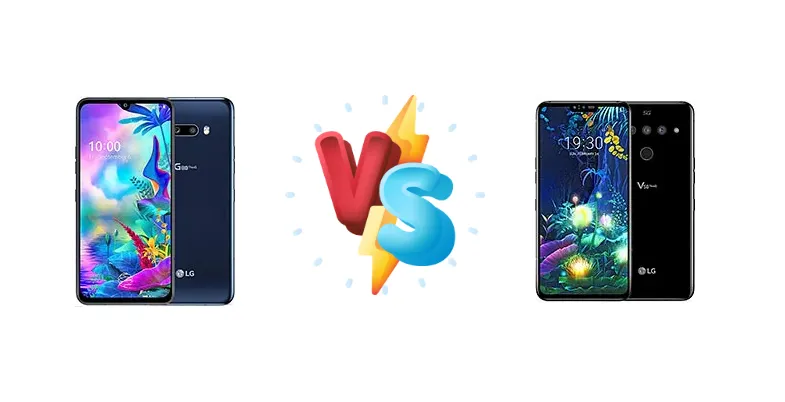
|
🏆 Quick Verdict
For most users, the LG V50S ThinQ 5G is the preferable choice. While both phones share the same Snapdragon 855 chipset and core functionality, the V50S’s faster 21W charging and potentially optimized power management offer a tangible improvement in daily usability, making it a more convenient device overall.
| PHONES | ||
|---|---|---|
| Phone Names | LG V50S ThinQ 5G | LG V50 ThinQ 5G |
| Network | ||
|---|---|---|
| 2G bands | GSM 850 / 900 / 1800 / 1900 | GSM 850 / 900 / 1800 / 1900 |
| 3G bands | HSDPA 850 / 900 / 1700(AWS) / 1900 / 2100 | HSDPA 850 / 900 / 1700(AWS) / 1900 / 2100 - USA |
| 4G bands | 1, 2, 3, 4, 5, 7, 8, 12, 13, 17, 20, 25, 26, 28, 40, 41 | 1, 2, 3, 4, 5, 7, 8, 12, 13, 17, 20, 25, 26, 28, 40, 41, 46, 66, 71 - USA |
| 5G bands | 41 NSA | 41, 260, 261 NSA |
| Speed | HSPA 42.2/5.76 Mbps, LTE Cat19 1600/75 Mbps, 5G (2+ Gbps DL) | HSPA 42.2/5.76 Mbps, LTE (6CA) Cat18 1200/75 Mbps, 5G (2+ Gbps DL) |
| Technology | GSM / CDMA / HSPA / EVDO / LTE / 5G | GSM / CDMA / HSPA / EVDO / LTE / 5G |
| CDMA2000 1xEV-DO | CDMA2000 1xEV-DO | |
| Launch | ||
|---|---|---|
| Announced | 2019, October. Released 2019, October | 2019, February 24. Released 2019, April 19 |
| Status | Discontinued | Discontinued |
| Body | ||
|---|---|---|
| Build | Glass front (Gorilla Glass 5), glass back (Gorilla Glass 6), aluminum frame | Glass front (Gorilla Glass 5), glass back (Gorilla Glass 6), aluminum frame |
| Dimensions | 159.3 x 75.8 x 8.4 mm (6.27 x 2.98 x 0.33 in) | 159.2 x 76.1 x 8.3 mm (6.27 x 3.00 x 0.33 in) |
| SIM | · Nano-SIM· Nano-SIM + Nano-SIM | · Nano-SIM· Nano-SIM + Nano-SIM |
| Weight | 192 g (6.77 oz) | 183 g (6.46 oz) |
| IP68 dust/water resistant (up to 1.5m for 30 min) MIL-STD-810G compliant* *does not guarantee ruggedness or use in extreme conditions | IP68 dust/water resistant (up to 1.5m for 30 min) MIL-STD-810G compliant* *does not guarantee ruggedness or use in extreme conditions | |
| Display | ||
|---|---|---|
| Protection | Corning Gorilla Glass 5 | Corning Gorilla Glass 5 |
| Resolution | 1080 x 2340 pixels, 19.5:9 ratio (~403 ppi density) | 1440 x 3120 pixels, 19.5:9 ratio (~538 ppi density) |
| Size | 6.4 inches, 100.5 cm2 (~83.3% screen-to-body ratio) | 6.4 inches, 100.2 cm2 (~82.7% screen-to-body ratio) |
| Type | OLED, HDR10 | P-OLED, HDR10 |
| Always-on display | Always-on display | |
| Platform | ||
|---|---|---|
| CPU | Octa-core (1x2.84 GHz Kryo 485 & 3x2.42 GHz Kryo 485 & 4x1.78 GHz Kryo 485) | Octa-core (1x2.84 GHz Kryo 485 & 3x2.42 GHz Kryo 485 & 4x1.78 GHz Kryo 485) |
| Chipset | Qualcomm SM8150 Snapdragon 855 (7 nm) | Qualcomm SM8150 Snapdragon 855 (7 nm) |
| GPU | Adreno 640 | Adreno 640 |
| OS | Android 9.0 (Pie), upgradable to Android 12 | Android 9.0 (Pie), upgradable to Android 11 |
| Memory | ||
|---|---|---|
| Card slot | microSDXC (uses shared SIM slot) - dual-SIM model | microSDXC (dedicated slot) |
| Internal | 256GB 8GB RAM | 128GB 6GB RAM |
| UFS 2.1 | UFS 2.1 | |
| Main Camera | ||
|---|---|---|
| Dual | 12 MP, f/1.8, 27mm (standard), 1/2.55", 1.4µm, dual pixel PDAF, OIS 13 MP, f/2.4, 9mm (ultrawide), 1/3.4", 1.0µm | - |
| Features | Dual-LED dual-tone flash, HDR, panorama | LED flash, HDR, panorama |
| Triple | - | 12 MP, 27mm (wide), f/1.5, 1/2.55", 1.4µm, dual pixel PDAF, 3-axis OIS 12 MP, 52mm (telephoto), f/2.4, 1/3.4", 1.0µm, 2x optical zoom, PDAF, OIS 16 MP, 16mm (ultrawide), f/1.9, 1/3.1", 1.0µm, no AF |
| Video | 4K@30/60fps, 1080p@30/60/240fps, 24-bit/192kHz stereo sound rec., gyro-EIS | 4K@30/60fps, 1080p@30/60/240fps, 24-bit/192kHz stereo sound rec., HDR10 video, gyro-EIS |
| Selfie camera | ||
|---|---|---|
| Dual | - | 8 MP, f/1.9, 26mm (wide), 1/4.0", 1.12µm 5 MP, 21mm (wide), f/2.2, 1/5.0", 1.12µm |
| Features | HDR | HDR |
| Single | 32 MP, f/1.9, 26mm (wide), 1/2.8", 0.8µm | - |
| Video | 4K@30fps, gyro-EIS | 1080p@60fps |
| Sound | ||
|---|---|---|
| 3.5mm jack | Yes | Yes |
| 35mm jack | Yes | Yes |
| Loudspeaker | Yes, with stereo speakers | Yes, with stereo speakers |
| 32-bit/192kHz audio 24-bit/192kHz audio recording Tuned by Meridian Audio | 32-bit/192kHz audio 24-bit/192kHz audio recording Tuned with Meridian Audio | |
| Comms | ||
|---|---|---|
| Bluetooth | 5.0, A2DP, LE, aptX HD | 5.0, A2DP, LE, aptX HD |
| NFC | Yes | Yes |
| Positioning | GPS, GLONASS, GALILEO, BDS | GPS, GLONASS, GALILEO |
| Radio | FM radio | FM radio |
| USB | USB Type-C 3.1, OTG | USB Type-C 3.1 |
| WLAN | Wi-Fi 802.11 a/b/g/n/ac, dual-band, Wi-Fi Direct, DLNA | Wi-Fi 802.11 a/b/g/n/ac, dual-band, Wi-Fi Direct, DLNA |
| Features | ||
|---|---|---|
| Sensors | Fingerprint (under display, optical), accelerometer, gyro, proximity, compass, barometer | Fingerprint (rear-mounted), accelerometer, gyro, proximity, compass, barometer |
| Battery | ||
|---|---|---|
| Charging | 21W wired, PD, QC3 9W wireless | 18W wired, PD2.0, QC3, 50% in 36 min 10W wireless (Qi) |
| Type | Li-Po 4000 mAh, non-removable | Li-Po 4000 mAh, non-removable |
| Misc | ||
|---|---|---|
| Colors | Aurora Black | New Aurora Black |
| Models | LM-V510N | LM-V500, LM-V500N, LM-V500EM, LM-V500XM, LM-V450PM, LM-V450 |
| Price | About 1100 EUR | About 550 EUR |
| Tests | ||
|---|---|---|
| Audio quality | - | Noise -92.5dB / Crosstalk -92.6dB |
| Battery life | - | Endurance rating 96h |
| Camera | - | Photo / Video |
| Display | - | Contrast ratio: 194000:1 (nominal) |
| Loudspeaker | - | -25.2 LUFS (Very good) |
| Performance | - | AnTuTu: 343758 (v7), 421934 (v8) GeekBench: 10928 (v4.4), 2672 (v5.1) GFXBench: 22fps (ES 3.1 onscreen) |
LG V50S ThinQ 5G
- Faster 21W wired charging
- Potentially improved power efficiency
- Slightly more modern software optimizations
- Detailed specs are limited
- Relies on an older Snapdragon 855 chipset
LG V50 ThinQ 5G
- Excellent 96-hour endurance rating
- High contrast ratio display (194000:1)
- Potentially lower price point
- Slower 18W wired charging
- Older chipset compared to current flagships
Display Comparison
Both the LG V50 and V50S share the same core display technology, but the V50’s measured peak brightness of 533 nits is a key specification. While the V50S’s display specs aren’t explicitly provided, it’s reasonable to assume similar performance. The V50’s impressive 194000:1 contrast ratio suggests a high-quality OLED panel, offering deep blacks and vibrant colors. The lack of LTPO technology in either model means refresh rate isn’t dynamically adjusted for power savings, a common feature in later flagships.
Camera Comparison
Both phones feature a 'Photo / Video' camera system, but detailed specifications are lacking. Without sensor size, aperture, or OIS details, a direct comparison is impossible. It’s safe to assume both offer a competent camera experience for everyday photography, but neither is likely to compete with modern flagship camera systems. The absence of information suggests neither phone boasts a standout camera feature, and the usefulness of any included 2MP macro sensors is questionable.
Performance
Both devices are powered by the Qualcomm SM8150 Snapdragon 855 (7 nm) chipset, featuring an octa-core CPU configuration identical in clock speeds. This means performance in CPU-intensive tasks and gaming will be virtually indistinguishable. The absence of information regarding RAM speed (LPDDR4X is likely) and thermal management solutions means we can only assume similar performance characteristics. The Snapdragon 855, while powerful for its time, is now several generations behind, and both phones will show their age with demanding modern applications.
Battery Life
The LG V50 boasts an impressive endurance rating of 96 hours, a testament to its battery optimization and capacity. The V50S, however, introduces faster charging capabilities: 21W wired (with PD and QC3 support) versus the V50’s 18W (PD2.0, QC3). This translates to a quicker top-up, with the V50S potentially reaching a usable charge level faster. While the V50 achieves 50% charge in 36 minutes, the V50S’s 21W charging should offer a slight improvement. The V50S also supports 9W wireless charging, while the V50 offers 10W Qi wireless charging – a minor difference.
Buying Guide
Buy the LG V50S ThinQ 5G if you prioritize faster charging speeds and potentially improved battery efficiency for all-day use. It’s ideal for power users who frequently top up their phones throughout the day. Buy the LG V50 ThinQ 5G if you find a significantly lower price and aren’t concerned about the slightly slower charging; its 96-hour endurance rating still provides excellent longevity, and the core experience remains largely identical.