
LG V50S ThinQ 5G vs LG G8X ThinQ: Which Snapdragon 855 Flagship Reigns Supreme?
| Phones Images | |||||
|---|---|---|---|---|---|
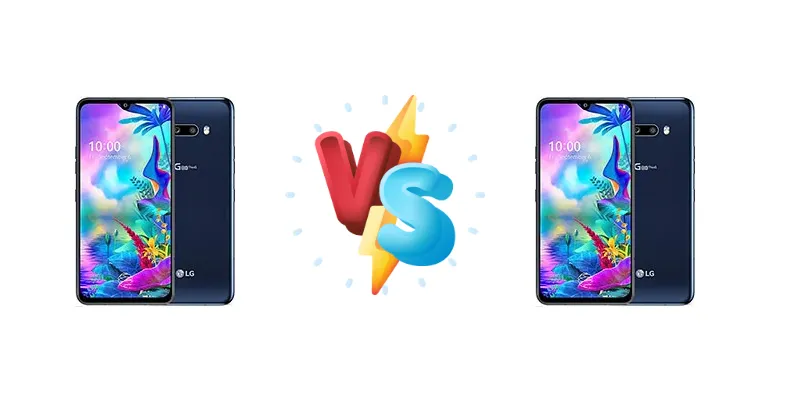
|
🏆 Quick Verdict
For the average user prioritizing longevity and consistent performance, the LG G8X ThinQ emerges as the slightly better choice. While both share the Snapdragon 855, the G8X’s reported 111-hour endurance rating suggests superior battery optimization, making it more practical for daily use. The V50S’s 5G capability is less relevant now.
| PHONES | ||
|---|---|---|
| Phone Names | LG V50S ThinQ 5G | LG G8X ThinQ |
| Network | ||
|---|---|---|
| 2G bands | GSM 850 / 900 / 1800 / 1900 | GSM 850 / 900 / 1800 / 1900 |
| 3G bands | HSDPA 850 / 900 / 1700(AWS) / 1900 / 2100 | HSDPA 850 / 900 / 1900 / 2100 |
| 4G bands | 1, 2, 3, 4, 5, 7, 8, 12, 13, 17, 20, 25, 26, 28, 40, 41 | 1, 2, 3, 4, 5, 7, 8, 12, 13, 17, 20, 28, 32, 38, 39, 40, 41 |
| 5G bands | 41 NSA | - |
| Speed | HSPA 42.2/5.76 Mbps, LTE Cat19 1600/75 Mbps, 5G (2+ Gbps DL) | HSPA 42.2/5.76 Mbps, LTE Cat20 1960/75 Mbps |
| Technology | GSM / CDMA / HSPA / EVDO / LTE / 5G | GSM / CDMA / HSPA / EVDO / LTE |
| CDMA2000 1xEV-DO | 1, 2, 3, 4, 5, 7, 12, 14, 20, 29, 30, 38, 39, 40, 41, 46, 66 - USA | |
| Launch | ||
|---|---|---|
| Announced | 2019, October. Released 2019, October | 2019, September 06. Released 2019, November 01 |
| Status | Discontinued | Discontinued |
| Body | ||
|---|---|---|
| Build | Glass front (Gorilla Glass 5), glass back (Gorilla Glass 6), aluminum frame | Glass front (Gorilla Glass 6), glass back (Gorilla Glass 5), aluminum frame |
| Dimensions | 159.3 x 75.8 x 8.4 mm (6.27 x 2.98 x 0.33 in) | 159.3 x 75.8 x 8.4 mm (6.27 x 2.98 x 0.33 in) |
| SIM | · Nano-SIM· Nano-SIM + Nano-SIM | · Nano-SIM· Nano-SIM + Nano-SIM |
| Weight | 192 g (6.77 oz) | 192 g (6.77 oz) |
| IP68 dust/water resistant (up to 1.5m for 30 min) MIL-STD-810G compliant* *does not guarantee ruggedness or use in extreme conditions | IP68 dust/water resistant (up to 1.5m for 30 min) MIL-STD-810G compliant* *does not guarantee ruggedness or use in extreme conditions | |
| Display | ||
|---|---|---|
| Protection | Corning Gorilla Glass 5 | Corning Gorilla Glass 6 |
| Resolution | 1080 x 2340 pixels, 19.5:9 ratio (~403 ppi density) | 1080 x 2340 pixels, 19.5:9 ratio (~403 ppi density) |
| Size | 6.4 inches, 100.5 cm2 (~83.3% screen-to-body ratio) | 6.4 inches, 100.5 cm2 (~83.3% screen-to-body ratio) |
| Type | OLED, HDR10 | OLED, HDR10 |
| Always-on display | Always-on display | |
| Platform | ||
|---|---|---|
| CPU | Octa-core (1x2.84 GHz Kryo 485 & 3x2.42 GHz Kryo 485 & 4x1.78 GHz Kryo 485) | Octa-core (1x2.84 GHz Kryo 485 & 3x2.42 GHz Kryo 485 & 4x1.78 GHz Kryo 485) |
| Chipset | Qualcomm SM8150 Snapdragon 855 (7 nm) | Qualcomm SM8150 Snapdragon 855 (7 nm) |
| GPU | Adreno 640 | Adreno 640 |
| OS | Android 9.0 (Pie), upgradable to Android 12 | Android 9.0 (Pie), upgradable to Android 12 |
| Memory | ||
|---|---|---|
| Card slot | microSDXC (uses shared SIM slot) - dual-SIM model | microSDXC (uses shared SIM slot) - dual-SIM model |
| Internal | 256GB 8GB RAM | 128GB 6GB RAM |
| UFS 2.1 | UFS 2.1 | |
| Main Camera | ||
|---|---|---|
| Dual | 12 MP, f/1.8, 27mm (standard), 1/2.55", 1.4µm, dual pixel PDAF, OIS 13 MP, f/2.4, 9mm (ultrawide), 1/3.4", 1.0µm | 12 MP, f/1.8, 27mm (wide), 1/2.55", 1.4µm, dual pixel PDAF, OIS 13 MP, f/2.4, 9mm (ultrawide), 1.0µm |
| Features | Dual-LED dual-tone flash, HDR, panorama | Dual-LED dual-tone flash, HDR, panorama |
| Single | - | 3.15 MP, AF |
| Video | 4K@30/60fps, 1080p@30/60/240fps, 24-bit/192kHz stereo sound rec., gyro-EIS | 4K@30/60fps, 1080p@30/60/240fps, 24-bit/192kHz stereo sound rec., gyro-EIS |
| Selfie camera | ||
|---|---|---|
| Features | HDR | HDR |
| Single | 32 MP, f/1.9, 26mm (wide), 1/2.8", 0.8µm | 32 MP, f/1.9, 26mm (wide), 1/2.8", 0.8µm |
| Video | 4K@30fps, gyro-EIS | 4K@30fps, gyro-EIS |
| Sound | ||
|---|---|---|
| 3.5mm jack | Yes | Yes |
| 35mm jack | Yes | Yes |
| Loudspeaker | Yes, with stereo speakers | Yes, with stereo speakers |
| 32-bit/192kHz audio 24-bit/192kHz audio recording Tuned by Meridian Audio | 32-bit/192kHz audio 24-bit/192kHz audio recording Tuned by Meridian Audio | |
| Comms | ||
|---|---|---|
| Bluetooth | 5.0, A2DP, LE, aptX HD | 5.0, A2DP, LE, aptX HD |
| NFC | Yes | Yes |
| Positioning | GPS, GLONASS, GALILEO, BDS | GPS, GLONASS, GALILEO, BDS |
| Radio | FM radio | FM radio |
| USB | USB Type-C 3.1, OTG | USB Type-C 3.1, OTG |
| WLAN | Wi-Fi 802.11 a/b/g/n/ac, dual-band, Wi-Fi Direct, DLNA | Wi-Fi 802.11 a/b/g/n/ac, dual-band, Wi-Fi Direct, DLNA |
| Features | ||
|---|---|---|
| Browser | - | HTML, Adobe Flash |
| Sensors | Fingerprint (under display, optical), accelerometer, gyro, proximity, compass, barometer | Fingerprint (under display, optical), accelerometer, gyro, proximity, compass, barometer |
| Battery | ||
|---|---|---|
| Charging | 21W wired, PD, QC3 9W wireless | 21W wired, PD, QC3 9W wireless |
| Talk time | - | Up to 12 h (multimedia) |
| Type | Li-Po 4000 mAh, non-removable | Li-Po 4000 mAh, non-removable |
| Misc | ||
|---|---|---|
| Colors | Aurora Black | New Aurora Black |
| Models | LM-V510N | LMG850EMW, LM-G850, 901LG, LM-G850N |
| Price | About 1100 EUR | About 560 EUR |
| SAR | - | 1.12 W/kg (body) |
| SAR EU | - | 0.90 W/kg (head) |
| Tests | ||
|---|---|---|
| Audio quality | - | Noise -93.2dB / Crosstalk -93.4dB |
| Battery life | - | Endurance rating 111h |
| Camera | - | Photo / Video |
| Display | - | Contrast ratio: Infinite (nominal) |
| Loudspeaker | - | -24.9 LUFS (Very good) |
| Performance | - | AnTuTu: 339726 (v7), 411980 (v8) GeekBench: 11251 (v4.4), 2870 (v5.1) GFXBench: 38fps (ES 3.1 onscreen) |
LG V50S ThinQ 5G
- 5G Connectivity (potentially useful depending on location)
- Snapdragon 855 Performance
- Fast Charging Support (21W)
- Likely Shorter Battery Life
- Potential for Thermal Throttling
- Limited Camera Information
LG G8X ThinQ
- Excellent Battery Endurance (111h)
- Brighter Display (603 nits)
- Snapdragon 855 Performance
- No 5G Connectivity
- Limited Camera Information
- May be harder to find new
Display Comparison
Both devices lack detailed display specifications beyond the G8X’s measured 603 nits of peak brightness. This suggests the G8X offers superior visibility in direct sunlight. The 'Infinite' contrast ratio on the G8X, while a marketing term, likely indicates a strong OLED panel. Without knowing the panel technology (OLED vs LCD) or refresh rate of the V50S, the G8X’s brightness advantage is a clear win for outdoor users. Bezels are assumed to be comparable given the similar design language of LG flagships from this period.
Camera Comparison
Both phones are listed as having 'Photo / Video' capabilities, offering minimal insight. Without sensor size, aperture, or image processing details, a direct comparison is difficult. The absence of specific camera specs suggests neither phone was a standout in the camera department compared to competitors. We can assume both offer a standard flagship camera experience for the time, but lack the advanced features found in later models. Ignoring the likely inclusion of low-resolution auxiliary lenses (like 2MP macro sensors), the primary camera performance will be the deciding factor, and without data, it's impossible to declare a winner.
Performance
The core performance is identical: both the V50S and G8X are powered by the Qualcomm Snapdragon 855 (7nm) with the same octa-core CPU configuration (1x2.84 GHz Kryo 485, 3x2.42 GHz Kryo 485, 4x1.78 GHz Kryo 485). This means similar performance in CPU-intensive tasks and gaming. However, thermal management could differ. The V50S, being a 5G phone, might have a slightly more constrained thermal envelope due to the additional components, potentially leading to more throttling under sustained load. RAM specifications are not provided, but both likely feature at least 6GB, sufficient for smooth multitasking.
Battery Life
The LG G8X ThinQ boasts an endurance rating of 111 hours, a significant advantage. While the V50S’s battery capacity isn’t specified, the G8X’s endurance suggests superior power efficiency. Both support 21W wired charging with Power Delivery (PD) and Quick Charge 3 (QC3), and 9W wireless charging. The G8X’s longer endurance means fewer charging cycles, extending battery lifespan. The 0-100% charge time will be similar on both, around 1.5-2 hours with the 21W charger.
Buying Guide
Buy the LG V50S ThinQ 5G if you specifically need 5G connectivity and are willing to compromise on battery life. It’s a good option for those heavily invested in 5G infrastructure. Buy the LG G8X ThinQ if you prioritize all-day battery life, a brighter display for outdoor visibility, and a more balanced overall experience. It’s ideal for media consumption and general productivity.