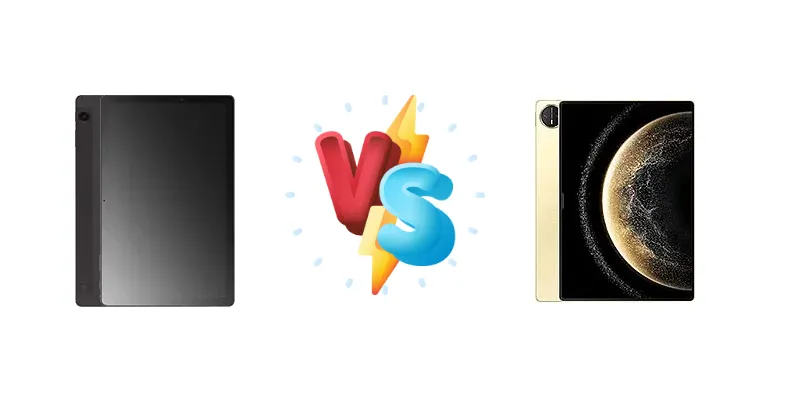
The tablet market is bifurcating: affordable, everyday devices versus premium, productivity-focused slates. The LG Ultra Tab aims for the former, leveraging Qualcomm’s efficiency, while the Huawei MatePad Pro 13.2 (2025) targets the latter with a focus on raw power and rapid charging. This comparison dissects the key differences to help you determine which tablet aligns with your needs.
🏆 Quick Verdict
For the average user prioritizing affordability and decent everyday performance, the LG Ultra Tab offers a compelling value. However, the Huawei MatePad Pro 13.2 (2025) is the clear winner for power users demanding faster performance and significantly quicker charging, justifying its likely higher price point.
| Network |
|---|
| 2G bands | N/A | GSM 850 / 900 / 1800 / 1900 |
| 3G bands | N/A | HSDPA 850 / 900 / 1900 / 2100 |
| 4G bands | N/A | LTE |
| EDGE | No | - |
| GPRS | No | - |
| Speed | - | HSPA, LTE - cellular model only |
| Technology | No cellular connectivity | GSM / HSPA / LTE |
| Launch |
|---|
| Announced | 2022, August 05 | 2024, November 26 |
| Status | Available. Released 2022, August 05 | Available. Released 2024, December 12 |
| Body |
|---|
| Build | - | Glass front, nylon fiber back, magnesium alloy frame |
| Dimensions | 247.6 x 157.3 x 7.1 mm (9.75 x 6.19 x 0.28 in) | 289.1 x 196.1 x 5.5 mm (11.38 x 7.72 x 0.22 in) |
| SIM | No | Nano-SIM (cellular model only) |
| Weight | 458 g (1.01 lb) | 580 g (Wi-FI) or 590 g (LTE) (1.28 lb) |
| | MIL-STD 810G
Stylus support | - |
| Display |
|---|
| Resolution | 1200 x 2000 pixels, 5:3 ratio (~225 ppi density) | 2880 x 1920 pixels, 3:2 ratio (~262 ppi density) |
| Size | 10.35 inches, 304.9 cm2 (~78.3% screen-to-body ratio) | 13.2 inches, 518.8 cm2 (~91.5% screen-to-body ratio) |
| Type | IPS LCD | OLED, 1B colors, 144Hz, HDR Vivid, 1000 nits (peak) |
| Platform |
|---|
| CPU | Octa-core (4x2.4 GHz Kryo 265 Gold & 4x1.9 GHz Kryo 265 Silver) | Octa-core |
| Chipset | Qualcomm SM6225 Snapdragon 680 4G (6 nm) | Kirin T92 |
| GPU | Adreno 610 | - |
| OS | Android 12 | Harmony OS 4.3 |
| Memory |
|---|
| Card slot | microSDXC (dedicated slot) | No |
| Internal | 64GB 4GB RAM | 256GB 12GB RAM, 512GB 12GB RAM, 1TB 16GB RAM |
| | UFS | - |
| Main Camera |
|---|
| Dual | - | 50 MP, f/1.8, (wide), PDAF
8 MP, f/2.2, (ultrawide) |
| Features | - | LED flash |
| Single | 8 MP, AF | - |
| Video | - | 4K@30fps, 1080p@30fps |
| Selfie camera |
|---|
| Single | 5 MP | 16 MP, f/2.2 |
| Video | - | 1080p@30fps |
| Sound |
|---|
| 3.5mm jack | Yes | - |
| 35mm jack | Yes | No |
| Loudspeaker | Yes, with stereo speakers (4 speakers) | Yes, with stereo speakers (6 speakers) |
| Comms |
|---|
| Bluetooth | 5.1, A2DP | 5.2, A2DP, LE, L2HC |
| NFC | No | No |
| Positioning | No | GPS, GALILEO, GLONASS, BDS |
| Radio | No | No |
| USB | USB Type-C | USB Type-C 3.1, OTG, DisplayPort 1.2, accessory connector pins |
| WLAN | Wi-Fi 802.11 a/b/g/n/ac, dual-band | Wi-Fi 802.11 a/b/g/n/ac/6, dual-band |
| Features |
|---|
| Sensors | Accelerometer | Fingerprint (side-mounted), accelerometer, gyro, compass, proximity (accessories only) |
| Battery |
|---|
| Charging | 16W wired, QC3 | 100W wired
7.5W reverse wired |
| Type | Li-Ion 7040 mAh | Li-Po 10100 mAh |
| Misc |
|---|
| Colors | Charcoal Gray | Black, White, Gold |
| Models | 10A30Q | WEB-W00, PCE-W29 |
| Price | About 320 EUR | About 680 EUR |
LG Ultra Tab
- More affordable price point
- Good efficiency with the Snapdragon 680
- Reliable for basic tasks
- Slow charging speed (16W)
- Mid-range performance may struggle with demanding apps
- Likely lower-quality display
Huawei MatePad Pro 13.2 (2025)
- Significantly faster charging (100W)
- Potentially superior performance with the Kirin T92
- Likely higher-quality display and camera
- Higher price tag
- Potentially less battery life due to higher power consumption
- Software ecosystem limitations (Huawei)
Display Comparison
Display specifications are absent from the provided data, but given the LG Ultra Tab’s positioning, we anticipate an LCD panel focused on cost-effectiveness. The Huawei MatePad Pro 13.2 (2025), being a premium device, likely features an OLED or high-end LCD with a higher refresh rate and potentially LTPO technology for variable refresh rate and power savings. Bezels on the Huawei are likely to be slimmer, contributing to a more immersive experience. Color accuracy will likely be superior on the Huawei, catering to content creators.
Camera Comparison
Camera details are unavailable. However, given the LG Ultra Tab’s focus on value, we expect a basic camera setup suitable for video calls and casual snapshots. The Huawei MatePad Pro 13.2 (2025), as a premium device, is likely to feature a more sophisticated camera system with larger sensors, optical image stabilization (OIS), and potentially multiple lenses for versatility. Image processing algorithms will also likely be more advanced on the Huawei, resulting in better image quality.
Performance
The core difference lies in the chipsets. The LG Ultra Tab’s Qualcomm SM6225 Snapdragon 680 (6nm) is a capable but mid-range processor. Its octa-core configuration (4x2.4 GHz Kryo 265 Gold & 4x1.9 GHz Kryo 265 Silver) prioritizes efficiency over raw speed. The Huawei MatePad Pro 13.2 (2025) utilizes the Kirin T92, an octa-core processor whose architecture is unknown, but given Huawei’s history, it’s likely designed for a balance of performance and power efficiency. The 6nm process node of the Snapdragon 680 is a step behind potentially more advanced nodes used in the Kirin T92, suggesting the Huawei tablet will offer a noticeable performance advantage in demanding tasks. RAM speed (LPDDR4x vs LPDDR5x) is also a likely differentiator, further favoring the Huawei.
Battery Life
Battery capacity is not specified, but the charging capabilities highlight a significant disparity. The LG Ultra Tab’s 16W wired charging with QC3 is relatively slow in 2025. The Huawei MatePad Pro 13.2 (2025) boasts a staggering 100W wired charging, allowing for a full charge in a fraction of the time. This is a game-changer for users who rely heavily on their tablets throughout the day. While the LG Ultra Tab may offer slightly better battery life due to the less powerful processor, the convenience of the Huawei’s rapid charging is a major advantage.
Buying Guide
Buy the LG Ultra Tab if you need a reliable tablet for basic tasks like web browsing, video streaming, and light productivity, and value a lower price point. It’s ideal for students or families. Buy the Huawei MatePad Pro 13.2 (2025) if you prioritize performance for demanding applications, multitasking, and creative workflows, and require the convenience of incredibly fast 100W charging – a boon for professionals and power users.
Frequently Asked Questions
❓ How will the Snapdragon 680 handle multitasking compared to the Kirin T92?
The Kirin T92 is expected to handle multitasking more smoothly due to its likely more powerful architecture and potentially faster RAM. The Snapdragon 680, while capable, may exhibit some lag when running multiple demanding applications simultaneously.
❓ Is the 100W charging on the Huawei MatePad Pro 13.2 (2025) likely to degrade the battery faster over time?
While faster charging generates more heat, modern charging controllers in devices like the MatePad Pro 13.2 (2025) incorporate safeguards to minimize battery degradation. Huawei likely employs advanced battery management techniques to mitigate any potential long-term effects of rapid charging.
❓ Does the LG Ultra Tab support expandable storage via microSD card?
This information is not provided. However, given its budget-friendly nature, the LG Ultra Tab is *likely* to include a microSD card slot for expandable storage, a feature often omitted in premium tablets.
❓ What kind of software experience can I expect on the Huawei MatePad Pro 13.2 (2025), given the ongoing restrictions with Google Mobile Services?
The Huawei MatePad Pro 13.2 (2025) runs HarmonyOS, Huawei’s proprietary operating system. While it lacks direct access to Google Mobile Services (GMS), Huawei has developed its own app ecosystem, AppGallery, and provides workarounds for accessing popular apps. The user experience is generally smooth, but app availability may be limited compared to devices with GMS.