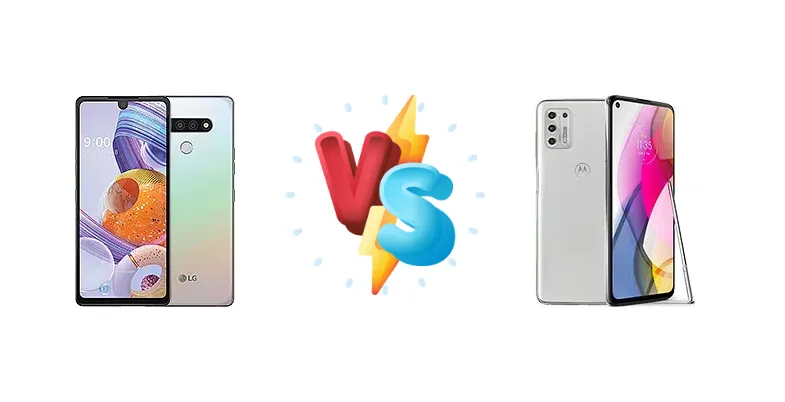
Both the LG Stylo 6 and the Motorola Moto G Stylus (2021) cater to the budget-conscious user seeking the convenience of a stylus. However, beneath the surface, significant differences in chipset architecture and manufacturing process dictate real-world performance and efficiency. This comparison dives deep into these distinctions to determine which phone delivers the best value.
🏆 Quick Verdict
For the average user, the Motorola Moto G Stylus (2021) is the better choice. Its Qualcomm Snapdragon 678, built on an 11nm process, offers a noticeable performance advantage and improved power efficiency compared to the LG Stylo 6’s MediaTek Helio P35, fabricated on a larger 12nm node. While both offer stylus functionality, the Moto G Stylus provides a smoother overall experience.
| Network |
|---|
| 2G bands | GSM 850 / 900 / 1800 / 1900 | GSM 850 / 900 / 1800 / 1900 |
| 3G bands | HSDPA 850 / 900 / 1900 / 2100 | HSDPA 850 / 900 / 1700(AWS) / 1900 / 2100 |
| 4G bands | LTE | 1, 2, 3, 4, 5, 7, 8, 12, 13, 14, 17, 20, 25, 26, 29, 38, 40, 41, 66, 71 |
| Speed | HSPA 42.2/5.76 Mbps, LTE (2CA) Cat6 300/50 Mbps | HSPA, LTE |
| Technology | GSM / HSPA / LTE | GSM / CDMA / HSPA / LTE |
| | - | CDMA 800 / 1900 |
| Launch |
|---|
| Announced | 2020, May 20. Released 2020, May 20 | 2021, January 08 |
| Status | Discontinued | Available. Released 2021, January 14 |
| Body |
|---|
| Build | - | Glass front, plastic frame, plastic back |
| Dimensions | 171.2 x 77.7 x 8.6 mm (6.74 x 3.06 x 0.34 in) | 169.8 x 77.9 x 9 mm (6.69 x 3.07 x 0.35 in) |
| SIM | Nano-SIM | Nano-SIM |
| Weight | 219 g (7.72 oz) | 213 g (7.51 oz) |
| | Stylus | Stylus
Water-repellent coating |
| Display |
|---|
| Resolution | 1080 x 2460 pixels (~395 ppi density) | 1080 x 2400 pixels, 20:9 ratio (~386 ppi density) |
| Size | 6.8 inches, 109.8 cm2 (~82.5% screen-to-body ratio) | 6.8 inches, 112.2 cm2 (~84.8% screen-to-body ratio) |
| Type | IPS LCD | IPS LCD |
| Platform |
|---|
| CPU | Octa-core (4x2.3 GHz Cortex-A53 & 4x1.8 GHz Cortex-A53) | Octa-core (2x2.2 GHz Kryo 460 Gold & 6x1.7 GHz Kryo 460 Silver) |
| Chipset | Mediatek MT6765 Helio P35 (12 nm) | Qualcomm SDM678 Snapdragon 678 (11 nm) |
| GPU | PowerVR GE8320 | Adreno 612 |
| OS | Android 10 | Android 10 |
| Memory |
|---|
| Card slot | microSDXC (dedicated slot) | microSDXC (dedicated slot) |
| Internal | 64GB 3GB RAM | 128GB 4GB RAM |
| | eMMC 5.1 | - |
| Main Camera |
|---|
| Features | LED flash, panorama, HDR | LED flash, HDR, panorama |
| Quad | - | 48 MP, f/1.7, 26mm (wide), 1/2.0", 0.8µm, PDAF
8 MP, f/2.2, 118˚ (ultrawide), 1/4.0, 1.12µm
2 MP (macro)
Auxiliary lens |
| Triple | 13 MP, (wide), PDAF
5 MP, 120˚, (ultrawide)
Auxiliary lens | - |
| Video | 1080p@30fps | 4K@30fps, 1080p@30/60fps; gyro-EIS |
| Selfie camera |
|---|
| Features | - | HDR |
| Single | 13 MP, 1/3.1", 1.12µm | 16 MP, f/2.0, (wide), 1/3.06", 1.0µm |
| Video | 1080p@30fps | 1080p@30fps, gyro-EIS |
| Sound |
|---|
| 3.5mm jack | Yes | Yes |
| 35mm jack | Yes | Yes |
| Loudspeaker | Yes | Yes |
| Comms |
|---|
| Bluetooth | 5.0, A2DP, LE | 5.0, A2DP, LE |
| NFC | No | No |
| Positioning | GPS | GPS, GLONASS, BDS, GALILEO |
| Radio | No | Unspecified |
| USB | USB Type-C 2.0 | USB Type-C 2.0 |
| WLAN | Wi-Fi 802.11 b/g/n, Wi-Fi Direct | Wi-Fi 802.11 a/b/g/n/ac, dual-band, Wi-Fi Direct |
| Features |
|---|
| Sensors | Fingerprint (rear-mounted), accelerometer, proximity | Fingerprint (side-mounted), accelerometer, gyro, proximity |
| Battery |
|---|
| Charging | - | 10W wired |
| Type | Li-Po 4000 mAh | Li-Po 4000 mAh |
| Misc |
|---|
| Colors | White | Aurora Black, Aurora White |
| Models | LMQ730TM, LM-Q730TM | XT2115, XT2115-1 |
| Price | About 200 EUR | About 90 EUR |
LG Stylo 6
- Potentially lower price point
- Stylus functionality for note-taking and drawing
- May offer expandable storage via microSD card
- Less powerful processor (Helio P35)
- Less efficient chipset (12nm process)
- Likely slower app loading and multitasking
Motorola Moto G Stylus (2021)
- More powerful and efficient processor (Snapdragon 678)
- Larger 5000mAh battery
- Qualcomm ISP for potentially better image quality
- Slightly higher price
- Slow 10W charging
- May still lack advanced camera features
Display Comparison
Neither device boasts a particularly impressive display. Details regarding panel type (IPS vs. AMOLED) and resolution are missing, but both likely feature 720p+ displays typical of this price bracket. The key difference lies under the hood: processing power impacts UI smoothness. While both will likely have adequate brightness for indoor use, the Moto G Stylus’s more capable chipset will contribute to faster refresh rates and smoother animations, even if the panel itself is similar.
Camera Comparison
Without detailed sensor information, a direct camera comparison is difficult. However, the Moto G Stylus (2021) likely benefits from Qualcomm’s image signal processor (ISP), which generally offers superior image processing capabilities compared to MediaTek’s ISP found in the Stylo 6. While both phones likely include a standard and potentially ultra-wide lens, the image quality, dynamic range, and low-light performance will likely favor the Motorola device. The prevalence of 2MP macro lenses on both devices suggests limited utility; these sensors typically produce images lacking in detail.
Performance
The Motorola Moto G Stylus (2021) holds a clear advantage in performance. The Snapdragon 678 utilizes Qualcomm’s Kryo 460 cores – a mix of 2x 2.2 GHz 'Gold' cores for demanding tasks and 6x 1.7 GHz 'Silver' cores for efficiency. This contrasts with the LG Stylo 6’s Helio P35, which employs four Cortex-A53 cores at 2.3 GHz and another four at 1.8 GHz. The Snapdragon 678’s architecture, combined with the more efficient 11nm manufacturing process, translates to better multitasking, faster app loading times, and a more responsive user interface. The Helio P35, while adequate for basic tasks, will struggle with more demanding applications and may exhibit noticeable lag.
Battery Life
Battery life is a complex equation. While the LG Stylo 6’s battery capacity is unknown, the Moto G Stylus (2021) features a 5000mAh battery. However, the Snapdragon 678’s 11nm process is more power-efficient than the Helio P35’s 12nm process. This means the Moto G Stylus (2021) will likely deliver comparable or even better battery life despite the larger battery capacity, especially under load. The Moto G Stylus (2021) also supports 10W wired charging, which, while slow by modern standards, is a feature absent from detailed specs for the LG Stylo 6.
Buying Guide
Buy the LG Stylo 6 if you prioritize absolute lowest cost and are primarily focused on basic communication tasks like calls, texts, and light social media. Buy the Motorola Moto G Stylus (2021) if you value a more responsive user experience, better multitasking capabilities, and slightly improved camera performance, even if it means spending a bit more.
Frequently Asked Questions
❓ Will the LG Stylo 6 struggle with popular apps like Facebook or YouTube?
The Helio P35 in the LG Stylo 6 is a relatively low-end chipset. While it can run these apps, you may experience noticeable lag, slow loading times, and occasional stuttering, especially when multitasking or using the apps for extended periods. The Moto G Stylus (2021) will provide a significantly smoother experience.
❓ Is the stylus on either phone compatible with note-taking apps like OneNote or Evernote?
Both styluses are capacitive, meaning they work on any touchscreen. They will function with apps like OneNote and Evernote, but don't expect the precision or features of a dedicated stylus like the S Pen on Samsung devices. They are primarily intended for basic note-taking and navigation.
❓ Does the Motorola Moto G Stylus (2021) support fast charging, and how long does it take to fully charge?
The Moto G Stylus (2021) supports 10W wired charging. This is a relatively slow charging speed. Expect a full charge from 0% to 100% to take approximately 3-4 hours. The LG Stylo 6's charging speed is unknown, but likely similar or slower.