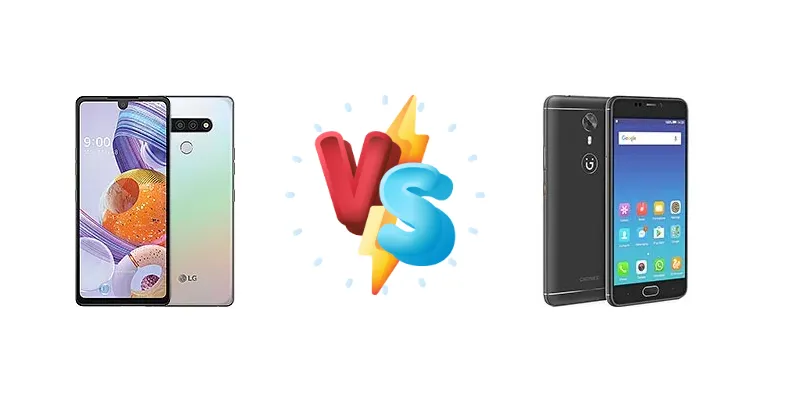
The LG Stylo 6 and Gionee A1 represent different eras of the budget smartphone. The Stylo 6, released later, benefits from advancements in processor technology, while the A1 aimed to deliver a solid experience at its time. This comparison focuses on the core performance differences stemming from their respective chipsets and how those translate to everyday use.
🏆 Quick Verdict
For the average user in 2024, the LG Stylo 6 is the better choice. Its Mediatek Helio P35, built on a 12nm process, offers improved efficiency and potentially better sustained performance compared to the Gionee A1’s older 28nm Helio P10. While both are entry-level, the Stylo 6 provides a more modern foundation.
| Network |
|---|
| 2G bands | GSM 850 / 900 / 1800 / 1900 | GSM 850 / 900 / 1800 / 1900 - SIM 1 & SIM 2 |
| 3G bands | HSDPA 850 / 900 / 1900 / 2100 | HSDPA 850 / 900 / 1900 / 2100 |
| 4G bands | LTE | 1, 3, 7, 38, 39, 40, 41 |
| Speed | HSPA 42.2/5.76 Mbps, LTE (2CA) Cat6 300/50 Mbps | HSPA 42.2/5.76 Mbps, LTE (2CA) Cat6 300/50 Mbps |
| Technology | GSM / HSPA / LTE | GSM / HSPA / LTE |
| Launch |
|---|
| Announced | 2020, May 20. Released 2020, May 20 | 2017, February. Released 2017, April |
| Status | Discontinued | Discontinued |
| Body |
|---|
| Dimensions | 171.2 x 77.7 x 8.6 mm (6.74 x 3.06 x 0.34 in) | 154.5 x 76.5 x 8.3 mm (6.08 x 3.01 x 0.33 in) |
| SIM | Nano-SIM | Nano-SIM + Micro-SIM |
| Weight | 219 g (7.72 oz) | 182 g (6.42 oz) |
| | Stylus | - |
| Display |
|---|
| Protection | - | Corning Gorilla Glass (unspecified version) |
| Resolution | 1080 x 2460 pixels (~395 ppi density) | 1080 x 1920 pixels, 16:9 ratio (~401 ppi density) |
| Size | 6.8 inches, 109.8 cm2 (~82.5% screen-to-body ratio) | 5.5 inches, 83.4 cm2 (~70.6% screen-to-body ratio) |
| Type | IPS LCD | IPS LCD |
| Platform |
|---|
| CPU | Octa-core (4x2.3 GHz Cortex-A53 & 4x1.8 GHz Cortex-A53) | Octa-core (4x2.0 GHz Cortex-A53 & 4x1.0 GHz Cortex-A53) |
| Chipset | Mediatek MT6765 Helio P35 (12 nm) | Mediatek MT6755 Helio P10 (28 nm) |
| GPU | PowerVR GE8320 | Mali-T860MP2 |
| OS | Android 10 | Android 7 (Nougat), Amigo 4 |
| Memory |
|---|
| Card slot | microSDXC (dedicated slot) | microSDXC (uses shared SIM slot) |
| Internal | 64GB 3GB RAM | 64GB 4GB RAM |
| | eMMC 5.1 | eMMC 5.1 |
| Main Camera |
|---|
| Features | LED flash, panorama, HDR | LED flash, HDR |
| Single | - | 13 MP, f/2.0, 1/3.1", 1.12µm, PDAF |
| Triple | 13 MP, (wide), PDAF
5 MP, 120˚, (ultrawide)
Auxiliary lens | - |
| Video | 1080p@30fps | 1080p@30fps |
| Selfie camera |
|---|
| Single | 13 MP, 1/3.1", 1.12µm | 16 MP, f/2.0, 26mm (wide), 1/3.06", 1.0µm |
| Video | 1080p@30fps | - |
| Sound |
|---|
| 3.5mm jack | Yes | Yes |
| 35mm jack | Yes | Yes |
| Loudspeaker | Yes | Yes |
| Comms |
|---|
| Bluetooth | 5.0, A2DP, LE | 4.0, A2DP |
| NFC | No | No |
| Positioning | GPS | GPS |
| Radio | No | FM radio |
| USB | USB Type-C 2.0 | microUSB 2.0, OTG |
| WLAN | Wi-Fi 802.11 b/g/n, Wi-Fi Direct | Wi-Fi 802.11 a/b/g/n, Wi-Fi Direct |
| Features |
|---|
| Sensors | Fingerprint (rear-mounted), accelerometer, proximity | Fingerprint (front-mounted), accelerometer, gyro, proximity, compass |
| Battery |
|---|
| Charging | - | 10W wired |
| Type | Li-Po 4000 mAh | Li-Ion 4010 mAh, non-removable |
| Misc |
|---|
| Colors | White | Black, Gray, Gold |
| Models | LMQ730TM, LM-Q730TM | A1 |
| Price | About 200 EUR | About 280 EUR |
LG Stylo 6
- More efficient processor (12nm)
- Potentially better sustained performance
- Likely better app compatibility
- Charging speed details unavailable
- Entry-level performance overall
Gionee A1
- 10W wired charging
- Potentially lower price point
- Simple and straightforward experience
- Less efficient processor (28nm)
- Higher risk of thermal throttling
- Older chipset with limited software support
Display Comparison
Neither device is known for display prowess. Details on panel type, resolution, and brightness are unavailable, but given their market segments, both likely utilize LCD panels. The focus here is on the chipset's ability to drive the display efficiently. The Stylo 6's newer processor *could* translate to slightly smoother scrolling and animations, but this is highly dependent on software optimization.
Camera Comparison
Camera details beyond sensor resolution are scarce for both devices. However, given their price points, image quality will likely be similar. The focus will be on the image signal processor (ISP) within each chipset. The Helio P35’s ISP is likely more advanced than the P10’s, potentially resulting in slightly better noise reduction and dynamic range. However, without detailed sensor specifications, a definitive comparison is difficult.
Performance
The core difference lies in the chipsets. The LG Stylo 6’s Mediatek Helio P35 (12nm) features an octa-core CPU with a split configuration of 4x2.3 GHz Cortex-A53 and 4x1.8 GHz Cortex-A53 cores. The Gionee A1 utilizes the older Mediatek Helio P10 (28nm) with a similar octa-core setup of 4x2.0 GHz Cortex-A53 and 4x1.0 GHz Cortex-A53 cores. The 12nm process of the P35 is a significant advantage, offering improved power efficiency and potentially allowing for higher sustained clock speeds before thermal throttling. The P10’s 28nm process is considerably less efficient, meaning it will generate more heat under load. While both CPUs use the same Cortex-A53 architecture, the higher clock speeds on the P35 and its more efficient manufacturing process give it an edge in overall performance.
Battery Life
The Gionee A1 includes 10W wired charging, a detail absent for the Stylo 6. However, the Helio P35’s superior power efficiency could offset the slower charging speed. The 28nm P10 will consume more power during operation, potentially negating any benefit from a larger battery (if present, which is unknown). The Stylo 6’s more efficient chipset will likely result in longer battery life during typical usage scenarios, despite potentially having a smaller battery capacity.
Buying Guide
Buy the LG Stylo 6 if you prioritize slightly smoother multitasking, potentially better app compatibility, and a more efficient processor that may lead to longer battery life during moderate use. Buy the Gionee A1 if you find it at a significantly lower price point and your needs are extremely basic – primarily calls, texts, and light social media – and you aren't concerned with future software updates or demanding applications.
Frequently Asked Questions
❓ Will the Gionee A1 struggle with modern apps like Facebook or WhatsApp?
The Helio P10, while capable for its time, is an older chipset. You may experience slower loading times and occasional lag when using newer, more demanding apps like Facebook or WhatsApp, especially with multiple apps open simultaneously. The LG Stylo 6’s Helio P35 is better equipped to handle these tasks.
❓ Does the older manufacturing process of the Helio P10 in the Gionee A1 mean it will get noticeably hot during use?
Yes, the 28nm process of the Helio P10 is significantly less efficient than the 12nm process of the Helio P35. This means the Gionee A1 is more likely to generate heat during prolonged use, such as gaming or video streaming, potentially leading to performance throttling to prevent overheating.
❓ Is the difference in CPU clock speeds between the two phones significant in real-world use?
While the clock speed difference (2.3GHz vs 2.0GHz on the faster cores) isn't massive, combined with the more efficient manufacturing process of the Helio P35, it contributes to a noticeable improvement in responsiveness and multitasking on the LG Stylo 6. It's not a night-and-day difference, but it's a tangible benefit.