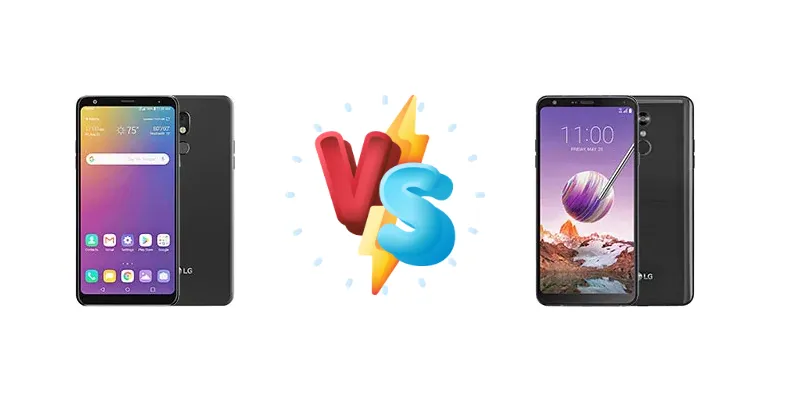
The LG Stylo 5 and Q Stylo 4 represent LG’s approach to affordable smartphones. While both devices share the same Qualcomm Snapdragon 450 chipset, key differences in charging speed and display characteristics create distinct user experiences. This comparison dives deep into these nuances to help you determine which device best suits your needs.
🏆 Quick Verdict
For most users, the LG Stylo 5 is the better choice. Its 20W charging capability significantly reduces downtime compared to the Q Stylo 4’s 10W charging, and the superior display contrast ratio (1485 vs. unspecified) offers a more vibrant viewing experience. The core performance remains identical, making the Stylo 5 a more practical daily driver.
| Network |
|---|
| 2G bands | GSM 850 / 900 / 1800 / 1900 | GSM 850 / 900 / 1800 / 1900 |
| 3G bands | HSDPA 850 / 1700(AWS) / 1900 | HSDPA 850 / 900 / 1900 / 2100 |
| 4G bands | 2, 4, 5, 12, 14, 29, 30, 66 | 1, 2, 3, 4, 5, 7, 12, 13, 20, 38, 41, 66, 71 |
| Speed | HSPA, LTE | HSPA 42.2/5.76 Mbps, LTE (2CA) Cat6 300/50 Mbps |
| Technology | GSM / HSPA / LTE | GSM / HSPA / LTE |
| Launch |
|---|
| Announced | 2019, June. Released 2019, June | 2018, June. Released 2018, June |
| Status | Discontinued | Discontinued |
| Body |
|---|
| Build | Glass front (Gorilla Glass 5), aluminum back, aluminum frame | - |
| Dimensions | 160 x 77.7 x 8.4 mm (6.30 x 3.06 x 0.33 in) | 160 x 77.7 x 8.1 mm (6.30 x 3.06 x 0.32 in) |
| SIM | Nano-SIM | Nano-SIM |
| Weight | 179 g (6.31 oz) | 172 g (6.07 oz) |
| | Stylus | Stylus |
| Display |
|---|
| Protection | Corning Gorilla Glass 5 | - |
| Resolution | 1080 x 2160 pixels, 18:9 ratio (~390 ppi density) | 1080 x 2160 pixels, 18:9 ratio (~390 ppi density) |
| Size | 6.2 inches, 99.2 cm2 (~79.8% screen-to-body ratio) | 6.2 inches, 99.2 cm2 (~79.8% screen-to-body ratio) |
| Type | IPS LCD | IPS LCD |
| Platform |
|---|
| CPU | Octa-core 1.8 GHz Cortex-A53 | Octa-core 1.8 GHz Cortex-A53 |
| Chipset | Qualcomm SDM450 Snapdragon 450 (14 nm) | Qualcomm SDM450 Snapdragon 450 (14 nm) |
| GPU | Adreno 506 | Adreno 506 |
| OS | Android 9.0 (Pie) | Android 8.1 (Oreo), LG UX 7 |
| Memory |
|---|
| Card slot | microSDXC (dedicated slot) | microSDXC (dedicated slot) |
| Internal | 32GB 3GB RAM | 32GB 2GB RAM |
| | eMMC 5.1 | eMMC 5.1 |
| Main Camera |
|---|
| Features | LED flash, panorama, HDR | LED flash, panorama, HDR |
| Single | 13 MP, PDAF | 13 MP, f/2.4, PDAF |
| Video | 1080p@30fps | 1080p@30fps |
| Selfie camera |
|---|
| Dual | 16 MP, f/2.0, 26mm (wide), 1/3.06", 1.0µm
8 MP | - |
| Single | 5 MP | 5 MP |
| Video | 1080p@30fps | 720p |
| Sound |
|---|
| 3.5mm jack | Yes | Yes |
| 35mm jack | Yes | Yes |
| Loudspeaker | Yes | Yes |
| Comms |
|---|
| Bluetooth | 4.2, A2DP, LE | 4.2, A2DP, LE |
| NFC | No | Yes |
| Positioning | GPS | GPS, GLONASS |
| Radio | No | No |
| USB | USB Type-C 2.0 | USB Type-C 2.0 |
| WLAN | Wi-Fi 802.11 a/b/g/n/ac, dual-band, Wi-Fi Direct | Wi-Fi 802.11 a/b/g/n/ac, dual-band, Wi-Fi Direct, DLNA |
| Features |
|---|
| Sensors | Fingerprint (rear-mounted), accelerometer, proximity | Fingerprint (rear-mounted), accelerometer, gyro, proximity, compass |
| Battery |
|---|
| Charging | 20W wired | 10W wired |
| Type | Li-Ion 3500 mAh, non-removable | Li-Ion 3300 mAh, non-removable |
| Misc |
|---|
| Colors | Blonde Rose, Platinum Gray | Aurora Black |
| Models | LM-Q720 | LM-Q710(FGN), LM-Q710.FGN, Q710AL, LML713DL, Q710PL |
| Price | About 200 EUR | About 250 EUR |
| SAR | - | 1.12 W/kg (head) 1.22 W/kg (body) |
| Tests |
|---|
| Audio quality |
Noise-93.5dB / Crosstalk -92.0dB | - |
| Battery life |
Endurance rating 79h
| - |
| Camera |
Photo / Video | - |
| Display |
Contrast ratio: 1485 (nominal), 3.218 (sunlight) |
240 USD |
| Loudspeaker |
Voice 62dB / Noise 69dB / Ring 70dB
| - |
| Performance |
GeekBench: 4695 (v4.4)
GFXBench: 6fps (ES 3.1 onscreen) | - |
LG Stylo 5
- Faster 20W charging for quicker top-ups
- Superior display contrast ratio for better viewing
- Longer endurance rating (79h)
- May be slightly more expensive than the Q Stylo 4
- Shares the same Snapdragon 450 chipset, limiting high-end performance
LG Q Stylo 4
- Potentially lower price point
- Shares the same Snapdragon 450 chipset
- Functional for basic smartphone tasks
- Slower 10W charging
- Likely inferior display quality
- Missing endurance rating suggests potentially shorter battery life
Display Comparison
Both the LG Stylo 5 and Q Stylo 4 share an unspecified display resolution, but the Stylo 5 boasts a contrast ratio of 1485 (nominal) and 3.218 (sunlight), indicating a more vibrant and readable screen, especially outdoors. The Q Stylo 4’s display is listed at $240, which is likely a manufacturing cost and doesn’t reflect consumer pricing or quality. The higher contrast ratio on the Stylo 5 suggests better black levels and overall image clarity, enhancing the viewing experience for media consumption and everyday use.
Camera Comparison
Both phones feature a photo/video camera setup, but detailed specifications are lacking. Without sensor size, aperture, or image processing details, it’s difficult to assess the camera quality. It’s reasonable to assume both devices offer similar camera performance given their shared target market. The presence of a 2MP macro camera on either device is unlikely to significantly impact image quality, serving more as a marketing feature than a substantial upgrade.
Performance
Both devices are powered by the Qualcomm Snapdragon 450 (14 nm) chipset, featuring an octa-core 1.8 GHz Cortex-A53 CPU. This means performance will be virtually identical for typical tasks like browsing, social media, and light gaming. The Snapdragon 450 is a capable processor for budget smartphones, but it’s not designed for demanding applications. The absence of information regarding RAM speed or configuration suggests both devices likely utilize similar memory setups, further solidifying the performance parity.
Battery Life
The LG Stylo 5 has an endurance rating of 79 hours, indicating excellent battery life. While the Q Stylo 4’s battery capacity is unknown, the key differentiator is charging speed. The Stylo 5 supports 20W wired charging, allowing for significantly faster top-ups compared to the Q Stylo 4’s 10W charging. This difference in charging speed translates to less downtime and a more convenient user experience, especially for users who frequently use their phones throughout the day.
Buying Guide
Buy the LG Stylo 5 if you prioritize minimizing charging times and enjoy a more visually appealing display. This phone is ideal for users who are frequently on the go and need a reliable device that can quickly top up its battery. Buy the LG Q Stylo 4 if you are looking for the absolute lowest price point and are willing to sacrifice charging speed and potentially display quality. It's a viable option for users with minimal smartphone demands.
Frequently Asked Questions
❓ Is the Snapdragon 450 in the LG Stylo 5 sufficient for playing modern mobile games?
The Snapdragon 450 is a capable processor for casual gaming, but it will struggle with graphically demanding titles at high settings. Expect to play games like PUBG Mobile or Call of Duty Mobile at lower graphics settings and frame rates for a smooth experience. It's best suited for less intensive games.
❓ How long does it realistically take to fully charge the LG Stylo 5 with the 20W charger?
While LG doesn't provide an exact 0-100% charging time, with 20W charging, you can expect a full charge in approximately 1 hour and 45 minutes to 2 hours, depending on usage during charging. This is significantly faster than the Q Stylo 4's 10W charging, which could take over 3 hours.
❓ Does the LG Q Stylo 4 support fast charging at all, or is it limited to 10W?
The LG Q Stylo 4 is limited to 10W wired charging. It does not support faster charging protocols, meaning even if you use a more powerful charger, the phone will only draw 10W of power.
❓ What type of USB port do both the LG Stylo 5 and Q Stylo 4 use?
Both devices likely utilize a Micro-USB port, which was standard for budget smartphones at the time of their release. This is slower than the USB-C port found on more modern devices.