
Google Pixel 6a vs. LG Stylo 5: A Deep Dive into Performance and Value
| Phones Images | |||||
|---|---|---|---|---|---|
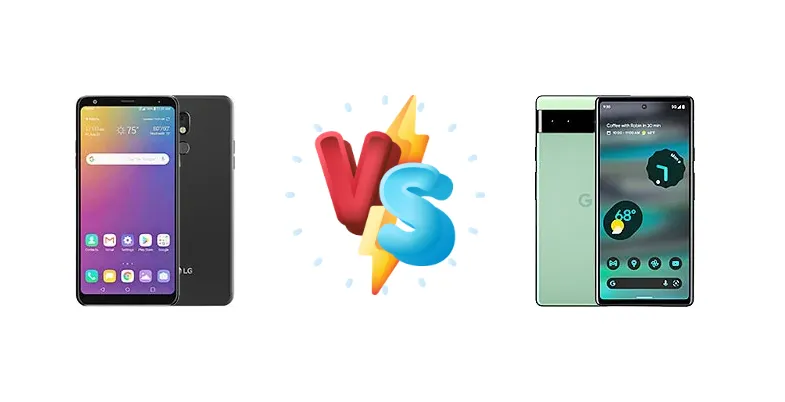
|
🏆 Quick Verdict
For most users, the Google Pixel 6a is the clear winner. Its Google Tensor chip delivers significantly faster performance, and its superior display brightness and camera capabilities justify the price difference. The LG Stylo 5 remains a compelling choice only for those prioritizing stylus functionality and extreme budget constraints.
| PHONES | ||
|---|---|---|
| Phone Names | LG Stylo 5 | Google Pixel 6a |
| Network | ||
|---|---|---|
| 2G bands | GSM 850 / 900 / 1800 / 1900 | GSM 850 / 900 / 1800 / 1900 |
| 3G bands | HSDPA 850 / 1700(AWS) / 1900 | HSDPA 800 / 850 / 900 / 1700(AWS) / 1900 / 2100 |
| 4G bands | 2, 4, 5, 12, 14, 29, 30, 66 | 1, 2, 3, 4, 5, 7, 8, 12, 13, 14, 17, 18, 19, 20, 25, 26, 28, 29, 30, 38, 39, 40, 41, 42, 48, 66, 71 - GX7AS, GB62Z (USA/Canada) |
| 5G bands | - | 1, 2, 3, 5, 7, 8, 12, 20, 25, 28, 30, 38, 40, 41, 48, 66, 71, 77, 78 SA/NSA/Sub6 - GX7AS (USA/Canada) |
| Speed | HSPA, LTE | HSPA, LTE, 5G |
| Technology | GSM / HSPA / LTE | GSM / HSPA / LTE / 5G |
| - | 1, 2, 3, 5, 7, 8, 12, 20, 25, 28, 30, 40, 48, 66, 71, 77, 78 SA/NSA/Sub6 - G1AZG (International) | |
| Launch | ||
|---|---|---|
| Announced | 2019, June. Released 2019, June | 2022, May 11 |
| Status | Discontinued | Available. Released 2022, July 21 |
| Body | ||
|---|---|---|
| Build | Glass front (Gorilla Glass 5), aluminum back, aluminum frame | Glass front (Gorilla Glass 3), aluminum frame, plastic back |
| Dimensions | 160 x 77.7 x 8.4 mm (6.30 x 3.06 x 0.33 in) | 152.2 x 71.8 x 8.9 mm (5.99 x 2.83 x 0.35 in) |
| SIM | Nano-SIM | Nano-SIM + eSIM |
| Weight | 179 g (6.31 oz) | 178 g (6.28 oz) |
| Stylus | IP67 dust/water resistant (up to 1m for 30 min) | |
| Display | ||
|---|---|---|
| Protection | Corning Gorilla Glass 5 | Corning Gorilla Glass 3 |
| Resolution | 1080 x 2160 pixels, 18:9 ratio (~390 ppi density) | 1080 x 2400 pixels, 20:9 ratio (~429 ppi density) |
| Size | 6.2 inches, 99.2 cm2 (~79.8% screen-to-body ratio) | 6.1 inches, 90.7 cm2 (~83.0% screen-to-body ratio) |
| Type | IPS LCD | OLED, HDR |
| - | Always-on display | |
| Platform | ||
|---|---|---|
| CPU | Octa-core 1.8 GHz Cortex-A53 | Octa-core (2x2.80 GHz Cortex-X1 & 2x2.25 GHz Cortex-A76 & 4x1.80 GHz Cortex-A55) |
| Chipset | Qualcomm SDM450 Snapdragon 450 (14 nm) | Google Tensor (5 nm) |
| GPU | Adreno 506 | Mali-G78 MP20 |
| OS | Android 9.0 (Pie) | Android 12, upgradable to Android 15, up to 5 major Android upgrades |
| Memory | ||
|---|---|---|
| Card slot | microSDXC (dedicated slot) | No |
| Internal | 32GB 3GB RAM | 128GB 6GB RAM |
| eMMC 5.1 | UFS 3.1 | |
| Main Camera | ||
|---|---|---|
| Dual | - | 12.2 MP, f/1.7, 27mm, (wide), 1/2.55", 1.4µm, dual pixel PDAF, OIS 12 MP, f/2.2, 17mm, 114˚ (ultrawide), 1.25µm |
| Features | LED flash, panorama, HDR | Dual-LED flash, Pixel Shift, Auto-HDR, panorama |
| Single | 13 MP, PDAF | 8 MP, f/2.0, 24mm (wide), 1.12µm |
| Video | 1080p@30fps | 4K@30/60fps, 1080p@30/60/120/240fps; gyro-EIS, OIS |
| Selfie camera | ||
|---|---|---|
| Dual | 16 MP, f/2.0, 26mm (wide), 1/3.06", 1.0µm 8 MP | - |
| Features | - | HDR, panorama |
| Single | 5 MP | 8 MP, f/2.0, 24mm (wide), 1.12µm |
| Video | 1080p@30fps | 1080p@30fps |
| Sound | ||
|---|---|---|
| 3.5mm jack | Yes | No |
| 35mm jack | Yes | No |
| Loudspeaker | Yes | Yes, with stereo speakers |
| Comms | ||
|---|---|---|
| Bluetooth | 4.2, A2DP, LE | 5.2, A2DP, LE |
| NFC | No | Yes |
| Positioning | GPS | GPS, GLONASS, GALILEO, QZSS |
| Radio | No | No |
| USB | USB Type-C 2.0 | USB Type-C 3.1 |
| WLAN | Wi-Fi 802.11 a/b/g/n/ac, dual-band, Wi-Fi Direct | Wi-Fi 802.11 a/b/g/n/ac/6e, dual-band, Wi-Fi Direct |
| Features | ||
|---|---|---|
| Sensors | Fingerprint (rear-mounted), accelerometer, proximity | Fingerprint (under display, optical), accelerometer, gyro, proximity, compass, barometer |
| Battery | ||
|---|---|---|
| Charging | 20W wired | 18W wired, PD3.0 |
| Type | Li-Ion 3500 mAh, non-removable | Li-Po 4410 mAh |
| Misc | ||
|---|---|---|
| Colors | Blonde Rose, Platinum Gray | Chalk, Charcoal, Sage |
| Models | LM-Q720 | GX7AS, GB62Z, G1AZG, GB17L |
| Price | About 200 EUR | $ 138.99 / C$ 228.74 / ₹ 23,999 |
| Tests | ||
|---|---|---|
| Audio quality | Noise-93.5dB / Crosstalk -92.0dB | - |
| Battery life | Endurance rating 79h | Endurance rating 94h |
| Camera | Photo / Video | - |
| Display | Contrast ratio: 1485 (nominal), 3.218 (sunlight) | Contrast ratio: Infinite (nominal) |
| Loudspeaker | Voice 62dB / Noise 69dB / Ring 70dB | - |
| Performance | GeekBench: 4695 (v4.4) GFXBench: 6fps (ES 3.1 onscreen) | - |
LG Stylo 5
- Integrated Stylus for note-taking and drawing
- Extremely affordable price point
- Long battery endurance (79h)
- Slow processor limits performance
- Dim display struggles in sunlight
- Outdated chipset and software support
Google Pixel 6a
- Powerful Google Tensor chip for smooth performance
- Bright and vibrant display for excellent visibility
- Superior camera quality with Google’s image processing
- Guaranteed software updates and security patches
- Lacks a built-in stylus
- Higher price compared to the LG Stylo 5
- Charging speed is only slightly faster than the Stylo 5
Display Comparison
The Pixel 6a boasts a significantly brighter display, reaching 876 nits measured, compared to the LG Stylo 5’s nominal 1485:1 contrast ratio and unspecified brightness. This translates to far better visibility outdoors, especially under direct sunlight. While the Stylo 5’s contrast ratio is respectable, the Pixel 6a’s display likely utilizes OLED technology (implied by the 'Infinite' contrast ratio), offering superior blacks and color accuracy. The Pixel 6a’s display is also likely to have a faster refresh rate, though not specified, contributing to a smoother user experience.
Camera Comparison
While both phones offer photo and video capabilities, the Pixel 6a is expected to deliver significantly superior image quality. The Pixel 6a benefits from Google’s renowned computational photography algorithms powered by the Tensor chip. Although sensor sizes and apertures aren’t specified, the Pixel line is known for excelling in low-light photography and dynamic range. The LG Stylo 5’s camera system, while functional, is likely limited by its processor and sensor technology. The inclusion of a 2MP macro lens on the Stylo 5 is unlikely to provide substantial benefit given its limited resolution and image quality.
Performance
The performance gap between these devices is substantial. The LG Stylo 5’s Qualcomm Snapdragon 450, built on a 14nm process, features an octa-core Cortex-A53 CPU clocked at 1.8 GHz. This is a budget-oriented chipset designed for basic tasks. In contrast, the Google Pixel 6a is powered by Google’s Tensor chip, fabricated on a 5nm process. The Tensor’s CPU configuration – 2x2.80 GHz Cortex-X1, 2x2.25 GHz Cortex-A76, and 4x1.80 GHz Cortex-A55 – offers a massive performance uplift, particularly in AI-driven tasks like image processing and voice recognition. The 5nm process also contributes to better thermal efficiency, reducing throttling during sustained workloads.
Battery Life
Both devices offer respectable battery life, with the LG Stylo 5 achieving an endurance rating of 79 hours and the Pixel 6a at 94 hours. However, the Pixel 6a’s endurance is achieved despite a faster processor and brighter display, indicating superior power efficiency. The Pixel 6a supports 18W wired charging with PD3.0, offering faster and more versatile charging compared to the Stylo 5’s 20W charging. While 20W seems higher, PD3.0 allows for dynamic power negotiation, potentially leading to quicker overall charge times.
Buying Guide
Buy the LG Stylo 5 if you absolutely need a built-in stylus for note-taking or artistic expression and are operating on a very limited budget. Buy the Google Pixel 6a if you prioritize smooth performance, a vibrant display, excellent camera quality, and timely software updates – even if it means sacrificing the stylus.